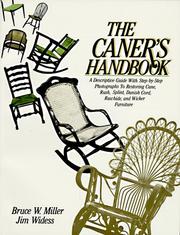
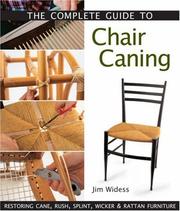
Seat weaving is one of the few crafts a book genuinely can teach, because the work is a fixed sequence of steps and the standard manuals photograph every one of them. The thing to establish before you buy is which material your chair takes, because they share almost no technique. Hand cane is woven through drilled holes in a six-way pattern. Pressed or sheet cane is a machine-woven web set into a routed groove and held by a spline, and it is a completely different job. Rush is twisted, either natural cattail leaves or paper fibre rush. Splint is flat ash or hickory, Shaker tape is woven cotton webbing, and Danish cord is the laced paper cord on mid-century frames.
Start with The caner's handbook by Bruce Miller and Jim Widess. It is the standard reference, it covers all the major materials rather than only cane, and its step photography is the clearest of the group. Widess's The complete guide to chair caning is the more recent and more approachable book from the same lineage, better as a first project guide and lighter on the unusual patterns. Owning both is redundant for most people; if you buy one, buy the handbook.
The older manuals
Three shorter books repeat the core techniques from different angles, and they are cheap. L. Day Perry's Seat weaving is an old shop-class manual, spare and diagram-led, still perfectly correct on rush and splint. Marion Burr Sober's Chair Seat Weaving for Antique Chairs is a slim pamphlet-style guide aimed squarely at pre-drilled antique frames. George Sterns's The Craft of Chair Seat Weaving covers similar ground. Their value is repetition: seeing the same rush pattern explained three ways is often what makes it click, and none of them is a substitute for the Miller and Widess handbook.
Materials, and the basketry side
Hilary Burns's Cane, Rush and Willow comes at the same materials from the British basketry tradition, with more on where the plant material comes from and how it is prepared. That is the bridge into the next two books, which are basketry proper rather than seat weaving. Dorothy Wright's The complete book of baskets and basketry is the standard general basketry manual, and the weaving logic in it transfers directly to seats even though no chair appears. Rob Pulleyn's The Basketmaker's Art is a survey of contemporary work — an inspiration and gallery book, not an instructional one. Both are optional.
Restoration, which is a different job
If you are weaving seats you will end up holding old chairs, and the next three books are about everything except the seat. Christophe Pourny's The Furniture Bible covers finishes, repairs and the decision of when to leave a surface alone; Richard A. Lyons's Restoring Antique Furniture is the more workshop-oriented manual. Richard Saunders's Wicker furniture is a history and identification guide, which matters because wicker frames are the pieces most often misidentified and most easily ruined by the wrong repair. These are adjacent skills that support the craft, not part of it.
Chairmaking, which is a different craft again
The last three books make the chair rather than the seat, and they are here for readers whose interest keeps going. John D. Alexander's Make a chair from a tree is the green woodworking classic — riving a log, shaving parts, building a post-and-rung chair with hand tools, and it does cover weaving the seat at the end. Drew Langsner's The Chairmaker's Workshop is the fuller treatment of the same tradition, including bending and Windsor work. Jeff Miller's Chairmaking and Design is the machine-shop counterpart, aimed at a woodworker with a table saw and an interest in joinery and comfort angles. All three assume woodworking you do not need for a seat, and none of them will teach you caning faster than the first book on this list.
Practical note: buy your material from a supplier who sells by seat rather than by weight for the first job, size the cane to the hole spacing on your actual chair, and soak exactly as long as the manual says. Under-soaked cane snaps and over-soaked cane goes slack as it dries.
More making paths sit on Discover.
Follow the full ordered path here: How to Learn Chair Caning and Seat Weaving from Books, in Order.
Ready to learn something deeply?
Build a reading path — free