Cabinetmaking sits at the demanding end of woodworking. A cabinet is a set of precise joints holding flat, square panels together for decades while the wood underneath expands and contracts with the seasons. Read in the wrong order and you learn techniques without understanding why they exist, which is how beginners build drawers that stick and doors that rack.
The right sequence starts with the material, moves to the tools and the small skills, then scales up to real casework and the finish that protects it. Here is how the reading path is arranged.
Start with the material and the workshop
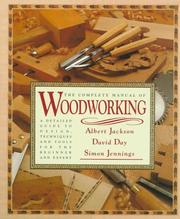
Everything begins with wood movement, so Understanding wood comes first. Bruce Hoadley explains, in plain terms, why boards cup, why grain direction dictates joinery, and why humidity is your quiet adversary. Pair it with The complete manual of woodworking by Albert Jackson, a broad illustrated reference that maps out tools, timber, and technique so nothing later feels like a leap.
From there, build your kit and your hands. The Anarchist's Tool Chest argues, persuasively, for a small set of quality tools and the discipline to use them well. The Essential Woodworker by Robert Wearing then teaches the core hand skills, sawing to a line, planing square, fitting joints, that machines can never fully replace. When you do reach for power, Woodworking with the router covers the one machine that does the most cabinet work: dados, rabbets, edges, and templates.
Move into real casework
Now the books get specific to cabinets. Cabinetmaking and Millwork by John Feirer is the classic trade text, systematic on carcase construction, face frames, doors, and drawers. Building traditional kitchen cabinets by Jim Tolpin turns that theory into a full kitchen, walking through a coherent system you can actually reproduce at home.
Before you commit to a whole kitchen, build a box. Taunton's Complete Illustrated Guide to Box Making (Complete Illustrated Guide) is a low-stakes way to practice the exact joints, fitted lids, and clean corners that cabinets demand, at a scale where mistakes are cheap.
Add veneer, finish, and built-ins
The finishing arc rounds out the craft. The veneering book opens up curved and figured surfaces you cannot get from solid stock. Wood Finishing 101, Updated Edition by Bob Flexner demystifies the step most people fear, matching finishes to use and applying them without runs or blotches.
Two books tie the practice together. Measure twice, cut once is Jim Tolpin's short, wise book on layout and accuracy, the habits that prevent expensive errors. And Building Built-Ins by Peter Gedrys shows how to fit cabinetry into the imperfect walls of a real house, the point where cabinetmaking meets carpentry.
Read in this order, each book answers a question the last one raised. Follow the full reading path to build from raw board to installed casework without the guesswork.
Follow the full reading path →