Bladesmithing sits at the intersection of craft and materials science, and that is exactly why reading order matters. You can make a knife by following steps, but you cannot make a reliably good knife until you understand what heat does to steel. The trick is to start hands-on and affordable — build a shop, make a blade — then circle back to the metallurgy that explains why your successes worked and your failures did not.
The other reason to sequence is cost and intimidation. New smiths overspend and overthink. A good path begins with the message that you can start cheap, gets you forging, then deepens into technique and theory as your ambition grows.
Start cheap and start forging
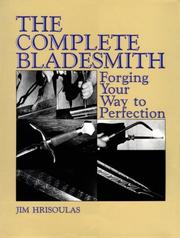
Begin with The $50 Knife Shop and its updated companion Wayne Goddard's $50 Knife Shop Revised, which prove you can set up a working knife shop on almost no budget and demystify the whole process for a first-timer. Then move to The complete bladesmith, the standard foundational text on forging blades from raw steel — it takes you through your first real forged knife with the fundamentals intact.
Deepen the craft
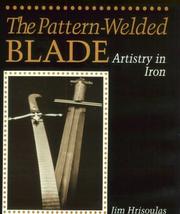
With a blade or two behind you, level up. The master bladesmith extends the fundamentals into advanced forging, heat treatment, and finishing, and The pattern-welded blade opens the door to Damascus and pattern welding — the layered steel that makes forged blades beautiful. These are the books that turn a functional knife into a refined one.
Understand the steel
Craft rests on materials. Steel Metallurgy for the Non-Metallurgist explains, in plain language, what actually happens inside steel during forging and heat treatment — the theory that makes your results repeatable instead of lucky. Round things out with two master's-eye views: Knife Making: Step by Step for a clear illustrated process and Bladesmithing with Murray Carter for the philosophy and technique of a renowned smith.
Read in this order and bladesmithing becomes controlled craft rather than trial and error. Follow the full path from your first cheap setup to blades you understand down to the grain.
Follow the full reading path →
Ready to learn something deeply?
Build a reading path — free