Read this subject as an argument, in the order the argument happened, because that is what it is. Whether antidepressants outperform placebo by a clinically meaningful margin has been contested in the scientific literature for more than fifteen years, and the dispute is live — not a settled question with a suppressed answer, and not a fringe position against a consensus. Both sides are published researchers making methodological arguments about the same trial data.
Before anything else: nothing here is a basis for changing how you take a medication. These books argue about population averages in clinical trials, which is a different question from what a particular drug is doing for a particular person. Stopping or altering a psychiatric medication without medical supervision carries real risks, including discontinuation effects that can be severe and are themselves a subject of active research. That conversation belongs with your prescriber.
The opening position
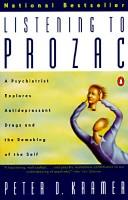
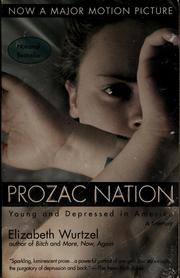
Peter Kramer's Listening to Prozac, from 1993, is where the popular argument starts. Kramer, a psychiatrist, described patients who became not merely less depressed but different — more confident, more socially fluent — and coined the phrase cosmetic psychopharmacology to ask what it means to medicate personality. Elizabeth Wurtzel's Prozac nation, published the following year, is the memoir alongside it, and it is a memoir: vivid, self-aware, and evidence about one life rather than about a drug class.
The challenge, and the direct reply
Irving Kirsch's The Emperor's New Drugs is the central text of the sceptical case. Kirsch, a placebo researcher, obtained unpublished as well as published trial data submitted to the FDA and reported that across the full set the drug-placebo difference on standard depression scales was small — small enough, he argues, to fall below thresholds of clinical significance except for the most severely depressed patients — and that the difference that remains may be explained by patients correctly guessing they are on the active drug because of its side effects.
Kramer's Ordinarily well is the direct rebuttal, and reading it immediately after Kirsch is the most useful thing on this list. Kramer's objections are methodological: that industry trials recruit unrepresentative and often mildly ill participants, that meta-analysis of short trials of heterogeneous patients washes out real effects, that mean score differences understate response in the patients who do respond, and that the trials measure efficacy under artificial conditions rather than effectiveness in practice. Kirsch and Kramer are both arguing about evidence quality; neither is arguing from anecdote.
Worth knowing, and outside these books: a large 2018 network meta-analysis led by Andrea Cipriani, published in the Lancet, found all twenty-one antidepressants examined more efficacious than placebo. Its critics argue it inherits the same trial-quality problems Kirsch identified. That is roughly where the field stands — the existence of an effect is much less disputed than its size and its clinical meaning.
The mechanism argument
A separate strand disputes not efficacy but explanation. Elliot Valenstein's Blaming the brain dismantles the evidence base for simple neurotransmitter-deficiency theories. Joanna Moncrieff's The myth of the chemical cure proposes what she calls a drug-centred model — that psychiatric drugs produce altered states which may be useful, rather than correcting a specific deficit — and her later Chemically Imbalanced examines how the serotonin story became a public explanation. Moncrieff is a founder of the critical psychiatry movement and writes as one; her 2022 serotonin umbrella review was widely criticised by other researchers for testing a hypothesis they say mainstream psychiatry had already abandoned.
Robert Whitaker's Anatomy of an Epidemic makes the strongest claim on the list: that long-term outcomes have worsened in the medication era. It is heavily contested, and the usual objection is that his comparisons cannot separate the effect of drugs from the severity of the illnesses that led to them being prescribed.
History, diagnosis, and the defence
David Healy's three books — The antidepressant era, Let Them Eat Prozac and Pharmageddon — are the historical and pharmaceutical-industry account, including his own contested account of SSRIs and suicidality and of what happened to him professionally afterwards. Allan Horwitz and Jerome Wakefield's The loss of sadness argues that diagnostic criteria conflate ordinary grief and sorrow with depressive disorder. Allen Frances, who chaired the DSM-IV task force, makes an insider's version of that case in Saving normal.
Close with Jeffrey Lieberman's Shrinks, a former American Psychiatric Association president's history of the profession and the clearest statement of the mainstream position on this list — which is worth noting is outnumbered here roughly ten to four. That imbalance is a fact about the books available, not a verdict.
Follow the full path in order, and read Kirsch and Kramer back to back if you read nothing else.
Follow the full ordered path here: Antidepressants and Psychiatric Medication: What to Read, in Order.