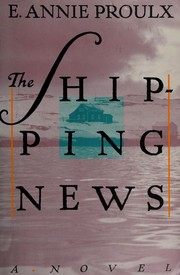
Start with The Shipping News. It is her most complete novel, it won the Pulitzer and the National Book Award, and — the part people forget — it is funny. A wrecked man takes his daughters to Newfoundland and slowly becomes competent. The prose is the compressed, clanging, verb-heavy Proulx sentence at full strength, but the story underneath is warm, which makes it the gentlest possible introduction to a writer who is frequently not gentle.
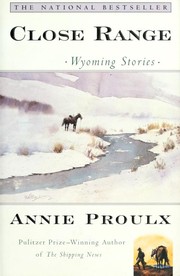
The obvious alternative is Close Range, published as Close Range: Wyoming Stories, because it contains the story that became the film everyone knows. It is a superb collection and you should absolutely read it — second. Coming to Proulx through that one story gives you a badly skewed sense of her: she is a landscape writer with a taste for catastrophe and black comedy, and the story is the softest thing in the book.
The entry pair
The Shipping News, then Close Range. Between them you have both modes: the redemptive novel and the merciless story. Read the collection whole rather than hunting for the famous story; the ones on either side of it are harder and better constructed.
Backwards to the beginnings
Heart Songs is her first collection, set in rural New England, and it is where the method is already visible: a small community, a newcomer, weather that behaves like a character. Postcards is her first novel, and it is bleak — a man leaves a body behind and the family disintegrates over decades. It won the PEN/Faulkner and it is not the book to hand to somebody who liked the film of The Shipping News.
Accordion Crimes is the one to be warned about. An accordion passes through a century of immigrant families in America, and each owner meets an end that is usually violent and often grotesque. It is a brilliant structural idea executed with a relentlessness that some readers find unbearable. Know what you are getting.
The Wyoming years
That Old Ace in the Hole sends a young man into the Texas panhandle to buy land for hog farms and is the loosest, most comic of the novels — an outlier, and a good palate cleanser after Accordion Crimes. Then the two later Wyoming collections: Bad Dirt is the lighter one, closer to tall tale, and Fine Just the Way It Is is the darker, and the stronger of the two if you only read one.
Bird Cloud is not fiction. It is a memoir about buying land in Wyoming and building a house on it, and readers who come to it expecting the novels are often disappointed — the drama is largely about contractors and concrete. Read it if you want to understand where the landscape in the fiction comes from, and skip it otherwise.
The big late novel
Barkskins runs to roughly seven hundred pages and covers three centuries of deforestation across two families from New France onward. It is the most ambitious thing she has written and the most demanding; the cast turns over constantly and no single character carries you through. Readers who want a novel to inhabit tend to bounce off it. Readers who want the argument — that the forest is the protagonist and the people are incidental — find it her major work. Both reactions are common.
Where to stop
The Shipping News and Close Range are enough for most readers, and they are the two to buy first. Add Fine Just the Way It Is if the stories are what grabbed you, and Postcards if the novel was. Barkskins last, or not at all. More sequences like this one are on Discover.
Follow the full ordered path here: Annie Proulx Reading Order: Where to Start with the Novels and Stories.
Ready to learn something deeply?
Build a reading path — free