Learning Ancient Greek is a marathon, and the most common way to fail is to gather too many textbooks and finish none. The alphabet, the accents, and an inflection-heavy grammar all front-load the difficulty, so the single most important decision is picking one primary course and sticking with it. Order matters more here than in almost any subject: you cannot skip to Homer.
The path below moves from a core textbook, through supported reading, to real classical authors with the dictionaries and commentaries that make them accessible.
Choose your core course
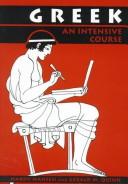
Pick one main textbook and commit. Ancient Greek for Everyone is a free, gentle starting point; Greek, an intensive course by Hansen and Quinn is rigorous and thorough; Reading Greek and Athenaze teach through connected passages from the start. Any one of these, finished, beats three abandoned halfway.
Bridge to real texts
Textbooks end; authors are harder. Ease the transition with a graded reader such as The Fifth Book of Xenophon's Anabasis, whose plain military prose is the traditional first "real" Greek, and Plato's Ion & Meno, short dialogues with student commentary.
Read the classics
Now the reward. Keep A Homeric Dictionary for use in Schools & Colleges at hand and work through Homer: Iliad Book I line by line — epic Greek differs from prose, so a commentary is essential. For philosophy, an annotated Plato Apology of Socrates and Crito lets you read Socrates in his own words, with extracts from the Phaedo, Symposium, and Xenophon to widen the view.
Follow the full reading path for study plans on each stage and verified editions, in order.
Follow the full reading path →
Ready to learn something deeply?
Build a reading path — free