Don't compete with AI — work with it
This curriculum takes a beginner from "AI feels overwhelming" to "I am the person my team turns to for AI-augmented work." It starts by building mental models and confidence, moves into hands-on prompting and workflow craft, then finishes with the strategic and human-judgment skills that make you irreplaceable as roles keep shifting. Each stage assumes the vocabulary and intuition built in the one before it.
Foundations: Understanding the AI Moment
BeginnerUnderstand what AI actually is (and isn't), why it changes work, and develop a confident, non-fearful mental model before touching any tool.
▸ Study plan for this stage
Pace: 6–8 weeks total: Weeks 1–3 for "Co-Intelligence" (~25–30 pages/day, reading conversationally and reflectively); Weeks 4–7 for "Human Compatible" (~20–25 pages/day, slower pace due to denser technical reasoning); Week 8 as a synthesis and review week with no new reading.
- The 'jagged frontier' of AI capability (Mollick): AI is simultaneously superhuman in surprising areas and shockingly weak in others — understanding this uneven landscape prevents both over-trust and under-use.
- AI as a 'co-intelligence' rather than a tool or a threat (Mollick): framing AI as a collaborative entity that augments human thinking changes how you engage with it at work.
- The four rules of working with AI (Mollick): always invite AI in, be the human in the loop, don't trust AI blindly, and use AI to improve your own thinking — these form a practical daily operating philosophy.
- The alignment problem (Russell): current AI systems are built to optimize fixed objectives, which is fundamentally dangerous because humans are notoriously bad at fully specifying what they actually want.
- The shift from 'standard model' to 'assistance games' (Russell): AI should be designed to be uncertain about human preferences and defer to humans, not to pursue a locked-in goal — this reframes what 'good AI' even means.
- Instrumental convergence (Russell): almost any sufficiently powerful AI pursuing almost any goal will develop sub-goals like self-preservation and resource acquisition, explaining why alignment is a structural problem, not a sci-fi edge case.
- Human oversight as a feature, not a bug: both books converge on the idea that keeping humans meaningfully in the loop is the responsible and productive default for today's AI.
- The difference between narrow AI, large language models, and AGI: building a clear mental taxonomy so workplace AI tools are understood in proper context, neither over-hyped nor dismissed.
- After reading Co-Intelligence, can you describe the 'jagged frontier' in your own words and give two examples from your own job where AI would likely outperform you and two where it would likely fail you?
- What does Mollick mean by treating AI as a 'brilliant friend' rather than a search engine, and how should that change the way you write prompts or ask questions at work?
- In Human Compatible, what is the 'standard model' of AI and why does Russell argue it is the root cause of the alignment problem — not a symptom of it?
- How does Russell's concept of 'assistance games' (or cooperative inverse reinforcement learning) propose to fix the alignment problem, and what does it imply about how much AI should defer to human correction?
- Both books were written by people who are neither pure AI boosters nor pure doomsayers. What is each author's core emotional stance toward AI, and where do they agree and disagree about the near-term future of work?
- What is instrumental convergence, and why does understanding it help a non-technical worker think more clearly about AI risk without resorting to science-fiction scenarios?
- Jagged Frontier Audit (after Co-Intelligence Ch. 1–3): List 10 tasks from your actual job. For each, predict whether AI would be above or below the frontier. Then test 3–4 of them with a free AI tool (ChatGPT, Copilot, etc.) and compare your predictions to reality. Write a one-paragraph reflection on what surprised you.
- Brilliant Friend Conversation Log (throughout Co-Intelligence): Each day you read, spend 10 minutes using an AI tool the way Mollick describes — as a knowledgeable, non-judgmental collaborator. Bring it a real work problem. Log the exchange and note where it helped, where it hallucinated, and where you had to be 'the human in the loop.'
- Rewrite a Work Prompt (after finishing Co-Intelligence): Take one prompt or question you've previously typed into an AI tool and rewrite it using Mollick's principles (give it a role, give it context, ask it to push back on you). Compare the two outputs and document the difference in quality.
- Alignment Problem Explainer (after Human Compatible Part I): Without looking at the book, write a 200-word plain-English explanation of the alignment problem as if you were explaining it to a skeptical colleague who thinks AI risk is just hype. Then re-read Russell's explanation and revise your draft.
- Instrumental Convergence Scenario Mapping (after Human Compatible Part II): Pick one AI feature you use or could use at work (e.g., an AI email assistant, a scheduling bot, a code helper). Walk through Russell's instrumental convergence logic: what 'goal' is it optimizing? What unintended sub-goals could emerge? What human oversight mechanism currently exists or should exist?
- Synthesis Comparison Chart (Week 8): Create a two-column table — Mollick vs. Russell — covering: (1) primary audience, (2) view of near-term AI at work, (3) biggest risk they identify, (4) recommended human response. Use only evidence from the books. Share or discuss with a peer if possible.
Next up: Completing this stage gives the reader a stable, fear-free mental model of what AI is and why alignment and human oversight matter — the exact conceptual scaffolding needed to evaluate, choose, and responsibly use specific AI tools in the next stage.

The single best starting point: a Wharton professor who studies AI at work gives you an honest, practical mental model of what LLMs can and cannot do — written specifically for people navigating AI in their professional lives.

Grounds you in how AI systems are actually built and where they fundamentally fall short of human judgment — essential context so you know which tasks to trust AI with and which to own yourself.
Core Skill: Prompting and Directing AI
BeginnerDevelop reliable, repeatable prompting skills so you can get high-quality, useful output from AI tools on real work tasks — not just demos.
▸ Study plan for this stage
Pace: 4–5 weeks, ~25–35 pages/day (the book is ~400 pages); read actively with a notebook open and an AI tool running alongside so you can test every technique as you encounter it
- Prompt anatomy: the role of instructions, context, input data, and output indicators in shaping AI responses (Phoenix's foundational framework)
- Zero-shot, one-shot, and few-shot prompting — when each is appropriate and how to construct clean examples for few-shot use
- Chain-of-thought (CoT) prompting: guiding the model to reason step-by-step before giving a final answer to improve accuracy on complex tasks
- Role and persona assignment: how framing the AI's 'identity' (e.g., 'You are a senior data analyst…') shifts tone, depth, and relevance of output
- Iterative prompt refinement: treating your first prompt as a draft, diagnosing weak output, and systematically improving it rather than starting over
- Output formatting and constraints: using explicit format instructions (JSON, bullet lists, tables, word limits) to make AI output immediately usable in real workflows
- Prompt chaining: breaking a large, complex task into a sequence of smaller prompts where each output feeds the next
- Avoiding common failure modes: hallucination, over-hedging, prompt injection risks, and how prompt design choices mitigate each
- Given a real work task (e.g., drafting a client summary), can you identify all four components of a well-structured prompt and explain what each one contributes to the quality of the output?
- What is the difference between zero-shot and few-shot prompting, and how would you decide which to use when writing a prompt for a repetitive task at your job?
- How does chain-of-thought prompting change the model's behavior, and in what kinds of work tasks (e.g., analysis, troubleshooting, planning) does it provide the most benefit?
- If an AI response comes back vague, off-topic, or too long, what is your diagnostic process for identifying which part of the prompt caused the problem and how would you fix it?
- How would you design a prompt chain to handle a multi-step work task — such as researching a topic, summarizing findings, and drafting a recommendation memo — and what information needs to pass between each step?
- What formatting instructions would you add to a prompt to ensure the AI's output can be pasted directly into a work deliverable without heavy editing?
- **Prompt Anatomy Audit:** Take 3 prompts you have already used at work (or write 3 from scratch for real tasks). Map each one against Phoenix's four-component framework. Identify which components are missing or weak, rewrite the prompts, and compare the outputs side by side.
- **Few-Shot Template Builder:** Choose one repetitive writing task from your job (e.g., status update emails, meeting summaries, ticket descriptions). Write a few-shot prompt with 2–3 high-quality examples embedded. Save it as a reusable template and use it for one full work week.
- **Chain-of-Thought Lab:** Pick a work problem that requires reasoning (e.g., diagnosing why a project is delayed, evaluating two vendor options). Write the same prompt twice — once without CoT instruction and once with an explicit 'think step by step' instruction. Document the difference in output quality and usefulness.
- **Prompt Refinement Journal:** For one week, every time you use an AI tool at work, log your initial prompt, the output quality (1–5), one specific thing that was weak, your revised prompt, and the new output quality. After 5 entries, identify your most common prompting mistake.
- **Prompt Chain Design:** Select a complex work task that has at least three distinct steps (e.g., competitive analysis → SWOT summary → executive slide bullets). Design a full prompt chain: write each individual prompt, define what output from step N becomes the input for step N+1, and run the full chain end-to-end.
- **Format Constraint Challenge:** Take a prompt that previously returned a messy, hard-to-use response. Rewrite it with explicit output format instructions (e.g., a specific table structure, a numbered list with a 20-word limit per item, or valid JSON). Verify the output is paste-ready for a real deliverable.
Next up: Mastering repeatable prompting with a single AI tool creates the hands-on fluency needed to evaluate, compare, and strategically integrate multiple AI tools and workflows across an entire job role — the focus of the next stage.

Goes deeper into structured prompting patterns (chain-of-thought, role prompting, few-shot) so you move from trial-and-error to a repeatable craft you can apply to any new AI tool you encounter.
Workflow Redesign: Multiplying Your Output
IntermediateRedesign your actual daily workflows around AI assistance — knowing when to delegate, when to verify, and how to combine AI speed with your own expertise to produce work that neither could alone.
▸ Study plan for this stage
Pace: 6–8 weeks total: Weeks 1–3 on "Impromptu" (~25–30 pages/day, reading in focused 30-min sessions), Weeks 4–7 on "Working with AI" (~20–25 pages/day with slower, note-heavy reading due to its case-study density), Week 8 reserved for integration, reflection, and completing exercises.
- AI as a collaborative thought partner, not just a tool — Hoffman's core framing in 'Impromptu' that AI amplifies human intent, meaning your prompts and judgment are the rate-limiting factor in output quality
- Delegation thresholds: identifying which tasks in your workflow are safe to hand off to AI (drafting, summarizing, brainstorming) vs. which require your irreplaceable expertise (judgment calls, stakeholder relationships, ethical decisions)
- The 'augmentation' vs. 'automation' distinction from Davenport & Wilson's 'Working with AI' — understanding that the most durable productivity gains come from humans and AI dividing labor by comparative advantage, not wholesale replacement
- Task decomposition: breaking complex work into AI-friendly subtasks, as illustrated through the professional case studies in 'Working with AI', so that AI handles the high-volume, low-ambiguity steps while you own the synthesis
- Verification discipline: Hoffman's implicit and Davenport's explicit warnings about AI hallucination and overconfidence — building personal checkpoints (fact-checks, logic reviews, domain-expert review) into every AI-assisted workflow
- Prompt engineering as workflow design: treating the construction of prompts as a repeatable, improvable process — iterating on them the way you would iterate on any professional template or SOP
- Domain-specific augmentation patterns from 'Working with AI': how knowledge workers in fields like law, medicine, finance, and management consulting have restructured their daily routines around AI assistance — and what transferable principles emerge
- Producing 'centaur work' — the concept from Davenport of output that is qualitatively better than what either human or AI could produce alone, and how to recognize when you have achieved it vs. when you are just outsourcing thinking
- After reading 'Impromptu', how does Hoffman characterize the human role in an AI-assisted creative or analytical process, and what does that imply about where you should invest your own effort?
- Drawing on the case studies in 'Working with AI', what distinguishes a workflow that has been genuinely redesigned around AI from one that has simply added an AI tool on top of an unchanged process?
- What criteria — from either book — would you use to decide whether a specific task in your own job should be delegated to AI, done collaboratively with AI, or kept entirely human?
- How do Davenport and Wilson define 'augmentation', and how does that definition change the way you should measure your own productivity when using AI?
- What verification steps do the authors collectively recommend (explicitly or implicitly) to prevent AI errors from compounding into larger workflow failures?
- What does 'centaur work' look like in your own professional domain, and what would you need to change about your current habits to produce it consistently?
- Workflow audit: Map out your top 5 recurring weekly tasks. For each one, use the augmentation/automation framework from 'Working with AI' to classify it as 'full AI delegation,' 'human-AI collaboration,' or 'human only' — and write a one-sentence justification grounded in the book's criteria.
- Prompt library sprint: Choose one task you've classified as 'human-AI collaboration' and write, test, and iterate on at least 5 different prompt versions for it over one week. Document what changed between versions and what produced the best output — treating this as the SOP-building exercise Hoffman implicitly advocates.
- Centaur output challenge: Pick a real deliverable from your job (a report, a proposal, an analysis). Produce one version using only your own effort, then produce a second version using AI assistance. Compare them explicitly: where did AI add value, where did it introduce errors, and what did your expertise fix or elevate?
- Verification checklist: Drawing on the cautions in 'Working with AI', build a personal 'AI output review checklist' of 5–8 items tailored to your field (e.g., fact-check statistics, verify citations, check for logical gaps, flag confident-sounding claims that need sourcing). Use it on every AI-assisted output for two weeks.
- Case study mirror: Select one professional case study from 'Working with AI' in a domain close to yours. Write a one-page memo explaining how you would adapt that person's redesigned workflow to your own role — identifying what transfers directly and what needs modification.
- Weekly delegation log: For two weeks, keep a simple log of every time you use AI at work: the task, whether you delegated/collaborated/verified, how long it took vs. your estimate without AI, and the quality outcome. At the end, identify your single highest-leverage workflow change supported by evidence from the log.
Next up: By the end of this stage you will have a working, evidence-based map of your own AI-augmented workflow — which sets up the next stage to go deeper into advanced prompting strategies, multi-step AI pipelines, and the organizational and ethical dimensions of scaling those workflows beyond individual use.

Hoffman wrote this book collaboratively with GPT-4 and uses that process to show concretely how professionals can amplify their thinking and output — a practical demonstration of human-AI collaboration in action.

Davenport's research-backed framework for augmenting knowledge work is the most grounded treatment of human-AI task division available — read here once you have hands-on experience to apply its models immediately.
Staying Valuable: Judgment, Creativity, and Career Strategy
ExpertDevelop the distinctly human skills — critical judgment, creativity, ethical reasoning, and strategic self-positioning — that make you more valuable as AI automates the routine parts of your role.
▸ Study plan for this stage
Pace: 10–12 weeks, roughly 25–35 pages/day: ~3 weeks for "Power and Prediction" (Agrawal), ~3 weeks for "The Creativity Code" (du Sautoy), ~3 weeks for "The Loop" (Ward), plus 1–2 weeks for reflection, review, and completing exercises.
- Power shifts in AI-driven organizations (Agrawal): AI handles prediction cheaply, but human judgment about *which* decisions matter and *what* to do with predictions becomes the scarce, high-value skill.
- The prediction-judgment separation (Agrawal): Understanding that AI excels at prediction while humans must supply the goals, values, and consequences — and that this separation restructures who holds power at work.
- Radical vs. incremental creativity (du Sautoy): AI can recombine and optimize within known rule-sets (incremental creativity), but genuine rule-breaking, meaning-making, and aesthetic judgment remain distinctly human territories.
- The boundaries of machine creativity (du Sautoy): Examining where AI-generated art, music, and writing fall short — and using those gaps to identify where your own creative contribution is irreplaceable.
- Cognitive bias amplification by AI (Ward): AI systems trained on human data inherit and can scale human biases, meaning uncritical reliance on AI outputs can entrench errors rather than correct them.
- The automation of behavior and the erosion of agency (Ward): How algorithmic nudges and AI-driven environments subtly shape human decisions, and why maintaining deliberate, reflective thinking is a career-critical skill.
- Ethical reasoning as a professional differentiator: Across all three books, the thread that AI cannot supply moral context — the ability to ask 'Should we?' rather than just 'Can we?' becomes a key marker of seniority.
- Strategic career self-positioning: Synthesizing all three books into a personal action plan — doubling down on judgment, creativity, and ethical oversight as the roles most resistant to AI substitution.
- After reading 'Power and Prediction,' can you explain in concrete terms how cheap AI prediction reshuffles decision-making authority in your own organization — and who gains or loses power as a result?
- Using du Sautoy's framework in 'The Creativity Code,' can you identify two or three creative tasks in your current role that AI can approximate versus two or three where human meaning-making is essential — and articulate *why* the distinction holds?
- Based on 'The Loop,' can you name at least two specific ways cognitive biases in your workplace could be amplified rather than reduced by AI tools, and what safeguards you would put in place?
- How do all three books collectively redefine what 'expertise' means in an AI-augmented workplace — and how does that change what skills you should be investing in right now?
- Can you construct an argument — drawing on Agrawal, du Sautoy, and Ward — for why ethical reasoning and judgment are not 'soft' skills but structural necessities in AI-integrated roles?
- What is your personal 'staying valuable' strategy? Can you articulate it in a one-page career brief that references the specific frameworks from all three books?
- **Power Map Exercise (Agrawal):** Draw an org chart of your team or department. Annotate each role with: (a) which decisions AI could now make cheaply, and (b) where human judgment about goals and consequences is still required. Identify which roles — including your own — are growing in strategic importance and which are shrinking.
- **Creativity Audit (du Sautoy):** List 10 creative outputs from your job in the past month (reports, pitches, designs, plans, etc.). Run each through an AI tool (e.g., ChatGPT, Midjourney). Compare the AI output to yours and write a one-paragraph analysis of where the AI fell flat — specifically around context, meaning, novelty, or taste. Use du Sautoy's incremental vs. radical creativity lens.
- **Bias Hunt (Ward):** Choose one AI-assisted workflow your team uses (a recommendation engine, a hiring filter, a content tool). Spend one week deliberately questioning its outputs: Where might training-data bias be showing up? Document at least three instances where the AI output felt 'off' and trace the likely source of the error.
- **'Should We?' Ethics Brief:** Pick a real AI use case being adopted (or considered) at your workplace. Write a one-page ethical brief that goes beyond legality and efficiency — address fairness, unintended consequences, and whose interests are not represented in the AI's training data. Share it with a colleague and discuss.
- **Judgment Journal:** For two weeks, keep a daily log of every significant decision you make at work. For each, note: Could AI have made this prediction? What human judgment did *you* supply on top of that prediction? At the end of two weeks, identify the pattern — this is your current judgment 'signature' and the core of your irreplaceable value.
- **Personal 'Staying Valuable' Strategy Document:** Write a 1–2 page career brief synthesizing all three books. Structure it as: (1) Where AI is encroaching on my role (Agrawal), (2) Where my creativity remains irreplaceable (du Sautoy), (3) Where I must guard against bias and loss of agency (Ward), and (4) Three concrete skill investments I will make in the next 6 months.
Next up: By internalizing how judgment, creativity, and ethical reasoning form your irreplaceable professional core, you are now equipped to move into more advanced territory — exploring how to lead, design, and govern AI-integrated teams and systems, rather than simply surviving within them.

Explains how AI shifts economic power by cheapening prediction while raising the value of human judgment and decision-making — gives you a clear framework for where to invest your skills going forward.
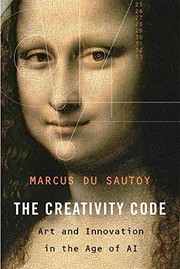
A rigorous examination of what AI can and cannot create, clarifying exactly where human originality, taste, and contextual creativity remain irreplaceable — essential for positioning your unique contributions.

Closes the curriculum by examining how algorithmic and AI systems shape human behavior and bias, giving you the critical lens to audit AI outputs, push back when needed, and be the trusted human in the loop your organization needs.
Discussion
Keep reading
Paths that share books, cover the same subject, or open a related topic.