Wolfgang Amadeus Mozart: The Best Books to Read, in Order
Mozart is buried under more accumulated myth than almost any composer, and the literature about him separates cleanly into three kinds of book that are easy to confuse: biography, musical study, and the catalogues and reference works that let you find a piece at all. This path keeps them apart deliberately. It begins with two very different modern biographies, goes straight to the letters, then works through the life chronologically from Salzburg to the final year, then into the music itself — the operas, the piano concertos, the Requiem — and ends with the reference apparatus, including Köchel's catalogue, which is why every Mozart work has a K number.
Two biographies, two methods
IntermediateMeet the life twice, from opposite directions: once as psychology and once as musicology. Notice how differently the same documented facts — the break with Archbishop Colloredo, the relationship with Leopold, the Vienna finances — can be read, and that neither reading is simply the truth.
▸ Study plan for this stage
Pace: Two and a half months for 954 pages, and both books display in our catalogue under the bare title Mozart, so check the author before buying either. Maynard Solomon's Mozart is 648 pages and takes six weeks at 25 pages a session; it is the major psychological biography, built on the father-son relati
- The father-son relationship as Solomon's organising principle: Leopold as manager, teacher and shaper of his son's public record, and Wolfgang's adult career as a protracted separation from him.
- Solomon's documentary scepticism. He treats the family correspondence as material produced by interested parties rather than as a transparent record, which is what makes his method controversial.
- The objection to Solomon, which musicologists state plainly: that psychological inference outruns the evidence in places, and that a suggestive document is not a demonstrated motive.
- Rushton's life-and-works form, in which the biography exists to situate the music and the analysis is the point rather than the ornament.
- The Colloredo break of 1781 as the pivotal documented event, and how differently it reads as a psychological emancipation and as a career decision by a musician assessing a market.
- The Vienna finances, which are much better documented than the poverty legend suggests and which both authors handle without the myth.
- Reading two biographies against each other as a method. Where they agree you have the record; where they diverge you have interpretation, and the divergences are more instructive than either book alone.
- What is Solomon's central claim about Leopold's role, and what documents does he base it on?
- Where does Solomon infer motive rather than establish it? Find two passages and say what a sceptic would want instead.
- How does Rushton's account of the Colloredo break differ from Solomon's, and what accounts for the difference in method?
- What do both books agree on regarding Mozart's Vienna income, and how does that compare with the popular story?
- Which parts of Rushton's book could only have been written by a musicologist, and what do they add?
- After both, what do you take to be documented fact and what is interpretation? Write the two lists.
- Take three episodes covered by both books and write the two accounts side by side, marking every point where one asserts something the other does not.
- Read Solomon's treatment of a single document and then find that document quoted in Rushton. Compare what each concludes from the same text.
- Build a bare chronology of the life from these two books, containing only what both agree on. The gaps in that skeleton are where the arguments live.
- Pick one work Rushton discusses in analytical detail and listen to it while reading his pages on it. Then read Solomon on the same period and note that he is doing something entirely different.
Next up: Both biographies build their arguments out of the family correspondence, so the next step is to read that correspondence yourself.
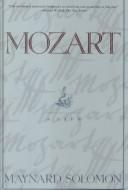
The major psychological biography, built on the father-son relationship and on a sceptical rereading of the family's own documents, including evidence that Leopold shaped the record. Contested by some musicologists for how far it reads motive into evidence, and the essential starting point precisely because it argues rather than narrates. Our record shows the bare title 'Mozart'.
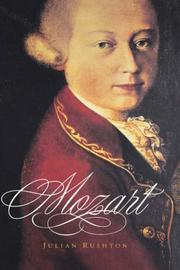
Rushton's Master Musicians volume — a musicologist's life-and-works, cautious where Solomon is bold, and much better on what the pieces are actually doing. Read it second as the corrective, and note that its record also displays as the bare title, so check the author when buying.
The letters
IntermediateGo to the primary source. The Mozart family correspondence is enormous, funny, coarse and often calculating, and it is where almost every claim in the biographies originates. Read enough to hear the difference between Wolfgang writing to his father and writing to his cousin.
▸ Study plan for this stage
Pace: Three months for 1,560 pages, though the two books are used quite differently. Spaethling's Mozart's Letters, Mozart's Life is 496 pages and is the best English selection for a general reader; four to five weeks reading straight through, because the translator is determined to keep Mozart's register
- That almost every claim in every Mozart biography originates here, which means reading the letters converts you from an audience for those books into a checker of them.
- Register as evidence. The way a letter is written — to Leopold, to his sister, to his cousin, to a patron — tells you as much about the relationship as its content does.
- Translation as interpretation. Anderson's decorum and Spaethling's coarseness are two readings of the same German, and comparing them shows how much a translator decides.
- Leopold's side of the correspondence, which survives in quantity and which is the direct evidence for Solomon's argument about his management of the family record.
- The letters as a business archive: fees, commissions, lodgings, travel costs and debts, which is where the financial picture in the biographies comes from.
- The bowdlerisation history. Earlier editions suppressed material that later ones restored, so what a given generation of readers thought Mozart was like depended partly on which edition they had.
- What the letters do not contain. There is very little sustained aesthetic theorising, which is worth knowing before expecting the correspondence to explain the music.
- How does Mozart's tone change between letters to his father and letters to his cousin? Quote from both.
- Take one letter that appears in both editions and compare the translations. What has Anderson softened, and does it change the meaning?
- What do the letters show about how Mozart earned money in Vienna — from what sources, in what amounts, and how reliably?
- Which of Solomon's claims about Leopold can you verify directly in the correspondence, and which cannot be verified either way?
- What questions about the music do the letters answer, and what do they leave entirely untouched?
- Read the surviving correspondence around the Colloredo break in Anderson, in full and in date order. Then reread what each biographer made of it.
- Take five letters and note in each what is being asked for and from whom. The correspondence is substantially a record of negotiation and this makes it visible.
- Compare Spaethling's and Anderson's versions of three passages and write a paragraph on what each translator prioritises.
- Pick one work whose composition is mentioned in the letters and assemble every reference to it in date order. That is what a source study looks like in miniature.
- Keep a note of every biographical claim you meet later on this path that you can trace to a specific letter. The list will be long.
Next up: With the primary source read, the career can be worked through in order using the specialist studies that go far deeper than any single-volume life.

The best English selection for a general reader, translated by someone determined to keep Mozart's registers — the puns, the dialect, the obscenity — rather than tidying them into eighteenth-century politeness. Start here; the annotations make it usable without a biography open beside you.

The complete scholarly edition in English, and the source that every biographer cites — read Spaethling for pleasure and come here when you need the full text of a letter or its date. Anderson's translation is more decorous than Spaethling's, which is itself worth knowing when you compare the two.
The life in sequence
IntermediateWork through the career in order: the child prodigy tours and the Salzburg service, the break with Colloredo and the freelance Vienna years, and the last twelve months. This stage is where you discard the myths — the pauper's grave, the poisoning, the effortless composition without revision.
▸ Study plan for this stage
Pace: Four months. Sadie's study of the early years to 1781 has no page count in our catalogue, so plan it by chapter over four to five weeks; it is unfinished and it covers the childhood tours, the Salzburg employment and the early operas in far more detail than any single-volume life can, which makes it
- The childhood tours as a business run by Leopold, with itineraries, patrons and finances that Sadie documents in detail — a professional operation rather than a series of anecdotes.
- The Salzburg employment and its terms, which is the necessary background to understanding what leaving it actually cost and gained.
- The Colloredo break in its documented sequence, now readable against the letters you have already worked through.
- Mozart's Vienna income, which on Landon's and Keefe's evidence was substantial for much of the decade — the destitution story does not survive the account books.
- The burial. A common grave was standard Viennese practice under the reforms of the period, and reading it as a mark of poverty is a category error the sources correct.
- The Salieri story as a nineteenth-century invention, traceable to sources long after the fact, and dismantled by Landon's month-by-month record of 1791.
- The Requiem commission and its actual circumstances, which are documented and mundane, against the anonymous-messenger legend built on them.
- The revision evidence. Surviving manuscripts show working, correction and rejected material, which is directly against the myth of effortless composition without a second thought.
- What did the childhood tours actually involve — where, for how long, financed how, and to what end?
- What were the terms of the Salzburg employment, and what specifically triggered the break with Colloredo?
- What was Mozart earning in Vienna across the decade, and where did the destitution story come from?
- Explain the burial arrangements of the period and why they do not support the pauper's-grave account.
- Where do Landon and Keefe disagree about the Vienna decade, and what accounts for the difference?
- What does the manuscript evidence show about how Mozart actually composed?
- Build a year-by-year income and expenditure sketch for the Vienna decade from Landon and Keefe. Even approximate, it kills the poverty story permanently.
- Take one disagreement between Landon and Keefe and follow both authors back to their sources. This is the fastest way to see how the modern archival work changed things.
- Read Landon's reconstruction of 1791 alongside the correspondence from that year in Anderson. The month-by-month method becomes obvious when you have both.
- List every Mozart myth you arrived with and mark which of these books disposes of which. Several will turn out to have no source at all.
- Take the early operas Sadie covers and find recordings of two. The years the general biographies compress contain a great deal of music.
Next up: The life is now documented rather than legendary, which is the point at which it stops being the most interesting thing about him.

Sadie's unfinished study of the period to 1781, covering the tours, the Salzburg employment and the early operas in far more detail than any single-volume life can. The most thorough account of the years the general biographies compress.

The Vienna decade from 1781 to 1791 — the concertos, the Da Ponte operas, the freemasonry and the finances — by the scholar who did most to correct the story of Mozart's supposed destitution. Our record carries the date range in the display title; it is the same book.

The modern scholarly account of the same decade, using more recent archival work and much less inclined to narrative colour than Landon. Read the two together where they disagree — the disagreements are the real state of the field.
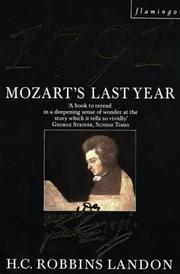
A month-by-month reconstruction of the final year that dismantles the Salieri story and the anonymous-messenger legend around the Requiem commission. Our record displays it as '1791'; read it last in this stage, and afterwards you will not be able to watch the film in the same way.
The music itself
IntermediateStop reading about the man. These are studies of specific bodies of work, written for people who will have the scores or at least the recordings in front of them. Listen alongside — none of them is intended to be read cold.
▸ Study plan for this stage
Pace: Three months for 1,133 pages, and none of these three is intended to be read cold — have the recordings, and where you can the scores, in front of you. Heartz's Mozart's operas is 363 pages and takes four weeks; it covers Idomeneo, the Da Ponte operas and Die Zauberflöte, combining source study with
- Heartz's combination of source study and dramatic analysis: what the manuscripts and librettos show about how an opera was assembled, set against what the finished work does on stage.
- The Da Ponte collaboration as a working relationship with three results, and the specific dramatic problems each libretto set that the music solves.
- Idomeneo as the earlier and more formal opera seria against which the later comedies should be heard, rather than as a preliminary sketch.
- The piano concerto as Mozart's central instrumental form in Vienna, written for his own performance, which ties the music directly to the finances of the previous stage.
- Girdlestone's concerto-by-concerto method and its cumulative argument that the twenty-seven works form a single sustained achievement rather than a series of occasional pieces.
- What Mozart actually wrote of the Requiem, what exists in sketch, and what Süssmayr supplied — a question with a documentary answer, which Wolff sets out with the manuscript evidence.
- Completion as a scholarly and practical problem: several modern completions exist, and knowing what is Mozart's is a precondition for having a view on any of them.
- Reading about music you can hear. Every book in this stage assumes access to the works, and the reading rate should be set by the listening rather than the page count.
- What does Heartz's source study reveal about how the Da Ponte operas were put together, and where does the evidence contradict the received account?
- How does Idomeneo differ from the later operas in form and in what it asks of singers and audience?
- Why were the piano concertos written, for whom, and how does that connect to Mozart's Vienna income?
- What is Girdlestone's argument about the concertos as a body, and does the sequence support it when you listen?
- Set out precisely what is Mozart's own in the Requiem, what is Süssmayr's, and what the manuscripts show about each.
- What questions about the Requiem remain genuinely open after Wolff, and what would answer them?
- Work through five piano concertos with Girdlestone: listen once cold, read his chapter, listen again. Note what you heard the second time that you missed the first.
- Take one Da Ponte opera, read Heartz on it while following a libretto, and mark the places where he shows the music doing something the words do not.
- Read Wolff's account of the manuscripts while following the score, and mark on it where Mozart's hand stops.
- Find two different completions of the Requiem and compare the same passage in each. Having read Wolff you will know exactly what each completer was choosing between.
- Pick one work discussed in this stage and write a paragraph about it that makes no reference to Mozart's life at all. That is the skill this stage exists to build.
Next up: Everything so far has assumed you can find a piece when it is mentioned, which is what the reference apparatus of the final stage is for.

Heartz on Idomeneo, the Da Ponte operas and Die Zauberflöte, combining source study with dramatic analysis by the leading scholar of the period. The single most rewarding book on this path if opera is what brought you to Mozart.
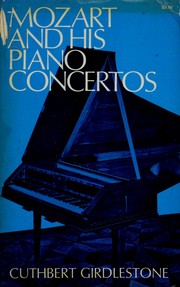
The 1948 concerto-by-concerto study that is still the standard guide to the twenty-seven concertos, and the reason many listeners hear them as a single sustained achievement. Old-fashioned in its language and unmatched in its coverage.

The scholarly account of what Mozart actually wrote, what Süssmayr completed, and what the surviving manuscripts show — including the score itself. The definitive answer to the question the myths are built around, and the right place to close the music stage.
Reference, and the world he worked in
IntermediateFinish with the apparatus. Understand what a K number is and why it exists, acquire a reference you can look things up in, and read one book about the intellectual world — Enlightenment Vienna, freemasonry, patronage — that the music was made inside.
▸ Study plan for this stage
Pace: Two months, and only one of the three books here is actually read. Till's Mozart and the Enlightenment is 371 pages and is the continuous reading of the stage — four weeks, and it reads the operas as arguments about truth, virtue and power in late eighteenth-century thought, which is the context bot
- What a K number is: a position in Köchel's 1862 attempt at a chronological and thematic catalogue of everything Mozart wrote, which is why the numbers roughly track chronology and why they have been renumbered as dating improved.
- Why a catalogue was needed at all. Mozart wrote across every genre without opus numbers covering the whole output, so a single reference sequence was the only way to identify a work unambiguously.
- That Köchel's catalogue is a German-language reference work and a historical document, not something anyone reads through, and that its numbering has been substantially revised by later editors.
- How to use an encyclopedia of this kind: the signed articles are by different specialists, so the entries carry different views and the cross-references are where the arguments connect.
- Till's central move: reading the operas as arguments within Enlightenment thought about virtue, authority, forgiveness and social order, rather than as dramas that happen to date from that period.
- Freemasonry and Josephine Vienna as the specific intellectual and institutional setting, which Till treats as constitutive of the works rather than as background.
- Patronage and the market as the material conditions in which those ideas were expressed, connecting the intellectual context back to the Vienna finances of stage three.
- That reference works and interpretive books do different jobs, and a path that ends with both makes the apparatus of the subject visible rather than hidden.
- What is a K number, who assigned the original numbers, and why have they been revised?
- How would you find a specific Mozart work if you had only a fragment of a melody or an approximate date?
- Take three encyclopedia entries on a controversy you have read about elsewhere on this path. Does the entry state the disagreement or resolve it?
- What is Till's argument about the operas as Enlightenment texts, and which opera does it fit best?
- How does freemasonry figure in Till's reading, and what evidence does he use?
- Having finished the path, which of its five stages would you tell someone to start with, and why not this one?
- Look up five works by K number and note the date, the genre and the circumstances. Doing this five times makes the numbering intuitive.
- Take one controversy from stage one — Leopold's role, the Vienna finances — and read the encyclopedia entry on it. Compare the neutral summary with Solomon's argued version.
- Read Till on one opera immediately after Heartz on the same opera. The two are doing entirely different things with the same work and the contrast is the point of ending here.
- Trace how the K numbering of one work has changed across catalogue revisions, and say what the change tells you about the dating evidence.
- Write a one-page reading guide to Mozart for someone starting from nothing, ordering the books on this path as you would now recommend them. The order you choose is the record of what the path taught you.
Next up: The path ends with the tools rather than the story, which is the point at which a reader can go to the works directly and check anything written about them.

Eisen and Keefe's alphabetical reference to works, people, places and controversies, with short signed articles by specialists. The practical companion to everything else here — not a book to read through, but the one to keep within reach.
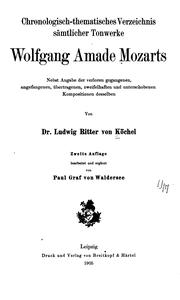
Köchel's 1862 thematic catalogue, the source of every K number, in the German original — our record is an early twentieth-century edition. Included so the reference apparatus is visible rather than assumed; you do not read this, you look things up in it, and it has been revised repeatedly since.
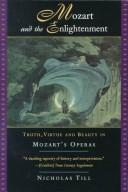
Till reads the operas as arguments about truth, virtue and power in late eighteenth-century thought, which is the context both the biographies and the musical studies tend to leave implicit. The right final book because it puts the work back into an argument about ideas.