Best Books on Virtual and Augmented Reality, in Reading Order
Virtual reality is unusual among computing subjects in that its hardest constraints are perceptual rather than computational — presence, latency and simulator sickness decide whether a system works at all. This path opens with what immersion does to people, moves into the design literature on interaction and comfort, crosses into augmented reality where the registration problem replaces the presence problem, and closes with the geometry, optics and tracking math underneath both.
What immersion does to people
BeginnerUnderstand presence, embodiment and the measured psychological effects of immersive media, and be able to judge the industry's claims about where this is going.
▸ Study plan for this stage
Pace: Four to five weeks for about 900 pages, none of it technical. Dawn of the New Everything (360 pages) takes two weeks and is a strange hybrid — memoir interleaved with a running series of definitions of virtual reality — so read it for the definitions as much as the story. Experience on Demand (304 p
- Presence as the field's central construct, split usefully into the place illusion of being somewhere and the plausibility illusion that what is happening is really happening
- Lanier's running list of definitions of virtual reality, which is a serious argument in disguise — the technology has no single stable definition and each candidate reveals what someone wanted it for
- Embodiment and body transfer: the readiness with which the brain accepts a virtual body, and Lanier's homuncular flexibility, the finding that people can learn to control bodies unlike their own
- The Proteus effect from Bailenson's lab — behaviour shifting to match the avatar a person is given — which is the most robust and most unsettling social finding in the field
- Bailenson's empathy and behaviour-change results together with his honesty about where effects are small, short-lived, or fail to replicate, which is the evidence base the design literature later leans on
- Bailenson's own rule of thumb that VR should be used when reality is impossible, dangerous, expensive or counterproductive — and not otherwise, which is the most useful sentence in the stage
- Ball's infrastructure argument: the constraints on a persistent shared virtual world are networking, compute, standards, interoperability and payment rails, not headset design
- Interoperability as a governance problem rather than a technical one, and Ball's clear-eyed treatment of why the incentives run against it
- What is presence, and what is the difference between the place illusion and the plausibility illusion?
- Pick three of Lanier's definitions of VR and say what each one emphasises and what it leaves out.
- What is the Proteus effect, and what experimental design established it?
- Which of Bailenson's findings are strongest, and which does he himself flag as weak or unreplicated?
- According to Ball, what actually stands between us and a persistent interoperable virtual world? Rank his constraints by difficulty.
- Write your own definition of virtual reality in one sentence, then compare it against Lanier's list and note which of his it most resembles. The exercise reveals your own assumptions about what the technology is for.
- Take three of Bailenson's studies and, for each, write down the manipulation, the measure and the effect size if given. Doing this converts a popular book into an evidence review.
- Apply Bailenson's rule to five VR applications you have seen or read about, and judge each as justified or not. Most will not be, and that is the point.
- Sketch Ball's constraint stack — network, compute, standards, payments, hardware — and mark which layer each of three current products is actually limited by.
Next up: Knowing what immersion does to people is what makes the design literature's rules read as consequences rather than as conventions, which is exactly how the next stage presents them.

Part memoir, part definition-hunting essay by the person who named the field. It is the best account of what VR is actually for, written by someone with no interest in selling you a headset.

Two decades of experimental results from Stanford's VR lab on empathy, training, fear and behaviour change — including where the effects fail to replicate. This is the evidence base the design books later lean on.

The clearest analysis of the industry, standards and infrastructure question, stripped of hype. Read third for the commercial and technical context around everything that follows.
Designing for presence and comfort
IntermediateDesign VR interactions that people can use for an hour without discomfort — selection and manipulation, locomotion, interface placement — and diagnose why a given experience induces sickness.
▸ Study plan for this stage
Pace: Four to six months, and this is the working stage. The VR Book is the core text and deserves two to three months read carefully, with the perception and adverse-health chapters worked rather than skimmed. 3D User Interfaces (512 pages) follows over two months and is more systematic and more empirica
- The perceptual pipeline as the actual design substrate: depth cues and their relative weights, the field of view, interpupillary distance, and the vergence-accommodation conflict that no current stereoscopic display resolves
- Motion-to-photon latency as the field's hardest number — the total delay from head movement to the corresponding photons, which must stay in the low tens of milliseconds and which every other design choice is subordinate to
- Simulator sickness and its competing explanations: sensory conflict, postural instability, and the evolutionary poison hypothesis, none of which is fully settled and all of which predict some of the data
- Vection as both the goal and the hazard — visually induced self-motion is what makes locomotion feel real and is also the main thing that makes people ill
- Locomotion techniques and their comfort trade-offs: teleportation, snap turning, physical walking with redirection, and continuous artificial motion, ranked by sickness risk against ranked by presence
- The selection and manipulation techniques Bowman's group formalised and compared empirically — virtual hand, ray-casting, the Go-Go extension and HOMER — with the reach and precision trade-off that decides between them
- System control and symbolic input as the genuinely unsolved problems of spatial interfaces, since menus and text entry both work badly in three dimensions
- Jerald's iterative design process — define, make, learn, repeat — with user testing as the only reliable comfort measurement, since designers habituate and stop noticing sickness
- What is the vergence-accommodation conflict, and why does it persist in current headsets?
- What is the target motion-to-photon latency, and what happens perceptually as it rises?
- State the three main theories of simulator sickness and say what each one predicts that the others do not.
- Rank four locomotion techniques by sickness risk and by presence. Where do the two rankings conflict, and how do you decide?
- When would you choose ray-casting over a virtual hand, and what does the Go-Go technique change?
- Why is text entry hard in VR, and what are the current partial solutions?
- Take an existing VR experience and write a comfort audit against Jerald's adverse-health chapter: locomotion method, frame rate, acceleration profile, interface placement, session length. Then name the single change most likely to help.
- Implement or storyboard the same selection task three ways — virtual hand, ray-casting, Go-Go — and note where each fails: near objects, far objects, small targets, cluttered scenes.
- Run a simple within-subjects comparison on two locomotion techniques using a standard simulator sickness questionnaire, on yourself and a few others. The methodology matters more than the sample size here.
- Design a menu for a VR application three times — head-referenced, hand-referenced and world-referenced — and write a paragraph on which suits which task and why.
- Take one non-game application from Sherman and Craig and write 300 words on which of Bowman's interaction techniques it needs and which are irrelevant to it.
Next up: Everything so far assumed you control the user's entire visual world; augmented reality removes that assumption, and almost every design constraint changes as a result.

The core design text: perception, presence, adverse health effects, interaction patterns and an actual iterative design process. If you only work through one book on this path, it is this one.
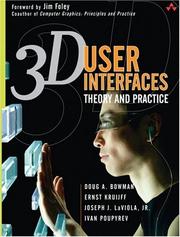
The systematic treatment of spatial interaction — selection, manipulation, travel, wayfinding, system control — with the empirical comparisons behind each technique. Read after Jerald, who summarises what this covers in depth.
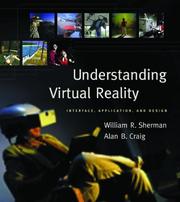
The broadest survey of VR systems, applications and design across domains, useful for seeing how the same principles play out in training, medicine and visualisation rather than only in games.
Augmented reality
IntermediateUnderstand what changes when virtual content must be registered to the real world — displays, calibration, tracking and the design consequences of not controlling the user's environment.
▸ Study plan for this stage
Pace: Three to four months for about 1,115 pages. Augmented Human (139 pages) is short and design-led and reads in under a week — take it as orientation. Practical Augmented Reality (448 pages) takes a month and is the hardware survey. Augmented Reality by Schmalstieg and Höllerer (528 pages) is the stand
- Registration as AR's central problem, replacing presence as VR's: virtual content must stay locked to real geometry, and error is measured in millimetres and milliseconds rather than in subjective quality
- Static and dynamic registration error, with dynamic error caused mainly by latency — which is why AR's latency budget is tighter than VR's, not looser
- Optical see-through versus video see-through, and the fundamental trade: optical preserves the real world at full fidelity but makes calibration and occlusion hard, video makes both easy but degrades everything you see
- Calibration, including the classic single-point active alignment method for optical see-through displays, and the reason per-user calibration is unavoidable when the eye position matters
- Tracking approaches: marker-based, natural feature, model-based, and SLAM for simultaneous localisation and mapping, with the trade between robustness, preparation cost and drift
- Sensor fusion of inertial and visual data — inertial gives low latency and drifts, vision gives absolute reference and is slow and fragile, and every practical system combines them
- Visual coherence: occlusion of virtual objects by real ones, consistent lighting and shadows, and the fact that getting these wrong destroys the effect faster than any amount of polygon count fixes it
- Papagiannis's design argument that AR is a distinct medium rather than VR with passthrough enabled, since the user's real environment is uncontrolled, variable and demands attention
- What is registration, and how does registration error decompose into static and dynamic components?
- Compare optical and video see-through displays on calibration, occlusion, latency and fidelity. Which would you choose for a surgical application, and why?
- How does marker-based tracking differ from SLAM in what it requires and what it delivers?
- Why does combining inertial and visual tracking work better than either alone? What does each contribute?
- Why does incorrect occlusion break the illusion so severely, and what techniques address it?
- What does Papagiannis identify as design considerations unique to AR that do not arise in VR?
- Measure registration error yourself in any AR application you can run: place a virtual object against a real edge, move your head, and observe the swim. Then estimate the latency implied by the displacement at a known head speed.
- Work through the calibration procedure in Schmalstieg and Höllerer on paper for an optical see-through display, and write down every parameter that must be estimated.
- Take one AR use case and specify its tracking requirements: accuracy, update rate, working volume, and whether the environment can be prepared. Then choose an approach and defend it.
- Write 500 words on why an AR interface cannot simply reuse a VR interface, citing three specific constraints from Papagiannis and three from Schmalstieg and Höllerer.
Next up: Two stages of rules and techniques rest on quantities — latency, projection geometry, tracking accuracy — that you have so far taken on trust, and the final stage derives them.

A short, design-led introduction to AR as a medium, strong on use cases and on why AR is not simply VR with the passthrough turned on. The right entry before the technical texts.

A grounded survey of the hardware — optics, displays, sensors, haptics — and the human perception that constrains it. Read second, for what the devices can and cannot physically do.

The field's standard textbook: computer vision tracking, registration, calibration, visual coherence and authoring, treated rigorously. The most technically demanding book in this stage, and the one to finish with.
The math and the machine
IntermediateDerive the geometry, optics and tracking mathematics that determine latency and registration accuracy, so you can reason about system performance rather than tune it by feel.
▸ Study plan for this stage
Pace: Four to six months. LaValle's Virtual Reality is the core text of the stage, freely available from the author, and deserves three to four months worked with a pencil — it is a real course with real mathematics, not a survey. Virtual Reality Technology (442 pages) takes a month or two and is an engin
- Rigid body transforms done properly: rotation matrices, Euler angles and their gimbal problems, quaternions, and the chain of transforms from tracked device to eye
- The viewing and projection pipeline for a head-mounted display, including the asymmetric frustum each eye actually gets and the interpupillary distance that parametrises it
- Optical distortion and its correction: barrel and pincushion, chromatic aberration, and the pre-distortion applied in the renderer so the lens produces a rectilinear image
- Visual physiology as engineering input — photoreceptor distribution, acuity falling off with eccentricity, and the critical flicker fusion frequency — which is what sets resolution and refresh requirements and what makes foveated rendering possible
- The vestibular system and the visual-vestibular conflict expressed quantitatively, so that the comfort rules from stage two become predictions rather than folklore
- Tracking mathematics: inertial measurement units, integration drift, complementary and Kalman filtering, and the sensor fusion that yields a usable six-degree-of-freedom pose
- Latency reduction techniques including prediction and post-render reprojection, and the honest limits of each — prediction fails on unpredictable motion and reprojection cannot invent occluded geometry
- System architecture and the end-to-end latency budget accounted stage by stage — sensing, fusion, application, rendering, scanout, display persistence — which is the single most useful engineering artefact in the field
- Write the full transform chain from a tracked headset pose to a vertex in eye coordinates for one eye, and identify where interpupillary distance enters.
- Why does the renderer pre-distort the image, and how would you determine the distortion coefficients for a given lens?
- Derive or state the relationship between angular resolution, display resolution and field of view. What does that imply for a headset matching human acuity?
- Explain why integrating accelerometer data alone gives an unusable position estimate, and what sensor fusion adds.
- What does post-render reprojection fix, and what artefacts does it introduce?
- Account for the end-to-end latency budget of a modern headset stage by stage. Which stage dominates?
- Derive the eye-space projection matrix for one eye of an HMD by hand, including the asymmetric frustum, and check it against a real headset's published parameters.
- Implement or simulate a simple complementary filter fusing accelerometer and gyroscope data, and plot the drift with and without fusion. One afternoon, and it makes tracking concrete.
- Build a latency budget spreadsheet for a hypothetical system with a line per stage. Then work out what each stage's improvement would buy you in total motion-to-photon time.
- Compute the required display resolution to match foveal acuity over a hundred-degree field of view, then compute it again under a foveated rendering scheme. The ratio between the two is the case for eye tracking.
- Finish by returning to one comfort rule from stage two and deriving it from LaValle's perceptual and latency material. If you can show why the rule is what it is, the path has done its job.
Next up: This is the end of the path — the psychology, the design literature, augmented reality and the mathematics underneath both — and the natural next step is building something: a small application taken from interaction design through to a measured latency budget, with every book above as the reference.

The rigorous course from a researcher who worked on the Oculus tracking system: transforms, projection, optical distortion, visual and vestibular perception, tracking and filtering. It explains mathematically why the comfort rules in stage two are what they are.

The engineering reference on input and output hardware — trackers, haptic interfaces, rendering pipelines and system architecture. A fitting close: the physical machinery beneath every perceptual effect the path began with.
Discussion
Keep reading
Paths that share books, cover the same subject, or open a related topic.


