Valerian and Laureline Reading Order: Where to Start the French Sci-Fi Comic
Pierre Christin and Jean-Claude Mezieres began Valerian in Pilote in 1967 and finished it in 2010, twenty-one albums later. It is the series that taught European comics what a lived-in galaxy looks like, and the debt owed to it by Star Wars and by Luc Besson's The Fifth Element — for which Mezieres actually did design work — is obvious enough that it has been argued in print. Read in order it is also a strange political document: Valerian starts as a straightforward agent of a galaxy-spanning Terran empire and is gradually written into someone who no longer believes in it, while Laureline, introduced as a medieval peasant girl in album one, ends up the more competent of the pair. This path takes the Cinebook English albums, which are the editions our catalogue holds individually. Be warned that it holds them unevenly: the first six albums plus the eighth and ninth resolve, and nothing from album ten onward does, under either author's name, across repeated slow queries. So this path covers the first third of the series properly and tells you how to get the rest.
The Opening Albums
BeginnerStart the series where it starts and get used to its conventions — the Spatiotemporal Service, Galaxity, time travel treated as routine bureaucracy. By the end you should be able to explain how Laureline joins the series and why the first album is set in a drowned New York.
▸ Study plan for this stage
Pace: Three albums, and our records carry no page count for any of the three, so plan by album rather than by length — a Cinebook Valerian album is a standard Franco-Belgian forty-eight-page hardback, which is one unhurried sitting. Three sittings, a week with time to look at the pages properly. Read The
- The Spatiotemporal Service and Galaxity — time travel administered as routine government work
- How Laureline joins the series: a medieval peasant girl brought forward, which is why she owes the Service nothing
- The drowned twentieth-century New York of album one and the rogue-scientist chase it stages
- The Empire of a Thousand Planets as the first genuinely alien society in the run, with its own castes and politics
- Mezieres's design density, and why later designers took notes from it
- The hollow-world premise of album three and its paired matriarchal and patriarchal cities
- The visible improvement in the art across three albums, which is fast enough to watch
- How does Laureline enter the series, and what does her origin let her say to Valerian that a colleague could not?
- Why is the first album set in a flooded New York rather than anywhere in the Terran empire?
- What are the conventions of the Spatiotemporal Service — what can agents do, and what are they forbidden?
- In The Empire of a Thousand Planets, what makes the alien society work as a society rather than as scenery?
- Album three splits a world into two opposed cities. What is the argument, and does the album take a side?
- Pick one wide panel from album one and one from album three and list everything in the background of each. The difference in count is the measure of how fast Mezieres developed.
- Write down the rules of time travel as the first two albums state them, then keep the list open — later albums bend several of them and the bending is deliberate.
- Track who solves the problem in each of the three albums. Note how often it is not Valerian.
- Before buying, check whether the copy in front of you is titled The Land Without Stars or World Without Stars, and confirm against the interior that it is the same album.
Next up: With the Service, the pair and the visual conventions established, you are ready for the middle albums, where Christin stops using that apparatus straight and starts arguing with it.
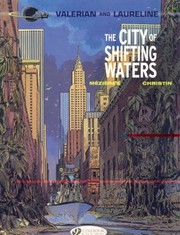
The first album, and the one that introduces the pair, the Service and the flooded twentieth-century New York they chase a rogue scientist through. It is also the roughest artwork in the series; do not judge Mezieres on it.

The second album and the point at which the series becomes what it is famous for: a genuinely alien society with its own politics, castes and secrets, drawn in the density that later made Star Wars designers take notes.
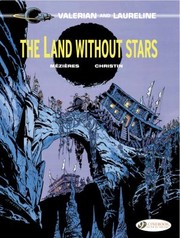
Album three, a hollow-world story with a war between two matriarchal and patriarchal cities. Note the catalogue quirk: this album resolves under Mezieres and not under Christin, and it also exists here as a separate record titled World Without Stars, which is the earlier English release of the same album — buy one, not both.
The Series Finds Its Politics
IntermediateRead the middle albums where Christin's writing turns openly satirical and Valerian's loyalty to the Terran empire starts to fail. You should be able to describe the colonial argument running through Alflolol and how it reframes everything the pair did in the first three albums.
▸ Study plan for this stage
Pace: Three albums. We hold no recorded length for Welcome to Alflolol (Valerian Spatiotemporal Agent); Birds of the Master is 48 pages and Ambassador of the Shadows is 50, so the two we can measure come to 98 pages between them and the third is another album of the same order. Three sittings again, a wee
- Christin's turn to open satire, and the shift from adventure plots to political ones
- Alflolol's colonial argument: prior occupancy against industrial development, with Valerian on the wrong side of it
- Willing servitude in Birds of the Master, and why the album makes the arrangement comfortable before it makes it horrifying
- Point Central as a design achievement and as a political proposition — coexistence engineered sector by sector
- Laureline as the competent one, established here rather than gradually
- Valerian's loyalty to the Terran empire beginning to fail, tracked through what he does not say
- The album format as a constraint: a complete argument in roughly fifty pages
- State the argument of Welcome to Alflolol in your own words, and say which side the album is on and how you know.
- How does Alflolol change your reading of the first three albums, in which the Service is simply the employer?
- In Birds of the Master, what keeps the population in place, and what does the album suggest about arrangements closer to home?
- Ambassador of the Shadows removes Valerian for most of its length. What does that reveal about how the series had been distributing competence?
- What does Point Central assume about how species coexist, and where does the album let that assumption fail?
- Read Alflolol and Birds of the Master back to back in one sitting, then write the sentence that connects them. They were built as a pair and the connection is not stated in either.
- Count the panels in Ambassador of the Shadows in which Valerian appears. Compare with album two.
- Take one page of Point Central and identify every distinct species design on it, then find where each is used again in the plot rather than as decoration.
- Go back to the Terran officials in album two and reread their scenes after Alflolol. Note the lines that now read differently with nothing on the page having changed.
Next up: Christin has now turned the series against its own premise; the final stage follows that as far as our catalogue holds it, and tells you exactly where it stops.

The best album of the early run and the one to convince a sceptic: an indigenous people returns to a planet Earth has industrialised in their absence, and the story refuses to let Valerian off the hook. Catalogued as Welcome to Alflolol (Valerian Spatiotemporal Agent).

Album five, a small closed story about a population kept docile by a creature that feeds on them, and the sharpest thing in the series about willing servitude. Read it directly after Alflolol; the two are a pair.

Album six and the most famous single volume — Point Central, a space station where hundreds of species live in adjoining sectors, is the image everything from Besson onward has borrowed. It is also the album in which Laureline carries the plot alone.
As Far as the Catalogue Goes
IntermediateRead the last two albums that resolve here, and know exactly where this path stops and what is missing, so you can go and find the rest deliberately rather than discovering the gap mid-series.
▸ Study plan for this stage
Pace: Three books, 280 pages: Heroes of the Equinox at 48, Chatelet Station Vol. 9 at 48, and the collected Valerian at 184. Read the two albums first, one sitting each, then treat the collection as a separate decision rather than as a fourth sitting. Before that, know about the gap: album seven, On the F
- The self-contained album versus the multi-part arc, and the point in the run where the series switches
- Heroes of the Equinox as comedy — the series' capacity to send up its own hero
- The Paris metro opening of album nine: Earth used as a setting rather than as an origin
- The long arc against Galaxity, and the reversal of everything the Service meant in the opening albums
- How to read a series across two incompatible editions — single albums against an integral collection
- The difference between a gap you know about, like album seven, and one you discover mid-story
- Where the series actually finishes, and what a reader has to do to get there from here
- What does Heroes of the Equinox do to Valerian as a hero figure, and could the series have made that joke in album two?
- Album nine begins in the Paris metro. Why does the series return to Earth at this point in its arc?
- What has become of Valerian's belief in the Terran empire by album nine, tracked from Alflolol onward?
- Given that album seven is missing here, what do you actually lose — and how would you check?
- How would you assemble the rest of the series in reading order from the integral edition, and where would the numbering trip you up?
- Before starting Chatelet Station, write down what you expect the two-part story to do. You will not get the second half from this list, so the note is the closest thing to a resolution available here.
- Compare a page of album nine with a page of album one. Everything except the two leads has changed; itemise what.
- Work out, from the integral edition's contents listing, exactly which albums it covers and which of the twenty-one remain outstanding. Write the shortfall down as a shopping list before you buy anything.
- Reread the closing pages of Heroes of the Equinox and Alflolol together, and say what the series thinks a hero is by this point.
Next up: This path ends here by necessity rather than by design: you have the first third of the series in order and a clear account of what the collected edition and outside sources have to supply for the rest.

Album eight, a contest between four champions from four worlds, and the funniest thing in the run. Album seven, On the False Earths, does not resolve in our catalogue under either author's name across repeated slow queries, so there is a genuine gap between this and the previous stage — it is a self-contained story and skipping it costs you little.

Album nine, the first half of a two-part story that starts in the Paris metro, and the beginning of the long arc that will eventually undo Galaxity itself. Filed here as Chatelet Station Vol. 9. Its conclusion, Brooklyn Line, Terminus Cosmos, does not resolve here, so this album ends on a cliffhanger you cannot follow within this list.

The way to read albums ten through twenty-one, none of which resolve individually in our catalogue. This is the Cinebook integral edition, which gathers the albums several at a time; our record for it displays as the bare title Valerian. Do not mix it with the single albums above, since the two editions number their contents differently — treat it as the route to the rest of the series once you know you want it.