Understand your cat
This four-stage curriculum takes a beginner from "why does my cat do that?" all the way to applying cutting-edge feline science to solve real problems and deepen the human-cat bond. Each stage builds on the last: you first learn to read your cat's body and mind, then understand its evolutionary wiring, then tackle specific behavioral challenges with evidence-based tools, and finally reach an advanced appreciation of feline cognition and welfare.
Foundations: Learning to Read Your Cat
BeginnerBuild a working vocabulary of feline body language, communication signals, and basic needs so every later book makes immediate practical sense.
▸ Study plan for this stage
Pace: 6–8 weeks total: Weeks 1–4 cover "Think Like a Cat" (~25–30 pages/day, reading in the chapter-by-chapter order Johnson-Bennett intended); Weeks 5–8 cover "Cat Sense" (~20–25 pages/day, which is denser science writing — allow extra time to pause and take notes on research findings).
- Feline body language vocabulary — the full signal set: tail position, ear orientation, whisker spread, slow blink, piloerection, and postural tension as described by Johnson-Bennett in 'Think Like a Cat'
- The 'cat's-eye view' mindset: Johnson-Bennett's core argument that misreading cats stems from projecting human emotions onto feline behavior rather than interpreting signals on the cat's own terms
- Territorial and resource needs: how cats define, mark, and defend space (vertical territory, scent marking, scratching) as a foundation for understanding stress and conflict
- The role of play as predatory rehearsal — Johnson-Bennett's explanation of why structured interactive play satisfies hardwired hunting sequences and prevents behavioral problems
- Evolutionary origins of the domestic cat: Bradshaw's account in 'Cat Sense' of how Felis silvestris lybica became Felis catus, and why domestication is shallower and more recent in cats than in dogs
- The cat's ambiguous social nature: Bradshaw's research showing cats are facultatively social (not obligately so), which explains why individual cats vary so widely in friendliness and tolerance of other cats or humans
- Sensory world of the cat: Bradshaw's coverage of olfactory communication (pheromones, Flehmen response, scent glands), hearing range, and tapetum lucidum vision — understanding what cats actually perceive
- The human–cat bond as a work-in-progress: Bradshaw's argument that cats have not yet fully adapted to living with humans and that owners must actively shape positive associations rather than assuming affection is automatic
- After reading 'Think Like a Cat', can you describe at least six distinct body-language signals and explain what emotional or motivational state each one most likely indicates in context?
- Johnson-Bennett emphasizes thinking from the cat's perspective — what specific daily husbandry or interaction mistakes does she identify as most commonly misunderstood by owners, and why do they occur?
- Based on Bradshaw's evolutionary account in 'Cat Sense', why is the domestic cat's social behavior so much more variable and context-dependent than that of dogs, and what does this mean for how owners should set expectations?
- How do the sensory capabilities Bradshaw describes (especially olfaction and hearing) change the way you would set up a cat's environment or interpret behaviors like head-rubbing, chin-marking, and chattering at birds?
- Both books touch on cat-to-cat relationships — how do Johnson-Bennett's practical guidelines for multi-cat households connect to the underlying social biology Bradshaw explains? Where do the two authors' perspectives reinforce each other?
- What is one claim or recommendation from 'Think Like a Cat' that 'Cat Sense' either provides scientific support for, or complicates with new evidence? How do you reconcile the two?
- Body-language photo journal: Over two weeks, photograph or sketch your cat (or a friend's cat) in at least 10 different postures. Label each image using Johnson-Bennett's signal vocabulary (tail, ears, eyes, whiskers, body posture) and write a one-sentence interpretation. Review and revise labels after finishing 'Cat Sense'.
- Signal log during play sessions: Run two 10-minute interactive play sessions per week using a wand toy (as Johnson-Bennett recommends). Keep a running log of which predatory sequence stages you observe — stalk, chase, pounce, grab, kill bite — and note when the cat disengages and what signals preceded it.
- Environmental audit: Using Johnson-Bennett's checklist of territorial needs, walk through your home and map vertical space, hiding spots, litter box placement, feeding stations, and scratching surfaces. Identify at least three gaps and propose concrete changes.
- Scent-world experiment: After reading Bradshaw's olfaction chapter, introduce a novel scent object (a worn sock from a stranger, a piece of catnip, a citrus peel). Observe and write down every behavior the cat exhibits in the first five minutes, specifically noting Flehmen response, head-rubbing, avoidance, or investigation patterns.
- Comparative reading note: Create a two-column document. In column one, list Johnson-Bennett's practical 'rules' or recommendations. In column two, find the corresponding biological or evolutionary explanation from Bradshaw. Aim for at least eight matched pairs — this directly builds the 'why behind the what' habit needed for later stages.
- Reflection essay (one page): Write a short personal essay answering: 'What is one behavior my cat (or a cat I know) does that I previously misread, and how do these two books together change my interpretation?' This consolidates both the vocabulary and the mindset shift that is the core goal of this stage.
Next up: Mastering Johnson-Bennett's behavioral vocabulary and Bradshaw's evolutionary 'why' gives you the interpretive lens to engage productively with more specialized or advanced texts — whether on feline health, training, or inter-species relationships — because you will already know what normal, motivated, and stressed cat behavior looks like from the inside out.
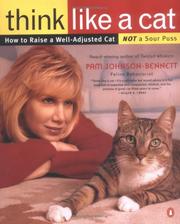
The ideal starting point: a warm, jargon-free guide to seeing the world from your cat's perspective, covering body language, territory, and daily routines before anything else.

A zoologist translates peer-reviewed science into plain language, explaining how cats evolved their unique social style — essential context for understanding every behavior you'll study next.
Going Deeper: The Feline Mind and Emotions
BeginnerUnderstand what cats actually think and feel — their emotional lives, social needs, and how they perceive humans — moving from observation to genuine comprehension.
▸ Study plan for this stage
Pace: 6–8 weeks total. Week 1–4: "The Inner Life of Cats" by Thomas McNamee (~20–25 pages/day, reading reflectively and journaling observations about your own cat). Week 5–8: "The Trainable Cat" by John W. S. Bradshaw (~25–30 pages/day, pausing after each chapter to attempt one practical exercise with you
- Feline emotional range: McNamee argues cats experience genuine emotions — fear, affection, curiosity, grief — not mere instinct-driven reactions, and understanding this reframes every interaction you have with your cat.
- The science of cat cognition: cats have a working memory, form mental maps of their territory, and solve problems — McNamee draws on ethology and neuroscience to show their minds are far more complex than popular culture suggests.
- Attachment and the human–cat bond: McNamee explores how cats form real, individualized attachments to specific people, distinct from simple dependency on a food source.
- Cat social structure and solitary vs. social tendencies: Bradshaw explains that cats are a facultatively social species — capable of sociality but not hardwired for it — which explains why each cat's tolerance for other cats and humans varies so widely.
- The role of early socialization (the 'sensitive period'): Bradshaw identifies the 2–7 week window in kittenhood as critical for shaping a cat's lifelong comfort with humans, other animals, and novel environments.
- How cats perceive and communicate with humans: Bradshaw details the unique communicative behaviors cats have evolved specifically for interacting with people (slow blinks, upright tails, chirps), behaviors rarely used with other cats.
- Positive reinforcement and reward-based learning: 'The Trainable Cat' demonstrates that cats learn efficiently through reward-based methods, debunking the myth that cats are untrainable, and shows how training reduces stress and builds trust.
- Stress, anxiety, and emotional wellbeing: Bradshaw frames training and environmental enrichment not as tricks but as tools for improving a cat's emotional health — connecting directly back to McNamee's portrait of the feeling cat.
- According to McNamee, what evidence suggests cats experience emotions like grief or affection, and how does this challenge the view of cats as purely instinct-driven animals?
- How does Bradshaw define the 'sensitive period' of socialization, and what are the lasting consequences for cats who receive little human contact during those early weeks?
- In what ways do cats communicate differently with humans than with other cats, and what does Bradshaw say this tells us about how cats have adapted to living alongside people?
- McNamee describes the human–cat attachment bond — how does Bradshaw's framework of reward-based training either support or deepen that bond in practice?
- What does Bradshaw mean when he calls cats 'facultatively social,' and how should this understanding change the way an owner introduces a second cat into the home?
- How do both authors connect a cat's emotional wellbeing to its physical environment, and what practical changes do they suggest an owner can make?
- Emotion diary (McNamee): For two weeks while reading 'The Inner Life of Cats,' keep a daily log of 3–5 specific behaviors your cat displays. For each, write one sentence guessing the underlying emotional state and one sentence noting what in the environment triggered it. Revisit entries at the end to spot patterns.
- Slow-blink experiment (Bradshaw): Practice the slow-blink communication technique Bradshaw describes on at least three separate occasions. Record whether your cat reciprocates, looks away, or approaches — note the context (time of day, your posture, distance) each time.
- Socialization timeline reflection: Draw a simple timeline of your cat's first 12 weeks of life based on what you know (or can find out from a shelter or breeder). Mark the sensitive period Bradshaw identifies and annotate what experiences your cat likely did or did not have. Use this to hypothesize why your cat reacts the way it does to strangers or other animals.
- First training session (Bradshaw): Using only a high-value treat and Bradshaw's positive-reinforcement principles, teach your cat one simple behavior (e.g., 'sit' or 'touch a target'). Limit sessions to 3–5 minutes. Log what reward worked, how many repetitions it took, and your cat's body language throughout.
- Environmental audit: Walk through your home with Bradshaw's concept of feline stress and enrichment in mind. List five things that may be causing low-level anxiety (e.g., a litter box near a noisy appliance) and five enrichment additions you could make (e.g., a window perch, a puzzle feeder). Implement at least two changes and observe any behavioral shifts over one week.
- Synthesis essay: After finishing both books, write a one-page personal reflection answering: 'How has my understanding of what my cat thinks and feels changed, and what is one concrete thing I will do differently as a result?' This bridges reading to lived practice.
Next up: By internalizing the feline emotional world through McNamee and gaining the practical communication and training toolkit from Bradshaw, the reader is now equipped to move from understanding cats in general to diagnosing and responding to the specific behavioral challenges and health signals their individual cat presents — the natural focus of a more advanced stage.

Synthesizes ethology and personal narrative to explore feline emotion and cognition, bridging the gap between popular reading and the science covered in the next book.

Reveals that cats are far more trainable — and socially flexible — than assumed, reframing the human-cat relationship and introducing reward-based thinking you'll need for the problem-solving stage.
Problem-Solving: Litter Boxes, Scratching, and Stress
IntermediateApply behavioral science to diagnose and fix the most common feline problems — inappropriate elimination, destructive scratching, aggression, and anxiety — using humane, evidence-based methods.
▸ Study plan for this stage
Pace: 8–10 weeks total: Week 1–3 — "Cat Vs. Cat" (~25–30 pages/day, including re-reading conflict and resource sections); Week 4–6 — "Decoding Your Cat" (~20–25 pages/day, pausing to take notes on each behavior chapter's diagnostic framework); Week 7–10 — "Total Cat Mojo" (~25–30 pages/day, with active ho
- Resource management and the 'N+1 rule' for litter boxes, food stations, and resting spots in multi-cat households (Cat Vs. Cat)
- Reading feline social hierarchies and distinguishing play aggression from genuine conflict to intervene appropriately (Cat Vs. Cat)
- Evidence-based diagnosis of inappropriate elimination — differentiating medical causes, substrate aversion, location aversion, and inter-cat stress before assuming behavioral origin (Decoding Your Cat)
- The role of the veterinary behaviorist's SOAP-style assessment: how to observe, document, and describe problem behaviors precisely rather than anthropomorphically (Decoding Your Cat)
- Scratching as a normal, necessary behavior — vertical vs. horizontal preferences, scent-marking function, and how to redirect rather than punish (Decoding Your Cat & Total Cat Mojo)
- Jackson Galaxy's 'Mojo' framework: understanding the Cat Superhighway, ownership of space, and how environmental enrichment directly reduces anxiety-driven problem behaviors (Total Cat Mojo)
- Humane behavior modification tools — counter-conditioning, desensitization, and management barriers — versus punishment-based methods and why the latter backfire (Decoding Your Cat & Total Cat Mojo)
- Stress-stacking and threshold concepts: recognizing when a cat is over-threshold and how cumulative stressors produce seemingly sudden problem behaviors (Total Cat Mojo & Decoding Your Cat)
- According to Cat Vs. Cat, what is the minimum litter box formula for a multi-cat home, and what variables — box type, substrate, location, and social pressure — should you audit first when a cat stops using the box?
- Decoding Your Cat emphasizes ruling out medical causes before behavioral ones. What specific medical conditions can mimic or cause inappropriate elimination, destructive scratching, or sudden aggression, and how does this change your first step as a cat owner?
- How does Jackson Galaxy's concept of the 'Cat Superhighway' in Total Cat Mojo explain why a cat that seems destructive or anxious may simply be a cat without adequate vertical space and territorial ownership — and what is the practical fix?
- Using the frameworks from all three books, how would you design a step-by-step intervention plan for a two-cat household where one cat has begun eliminating outside the litter box after a new cat was introduced?
- Decoding Your Cat describes counter-conditioning and desensitization as the gold-standard tools for fear and aggression. How do these techniques work mechanically, and why does punishment reliably make fear-based aggression worse?
- What distinguishes 'redirected aggression' from 'inter-cat aggression' as described in Cat Vs. Cat, and why does misidentifying the trigger lead owners to apply the wrong solution?
- Litter Box Audit (Cat Vs. Cat): Using Johnson-Bennett's resource checklist, physically audit every litter box in your home — count, size, substrate type, location, proximity to food/water, and sightlines. Map them on a floor plan and identify any that violate the N+1 rule or create ambush vulnerability for a lower-status cat. Propose at least one concrete change.
- Behavior Log (Decoding Your Cat): For one full week, keep a structured observation journal modeled on the book's diagnostic approach — recording the antecedent, behavior, and consequence (ABC) for any problem behavior you observe (or simulate with a friend's cat). Practice describing behaviors in neutral, observable terms rather than emotional ones (e.g., 'cat eliminated on bathmat' not 'cat was s
- Cat Superhighway Design Sprint (Total Cat Mojo): Draw a to-scale sketch of one room in your home and redesign it using Galaxy's Cat Superhighway principles — add or rearrange vertical climbing paths, identify and eliminate 'dead ends,' designate owned territories for each cat, and mark resource locations. If possible, implement at least one physical change (a cat tree, a wall shelf, a repositioned
- Scratcher Preference Test (Decoding Your Cat & Total Cat Mojo): Set up a temporary experiment offering your cat at least two scratching surfaces — one vertical sisal post and one horizontal corrugated cardboard pad — placed near a location the cat already scratches inappropriately. Observe and record which surface, angle, and location the cat prefers over 5–7 days, then use that data to permanentl
- Desensitization Role-Play (Decoding Your Cat): Choose a mild fear trigger your cat has (carrier, vacuum, strangers) and design a written desensitization ladder with at least 6 graduated steps, pairing each step with a high-value treat. Execute the first 2–3 steps and document the cat's body language response at each stage using the stress-signal vocabulary from Decoding Your Cat.
- Conflict vs. Play Identification Exercise (Cat Vs. Cat): Using YouTube videos of multi-cat interactions (or your own cats), practice classifying each interaction as play, mild conflict, or serious aggression using Johnson-Bennett's behavioral cues — role reversals, soft vs. hard bites, piloerection, vocalizations, and post-interaction behavior. Write a one-paragraph assessment for at least three c
Next up: Mastering diagnosis and humane intervention for common problems builds the behavioral literacy and observational precision needed to tackle the next stage's deeper topics — such as feline health-behavior intersections, advanced multi-pet dynamics, or life-stage behavioral changes — where the same evidence-based mindset is applied to more complex or chronic situations.
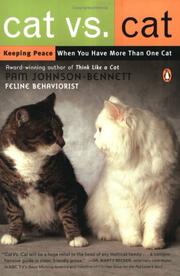
Tackles multi-cat tension — a root cause of litter box and scratching problems — giving concrete environmental and behavioral strategies that require the foundational knowledge built so far.

Written by board-certified veterinary behaviorists, this is the most scientifically rigorous practical guide available, with dedicated chapters on elimination problems, scratching, and fear — exactly the issues the learner wants to solve.

Provides a holistic, environment-first framework for building feline confidence and eliminating problem behaviors, complementing the clinical precision of the previous book with actionable home redesign strategies.
Advanced: Feline Cognition, Welfare, and the Science Frontier
ExpertEngage with the latest research on how cats think, remember, and relate to humans, and use that knowledge to optimize long-term welfare and a genuinely enriched life together.
▸ Study plan for this stage
Pace: 6–8 weeks total: Weeks 1–3 on "The Lion in the Living Room" (~25–30 pages/day, including pausing to take notes on evolutionary arguments); Weeks 4–7 on "CatWise" (~20–25 pages/day, reading thematically by problem cluster rather than straight through); Week 8 reserved for synthesis, review, and compl
- Evolutionary self-domestication: how cats essentially domesticated themselves by exploiting human settlements, and what that means for their fundamentally wild cognitive architecture
- The cat's ambiguous social contract: unlike dogs, cats were never selectively bred for obedience or human-reading, making their affiliative behaviors toward us genuinely voluntary and scientifically remarkable (Tucker)
- Feline cognitive abilities and limits: object permanence, short- and long-term memory, causal reasoning, and why cats learn better through observation and trial-and-error than through human instruction (Tucker & Johnson-Bennett)
- The indoor cat paradox: how the modern domestic environment simultaneously protects cats and creates chronic stress, boredom, and behavioral pathology — and the welfare implications of this tension (Tucker)
- Behavior as communication: Johnson-Bennett's framework for reading feline body language, vocalizations, and subtle stress signals as a real-time welfare monitoring tool (CatWise)
- Environmental enrichment as science, not luxury: the five pillars of a feline-friendly environment (vertical space, hiding spots, play, social choice, scratching) grounded in cats' predatory cognitive needs (CatWise)
- Multicat household dynamics and social stress: how cats form fluid, non-linear social structures and why forced proximity is a leading cause of chronic low-grade suffering (CatWise)
- The frontier of human–cat attachment research: what studies on secure-base effects, name recognition, and gaze communication reveal about the depth — and the ceiling — of the cat–human bond (Tucker)
- According to Tucker, in what key ways does the cat's evolutionary path differ from the dog's, and how does that difference manifest in the limits of feline trainability and social bonding today?
- What does current science (as synthesized by Tucker) say about the upper boundaries of cat cognition — what can cats demonstrably understand about cause, effect, and human intention, and where does the evidence run out?
- Using Johnson-Bennett's framework in CatWise, how would you distinguish a cat displaying redirected aggression from one displaying play aggression, and what does each behavior reveal about the cat's internal state?
- How does Tucker's macro-level argument about cats as ecological disruptors connect to Johnson-Bennett's micro-level advice about keeping cats indoors and providing enrichment — where do the two authors agree and where do they create productive tension?
- What are the five pillars of a feline-friendly environment described in CatWise, and for each pillar, what is the underlying cognitive or behavioral need it addresses?
- After reading both books, how would you design a welfare audit for a single-cat indoor household, and what three changes would have the highest evidence-based impact on that cat's quality of life?
- Tucker field journal: While reading 'The Lion in the Living Room,' keep a daily log of one observed behavior in your own or a friend's cat and annotate it with Tucker's evolutionary lens — ask 'what ancestral pressure shaped this?' for each entry.
- Cognitive challenge experiment: Drawing on Tucker's discussion of feline problem-solving, design and run three simple at-home cognition tests (e.g., object permanence with a hidden treat, two-cup shell game, novel object exploration) and record results, comparing them to what the science predicts.
- CatWise behavior audit: Use Johnson-Bennett's body-language and stress-signal checklists from CatWise to conduct a structured 20-minute observation session, scoring your cat on ear position, tail carriage, pupil dilation, and proximity-seeking — repeat weekly for four weeks to track patterns.
- Environmental enrichment redesign: Map your home's current layout against Johnson-Bennett's five pillars. Identify at least two deficits, implement low-cost changes (a new vertical perch, a puzzle feeder, a dedicated hide), and document behavioral changes over two weeks.
- Synthesis essay: Write a 500-word position paper arguing either for or against the claim 'Cats are fundamentally unsuited to indoor-only life' — you must cite specific arguments from both Tucker and Johnson-Bennett, acknowledging where they support and where they complicate your thesis.
- Research rabbit hole: Tucker references several peer-reviewed studies on cat cognition and ecology. Choose one study she cites, find the original paper, read the abstract and conclusion, and write a one-paragraph plain-language summary — then discuss whether Johnson-Bennett's practical advice reflects or lags behind that finding.
Next up: By internalizing both the evolutionary 'why' from Tucker and the applied behavioral 'how' from Johnson-Bennett, the reader is now equipped to move from understanding cats to actively advocating for them — a natural springboard into topics like veterinary communication, feline medicine literacy, and lifelong preventive care planning.

A deeply researched investigation into the evolutionary and ecological success of Felis catus, giving the reader a sophisticated, science-journalism-level understanding of what cats truly are — and what they need from us.

A capstone practical reference covering the full lifespan and the subtler behavioral questions that only make sense once you have the scientific and problem-solving grounding from every prior stage.
Discussion
Keep reading
Paths that share books, cover the same subject, or open a related topic.