Transmetropolitan Reading Order: Where to Start Warren Ellis's Gonzo Sci-Fi Comic
Transmetropolitan is sixty issues that tell one story — a single election cycle, start to finish — and it should be read straight through rather than dipped into. The English collections exist in three incompatible tiers: five Books, ten slim volumes, and the Absolute hardcovers. This path stays in the five-Book edition, which collects the entire run with no gaps, then places Spider Jerusalem beside the gonzo journalism he is openly copied from and the rest of Warren Ellis's work.
The City: Books One to Three
IntermediateMeet Spider Jerusalem, learn the City, and watch the column-of-the-week format turn into a political plot.
▸ Study plan for this stage
Pace: Two to three weeks. The three Books total 944 pages — 320, 336 and 288 — and each collects roughly a dozen issues, so a Book is four or five sittings rather than one. That is slower than most comics on this path for a specific reason: Transmetropolitan is unusually text-heavy, with Spider's columns
- The City as a setting that generates stories rather than hosting them — every gag is a piece of worldbuilding
- Spider Jerusalem as a working journalist first and a lunatic second: the column is the job and the job is the plot
- The column-of-the-week format and its conversion into a sustained political narrative across Books One and Two
- The Beast and the Smiler as two kinds of unacceptable, and an election with no good option
- Yelena and Channon promoted from foils to full characters, which is what lets Book Four work
- Ellis turning from jokes about the future to writing about power, a shift datable to Book Three
- What does the City let Ellis satirise that a contemporary setting could not, and where is that clearest?
- Where exactly does the series stop being episodic? Point to the issue or arc, not to a Book boundary.
- What is the difference between the Beast and the Smiler as candidates, and does the series treat the choice as real?
- How do Yelena and Channon change between Book One and Book Three, and what does each gain that a sidekick does not have?
- Spider's columns are reproduced as prose. What do they do that the comics pages around them cannot?
- Decide your edition before buying anything. If the spine says Book you are in this path's tier; the ten-volume line and the Absolutes cover identical material under different numbers.
- Read every column in full rather than skimming to the next page of art. Then pick the one you think is the best piece of writing in Book One and say why.
- Keep a list of the City's technologies and social arrangements as they are introduced. Ellis rarely reuses a gag, and the accumulated list is the setting.
- At the end of Book Three, write down what you expect the election to do to Spider. The back half is built to answer that in a way most readers do not predict.
Next up: The election is now the spine and the supporting cast can carry weight, which is exactly what the back half needs when the target narrows to one man.

The correct entry point and the only tier worth starting in: Spider dragged off the mountain and back to work, plus the early standalone columns. Note the edition — the ten-volume numbering and the Absolute hardcovers cover the same issues, so pick one line and stay in it or you will read chapters twice.

The Beast and the Smiler enter and the election becomes the spine of the series. Read straight on; the shift from satire-of-the-week to sustained plot happens across the seam between Books One and Two.

The campaign proper, and the point at which Ellis stops writing jokes about the future and starts writing about power. Yelena and Channon become full characters rather than foils.
The Smiler: Books Four and Five
IntermediateRead the back half, in which the comic's target stops being culture and becomes the presidency.
▸ Study plan for this stage
Pace: Ten days to two weeks. Book Four is 336 pages and Book Five 296, 632 in total, and the reading is continuous — no standalone issues, no natural breaks, so plan longer sittings than the first stage needed. Book Four is the angriest and least funny stretch of the run and is the reason people still rec
- The target narrowing from culture to the presidency, and what satire loses and gains by naming one enemy
- Journalism as the only available weapon, and the series' argument that publication is an act rather than a record
- The illness plot as a deadline imposed on the narrative rather than as a character beat
- An ending planned from the start, and the evidence for that visible in Books One and Two
- Anger as a sustained register: what happens to comedy when a comic stops being willing to make jokes
- The whole run as a single election cycle, complete in this tier with no gaps
- What does Book Four give up in order to become the strongest part of the run, and is the trade worth it?
- What is the series' actual claim about what journalism can do? Does the ending confirm or undercut it?
- How does the illness change the structure of the back half — what does a deadline let Ellis do?
- Which elements of the ending are visibly planted in Book One? Find at least two.
- Is Spider a good journalist by the standards the series itself sets? Argue it from his methods, not his results.
- Read Book Four in as few sittings as you can manage and note where you needed to stop. Fatigue with the anger is a legitimate reaction and the book is built to produce it.
- Go back to Book One and find the setup for the ending. Write down the page; it is the strongest evidence for the claim that the run was planned.
- List Spider's methods across the whole run — what he does to get a story — and mark which would end a career today. That list is the series' argument and its problem at once.
- After Book Five, write a paragraph on what the series concludes about the election. Keep it; the Thompson book in the next stage covers a real campaign and the comparison is the point.
Next up: With the whole run behind you the borrowings can be examined properly, which is why the source journalism comes next rather than first.
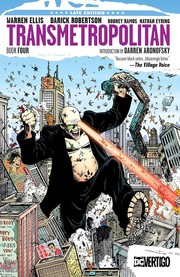
Spider against a sitting president, with the series at its angriest and least funny. The strongest stretch of the run and the reason people still recommend it.
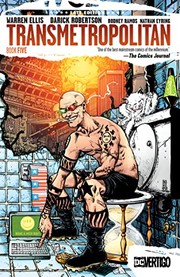
The conclusion, including the illness plot and the ending Ellis had planned from the start. Complete in this tier — the five Books contain the whole sixty issues, so nothing is missing when you finish here.
Where Spider comes from
IntermediateRead the journalism Transmetropolitan is a direct pastiche of, so the borrowings register as argument rather than homage.
▸ Study plan for this stage
Pace: Two to three weeks, and a full change of medium. Fear and Loathing in Las Vegas is 205 pages and reads quickly — a couple of evenings — but Fear and Loathing on the Campaign Trail '72 is 480 pages of dispatch journalism about a primary season, which is dense with names, delegate arithmetic and week-
- Gonzo as a method — the reporter inside the story, openly compromised, arguing rather than balancing
- Las Vegas as the source of Spider's mannerisms and Campaign Trail as the source of his job
- A presidential campaign covered by someone who despises the participants, and what that produces that access journalism cannot
- Which of Spider's traits are lifted, which are exaggerated, and which are Ellis's invention
- Thompson as a participant and advocate rather than a neutral guide, in both books
- Reporting written to deadline and collected afterwards, which is the form Transmetropolitan imitates
- Which specific Spider mannerisms come from Las Vegas, and which does Ellis invent outright?
- What does Campaign Trail do week by week that a retrospective account of the same primaries could not?
- Where is Thompson unreliable, and does he tell you? How does that compare with Spider's relationship to his own readers?
- What does Ellis take from Campaign Trail structurally rather than tonally — in how his election is covered rather than how it is described?
- After both, is Transmetropolitan a pastiche, a critique, or an update of gonzo journalism?
- Read one Thompson dispatch from Campaign Trail and one Spider column back to back. The pastiche is close enough that the differences are the interesting part.
- Pace Campaign Trail at forty pages an evening and keep a list of names and factions; the delegate politics is the substance and it is easy to lose.
- Retrieve the paragraph you wrote about the comic's conclusion on elections and set it beside Thompson's. Two accounts of a campaign ending badly, thirty years apart.
- Mark three passages in Las Vegas where Thompson is plainly the least reliable person in the room. Then find the equivalent in Spider — the series is more honest about this than it first appears.
Next up: With the source material read you can separate what Spider owes to Thompson from what he owes to Ellis, which is what the next stage tests across the rest of the comics work.

The obvious source — Spider is Thompson with a bowel disruptor. Read it after the comic rather than before, so you can see exactly which mannerisms Ellis lifted and which he invented.
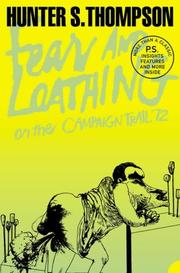
The far more relevant book: an entire presidential campaign covered by a reporter who despises everyone in it. This, not Las Vegas, is the template for Books Two through Five.
Ellis in comics
IntermediateRead the rest of his comics work and see which parts of Transmetropolitan were the series and which were the writer.
▸ Study plan for this stage
Pace: Two weeks, with four books of very different weight. Global Frequency is 320 pages of twelve standalone issues by twelve artists, so it reads in almost any order and at any pace — a good immediate follow-on. Orbiter is 104 pages, a single sitting, and the slowest per page of the four because Colleen
- The high-concept mode with the ranting stripped out — Global Frequency as Ellis's premise-generation at its purest
- One artist per issue as a structural choice, and what an anthology of twelve gains and loses
- Orbiter as the sincere register, and the evidence that permanent contempt was a setting rather than a personality
- Nextwave as proof that the Transmetropolitan voice was a choice: same writer, no anger, still funny
- Trees as the later, colder science fiction, and where the interests went after the shouting stopped
- Separating series from writer: which parts of Transmetropolitan were Spider's and which were Ellis's
- What is Global Frequency's premise, and what does having twelve artists do to a series with one idea?
- How does Orbiter's sincerity read after sixty issues of Spider — as relief, as a lapse, or as the same writer's other hand?
- What is Nextwave doing that Transmetropolitan never does, and does it need the anger to work?
- Trees is slower and colder than everything before it. What is it interested in that the earlier work is not?
- Across all four, which recognisable Ellis traits survive every change of register?
- Read three Global Frequency issues by three different artists and describe what each artist changes about a fixed formula. It is a controlled experiment in comics art.
- Read Orbiter's 104 pages in one sitting and time it. If it took you as long as a 300-page comic, that is Doran's art doing the work, and worth articulating.
- Pick one page of Nextwave and one of Transmetropolitan with comparable jokes. The construction is nearly identical; the target is not.
- Write a list of Ellis traits that appear in all four books. That list is your answer to what was the writer rather than the series.
Next up: Having seen the range of the comics work, the last stage goes to the prose, which is where the Spider Jerusalem voice actually survives.
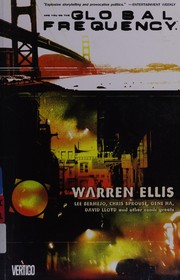
Twelve standalone issues, twelve artists, one premise — the purest example of Ellis's high-concept mode with the ranting stripped out. A good immediate follow-on.

With Colleen Doran, and the most sincere thing he has written: a shuttle returns after ten years missing. Read for the contrast with Spider's permanent contempt.

Catalogued as Nextwave: Agents of H.A.T.E. Pure comedy, and the best demonstration that the Transmetropolitan voice was a choice rather than a limit.

His later creator-owned science fiction with Jason Howard, colder and slower than anything above. The natural place to see where the interests went after the shouting stopped.
Ellis in prose
IntermediateRead the novels, which are where the Spider Jerusalem voice actually survives.
▸ Study plan for this stage
Pace: Two to three weeks, and prose after eleven comics is a real change of pace. Crooked Little Vein is 296 pages and reads fast — short chapters, propulsive, closest of the three to the experience of reading Transmetropolitan. Gun Machine is 320 pages, tighter and better written, and takes longer per pa
- Crooked Little Vein as the prose equivalent of Transmetropolitan: a road trip through obscenity with a narrator who despises and enjoys it
- Gun Machine as the arrival of discipline — the same voice with the sneer largely gone and the plotting much tighter
- Normal as a coda: futurists broken by looking at the future, which is the whole path's subject in miniature
- What survives the move from comics to prose, and what the loss of an artist costs a writer of this kind
- Novel, crime novel and novella as three different amounts of room, and what each permits
- The Spider Jerusalem voice as something Ellis kept writing in after the comic ended
- How much of Crooked Little Vein reads as Spider Jerusalem in prose, and where does the resemblance break?
- What is better in Gun Machine than in Crooked Little Vein, specifically — plotting, sentences, characters?
- What does Normal say about people who look at the future professionally, and how does that reflect back on Transmetropolitan?
- What does Ellis lose without an artist, and does the prose compensate or simply do something else?
- After all three, is the voice a strength or a limit? Argue it against Nextwave and Orbiter from the previous stage.
- Read the first chapter of Crooked Little Vein immediately after rereading one of Spider's columns. The continuity is close enough to be startling and specific enough to describe.
- Take a paragraph from Gun Machine and one from Crooked Little Vein of comparable content and compare sentence length and adjective count. The discipline is measurable.
- Read Normal in a single sitting, then write two sentences connecting it to the illness plot in Transmetropolitan Book Five. They are closer than they look.
- Finish by writing your own recommended order for someone approaching Ellis for the first time — where the comic goes, where Thompson goes, and whether the prose comes before or after. If you can defend putting Thompson after the comic, you have the path.
Next up: This is the end of the path: the whole sixty-issue run in one edition tier, the journalism it is a pastiche of read afterwards so the borrowings register as argument, and the comics and prose that show which parts were Spider and which were Ellis.

His first novel, a road trip through American obscenity, and the closest prose equivalent to reading Transmetropolitan. Start here of the three.

A straight crime novel, tighter and better written than Crooked Little Vein, with the sneer largely gone. Read second to see the discipline arrive.

A short novella about futurists who have broken down from looking at the future too hard — effectively a coda to everything on this path. Read last.