Tracy Chevalier books in order: where to start
Tracy Chevalier's novels are entirely unconnected — each one is built around an object, a craft or a real life, and none of them requires another. That means publication order is optional, and this path deliberately does not use it: it opens with the two books that convert new readers fastest, then goes back and picks up the early novels, then follows the thread of work and craft that runs through the later ones.
The Two That Convert New Readers
BeginnerStart with the two novels that have made the most readers into Chevalier readers, and learn what her method actually is: take one artefact or one documented life, and build a whole interior world around the gaps in the record. ORDER CHOSEN: not publication order — these are standalones, so the path leads with the strongest entry points rather than the earliest.
▸ Study plan for this stage
Pace: Two to three weeks. Girl with a Pearl Earring is 271 pages, the shortest novel on the whole path, and can comfortably be read in a week at 40 pages a sitting — its restraint is the point, so resist finishing it in one go. We hold no page count for our record of Remarkable Creatures, so budget by cha
- Chevalier's method: take one artefact or one documented life, then build the novel entirely out of what the record does not say
- The servant's viewpoint in Girl with a Pearl Earring, which lets a painting be described by someone who cannot own it or name what it does
- Restraint as technique — how much of Griet's feeling is conveyed by what she declines to say
- Dual first-person narration in Remarkable Creatures, and what a second narrator can do that a single one cannot
- Fossil hunting in the 1810s as paid manual labour and as a threat to the accepted age of the world
- Class and credit: who gets named as the discoverer, and the gap between doing the work and owning it
- Girl with a Pearl Earring is told entirely by Griet. What does the novel gain by never entering Vermeer's head, and what does it lose?
- Which specific facts about Vermeer's household are documented and which has Chevalier supplied? How does the prose signal the difference, if it does?
- Remarkable Creatures splits its narration between a working-class woman and a gentlewoman. What can each of them observe about the other's life that she cannot observe about her own?
- Anning's discoveries were credited to the men who bought them. How does the novel dramatise that without turning her into a symbol?
- Both books put a woman close to work she is not allowed to be credited for. Is Chevalier making the same argument twice, or two different ones?
- Look up Vermeer's painting before starting the novel, then again after finishing, and write down what you now see in it that you did not before — that difference is exactly what Chevalier added.
- Mark every passage in Girl with a Pearl Earring where Griet describes colour or light; those are the places she is being taught to see, and they track the plot.
- Read one Mary chapter and the following Elizabeth chapter in Remarkable Creatures back to back and list the facts each narrator withholds from the reader as well as from the other.
- Find one contemporary account of Mary Anning's life and compare its timeline with the novel's, noting where Chevalier compresses.
Next up: With the method visible in its purest and its most developed form, the next stage goes back to the three early novels to watch that method being assembled piece by piece.
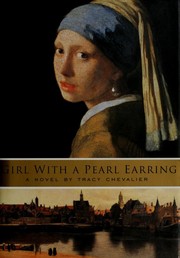
Her second novel and still the one to start with: Vermeer's painting reimagined as the story of the servant who might have sat for it. It is short, controlled and does the artefact-into-novel trick in its purest form.
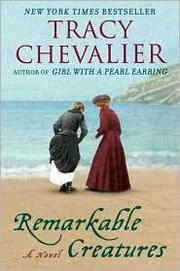
Mary Anning the fossil hunter and Elizabeth Philpot, on the Lyme Regis beach, discovering creatures that should not exist in a world that thought it knew when it began. Second because it shows the same method applied to a documented life rather than an object, and because it is the best of the later books.
The Early Novels
BeginnerGo back to the three novels around Girl with a Pearl Earring and see the method being worked out — a dual-timeline debut, then a graveyard, then a set of medieval tapestries.
▸ Study plan for this stage
Pace: Four to five weeks for 910 pages, none of them long — The Virgin Blue is 304 pages, Falling Angels 328 and The Lady and the Unicorn 278. Read The Virgin Blue first even though it is the debut and the least accomplished, because its dual modern-and-historical timeline is the device she abandons and y
- The dual timeline in The Virgin Blue — a modern researcher and the past she is researching — and the specific problems that structure creates
- Rotating first-person chapters as a way to make a social system, rather than a person, the subject of the novel
- The Edwardian cemetery in Falling Angels as a site where class, mourning convention and the suffrage movement all become visible at once
- Commission, design, cartoon, weaving: The Lady and the Unicorn follows a single object through every hand that made it
- The move from a heroine who researches the past to a heroine who is inside it and does not know she is a subject
- Why the physical process of making something becomes Chevalier's dominant interest from The Lady and the Unicorn onward
- The Virgin Blue's modern strand is the one device Chevalier never reused. What does it do for the book, and what does it cost?
- Falling Angels distributes its story across many narrators, several of them children or servants. Who in that cast is given the least page space, and is that a judgement by the author or by the period?
- The Lady and the Unicorn moves from the patron who orders the tapestries to the weavers who make them. At which point in that chain does the novel place its sympathy?
- Compare the rotating narration in Falling Angels with the two-narrator alternation in Remarkable Creatures. Which is the more controlled instrument, and why?
- What in these three early books does Chevalier keep, and what does she visibly discard, by the time she writes A Single Thread?
- Keep a chapter-by-chapter narrator list for Falling Angels; when you finish, count the chapters each character gets and see whose story the book actually turned out to be.
- Split a page in two while reading The Virgin Blue and log each strand's events separately, then check where the two timelines are made to rhyme and whether the rhymes are earned.
- Look at photographs of the six Cluny tapestries alongside The Lady and the Unicorn and identify which details of the finished objects Chevalier has reverse-engineered a story from.
- Take one rotating chapter from The Lady and the Unicorn and rewrite its opening paragraph in third person; the specific thing lost is what the device is for.
Next up: Having seen the rotating-narrator technique arrive and the physical craft move to the centre, the next stage reads the three novels where the craft is not a setting but the whole argument.
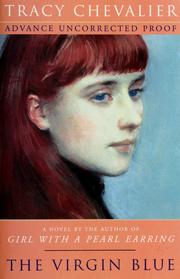
Her debut, cutting between a modern American woman in France and a sixteenth-century Huguenot family. The dual timeline is a device she never used again, which makes it the most instructive book of hers to read second.
Two Edwardian families whose plots adjoin in a London cemetery, told in short rotating first-person chapters. Here because it is her first experiment with multiple narrators, the technique that carries Remarkable Creatures.
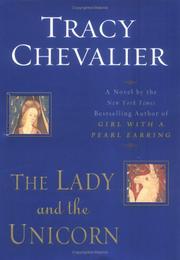
The six Cluny tapestries, from commission through design to the Brussels weavers' workshop. Read after Falling Angels: it keeps the rotating narrators and adds the thing that dominates her later work, the physical process of making something by hand.
Craft, Work and the Object at the Centre
IntermediateRead the three novels where the craft is not decoration but the whole subject — printing, quilting, embroidery — and where the heroine's competence is the plot.
▸ Study plan for this stage
Pace: Five to six weeks for 1,088 pages. Burning Bright is 320 pages, The Last Runaway 416 and A Single Thread 352. The order matters more here than the pace: Burning Bright is the most externally eventful, The Last Runaway has the strongest forward plot, and A Single Thread is the quietest book she has w
- Competence as characterisation: in all three books the heroine is defined by what she can make, and the plot tests the skill rather than the sentiment
- Printing in Burning Bright — how Blake's illuminated books were physically produced, and what that means for a chairmaker's family living next door
- English versus American quilting in The Last Runaway as a concrete argument about assimilation rather than a metaphor for it
- The Winchester cathedral broderers and bellringers in A Single Thread as institutions that let an unmarried woman have a public life
- The 'surplus woman' of the 1920s and 1930s as a demographic fact with consequences for housing, work and independence
- Moral compromise inside a craft community: the Quaker household in The Last Runaway believes one thing and does another
- Why Chevalier's later heroines act while her earliest ones mostly observe
- Burning Bright puts Blake at the edge of the story rather than the centre. What does keeping him peripheral protect the novel from?
- What is the actual difference between English and American quilting as the book describes it, and how does that difference carry the argument about belonging?
- The Last Runaway's Quaker family opposes slavery and refuses to break the law. Does the novel let them off, and where can you find the evidence for your answer?
- A Single Thread has almost no external event. What is holding it together instead, and does it hold?
- Across the three, what does Chevalier think a craft gives a woman that a marriage does not?
- Find a reproduction of a page from Songs of Innocence and of Experience and follow Burning Bright's account of how it was physically made, checking the novel's description against the object.
- Sketch the two quilt constructions described in The Last Runaway; the argument of the novel is easier to hold once the difference is drawn rather than read.
- Look up a photograph of the Winchester Cathedral kneelers before reading A Single Thread and pick out which of the described designs you can actually identify.
- Compare the making-a-thing scenes in The Lady and the Unicorn with the equivalent in Burning Bright and note how much more technical detail the later book trusts you with.
Next up: The last stage takes the two novels that sit outside this pattern — one where the craft offers no comfort at all, and one written to a commission — and closes with an honest account of what our catalogue does not hold.
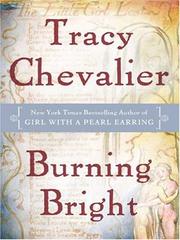
1790s Lambeth, a chairmaker's family, and William Blake next door printing Songs of Innocence and of Experience. The best of her books on how a trade actually works, and a useful corrective to the idea that she only writes about paintings.

An English Quaker quilter lands in 1850s Ohio and finds herself on the Underground Railroad. Here because the quilting is not a metaphor — the difference between English and American quilting is the book's argument about assimilation.
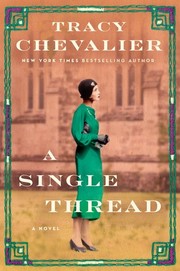
1932 Winchester, a surplus woman after the Great War, and the cathedral broderers who make its kneelers. The quietest novel she has written and the one that most rewards having read the others first.
Later and Sideways
IntermediateFinish with the two books that sit outside the pattern — an American frontier novel and a Shakespeare retelling written to commission — and know what is not yet in our catalogue.
▸ Study plan for this stage
Pace: Two to three weeks, and the shortest stage on the path at 624 pages. At the Edge of the Orchard is 368 pages and New Boy is 256, the second-shortest book here. Read the orchard novel first: it is her harshest and it earns the contrast with the compressed single-day schoolyard of New Boy, which can b
- Grafting as the one act of care in At the Edge of the Orchard, and what it means that the tenderness goes to trees
- The frontier as an economic trap rather than an opportunity — a family fixed in a swamp by debt and by apple trees that cannot be moved
- The jump from Ohio to the Californian sequoias, and the plant-collecting trade that connects them
- Writing to commission: New Boy was produced for a series that assigns a Shakespeare play, and the constraint is visible in the structure
- Compression as a formal choice — one playground, one day, five main characters, the unities of the source play kept intact
- What survives of Othello when the jealousy plot is given to children, and what stops making sense
- At the Edge of the Orchard withholds sympathy from almost everyone in it. Is that a change in Chevalier's outlook or a demand made by the material?
- The novel breaks in two, decades and a continent apart. What holds the halves together besides the trees?
- New Boy keeps Othello's plot mechanism in a single school day. Which of the play's turns survive that compression, and which become implausible?
- Does knowing New Boy was commissioned change how you read it, and should it?
- Ranked by what you would hand to another reader first, where do these two fall against the eight books before them?
- Read a summary of the Osage orange and Golden Pippin apple varieties before starting At the Edge of the Orchard; the family's argument about which to plant is a real horticultural dispute with a real answer.
- Read or reread Othello's handkerchief scenes, then set them beside their equivalent in New Boy and mark exactly what Chevalier substituted and what she left alone.
- Write a single paragraph placing all ten books on the path in your own order of recommendation, with one sentence of justification each — after four stages you have the evidence to disagree with this path's ordering.
- List the three novels here whose central craft or object you could now describe to someone else in technical terms; that list is the real measure of what the reading gave you.
Next up: This is the end of the path — ten novels covering her method from its purest short form to its outliers, with the 2024 Venetian novel left off because we could not verify a record for it.
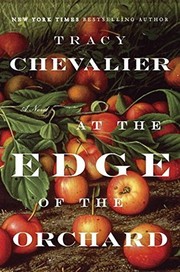
An 1838 Ohio swamp, a marriage held together by apple trees, and then a jump to the Californian sequoias. Her harshest book, and the one where the craft — grafting — is the only tenderness on offer.

Othello relocated to a 1970s Washington DC schoolyard over a single day, written for the Hogarth Shakespeare series. Last because it is the outlier: commissioned, compressed and structurally unlike anything else she has done. Note that her 2024 Venetian novel The Glassmaker has no record we could verify, so it is not on this path.