Theodore Dreiser in Order: Which Novel to Read First
Dreiser wrote long, slow, badly-sentenced novels that almost nobody would defend line by line and that are nevertheless among the most powerful in American literature. He repays the effort only if you start in the right place, and An American Tragedy at eight hundred pages is not it. This path opens with the short first novel, moves through the second and the business trilogy so you learn his rhythm on smaller books, and only then hands you the big one, with the failures and the memoirs as a tail.
Start With Sister Carrie
BeginnerLearn what Dreiser does that nobody else does — refuse to moralise about a character the era demanded be punished — and find out whether you can live with his prose.
▸ Study plan for this stage
Pace: 2-3 weeks, ~30 pages/day across roughly 450 pages
- Naturalism in practice: character as the product of environment, appetite and accident rather than of moral choice
- The withheld verdict — Carrie Meeber rises through two men into a stage career and the novel never punishes her, which is the break with everything the period expected
- Hurstwood's descent as the novel's real tragedy, and the deliberate asymmetry of running it against Carrie's ascent
- The safe-door scene: a decisive act that Dreiser stages as something that half happens to the man performing it
- Chicago and New York rendered as economic systems — wages, rooms, restaurant prices — with the money always specified
- Dreiser's prose as a genuine problem: clumsy, repetitive, occasionally ridiculous, and somehow not fatal to the effect
- The novel's effective suppression on publication, and how a hostile reception shaped Dreiser's later career
- The novel refuses to punish Carrie. Does it also refuse to admire her, and where exactly does it stand?
- At what point does Hurstwood's decline become irreversible, and does the book locate a moment of responsibility?
- How does Dreiser use rocking chairs, room rents and menu prices to do work that another novelist would do through interiority?
- Can you point to a paragraph where the sentences are objectively bad and the passage still lands? What is producing the effect if not the prose?
- What does the novel gain by making the rise and the fall run in parallel rather than in sequence?
- Does Carrie want anything specific by the end, and does the book treat that as a failure in her or in what was on offer?
- Write 200 words on the safe-door scene arguing that Hurstwood decides, then 200 more arguing he does not; use only what the text puts on the page.
- Track every wage, rent and price stated in the first 150 pages and write a short note on what the ledger tells you that the narration does not.
- Pick the worst-written paragraph you can find and rewrite it cleanly; then write 100 words on what the rewrite loses.
- Summarise the novel's ending in 150 words in a way a moralising Victorian reviewer would recognise, and note every distortion you had to introduce.
Next up: Having established the method on one book, you can test whether it holds when Dreiser reverses the moral polarity in Jennie Gerhardt.

A country girl arrives in Chicago, drifts through two men into a stage career, and is never punished for it, while the man who ruins himself for her sinks all the way to a flophouse. His first novel, effectively suppressed on publication, and the shortest route into everything he believed. Start here without exception.
The Second Novel and the Sketches
IntermediateConfirm the method on a book many readers prefer to Sister Carrie, and see Dreiser's documentary eye working at short length.
▸ Study plan for this stage
Pace: 3-4 weeks, ~30 pages/day across roughly 690 pages
- Jennie Gerhardt as Sister Carrie inverted: a woman who gives herself out of duty rather than ambition and is destroyed by other people's respectability
- Respectability as an active social force with agents — Lester Kane's family, the will, the terms attached to money
- Warmth as a genuine variable in Dreiser: many readers find Jennie the better novel precisely because he lets himself feel for her
- Old Gerhardt and the immigrant working household, rendered without either contempt or sentimentality
- Twelve Men as documentary portraiture, including the sketch of Dreiser's own brother, the songwriter Paul Dresser
- Obsessive factual attention as the engine underneath the clumsy sentences — visible more clearly at sketch length than at novel length
- The difference between a character defeated by appetite and one defeated by other people's opinion of her
- Is Jennie Gerhardt a better novel than Sister Carrie, and what standard are you applying when you answer?
- Lester Kane is faced with a choice between Jennie and his inheritance. Does the novel treat his decision as weakness, as inevitability, or as neither?
- What is Dreiser's attitude to Jennie's self-sacrifice, given that he refused to moralise about Carrie's self-interest?
- In Twelve Men, what is Dreiser able to do at thirty pages that he cannot do at four hundred?
- The sketch of Paul Dresser is written by a brother. Does the closeness sharpen the portrait or soften it?
- Where does the factual density in these books tip from evidence into padding?
- Set the closing pages of Sister Carrie beside the closing pages of Jennie Gerhardt and write 300 words on what the two endings assume about what a life is for.
- List the specific mechanisms by which the Kane family exerts pressure — money, letters, wills, silence — and write a paragraph on how the pressure is distributed.
- Read the Paul Dresser sketch in Twelve Men, then write 200 words on which techniques from it are visible in the portrait of Hurstwood.
- Pick any two sketches from Twelve Men and write one sentence each on what Dreiser noticed that a less patient writer would have skipped.
- Summarise Jennie's situation as her father would state it and as Lester's sister would state it, in 100 words each.
Next up: Two novels of people acted upon prepare you for the trilogy's opposite proposition: a man who acts, without restraint, for thirty years.

A poor woman gives herself to two wealthy men out of duty rather than ambition, and is destroyed by their families' respectability. Warmer than Sister Carrie and, for a substantial minority of readers, the better novel. Read it second: it is the same situation with the moral polarity reversed.

Twelve biographical sketches of men Dreiser knew, including his own brother, the songwriter Paul Dresser. Short, unexpectedly moving, and the best demonstration that his clumsiness on the sentence is a byproduct of an obsessive attention to fact.
The Trilogy of Desire
IntermediateFollow one financier across three novels and thirty years, and understand Dreiser's central claim: that capitalism and sexual appetite are the same force wearing different clothes.
▸ Study plan for this stage
Pace: 8-9 weeks, ~30 pages/day across roughly 1,370 pages — read strictly in order
- Frank Cowperwood as a deliberately amoral protagonist whose creed — 'I satisfy myself' — is presented as a philosophy rather than a defect
- The trilogy's central claim: financial appetite and sexual appetite are one force in different clothes, and Cowperwood's affairs track his acquisitions
- Cowperwood modelled closely on the streetcar magnate Charles Yerkes, and what a roman-à-clef gains and loses in accuracy
- The Financier's Philadelphia mechanics: municipal deposits, the fire, the panic, the trial — a fortune built and lost in traceable steps
- The Titan's Chicago as documented corruption — bought aldermen, traction franchises, the sheer accumulation of detail becoming the effect
- The Stoic as an unfinished-feeling posthumous close, with a late and startling turn toward Hindu philosophy
- Why a strictly sequential trilogy makes a point that three standalone novels could not: the same appetite, unchanged, across thirty years
- Does the trilogy admire Cowperwood? Distinguish between what the narration says and what the structure implies.
- The Financier ends in disgrace and The Titan opens in recovery. What does that repetition establish that a single fall would not?
- How does Dreiser's documentary method — franchises, ordinances, share transactions — function as characterisation rather than research dumped on the page?
- Cowperwood's affairs and his acquisitions are narrated in the same register. Is that an argument, or a limitation of the writer?
- Is The Stoic worth reading, and on what grounds — completing the arc, or its own merits?
- Where do the business chapters stop being informative and start being an endurance test, and does that shift damage the book?
- Diagram the sequence of transactions that destroys Cowperwood in The Financier, from the city deposits to the verdict; write 150 words on where the chain could have broken.
- Count the pages of The Titan given to municipal politics against those given to Cowperwood's private life, then write a paragraph on what the ratio argues.
- Write a 200-word neutral summary of Cowperwood's stated philosophy using only his own lines, then 150 words on whether the trilogy's events confirm or refute it.
- Take one bribe or franchise negotiation and rewrite it in half the words; note what the compression removes besides length.
- After The Stoic, write 200 words on whether the late philosophical turn is prepared for anywhere in the previous two volumes.
Next up: Four novels in, you have learned to read accumulation as argument — the exact skill An American Tragedy's eight hundred pages demand.

Frank Cowperwood, modelled closely on the streetcar magnate Charles Yerkes, builds and loses a fortune in Philadelphia. Read it before The Titan; the trilogy is strictly sequential and this is where his amorality is established as a philosophy rather than a flaw.
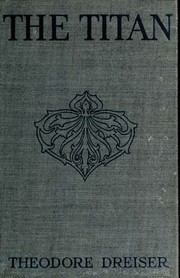
Cowperwood in Chicago, buying politicians and traction franchises. The most detailed novel about American business corruption of its era, and the volume where the sheer accumulation of fact becomes the effect.

The third volume, finished just before his death and published posthumously, taking Cowperwood to London and to an odd late turn toward Hindu philosophy. Unfinished in feel and completist-only, but it does close the arc.
The Big One
IntermediateRead the novel Dreiser is remembered for, at the point where you have the stamina and the context to see why its slowness is the whole design.
▸ Study plan for this stage
Pace: 6-8 weeks, ~20 pages/day across roughly 780 pages — the last third moves faster than it looks
- The grinding accumulation of circumstance as the argument itself: Clyde Griffiths is assembled from pressures rather than choices
- The drowning scene written so that intention and accident cannot be cleanly separated, which is the novel's whole legal and moral problem
- Roberta and Sondra as two social positions rather than two women, and what the novel does by making Clyde's desire indistinguishable from ambition
- The final third as near-transcript: indictment, evidence, cross-examination, appeal, execution, rendered at procedural pace
- The evangelical mission upbringing at the start, and how the opening street scene predicts the closing one
- The class ladder inside one family — the Kansas City missionaries against the Lycurgus collar factory Griffiths
- Why the same book is intolerable as a first Dreiser and overwhelming as a fifth
- Does Clyde murder Roberta? State the strongest case for each answer using only what the boat scene puts on the page.
- The trial section is deliberately slow. What does that pacing accomplish that a summary of the verdict could not?
- Where does the novel place responsibility — on Clyde, on his upbringing, on the class system, or nowhere in particular?
- How do Clyde's desires for Sondra and for money differ, and does the novel ever separate them?
- The book opens and closes with a street mission. What is that frame claiming?
- Having read four earlier Dreiser novels, what do you now see in the technique that a first-time reader would experience only as length?
- Write a 300-word account of the boat scene that a prosecutor would give, then a 300-word account a defence counsel would give, drawing only on the text.
- List the ten decision points at which Clyde could have altered his course and mark, for each, what pressure prevented it.
- Read fifty pages of the trial section and write 200 words on what the procedural detail is doing that dramatic compression would destroy.
- Compare Clyde's ambition with Carrie Meeber's in 250 words: same engine, different outcome, and why.
- Set the opening mission scene beside the closing one and write a paragraph on what has and has not changed.
Next up: With the major work behind you, the last stage shows where the method breaks down and where the raw material came from.
A poor young man drowns his pregnant girlfriend for a chance at a rich one, and the last third is essentially a trial transcript. Eight hundred pages that would be intolerable as a first Dreiser and are overwhelming as a fifth, because by now you know that the grinding accumulation of circumstance is the argument.
The Failures and the Memoirs
IntermediateFinish with the books that show the limits of the method and the two volumes of autobiography that explain where all of it came from.
▸ Study plan for this stage
Pace: 10-12 weeks, ~30 pages/day across roughly 2,320 pages — completist reading, best taken in any order within the stage
- The "genius" as the test case for Dreiser without a documentary subject: an autobiographical novel about a painter's appetites, suppressed for obscenity and generally judged his worst major book
- Documentary discipline as the thing that makes the method work — and what happens to the prose when it is removed
- The Bulwark's Quaker businessman and his children's modernity: a quieter register some readers find the most humane thing Dreiser wrote
- Dawn as the source text for the fiction — the Indiana poverty, the sisters who become Carrie's, the boy who becomes Clyde
- Newspaper Days and the reporter's beat in St Louis, Pittsburgh and New York as the collection point for the murder cases and business scandals
- Frankness about family and sex in the memoirs that was unusual for the period they were written in
- Reading source material after the novels: what the reshaping actually did, visible in both directions
- Does The "genius" fail for the reasons its critics give, or for different ones you can identify after reading the earlier novels?
- The Bulwark treats religious faith seriously in a way nothing else here does. Is that a late change of position or a subject Dreiser was always capable of?
- Reading Dawn after An American Tragedy, what did Dreiser invent for Clyde and what did he transcribe?
- Newspaper Days shows the raw cases. Does knowing the source strengthen the novels or diminish them?
- Where in the memoirs is Dreiser plainly unreliable about himself, and how can you tell?
- After all nine books, what is your one-sentence account of what Dreiser is for?
- Find the passage in Dawn closest to Clyde's family circumstances in An American Tragedy and write 250 words on every change Dreiser made in the fiction.
- Write 200 words on why The "genius" is worse than the trilogy, naming the specific technique that is missing rather than calling it self-indulgent.
- Pick one case reported in Newspaper Days and trace it into whichever novel used it; note what was kept, dropped and invented.
- Read fifty pages of The Bulwark and write a paragraph on how the sentence rhythm differs from The Titan's.
- Draft your own recommended Dreiser reading order for someone starting tomorrow, defending every departure from the one you followed.
Next up: This closes the path: you have read the achievement, the failures and the source material, and can argue for Dreiser on evidence rather than reputation.

An autobiographical novel about a painter and his appetites, suppressed for obscenity and generally judged his worst major book. Catalogued with the quotation marks he insisted on. Read it as evidence of what happens when he writes about himself without a documentary subject to discipline him.
A Quaker businessman's faith against his children's modernity, published posthumously and much quieter than anything else here. Some readers find it the most humane thing he wrote.

The autobiography of his poverty-stricken Indiana childhood, and the source of Sister Carrie's sisters and An American Tragedy's Clyde. Startlingly frank for its date.
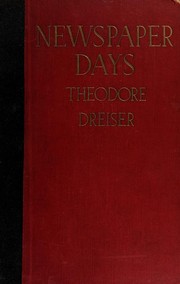
The second memoir, on his years as a reporter in St Louis, Pittsburgh and New York, which is where he collected the murder cases and business scandals that became the novels. The right last book on the path: it shows the raw material before the fiction reshaped it.