The Umbrella Academy Reading Order: Where to Start and How It Differs From the Show
The Umbrella Academy is a short series with a long shadow: three volumes of comics by Gerard Way and Gabriel Ba, published slowly across more than a decade, out of which Netflix built four seasons that diverge from the books almost immediately. The comics are stranger, funnier and much less interested in explaining themselves — the apocalypse in volume one is resolved in six issues, the second volume is a time-travel story about the Kennedy assassination that the show reworks completely, and by the third volume the plot has stopped pretending to be a superhero narrative at all. This path reads them in publication order, which is also story order, then adds the spinoff, then goes to the two artists, because Gabriel Ba and his brother Fabio Moon are the reason the books look the way they do and their own work is better than most people who came from the show realise. A catalogue note: these resolve under their bare volume titles, not under a series prefix — a query for The Umbrella Academy, Vol. 1 or The Umbrella Academy: Apocalypse Suite returns nothing, while Apocalypse Suite returns the book.
The Core Run
BeginnerRead the three published volumes in order. By the end you should be able to describe the seven siblings and what each can do, what happened to Ben and to Vanya, and the three points where the comic and the television series stop telling the same story.
▸ Study plan for this stage
Pace: Four volumes, 864 pages on paper — but a comics page is mostly art, and a 216-page Umbrella Academy trade is six issues that reads in an hour or two. Measure this stage in volumes, not hours: one volume per sitting, four sittings, comfortably done inside a week. Read Apocalypse Suite, then Dallas, t
- The forty-three simultaneous births and the arbitrary logic by which Hargreeves collects seven of them
- Each sibling's number, power and nickname, and the fact that the numbering is a ranking
- Hargreeves as an institution rather than a parent — the Academy is a workplace the children were raised inside
- Ben's absence and Vanya's exclusion as the two wounds the whole series runs on
- Apocalypse Suite's six-issue compression: an apocalypse set up and resolved without an act break
- Dallas and the Kennedy assassination as a time-travel plot the Netflix series keeps the setting of and discards
- Hotel Oblivion's prison dimension, and its assumption that you remember Dallas in detail
- Culbard's line in Tales against Ba's, and how much of the series' feel was the artist
- Name the seven siblings, their numbers and what each can do — and say which of those the show changes.
- What happened to Ben, and how does the comic use a dead sibling differently from the way the series does?
- Apocalypse Suite resolves its apocalypse in six issues. What does that pacing let Gerard Way skip, and what does it cost?
- Identify the three clearest points where the comic and the television series stop telling the same story, and say whether each is elaboration or contradiction.
- Why does Hotel Oblivion read as less of a superhero comic than the two volumes before it?
- What does Tales from the Umbrella Academy tell you about Klaus that the main run leaves implied?
- Keep a one-line note for each sibling as they are introduced in Apocalypse Suite — number, power, and the first thing they say. Compare that list against the version of the character you remember from the show.
- Read Apocalypse Suite, then rewatch the first episode of season one and mark every element that is expanded from the comic versus invented for it. Way's six issues become ten hours; the ratio itself is the finding.
- Track Vanya across all three volumes and write down the panel where the comic first signals what she is. It arrives far earlier than most readers notice.
- Read the last ten pages of Dallas and the first ten of Hotel Oblivion back to back, then say what a decade between publications did to the storytelling.
- Compare a two-page spread of Culbard's Tales with any two-page spread of Ba's in Hotel Oblivion. Note panel count, black-to-white ratio and how figures sit in a frame.
Next up: Having read the whole Academy run, you can now test whether what you responded to was Gerard Way's writing or Gabriel Ba's drawing — which is exactly what the next two stages separate out.

Volume one, and the correct starting point: the forty-three children born on the same day, Reginald Hargreeves, and an apocalypse resolved in six issues. Read it knowing that the show's first season expands this into ten hours — most of the divergence is elaboration rather than contradiction.
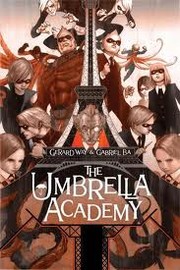
Volume two, the time-travel story around the Kennedy assassination, and the point where the comic and the series part company for good. The show's second season keeps the setting and discards the plot. Also catalogued as Umbrella Academy Vol. 2; that is the same book, so buy one of them.

Volume three, published a full decade after Dallas, and the strangest of the three — a prison dimension, Perseus, and a structure that assumes you remember everything. It also appears in the catalogue as The Umbrella Academy Volume 3 via the Library Edition record; do not buy both.

The Klaus spinoff, co-written with Shaun Simon and drawn by I. N. J. Culbard rather than Ba, so it looks nothing like the main run. Catalogued under the shorter Tales from the Umbrella Academy. Read it after Hotel Oblivion; it sits between volumes one and two chronologically but reads better as a coda. A fourth volume, Sparrow Academy, does not resolve in our catalogue in any form we tried, so this path stops here.
The Rest of Gerard Way
BeginnerRead Way's other comics work and be able to say what is consistent across it — the same taste for damaged institutional teams, the same refusal to explain a premise — and where the Umbrella Academy voice came from.
▸ Study plan for this stage
Pace: Two books, 424 pages: The true lives of the fabulous Killjoys at 240 and Doom patrol at 184. A weekend, one book per sitting. Read Killjoys first — it is the closer relative, a desert dystopia grown out of the My Chemical Romance album of the same name and drawn by Becky Cloonan, so it isolates Way'
- Way's recurring subject: a damaged team inside a failing institution, told without exposition
- The refusal to explain a premise before using it, and what that demands of the reader
- Killjoys as a comic built from an album — how a song cycle becomes a plot
- Becky Cloonan's line as a control on the Ba question: same writer, different artist, different book
- Doom Patrol as an existing property Way inherits rather than invents, and what he keeps of it
- The difference between weirdness as decoration and weirdness as structure, which is what separates these two books
- What is consistent across the Academy, Killjoys and Doom patrol at the level of premise rather than plot?
- Reading Killjoys with Cloonan drawing it, how much of the Umbrella Academy's feel survives — and what does that tell you about Ba's contribution?
- Doom Patrol existed for decades before Way touched it. What did he keep, and what did he treat as negotiable?
- Both books withhold explanation. Where does that work, and where does one of them lose you?
- Which of these two would you hand to someone who liked the show but not the comics, and why?
- Write down the premise of each of the three Way books in one sentence. If any takes two, work out what the comic is doing that resists compression.
- Take the first five pages of Killjoys and count how many facts about the world are stated versus shown. Repeat with the first five pages of Apocalypse Suite.
- Pick a single Doom patrol scene and rewrite it as an Umbrella Academy scene, changing only the cast. What breaks tells you what is property-specific and what is Way.
Next up: You have now separated the writer's habits from the finished page; the next stage supplies the other half of the answer by putting Ba and Moon on their own material.

The desert-dystopia series built out of the My Chemical Romance album of the same name, drawn by Becky Cloonan. Closest in temperament to Umbrella Academy and the best test of whether it was Way or Ba you were responding to.
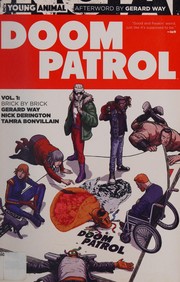
Way writing DC's most deliberately incoherent superhero team, which turns out to be exactly the right assignment. Catalogued under the bare display title Doom patrol. Read it if the institutional-dysfunction comedy of the Academy is what you liked.
Gabriel Ba and Fabio Moon
IntermediateRead the artists' own work. You should come out able to explain why the Umbrella Academy pages read the way they do, and with a sense of the Brazilian comics tradition the brothers come from, which is not the American superhero one.
▸ Study plan for this stage
Pace: Three books, 600 pages: Daytripper at 256, Two Brothers at 232, De:tales at 112. Two weeks is generous — Daytripper is ten discrete chapters and reads well one chapter an evening, which is also how it was published. Read it first: it is the best book on this path by a distance and has nothing to do
- The Brazilian comics tradition the brothers come from, which is not the American superhero one
- Daytripper's premise: ten chapters, ten deaths, one life read out of order
- Ink as the primary tool — solid black used for weight and silence rather than for shadow
- Adaptation as a formal problem: what Two Brothers keeps of Hatoum's novel and what it converts to image
- Page rhythm — how the brothers control pace with panel size instead of dialogue
- The autobiographical mode in De:tales, and how much of the later work is already visible in it
- Twin authorship: two artists producing pages meant to read as one hand
- Daytripper kills its protagonist ten times. What does the repetition make possible that a linear life story could not?
- Where in Two Brothers does the art carry information the text never states?
- What does De:tales do badly, and can you find the same move done well in one of the later two books?
- How is silence used differently in Two Brothers than in the Umbrella Academy volumes?
- Having read all three, what specifically do Ba and Moon bring to a page that a superhero artist typically does not?
- Read one chapter of Daytripper an evening and, before starting the next, write the age at which he dies and one thing the chapter establishes about him. By chapter ten you will have the biography the book never states.
- Find two facing pages in Two Brothers with no dialogue and describe, in prose, everything the reader is told. Then check how many panels it took.
- Pick any De:tales short piece and locate the same idea handled in Daytripper. Note what changed between them.
- Return to a page of Hotel Oblivion after finishing Daytripper and mark what is recognisably Ba's — figure spacing, blacks, how a panel is cropped.
Next up: You now know what the brothers do with their own material, which is the control you need for the last stage, where they draw scripts that are not theirs — the situation they were in on Umbrella Academy.
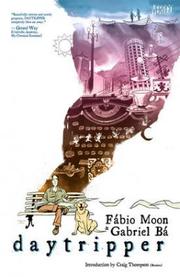
The brothers' masterpiece: ten chapters, each ending with the same man's death at a different age. Nothing to do with superheroes and the best book on this path. Start here.
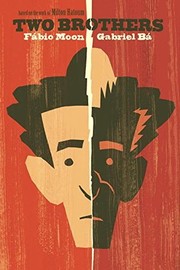
An adaptation of Milton Hatoum's novel about twin brothers in Manaus, drawn in heavy black. The most formally controlled thing they have done and the clearest view of Ba's ink work without a genre plot over it.
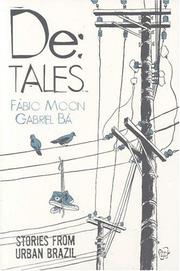
Early short stories, autobiographical and loose. Read third: it is the least polished and the most useful for seeing the style being assembled.
The Brothers on Other People's Scripts
IntermediateSee what Ba and Moon do with material they did not write, which is the situation they were in on Umbrella Academy. You should be able to say what the art contributes independently of the writing in each case.
▸ Study plan for this stage
Pace: Three short books. Neil Gaiman's How To Talk To Girls At Parties is 64 pages, Casanova is 144, and we hold no recorded length for Pixu — it is a slim collaborative horror volume, so do not plan around a number we do not have. A single weekend covers the stage. Read the Gaiman adaptation first: at 64
- The distinction between illustrating a script and interpreting one
- How a 64-page adaptation forces every decision into visible relief
- Casanova's compression — plot moving faster than the panel grid comfortably carries
- What Ba's line does to genre material it did not invent, compared with what it does to Daytripper
- Multi-artist collaboration in Pixu, and the seams it leaves on purpose
- The Umbrella Academy situation restated: an artist serving someone else's premise, which is all three of these books
- In How To Talk To Girls At Parties, what did the brothers add that is nowhere in Gaiman's prose?
- Casanova and early Umbrella Academy were drawn at the same time. What is shared, and what does Fraction ask for that Way does not?
- Where in Pixu can you see the handover between artists, and does the book gain or lose by it?
- Across these three, can you state what Ba's art contributes independently of the writing in each case?
- Which of the three scripts is best served by these artists, and what would a different artist have made of it?
- Read Gaiman's original short story alongside the 64-page adaptation and list every point where the comic makes a choice the prose left open.
- Take one Casanova sequence you had to read twice and diagram what information sits in which panel. Then decide whether the confusion is the script's or the layout's.
- In Pixu, mark the page where you first notice the hand change, then check it against the credits.
- Set a page from Casanova beside a page from Two Brothers and write down what is constant. Whatever survives both is Ba rather than the assignment.
Next up: This closes the path: you have read the Academy, its writer alone, its artists alone, and its artists under other writers, which is everything needed to say what each of them actually did.

Gaiman's short story adapted by both brothers, and a compact demonstration of what they do with a script that is not their own. Catalogued as Neil Gaiman's How To Talk To Girls At Parties.
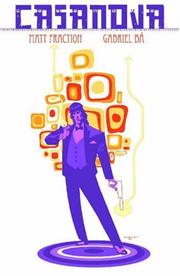
Ba drawing Fraction's spy-fiction fever dream, the collaboration running in parallel with early Umbrella Academy and sharing its willingness to move faster than the reader. Catalogued under the bare title Casanova.
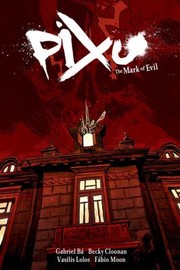
A collaborative horror book by Ba, Moon, Becky Cloonan and Vasilis Lolos about a haunted apartment building. Short, ugly in the intended way, and the right place to finish.