Best Books on the Stonewall Riots and Gay Liberation, in Reading Order
Stonewall is remembered as a beginning, which is exactly why it is worth studying carefully: there was an organised homophile movement two decades before it, and the riots themselves are documented far less securely than the anniversary coverage suggests. This path reads the two standard accounts of the riots first, then reconstructs the world that produced them, then the movement that preceded them, then the liberation politics that followed, and ends with the primary sources so you can weigh the contested claims yourself.
The riots
BeginnerKnow what happened at the Stonewall Inn over several nights in June 1969, and understand why two careful historians reconstruct the same events differently.
▸ Study plan for this stage
Pace: 3 weeks. Duberman's Stonewall is 330 pages and Carter's is 352. Read Duberman first for the six lives, then Carter for the forensic reconstruction — and keep a running note of every point where the two books disagree about the same night, because that list is the real product of this stage.
- The basic facts almost everyone agrees on: a police raid on the Stonewall Inn in the early hours of 28 June 1969, resistance from the crowd, and several nights of disturbances on Christopher Street
- The Stonewall Inn as a Mafia-operated, unlicensed bar, which is why it was raided and why raids were routine rather than exceptional
- Duberman's structural choice — six biographies intersecting the riots — which makes the period, not the night, the subject
- Carter's method: interviews conducted decades later, police records, contemporary press, and reconstruction of the physical geography of the block
- Where the two accounts diverge: who was present, who resisted first, and how much weight to place on any single participant's later recollection
- Why the evidentiary problem is severe — the participants were criminalised, the press coverage was hostile or absent, and most testimony was collected twenty to fifty years afterwards
- The disputed claims about specific individuals' presence and actions on the first night, which rest on conflicting testimony and should be held loosely
- The distinction between what happened and what Stonewall came to mean, which the anniversary literature routinely collapses
- What are the facts about the raid that both Duberman and Carter accept without qualification? Write them out; the list is shorter than you expect.
- Name three specific points on which the two books differ, and for each, identify what kind of evidence would settle it.
- Why was the Stonewall Inn Mafia-run, and what does that tell you about the legal position of gay bars in New York in 1969?
- Duberman's six subjects include people who were not at the riots at all. What is that structure arguing about how history should be written?
- Carter relies heavily on interviews conducted thirty years later. What are the known problems with that kind of testimony, and how does he try to control for them?
- Build a two-column table of the first night: Duberman's account of each event on the left, Carter's on the right, with the page reference for each. Leave a third column for what the evidence actually supports.
- Draw the block from Carter's descriptions — the bar, the doors, Christopher Street, Sheridan Square, the Waverly — and plot the movement of the crowd and the police through the first night.
- Pick one widely repeated claim about the first night, trace it to its earliest source in either book, and write 300 words on how strong that source is.
- Write a 400-word account of the raid that includes only claims you can support from both books, then a separate paragraph listing everything you had to leave out.
Next up: Knowing what a bar raid was and how routine it had been, the next stage explains the world in which that routine made sense — and why 1969 was different.

Duberman tells the riots through six people whose lives intersected with them, which makes the period rather than the event the real subject. Read it first: it gives you the human context before the forensic reconstruction.

Carter's is the most detailed reconstruction, built from interviews and police records, and it is where most later accounts get their facts. He and Duberman differ on who was present and who did what, and several widely repeated claims about the first night rest on thin or conflicting testimony — that uncertainty is part of what you should take away.
The world that produced them
BeginnerSee how gay and lesbian life was organised before liberation — bar culture, policing, and the federal purges — and why a bar raid was a political event.
▸ Study plan for this stage
Pace: 7–8 weeks. Chauncey's Gay New York is 496 pages, Faderman's Odd Girls and Twilight Lovers 373, Johnson's The Lavender Scare 312. Chauncey is the densest and worth the slowest reading; take the other two at ~30 pages a day.
- Chauncey's central finding: a large, visible, institutionally elaborate gay male world existed in New York from the 1890s to the early 1930s, in bathhouses, cafeterias, drag balls and rooming houses
- The closet as a historical development rather than a permanent condition — Chauncey dates the intensified repression to the 1930s, tied to Prohibition's repeal and state liquor licensing
- The 'fairy', the 'wolf' and the 'trade': a working-class sexual taxonomy organised by gender presentation rather than by object choice, which the later hetero/homo binary replaced
- The State Liquor Authority rule making it illegal to serve 'disorderly' patrons, which is the direct legal ancestor of the Stonewall raid
- Faderman's parallel and different chronology for lesbian life: romantic friendship, the sexologists' reframing, wartime opportunity, butch-femme bar culture, and lesbian feminism
- Why the male and female histories cannot be merged — different institutions, different economics, different policing, different periodisation
- The Lavender Scare: thousands of federal employees dismissed as security risks from the late 1940s, on a larger scale and over a longer period than the anti-communist purge alongside it
- Executive Order 10450 of 1953, which made 'sexual perversion' formal grounds for exclusion from federal employment
- Chauncey argues the closet is a historical artefact of the mid-twentieth century. What is his strongest evidence, and what is the strongest objection to it?
- Explain the fairy/trade/wolf system in your own words. Why does it not map onto a modern gay/straight distinction, and what changed?
- Which specific liquor licensing rules made a gay bar illegal in New York, and how did bar owners work around them?
- Faderman's chronology differs from Chauncey's in several places. Name two and explain what caused each divergence — economics, policing, or visibility.
- How many federal employees lost their jobs in the Lavender Scare, and how does Johnson establish the figure? Why is it hard to count?
- Build a single timeline from 1890 to 1969 with three rows: gay male institutions, lesbian institutions, and state repression. Fill it from all three books. This is the backbone for the rest of the path.
- Take Chauncey's map of gay New York and locate the neighbourhoods he names — the Bowery, Harlem, Times Square, Greenwich Village — on a modern map, with the decades each was central.
- Write 400 words on a single Lavender Scare dismissal case as Johnson describes it: the accusation, the interrogation, the outcome, and the appeal options available.
- Read Faderman's chapter on wartime and Chauncey's on the 1920s and write a one-page comparison of how each period created and then closed a space.
Next up: The federal purges provoked organised resistance, which is the movement the next stage recovers — the one that existed for two decades before Stonewall.

Chauncey shows a visible and elaborate gay world in New York from the 1890s to the 1930s, which was then driven underground by mid-century repression. It demolishes the assumption that the closet was a permanent condition that Stonewall ended.

The corresponding twentieth-century history of lesbian life, which follows a different chronology and a different set of institutions from the gay male one. Reading it here prevents the common error of treating a male narrative as the whole.
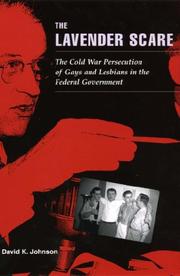
The mass firing of gay and lesbian federal employees during the McCarthy era, which was larger in scale than the anti-communist purge it accompanied. It is the direct provocation for the organised movement in the next stage.
The movement before Stonewall
IntermediateUnderstand the homophile organisations of the 1950s and 60s — Mattachine, Daughters of Bilitis, the picket lines — and what they had already achieved.
▸ Study plan for this stage
Pace: 5–6 weeks. D'Emilio's Sexual Politics, Sexual Communities is 263 pages of dense scholarly history; Cervini's The Deviant's War is 512 pages of narrative and reads far faster. Read D'Emilio first for the structure and Cervini second for the person and the strategy.
- D'Emilio's founding claim: organised gay political activity in the United States begins around 1950, not 1969, and the riots occurred inside a movement rather than creating one
- The Mattachine Society, founded in Los Angeles in 1950 by Harry Hay and others with Communist Party organising experience, and its early minority-group analysis
- The 1953 turn: Mattachine's radical founders displaced by a leadership committed to respectability and to deference to medical and legal experts
- The Daughters of Bilitis, founded 1955, and The Ladder — a separate lesbian organisation with its own priorities and its own conflicts with Mattachine
- The homophile picket lines of 1965 at the White House, the Pentagon and Independence Hall, with dress codes requiring suits and dresses
- Frank Kameny, fired from the Army Map Service in 1957, and the legal and rhetorical campaign he ran for the rest of his life
- Kameny's decisive move — 'Gay is Good' and the refusal of the sickness model — which shifted the argument from asking for tolerance to denying there was anything to tolerate
- The 1973 removal of homosexuality from the DSM, the campaign for which began in this period and is the movement's clearest pre-Stonewall-lineage victory
- What did the original Mattachine founders believe about gay people as a group, and what replaced that analysis after 1953?
- Why did the Daughters of Bilitis exist separately, and what did its priorities look like next to Mattachine's?
- Kameny insisted on a dress code at the 1965 pickets and was later associated with confrontation. Is that a contradiction, or a strategy? Argue from Cervini's evidence.
- What legal argument did Kameny make against his dismissal, and why did the courts take so long to accept anything like it?
- If the movement began in 1950, what does Stonewall actually mark? Give the most defensible answer you can construct from D'Emilio.
- Draw an organisational chart of the homophile movement from 1950 to 1969: Mattachine chapters, DOB, ECHO, NACHO, with founding dates and the splits between them.
- Write 300 words in the voice of a 1965 picket organiser explaining the dress code to a reluctant participant. Then write 300 words in the voice of the participant objecting.
- Track one legal argument — that homosexuality is not a bar to federal employment — from Kameny's 1961 Supreme Court petition through the 1969 Norton decision, using Cervini's account. Note who made which move.
- Read the last chapter of D'Emilio and write a one-page assessment of whether the pre-Stonewall movement's achievements were mainly legal, cultural or organisational.
Next up: With the pre-history in place, the explosion of liberation politics after 1969 reads as a break in strategy rather than as a beginning from nothing.

The foundational scholarly history of the homophile movement, and the book that established that gay political organising in America began around 1950, not 1969. Everything in this path's framing depends on it.

Frank Kameny's decades-long legal and political campaign after being fired from the federal government, told with recently opened records. It puts a face and a strategy on the pre-Stonewall movement and shows how much of the later legal argument was built there.
Liberation and what followed
IntermediateTrace the movement from the Gay Liberation Front through the fights over rights, respectability and inclusion across the next fifty years.
▸ Study plan for this stage
Pace: 10–12 weeks — the longest stage on the path. Faderman's The Gay Revolution is 794 pages and Clendinen and Nagourney's Out for Good is 718; Stryker's Transgender History is a compact 328. Use Faderman as the spine, read Out for Good alongside it for the internal arguments, and read Stryker as a self-
- The Gay Liberation Front, formed weeks after the riots, and its explicitly revolutionary and coalitional politics — anti-war, anti-racist, anti-capitalist
- The GLF/GAA split within a year, over whether to pursue single-issue reform or general revolution, which sets the pattern for the next fifty years
- The 1973 DSM declassification, the Anita Bryant campaign of 1977, and the Briggs Initiative of 1978 as the movement's first national electoral tests
- AIDS from 1981: the transformation of the movement's priorities, ACT UP's direct-action model, and the political consequences of mass death
- The long fights over strategy that Clendinen and Nagourney document candidly — assimilation against liberation, the marginalisation of lesbians inside male-led organisations, and racial exclusion
- Stryker's account of trans activism as its own tradition with its own chronology, including Compton's Cafeteria in 1966, three years before Stonewall
- The recurring pattern Stryker documents of trans people being organised out of coalitions that they had helped build, which bears directly on the contested claims about the riots
- Marriage equality as endpoint and as argument — the campaign that succeeded and the critique that it displaced other priorities
- What did the Gay Liberation Front want that the homophile organisations did not, and what did it give up by wanting it?
- Clendinen and Nagourney are candid about internal conflict. Name the three sharpest divisions they document and say who was on each side.
- Compton's Cafeteria happened in 1966. Why is it not the founding event in the standard narrative, and what does Stryker say about that?
- How did AIDS change the movement's tactics, its institutions and its public argument? Distinguish the three.
- Faderman's book runs from the 1950s to marriage equality as a single arc. What does that structure include and what does it leave out?
- Extend your timeline from stage two forward to the present, adding rows for legal change, organisational history and trans activism. Faderman supplies most of the first two and Stryker the third.
- Take one campaign — the Briggs Initiative is the best documented — and write a 500-word account of who organised it, what the strategy was, and why it succeeded, using both Faderman and Out for Good.
- Write two 400-word arguments about marriage equality as a movement priority: the strongest case for, and the strongest case against, both drawn from the books rather than invented.
- Read Stryker's chapters on the 1970s alongside Faderman's on the same decade and write a one-page note on which events appear in one book and not the other.
Next up: You have now read four interpretations of the same fifty years, which is the only useful preparation for reading the primary documents and judging them yourself.

The most comprehensive single-volume history of the American movement from the 1950s to marriage equality, built on hundreds of interviews. Use it as the spine that connects everything else on this path.
Journalistic history of the movement from 1969 into the 1990s, unusually candid about internal conflicts over strategy, gender and race. It shows a movement arguing with itself rather than advancing in a line.
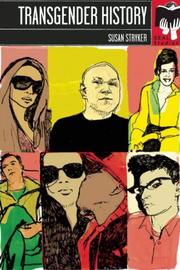
Stryker traces trans activism as its own tradition with its own chronology, intersecting the gay movement and repeatedly being written out of it. Necessary for evaluating the contested claims about who was at Stonewall, and valuable well beyond that question.
Back to the sources
BeginnerWork with primary documents and testimony directly, and form your own view of what the record can and cannot establish about the riots and their aftermath.
▸ Study plan for this stage
Pace: 4 weeks. Stein's documentary collection is 352 pages and should be read against your notes rather than straight through. Marcus's Making Gay History is oral history and reads quickly — an interview or two a sitting. Both are best approached with a specific question in hand.
- What contemporaneous coverage of the riots actually consisted of: a handful of newspaper reports, the Village Voice pieces with their hostile language, and movement publications
- The difference between a contemporaneous document and a recollection, and why the ratio matters so much for June 1969
- Reading movement newsletters as sources: who published them, for whom, and what they were arguing for at the moment of writing
- Oral history's strengths — access to people the written record ignored — and its known weaknesses, including narrative smoothing and the influence of the interviewer's questions
- Marcus's interviews with figures from the 1940s onward, which reach back before any organised movement existed
- How much of each historian's account in stages one to four turns out to rest on the same small body of documents
- The honest conclusion this stage supports: the broad shape of the riots is well established, and several specific and widely repeated claims about individuals are not
- The distinction between saying the record is uncertain and saying a claim is false
- Read the contemporaneous press reports in Stein. What do they establish, what do they get demonstrably wrong, and what vocabulary do they use?
- Take three claims from your stage-one disagreement table and check each against the documents Stein reprints. How many can be settled?
- Marcus's interviewees sometimes contradict each other and sometimes contradict the documents. Find one instance and write down what you would conclude.
- Which of the four historians you read earlier leans most heavily on documents you can now examine yourself, and does their reading hold up?
- After all ten books, write down what you think can be established about the first night of the riots and what cannot. Be specific about the boundary.
- Complete the third column of your stage-one table — what the evidence supports — now that you have the documents. Where the answer is 'unresolved', say so explicitly.
- Choose one interview in Marcus and one document in Stein covering the same period and write 400 words on what each source type can do that the other cannot.
- Write a 600-word account of Stonewall for a general reader that is scrupulous about uncertainty: assert only what the sources support, and mark the contested points as contested.
- Look up how your local or national archive holds LGBT movement material, and write down what a researcher would need to consult one collection. The path ends most usefully by pointing outward.
Next up: The path ends here; from here the obvious continuations are the AIDS histories in depth, trans history on its own terms following Stryker's bibliography, or the local movement archive nearest to you.

A documentary collection of contemporaneous newspaper reports, movement publications and other primary material from before, during and after the riots. Reading the sources after the narratives is the fastest way to see how much interpretation each historian added.

Oral history interviews spanning the movement from the 1940s onward, in the participants' own words and without an argument imposed on them. It is the human record that the analytical histories are built from, and a fitting place to finish.