The Seven Sisters Reading Order: Where to Start with Lucinda Riley
Lucinda Riley's saga gives each of Pa Salt's adopted daughters her own novel, and every one runs the same double track: a present-day journey to the coordinates left in her father's letter, and a historical strand — an artist, a musician, an aviator — that explains where she came from. The books are near-standalone, but the frame story tightens with each volume and the final book answers questions planted in the first, so publication order is the only order that works. This path takes the eight-book saga in sequence and then points at the earlier standalone novels where Riley built the dual-timeline method she later scaled up.
The frame, and the first two sisters
BeginnerUnderstand the premise Pa Salt's death sets up, and see the dual-timeline structure the whole saga runs on.
▸ Study plan for this stage
Pace: Three to four weeks for the two books. The Seven Sisters is 480 pages and The Storm Sister 512, so the stage is 992 pages — at 40 pages an evening that is about twelve sittings per book. Do not rush the opening: the first hundred pages of The Seven Sisters do the work of naming six sisters, establis
- The frame: Pa Salt's death, the armillary sphere and the coordinates each daughter is left, which is the engine of every subsequent volume
- The dual-timeline structure — a present-day journey braided with a historical strand — used identically in both books, which is how you know it is the saga's method and not a one-off
- Maia's Rio strand and the sculpting of Christ the Redeemer as the model for how Riley attaches a sister to a real historical project
- Ally's Norwegian strand and Grieg's Peer Gynt as the second proof of the pattern
- The running question of who Pa Salt actually was, planted here and not answered for another six books
- Why publication order is the only order: the frame tightens volume by volume rather than resetting
- What exactly does Pa Salt leave each daughter, and what does it tell her to do?
- Name the six sisters in adoptive order and the country each one's coordinates point to as far as you know it at the end of The Storm Sister.
- In both books, at what point does the historical strand first connect to the present-day sister — and does the reader work it out before she does?
- What does The Storm Sister add to the Pa Salt question that The Seven Sisters did not?
- If the books are near-standalone, what is actually lost by reading The Storm Sister first?
- Start a one-page saga sheet: six columns, one per sister, with name, coordinate, country and historical strand. Fill in Maia and Ally now and add a column each stage — by stage three you will need it.
- Mark the chapter in each book where the timelines converge, then compare the two page positions. Riley uses roughly the same structural placement each time, and seeing that once tells you how the remaining six books are built.
- Write down every detail either book gives about Pa Salt himself — physical description, wealth, the boat, what the sisters are not told. Keep the list open; you are going to add to it for 3,000 more pages.
- Read the last two chapters of The Seven Sisters again immediately after finishing The Storm Sister and note what has changed in how they read.
Next up: With the frame fixed and the pattern proved twice, you can read the middle three books for the frame story rather than treating each one as a self-contained historical novel.

This is the entry point with no alternative: it opens with Pa Salt's death, gives all six sisters their names and the coordinates that send each of them off, then follows Maia to Rio and the sculpting of Christ the Redeemer. Everything later in the saga assumes you have read this frame.
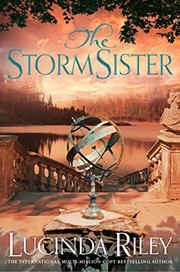
Ally's book, and the one that proves the pattern is deliberate rather than a one-off — Norway, Grieg and the first performance of Peer Gynt. It also introduces the running thread about who Pa Salt actually was, which is the saga's real plot.
The middle three
BeginnerFollow the saga through its widest historical range, and start tracking the frame story rather than treating each book as a standalone.
▸ Study plan for this stage
Pace: Six to eight weeks — roughly one book every two to three weeks, which is the pace that makes an eight-book saga finishable. The Pearl Sister is 510 pages and The Moon Sister 544; we do not have a reliable page count on record for The Shadow Sister, but it sits in the same range as its neighbours in
- Star and CeCe as a paired reading: two books, two narrators, one separation seen from both sides
- The shift in what the historical strands are for — literary and artistic history (Beatrix Potter's Lake District, the Aboriginal art world) rather than a single monument
- The sisters' relationships with each other beginning to carry the emotional weight the fathers' histories carried in stage one
- The saga's supernatural register, which becomes explicit in The Moon Sister and is not walked back afterwards
- The frame story overtaking the standalone story: the Pa Salt thread now appears in the plot rather than the margins
- Riley's habit of seeding a detail in one sister's book that only pays off in another's
- How does The Pearl Sister re-read events you saw from Star's point of view in The Shadow Sister, and where do the two accounts differ?
- What does each of the three historical strands claim about the artist or maker at its centre, and which of the three is closest to documented history?
- At what point does The Moon Sister ask you to accept second sight as literally true rather than as a character's belief, and does the book give you a way to read it otherwise?
- What new information about Pa Salt or the missing seventh sister does each of these three books add?
- Which of the three would you hand to someone who wanted a single Riley novel, and why?
- Add Star, CeCe and Tiggy to the saga sheet, and this time also record what each book tells you about the seventh sister — that column is the one that matters from here.
- Take one scene that appears in both The Shadow Sister and The Pearl Sister and write a paragraph on what each sister notices that the other does not.
- Track the mystical elements across all three books: list every moment a character knows something they could not have known, and note whether the book confirms it. Do this before you decide whether The Moon Sister broke the saga for you.
- Look up one real figure or institution from each historical strand — Potter, the Aboriginal art market, flamenco's Romani lineage — and note one thing the novel changed or compressed. Riley's strands are researched but they are novels.
Next up: The frame story is now the main plot rather than a background note, which is exactly the state the last two sisters' books assume from page one.

Star's book, set against Beatrix Potter's Lake District and Edwardian England. Read third because it is where the sisters' relationships with each other — rather than with their fathers' histories — begin to carry weight.

CeCe's book takes the saga to Australia and the Aboriginal art world, and it is the volume most often named as the strongest of the middle run. It follows The Shadow Sister directly because Star and CeCe's separation is the hinge between the two.

Tiggy's book, with a Spanish flamenco and Romani historical strand and an openly mystical streak the earlier volumes only hint at. Worth knowing that going in — this is where readers either accept the saga's supernatural register or stall.
The last two sisters, and the missing one
BeginnerSee the frame story take over from the individual histories as the search narrows to the seventh sister.
▸ Study plan for this stage
Pace: Five to six weeks for 1,232 pages — The Sun Sister is 656, the longest book in the saga, and The Missing Sister 576. Give The Sun Sister its own three weeks rather than trying to hold the pace of the middle stage; it is a third longer than The Pearl Sister and its present-day half is a sustained add
- The search for the seventh sister as the series' main engine, no longer a subplot
- Electra's present-day strand as the saga's one sustained interior story — addiction and recovery — against a historical strand set in colonial Kenya
- Merry's story as a structural exception: a woman who does not know she is being looked for, so the search plot runs from outside her
- The Irish and New Zealand strands, and the reason the saga needed a book that crosses hemispheres rather than sitting in one
- Deliberate withholding as a technique: what The Missing Sister refuses to answer and why the refusal is planned rather than a failure
- The accumulated Pa Salt evidence, which by the end of this stage is enough to make several competing theories defensible
- What does the saga gain by making Electra's book the longest, and what would be lost by cutting the addiction plot to fit the length of the others?
- How does The Missing Sister change the sisters' relationship to their father's letter — are they still following his instructions by this point?
- What is the case, on the evidence you have, for who Pa Salt was? Write it out before opening Atlas.
- Where does The Missing Sister stop, and what precisely does it leave unanswered?
- Which earlier volume does each of these two books quietly depend on, and would a reader who skipped it notice?
- Before starting The Missing Sister, write your Pa Salt theory in three sentences and date it. You will check it against Atlas in the next stage, and the guess is more interesting than the answer.
- Complete the saga sheet — all seven columns — and mark every cell you filled in from an inference rather than a stated fact.
- Reread the first chapter of The Seven Sisters after finishing The Missing Sister and list the details that were planted there and have now been used.
- Note the points in The Sun Sister where the colonial Kenya strand and the present-day New York strand comment on each other, then decide whether the book earns the parallel.
Next up: You now hold every question the saga has asked and none of the answers, which is the state Atlas was written to be read in.

Electra's book — a New York supermodel's addiction plot against a Kenyan colonial strand — and the point at which the search for the missing seventh sister becomes the series' main engine rather than a background note.

The sisters go looking for Merry across Ireland and New Zealand, and the book deliberately withholds the resolution. Read it knowing it is the setup for the finale, not the finale.
The answer, and where the method came from
IntermediateFinish the saga, then read the earlier standalones that show how Riley built the dual-timeline novel she later stretched across eight books.
▸ Study plan for this stage
Pace: Read Atlas first and alone — it was drafted by Lucinda Riley and completed by Harry Whittaker after her death, which is why the catalogue credits it to both, and it answers the Pa Salt question the previous seven books built. We do not have a reliable page count on record for Atlas, but it is a full
- The resolution of the Pa Salt question and the seventh sister, and how far back into the first book its groundwork reaches
- Posthumous completion as a real editorial fact of this book — how the finale reads against the seven volumes Riley finished herself
- The dual-timeline novel at standalone length in Hothouse Flower: an English estate and a wartime Thai strand, the saga's structure in one volume
- The Midnight Rose as the most ambitious pre-saga version of the method — a century-spanning Indian and English story
- The Light Behind the Window's Provence and wartime-France pairing as the smaller scale Riley worked at first
- What scaling the method to eight books added, and what it cost, compared with the standalones
- The one-title-two-markets problem (Hothouse Flower / The Orchid House) as a practical hazard of reading a British author in American editions
- Does Atlas's answer make the first book better or worse on a reread, and which specific scene decides it for you?
- How close was the Pa Salt theory you wrote down in the previous stage, and what evidence did you weight wrongly?
- Comparing Hothouse Flower with any single sister's book, what does the standalone do that the saga volume cannot, and vice versa?
- The Midnight Rose spans roughly a century in one volume where the saga spans a century per sister. Which handles the span better?
- If someone asked you for one Riley novel and refused to read eight, which of these three standalones would you give them?
- Read Atlas with the saga sheet open and mark every column it closes. The cells it leaves open are deliberate.
- Reread the first two chapters of The Seven Sisters immediately after finishing Atlas and list what now reads differently. This is the single best use of an hour in the whole path.
- Compare the opening chapter of Hothouse Flower with the opening of The Seven Sisters — same structural move, ten years of practice apart — and note what the later book does more confidently.
- Before buying, check the title page of any Riley paperback you pick up against your existing shelf. Hothouse Flower and The Orchid House are one book, and this is the mistake readers of this saga most often make.
- Pick the standalone you liked least and write a paragraph on what the saga format would have fixed in it.
Next up: This is the end of the path: the saga is closed, and the three standalones show the machinery Riley built before she stretched it across eight books.

The finale, drafted by Riley before her death in 2021 and completed by her son Harry Whittaker, which is why the catalogue record credits the authorship oddly. It answers Pa Salt directly and must be read last.

Riley's 2011 breakout, and the clearest ancestor of the saga: an English estate, a wartime Thai strand and the same alternating structure at standalone length. Published in the United States as The Orchid House — the two titles are the same novel, so buy only one.

A century-spanning Indian and English story that shows the dual timeline at its most ambitious before the saga, and is the standalone most often recommended to readers who finish the sisters and want more of the same.

A Provence and wartime-France pairing that closes the path on the smaller scale Riley worked in first. Read it last of the three if you want one more before starting over.