Louis L'Amour's Sackett Series Reading Order: Where to Start
Louis L'Amour wrote seventeen Sackett novels over twenty-five years and wrote them almost entirely out of sequence — The Daybreakers came first in 1960, and the story's actual beginning in Elizabethan England did not arrive until 1974. Late in his life L'Amour published his own chronological list of the family and told readers to follow it, and this path takes him at his word: it reads the Sacketts from a London street fight in the 1590s westward to the Canadian border, and explains what publication order gives up.
Elizabethan England to the Carolina Frontier
BeginnerRead the four novels about the first American Sacketts, which L'Amour wrote last and placed first. ORDER CHOSEN: L'Amour's own chronological family order, as set out in his Sackett Companion, not publication order. Publication order starts you in 1860s New Mexico with The Daybreakers and then jumps back three centuries; chronological order costs you nothing, because L'Amour wrote every book to stand alone, and it turns seventeen westerns into one three-hundred-year family story.
▸ Study plan for this stage
Pace: Three to four weeks for 1,087 pages across four novels. These are short books by modern standards — Sackett's Land is 185 pages, To the Far Blue Mountains 287, The Warrior's Path 240 — and L'Amour wrote for a paperback reader who finished a book in two evenings, so a novel every three or four days i
- L'Amour's chronological family order, published late in his life in his Sackett Companion, and why he told readers to use it
- Every Sackett novel is written to stand alone, which is exactly what makes a non-publication order costless
- Barnabas Sackett's fen-country stubbornness as the inherited trait the whole three-hundred-year series runs on
- The frontier as a series of moving edges — Norfolk fen, Carolina wilderness, then the Rockies — rather than a single place
- Competence in wild country as L'Amour's central value, established here and never abandoned
- The colonial-era books as the ones L'Amour wrote last, with a career of craft behind them
- Sackett's Land opens in England, not America. What does the series gain by starting a western three thousand miles east of the West?
- Name three specific practical skills Barnabas demonstrates. Does L'Amour explain them, or expect you to keep up?
- The Warrior's Path sets a Sackett's woodcraft against colonial society directly. Which does the novel treat as more dangerous?
- Jubal Sackett walks to the Rockies a century before anyone else in the series. What does his isolation let L'Amour write that the crowded later books cannot?
- L'Amour wrote these four last. What in the writing shows it?
- Start a family tree with Barnabas at the top and add every Sackett as they appear; by stage five it will have three centuries on it and it is the only practical way to keep the branches apart.
- Mark every passage in Jubal Sackett describing terrain rather than action, and compare the proportion with Sackett's Land — the shift is the measure of what L'Amour learned in twenty-five years.
- List the skills each of the four protagonists relies on and note which are shared across all four; that shared list is the family trait the series is actually about.
- Read the opening chapter of The Daybreakers out of order now, then set it aside; comparing it with Sackett's Land shows immediately what a publication-order reader gets first.
Next up: The colonial branch established, the next stage crosses a two-century gap to the Tennessee mountain Sacketts and to the ride west that made the series famous.
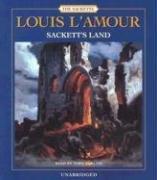
Barnabas Sackett finds Roman gold in a Norfolk fen, makes an enemy of a peer, and sails for America. The chronological beginning of the whole family and the right first book — it is short, fast, and it plants the fen-country stubbornness every later Sackett inherits.

Barnabas returns to England for his inheritance and comes back to build a settlement in the Carolina wilderness. Second, and the book that establishes the family's westward instinct as a choice rather than an accident. Some catalogue records credit this one to the wrong author; the book is L'Amour's.
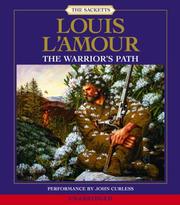
Kin and Yance Sackett go north after a kidnapping, into Massachusetts and the Caribbean slave trade. Third by chronology, and the first book where a Sackett's competence in the woods is contrasted directly with colonial society.
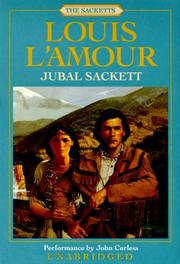
Barnabas's son walks west from the Carolinas to the Rockies, a century before anyone else in the series. The best-written book L'Amour ever produced and the last one he finished; fourth chronologically and worth slowing down for.
Tennessee, and the First Ride West
BeginnerCross the two-century gap to the nineteenth-century mountain Sacketts, and follow the branch that opens the American West — Tell, Orrin and Tyrel Sackett.
▸ Study plan for this stage
Pace: About two weeks for 544 pages — Ride the River 184 pages, The Daybreakers 204, Lando 156, all short enough to read in two sittings each. This is the lightest stage of the path and the fastest-moving. Ride the River comes first because it bridges the colonial books and the western ones; The Daybreake
- Echo Sackett as the only woman to lead a Sackett novel, and what the series does with a protagonist who cannot rely on a gunfight
- The Tennessee mountain branch as the reservoir the western Sacketts come out of
- The Daybreakers as the series' true origin in publishing terms, read here in fifth place by design
- Orrin's route into law and politics against Tyrel's into gunfighting — the two ways L'Amour thinks a frontier man can end up
- The family scattering rather than travelling as one unit, which is what makes seventeen novels possible
- Inheritance and money as recurring plot engines, running from Sackett's Land straight into Ride the River
- Echo walks to Philadelphia and back with an inheritance. Which of her solutions would have been unavailable to a male Sackett, and does the novel notice?
- The Daybreakers was written first. Reading it sixth, what does it assume the reader does not know, and were you missing any of it?
- Orrin and Tyrel take opposite paths in New Mexico. Does L'Amour prefer one, and what is the evidence in how each is written?
- Lando is a different branch entirely. What is gained by following a Sackett who is not part of the main line?
- The money in Ride the River traces back to the first book. How much of this series is about property?
- Map Echo's route from Tennessee to Philadelphia and back against a period map; the novel's plot is a geography problem and seeing it laid out changes how the threats read.
- Add the Tennessee branch to the family tree started in stage one and mark where it connects back to Barnabas.
- Read The Daybreakers' first two pages and Sackett's Land's first two pages side by side, and note what 1960 L'Amour does that 1974 L'Amour no longer does.
- List the ways Orrin and Tyrel each resolve a confrontation across The Daybreakers; the two lists are the novel's argument.
Next up: With the western branch established, the next stage follows the eldest brother through the run of novels that made the series famous and that state the clan's defining rule outright.

Echo Sackett, sixteen, walks from Tennessee to Philadelphia to collect an inheritance and walks back with it. The bridge between the colonial books and the western ones, and the only Sackett novel with a woman as its lead.
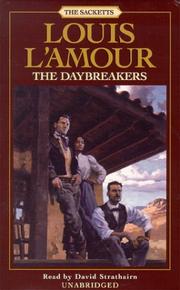
Orrin and Tyrel Sackett leave the Tennessee hills for New Mexico. This was the first Sackett novel written, in 1960, and it is where a publication-order reader would start; in chronological order it lands here, with two centuries of family already behind it.
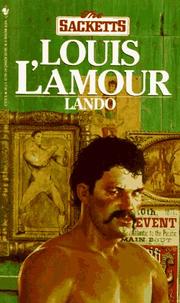
Orlando Sackett, a Tennessee branch, ends up in a Mexican prison and comes out a fighter. Read after The Daybreakers: it runs alongside those events and shows the family scattering rather than moving as one.
Tell Sackett's Decade
IntermediateFollow the eldest brother, William Tell Sackett, through the run of novels that made the series famous — and watch the family's defining rule appear: touch one Sackett and all of them come.
▸ Study plan for this stage
Pace: Ten days to two weeks for 470 pages, the shortest stage on the path — Mojave Crossing 150 pages, The Sackett Brand 151, Mustang Man 169, each an evening or two. The order inside the stage is doing the work: Mojave Crossing first so you know Tell well, The Sackett Brand second so the family's converg
- The clan rule stated outright in The Sackett Brand — touch one Sackett and all of them come — and how the earlier books had been building to it
- Terrain as antagonist: the Mojave crossing is the clearest example of L'Amour writing landscape as the thing trying to kill you
- Tell Sackett as the series' most fully drawn character, and the cumulative method that made him so across several short books
- Nolan Sackett as the deliberate counter-example — the same blood, none of the loyalty
- How L'Amour paces a 150-page novel: one problem, one landscape, one antagonist
- The gaps in any reading order, and what to do about a volume the catalogue only holds in an omnibus
- Mojave Crossing spends much of its length on water, distance and heat. Count the pages given to the desert against those given to the human antagonist — which is the real plot?
- The Sackett Brand brings the family together. How does L'Amour make a convergence of relatives read as a threat rather than a reunion?
- Nolan Sackett is placed immediately after the clan closes ranks. What does the juxtaposition argue?
- Tell appears across several books. Which single scene tells you most about him, and could that scene have worked in the first Sackett novel you read?
- These books run 150 to 170 pages. What has to be left out at that length, and does L'Amour miss it?
- While reading Mojave Crossing, note every water source mentioned and the distance between them; the survival arithmetic is exact and following it is the point.
- List every Sackett who appears or is named in The Sackett Brand and check each against your family tree — the novel is a roll call and the tree makes it legible.
- Write down Nolan's code as the book gives it, then set it beside Tell's; the difference is a single principle and finding it is the exercise.
- Take one chapter of Mojave Crossing and count the sentences over twenty words; L'Amour's pace at this length is a measurable feature of the prose.
Next up: The next stage moves to the Colorado high country and the Clinch Mountain branch, and to the two novels where the family's own three-hundred-year history comes back into the plot.
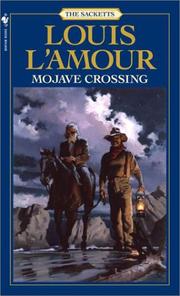
Tell Sackett crosses the desert to Los Angeles with gold and a woman he should not trust. A tight, contained book and the best single demonstration of L'Amour's terrain writing. Some records credit it to the wrong author; the novel is L'Amour's.

Tell's wife is killed and the family converges on the Mogollon Rim. The emotional centre of the series and the book that states the clan rule outright — read it after Mojave Crossing, when you know Tell well enough for it to land.
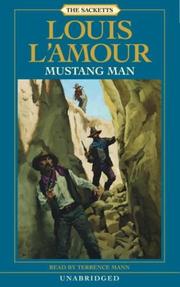
Nolan Sackett, the black sheep of the clan, on the Llano Estacado. Placed here because it deliberately follows The Sackett Brand: having seen the family close ranks, you meet the cousin who lives outside them. The neighbouring novel The Lonely Men resolves only inside a four-book omnibus in our catalogue, so it is not listed separately here.
The Colorado Sacketts
IntermediateRead the Flagan and Galloway branch and the two novels where the family's older history — the money from Sackett's Land, the mountain kin — comes back into play.
▸ Study plan for this stage
Pace: Two weeks for 512 pages — Galloway 156, Treasure Mountain 187, Ride the Dark Trail 169. Same short-novel rhythm as the last stage. Read Galloway before Treasure Mountain: it establishes the brothers Tell later calls on, and the call means nothing if you have not met them. Treasure Mountain is the bo
- The Clinch Mountain branch — Logan, Flagan, Galloway — as the wild kin distinct from Tell's line
- Land grants and title as the actual legal substance under a range war
- Treasure Mountain as the series' internal reckoning, where the western books reach back to the family history the earlier stages established
- The high-country Colorado setting and what altitude does to L'Amour's survival writing
- A widow's ranch, a disputed grant, a vanished father: L'Amour's three recurring plot engines all appearing in one stage
- How a family saga written out of order eventually has to close its own loops
- Galloway sets Anglo settlers against a Spanish land-grant family. Whose legal claim does the novel treat as stronger, and does it argue the point or assume it?
- Treasure Mountain reaches back into the family's past. Which earlier books does it actually require, and which does it merely reward?
- Flagan's survival stretch in Galloway is the most extended physical-hardship writing in the series. What does L'Amour include and what does he decline to describe?
- Logan Sackett defends a ranch he has no stake in. What does the series think obligation is founded on?
- By this point the family tree has many branches. Has L'Amour kept them genuinely distinct, or are they the same man under different names?
- Write a one-line character sketch of Flagan, Galloway, Logan, Tell and Nolan without looking anything up; where the sketches blur is your honest answer to the last question above.
- Trace on your family tree the exact link between Treasure Mountain's search and Sackett's Land, and note how many books it passes through.
- List the legal facts about the Spanish land grant as Galloway states them, and separate what is asserted by a character from what the narration confirms.
- Compare the Colorado terrain writing here with the Mojave in the previous stage; the two are the same technique applied to opposite extremes.
Next up: The final stage closes the chronology at the Canadian border and then leaves the fiction for L'Amour's own account of the reading that produced all of it.
Flagan and Galloway Sackett settle in the Colorado high country against a Spanish land-grant family. Best read before Treasure Mountain, since it establishes the brothers Tell later calls on.
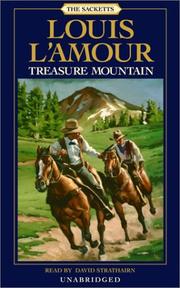
Tell and Orrin go to New Orleans and then Colorado looking for the father who vanished twenty years earlier. The book that ties the western Sacketts back to the family's own past, so it needs the earlier stages behind it.
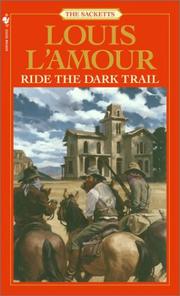
Logan Sackett, another of the wild Clinch Mountain branch, defends a widow's ranch. Here because it pairs with Galloway and Treasure Mountain to complete the Colorado cluster.
The Last Rides, and L'Amour Himself
IntermediateClose the chronological run at the Canadian border, then read L'Amour's own account of the reading and wandering the whole series came out of.
▸ Study plan for this stage
Pace: Two to three weeks for 660 pages. The Sky-Liners is 208 pages and Lonely on the Mountain 194, the last Sackett novel by internal chronology and the natural end point of the family story. Then Education of a Wandering Man, 258 pages — a memoir rather than a novel, and the longest item in this stage;
- Lonely on the Mountain as the chronological terminus — the family reaching the Canadian border, and the point at which a reader can stop
- The cattle drive as L'Amour's final structural device: a fixed route, a deadline and a moving target
- L'Amour's self-education as a merchant seaman, miner and boxer, and the reading lists that document it
- Where the Sacketts' blend of frontier competence and book learning actually came from
- Reading a memoir as a primary source about its own author rather than as a neutral record
- What is left after fifteen of the seventeen novels, and whether completeness is worth pursuing
- Lonely on the Mountain reunites Tell, Orrin and Tyrel. What has changed in them since The Daybreakers, and is the change earned across the books between?
- The Sky-Liners is one of the most enjoyable of the run and one of the least consequential. What does that combination say about the series' design?
- Education of a Wandering Man is L'Amour's account of himself. Which claims in it could be checked, and which are unfalsifiable by their nature?
- Look at his reading lists. How much of what a Sackett knows can be traced to a specific book he names?
- Having read the family chronologically, would you now recommend publication order to anyone? Under what condition?
- Finish the family tree and mark the date and place of each novel beside its Sacketts; the completed diagram is the three-hundred-year story in one page.
- Pick five titles from L'Amour's reading lists in Education of a Wandering Man and note which of them show up as knowledge in a Sackett's hands.
- Write the argument for chronological order in one paragraph and the argument for publication order in another, using specific books rather than general claims.
- List the Sackett novels you have not read, including The Lonely Men, and decide in writing whether the story is complete enough to stop here — this path is built on the position that it is.
Next up: This is the end of the path: L'Amour's own chronological order from an Elizabethan fen to the Canadian border, plus the memoir that explains where it came from — the remaining Sackett novels can be read in any order from here, since every one of them stands alone.
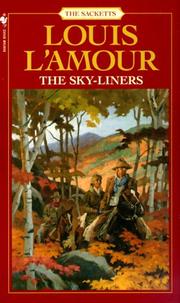
Flagan and Galloway again, escorting a girl and a fortune through the mountains. Late in the chronology and one of the most purely enjoyable of the run. Some records carry the wrong author field; the book is L'Amour's.
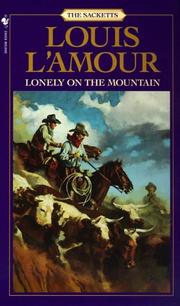
Tell, Orrin and Tyrel drive cattle from Kansas to British Columbia to save a cousin. The last Sackett novel by internal chronology and the natural end point of the family story.
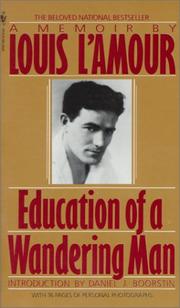
L'Amour's memoir of the books he read while working as a merchant seaman, miner and boxer, with the reading lists included. Read last: it explains where the Sacketts' particular blend of frontier competence and self-education actually came from.