The history of Sudan: books to read, in order
Sudan was the largest country in Africa until 2011, when the south voted almost unanimously to leave after two civil wars that together consumed most of the years since independence. Understanding why requires going back further than the wars: to a Turco-Egyptian conquest that treated the south as a slaving frontier, a Mahdist state that briefly expelled every foreign power, a British-Egyptian condominium that ruled north and south as effectively separate territories and then joined them at the moment of departure, and an independent state in which a narrow riverain elite governed a country whose peripheries — south, west, east and the Nuba mountains — were all in some sense colonies. Douglas Johnson's argument that this is one continuous crisis of centre and periphery rather than a series of separate wars is the organising idea of this path. It runs chronologically, gives Darfur its own stage because that is where the historiographical argument is sharpest, and ends with South Sudan's independence and its immediate collapse into war.
Before Independence
BeginnerEstablish the deep background. By the end you should be able to explain the Turco-Egyptian conquest of 1820 and the slave trade it ran, what the Mahdiyya was and why it succeeded, how Kitchener's reconquest at Omdurman worked, and what the condominium's Southern Policy did to the country it eventually handed over.
▸ Study plan for this stage
Pace: Three books, 835 pages, and two of them are by the same historian, so keep the titles distinct. P. M. Holt's A modern history of the Sudan, written with M. W. Daly, is 247 pages and is the survey — read it first as the spine of the stage, and note that our catalogue holds it under an earlier edition
- The Turco-Egyptian conquest and the administration of the south as a slaving frontier
- The Mahdiyya: its religious claim, its military success, and the state it built
- Omdurman and the technological asymmetry of the reconquest
- The Anglo-Egyptian condominium as a legal fiction and an administrative reality
- The Southern Policy — separate administration, restricted movement, missionary education
- The riverain north as the seat of administration, education and later of the independent state
- The joining of north and south at the moment of British departure
- Reading an imperial participant's account for what it reveals about its author
- How did the Turco-Egyptian administration treat the southern territories, and what did that establish?
- Why did the Mahdist movement succeed where earlier resistance had not?
- What was the condominium, constitutionally, and who actually governed?
- What did the Southern Policy do, in practice, to the relationship between the two halves of the country?
- Why were north and south administered separately for decades and then joined at independence?
- What does Churchill reveal about British assumptions that Holt's scholarship cannot?
- Draw the country as the condominium administered it, marking which regions were under the Southern Policy and what the restrictions were.
- From Holt's Mahdist State, write down the Mahdi's claims about his own authority and note which later Sudanese movements have invoked them.
- Read Churchill's account of Omdurman and then Holt's, and list the facts both agree on and the judgements only one makes.
- Build a chronology from 1820 to 1956 and mark every point at which the north-south relationship was formally redefined.
Next up: The independent state inherited a country administered as two, which is where the next stage's central argument begins.

The standard survey, by Holt and M. W. Daly, running from the coming of Islam to the present. Our catalogue holds it under the earlier edition title, A Modern History of the Sudan; it is the same lineage of work and the spine of this stage.

Holt's monograph on the Mahdi's movement and the state it built between 1881 and 1898. The most important episode in Sudanese history for how Sudanese Islamists have understood their own politics ever since.
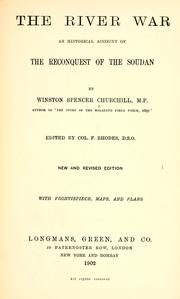
Churchill's 1899 account of the reconquest, written as a young officer who was at Omdurman. Read it as a primary source on the imperial mind rather than as history — its judgements on Sudanese Islam are exactly what you would expect, and that is the point.
The Civil Wars
IntermediateWork through the two north-south wars, 1955-72 and 1983-2005. You should be able to explain the Torit mutiny, the Addis Ababa agreement and why it broke down, the imposition of sharia in 1983, the SPLA's split in 1991, and Johnson's case that treating these as two wars rather than one continuous crisis obscures the cause.
▸ Study plan for this stage
Pace: Four books, 1,556 pages, and they are four different kinds of knowledge. Douglas H. Johnson's The root causes of Sudan's civil wars is 254 pages and must be read first — it is the single most important book on Sudan in English and the argument this whole path is organised around: an unequal state bu
- The Torit mutiny and the beginning of the first war
- The Addis Ababa agreement, the autonomy it granted, and the decisions that dismantled it
- The imposition of sharia in 1983 and the redivision of the south
- Oil, and the alteration of the north-south boundary around it
- The 1991 SPLA split, its ethnic dimension, and the Bor massacre
- Johnson's continuity thesis: one crisis of centre and periphery rather than two wars
- Identity as the war's declared subject — Arab and African, Muslim and Christian — and the limits of that framing
- Humanitarian operations as a resource the armed parties learned to use
- What was the Torit mutiny, and what does its timing relative to independence signify?
- Why did the Addis Ababa agreement break down? Name the specific decisions.
- State Johnson's continuity thesis and identify the evidence that would count against it.
- What happened in the 1991 SPLA split, and what followed at Bor?
- Francis Mading Deng frames the conflict as one of identity. What does that explain, and what does it leave out that Johnson supplies?
- What did the aid operation do in southern Sudan, on Scroggins's evidence — beyond feeding people?
- Draw the north-south boundary as it stood at independence and mark every subsequent alteration, with the oilfields on the same map.
- Write out the Addis Ababa agreement's terms and, beside each, the act that voided it.
- Take Johnson's centre-periphery framework and apply it to the east and to the Nuba mountains, not just the south. If it holds there too, that is his case.
- Read one of the Lost Boys' accounts in They poured fire on us from the sky alongside the analytical treatment of the same period and note what the child's account records that the historian's does not.
- List the ways the armed parties used relief operations, from Scroggins, and mark which are still standard practice.
Next up: Relief kept surfacing as an instrument of the war rather than as a response to it, which is exactly the subject the next stage takes up directly.
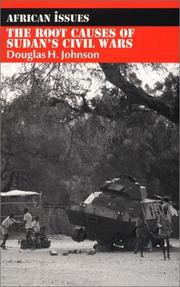
The single most important book on Sudan in English, and the argument the rest of this path is organised around: an unequal state built on an exploited periphery, producing the same war repeatedly. Read it before anything else on the conflicts.
A Dinka scholar and diplomat on the conflict of identities — Arab and African, Muslim and Christian — at the centre of the Sudanese state. The best account of the war as an argument about what the country was, written by someone who negotiated in it.
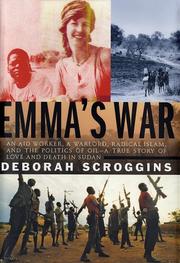
The story of the British aid worker who married the SPLA commander Riek Machar, and through it the aid industry, the 1991 SPLA split and the Bor massacre. The most readable book on the list and unusually honest about what humanitarian intervention did in southern Sudan.
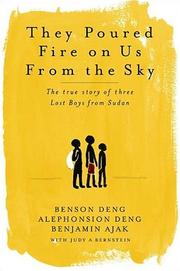
Three of the Lost Boys of Sudan telling their own walk out of Bahr el Ghazal as children. Read it after the analytical accounts; it supplies what none of them can.
Famine, Aid and the Argument About Both
IntermediateTake up the humanitarian dimension, which in Sudan is not a side issue but part of how the wars were fought. You should be able to state Alex de Waal's argument that people in famine do not simply die of starvation but make strategic choices to preserve future livelihoods, and why that reframing changed relief practice.
▸ Study plan for this stage
Pace: Two books by Alexander De Waal, 478 pages, and the shorter stage on this path. Famine that kills is 258 pages, a close study of the 1984-85 Darfur famine, and it is the one that changed the field: it showed that most deaths came from disease during displacement rather than from starvation itself, an
- Famine mortality: disease during displacement rather than starvation as the principal killer
- Coping strategies as rational choices about future livelihood rather than as helplessness
- The distinction between famine that kills and famine that impoverishes
- What the reframing changed in relief practice — where to intervene, and with what
- Relief resources as assets in a conflict economy
- The political marketplace: loyalty purchased, prices fluctuating, budgets as the real constitution
- Why an institutional account of Sudanese government explains less than a transactional one
- The relationship between drought, land use and conflict in Darfur before 2003
- State De Waal's argument about famine mortality precisely enough that it could be tested.
- What do people in famine actually do, on his evidence, and why?
- How did this book change what relief agencies do?
- What is the political marketplace, and what does it predict that an institutional model does not?
- Apply the marketplace framework to one episode from the civil wars stage. Does it fit?
- What does the 1984-85 Darfur famine tell you in advance about the conflict that began there in 2003?
- Reconstruct De Waal's mortality data from Famine that kills and write out the causes of death in order. The order is the finding.
- List the coping strategies he documents and rank them by how much future livelihood each preserves.
- Take the political marketplace framework and map one Sudanese government's coalition onto it — who was paid, in what, and for what.
- Write a paragraph on what a relief agency should have done in Darfur in 1984, using only what the book establishes.
Next up: The famine, the land use behind it and the government's transactional politics are the three things the Darfur conflict is made of, so you now have its components before meeting it.

The 1984-85 Darfur famine studied at close range, and the book that overturned the standard model of famine mortality by showing that most deaths came from disease during displacement rather than from starvation, and that people's own coping strategies were rational. One of the most influential books ever written on relief.
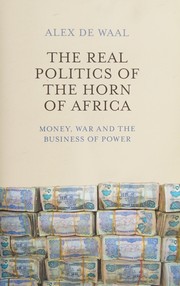
De Waal decades later on how the region's politics actually works as a transactional marketplace of loyalty payments. The framework explains a great deal about Sudanese governance that institutional accounts miss.
Darfur
IntermediateEnter the Darfur conflict and the dispute over how to describe it. You should be able to explain the origins of the 2003 rebellion, the Janjaweed and the government's counterinsurgency, and to set out the genocide argument and the objections to it — including from writers who documented the atrocities and still resisted the label.
▸ Study plan for this stage
Pace: Three books, 744 pages, and two of them display under exactly the same title, so attach the authors every time. Gérard Prunier's Darfur is 236 pages, a short history whose original subtitle called it an ambiguous genocide — which is the argument in three words: he documents mass atrocity and then in
- The 2003 rebellion: who rebelled, from where, and with what demands
- The Janjaweed, their recruitment, and their relationship to government forces
- Counterinsurgency by proxy, and the deniability it was designed to produce
- Land, drought and the native administration system as the conflict's long-run substrate
- The genocide argument and the specific legal elements it requires
- The objections to the label from people who documented the atrocities
- Darfur as an instance of Johnson's centre-periphery pattern rather than an aberration
- International advocacy and its effect on how the conflict was described and addressed
- What did the Darfur rebels demand in 2003, and how does that connect to the country's other peripheries?
- How did the government's counterinsurgency work, and what was the Janjaweed's role in it?
- Set out the genocide argument and the objections to it. What does the legal term require that mass atrocity does not?
- What do Flint and De Waal emphasise that Prunier does not, and vice versa?
- How does Cockett's framing relate Darfur to the north-south wars?
- What did international advocacy get right about Darfur, and what did it distort?
- Write the genocide question out as a list of legal elements and, for each, note what Prunier and what Flint and De Waal say the evidence shows.
- Map Darfur's land tenure and native administration before 2003 from Flint and De Waal, then overlay the conflict's geography.
- Compare the two Darfur books' accounts of the same episode and record where the difference is evidential and where it is interpretive.
- Apply Johnson's centre-periphery thesis to Darfur point by point and note where it fits badly.
- Draft the sentence you would use to describe what happened, and defend every word in it.
Next up: The pattern has now appeared in the south and in the west; the last stage follows the south out of the country and asks whether leaving broke the pattern.
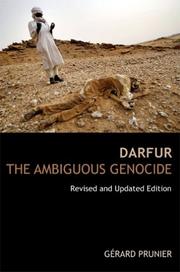
Prunier's short history, subtitled The Ambiguous Genocide in its original edition, which is the argument in three words: he documents mass atrocity and interrogates whether the legal term fits. Note that our catalogue holds two distinct books displaying simply as Darfur; this is Prunier's.
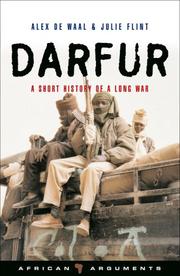
Flint and Alex de Waal's account, built on field reporting and far more attentive to Darfur's own long internal history of land, drought and tribal administration. This is the other Darfur record; read it directly after Prunier, since the two disagree productively.

An Economist correspondent's survey of the whole modern Sudanese state with Darfur at the centre, and the best book for seeing Darfur as an instance of the pattern Johnson described rather than as an isolated horror. Catalogued under the bare title Sudan.
Partition and After
IntermediateFollow the story to the 2005 Comprehensive Peace Agreement, the 2011 referendum and South Sudan's descent into its own civil war within two years. You should be able to explain what the CPA settled and what it deferred, and why independence did not end the pattern.
▸ Study plan for this stage
Pace: Two books, 592 pages, the shortest stage here and the most recent material. Matthew LeRiche's South Sudan, written with Matthew Arnold, is 272 pages on the SPLM's transformation from a guerrilla movement into a government and the institutional weaknesses it carried across; it was written just as ind
- The Comprehensive Peace Agreement: what it settled, what it deferred, and the referendum it guaranteed
- Abyei, the border and the oil arrangements left unresolved
- The 2011 referendum result and the terms of separation
- A guerrilla movement becoming a government, and the institutional habits it brought with it
- Oil revenue as almost the entire budget of the new state
- The 2013 collapse: the split within the SPLM and its ethnic dimension
- Whether partition broke the centre-periphery pattern or reproduced it inside the new country
- The unresolved peripheries left in Sudan after the south's departure
- What did the CPA settle and what did it defer? List the deferred items and their later fate.
- Why did the referendum result come out as overwhelmingly as it did?
- What weaknesses did LeRiche identify at independence, and which of them materialised?
- What happened in 2013, and how did a political split become an ethnic war?
- Did partition end the pattern Johnson described, or move it? Argue from the evidence.
- What remains unresolved in Sudan itself after the south left?
- Take the CPA's provisions one by one and mark each as implemented, deferred or abandoned.
- List LeRiche's cautions and score each against what actually happened. This is the most useful thing a book written at the moment of independence can be used for.
- Trace South Sudan's oil revenue and its share of the national budget, and ask what a state financed that way can and cannot do.
- Apply Johnson's framework to South Sudan after 2011 — is there a centre, and are there peripheries?
- Write a final page answering the question this path opened with: why the largest country in Africa split, using one book from each stage.
Next up: This closes the path: a single argument about centre and periphery, tested across the Mahdist state, two civil wars, a famine, Darfur and a partition that did not end it.

LeRiche and Matthew Arnold on the SPLM's transformation from a guerrilla movement into a government, and the institutional weaknesses it carried across. Written just as independence arrived, which makes its cautions worth reading with hindsight.

A journalist's account of South Sudan from the long war through independence to the 2013 collapse, told through the people who lived it. The most current and the most honest about how quickly the new state failed. The right place to end.