The Richard Bolitho Novels Reading Order: Where to Start
Alexander Kent — the pen name Douglas Reeman used for his age-of-sail fiction, which is why library records file these under his legal name — began the Richard Bolitho saga in 1968 with a twenty-six-year-old frigate captain already in command. He did not go back and write the midshipman years until 1975, seven books in, and he kept adding both ends of the career for another thirty-five years. That is the one real decision a new reader has to make: publication order, which is how the saga was written and revealed, or Bolitho's service chronology, which starts with a boy of sixteen and reads the same books in a different sequence. This path recommends publication order and reads it that way, with the chronological position of each book named so you can see exactly where the two routes part.
Start where Kent started
IntermediateMeet Bolitho as Kent first wrote him — a young post-captain in the American war — and get the frigate command that the entire saga is measured against.
▸ Study plan for this stage
Pace: Two months at two books a month — 1,488 pages across four evenly matched novels: To Glory We Steer 384 pages, Form Line of Battle! 368, Enemy in Sight! 352 and The Flag Captain 384. Two books a month is the pace to fix now and hold for the whole saga; this is a very long sequence and readers who try
- The frigate Phalarope, a mutinous crew and a ship with a reputation to rebuild — the command the whole saga is measured against
- Promotion as the saga's structure: Kent moves Bolitho up through the entire hierarchy of the Navy rather than keeping him a frigate captain
- The difference between a frigate action and a fleet action, established across the first two books
- The Glorious First of June, and the personal cost the saga starts charging in Enemy in Sight!
- Command relationships, especially serving an admiral you cannot respect, which is Kent's recurring subject from The Flag Captain onward
- Why publication order is the recommended route: this is the Bolitho Kent invented first, and the later books were written against him
- The working detail of a King's ship — watches, prize money, the sailing master, the lieutenants' ladder — taught by immersion rather than explanation
- What is actually wrong with the Phalarope when Bolitho takes her, and how much of the fix is seamanship rather than command?
- Form Line of Battle! puts Bolitho in a ship of the line for the first time. What changes about the kind of story Kent can tell?
- What does Enemy in Sight! charge Bolitho personally, and why does that distinguish the saga from a straight adventure series?
- In The Flag Captain, where does Bolitho's duty to his admiral and his duty to his ship come apart?
- You have met Bolitho mid-career. What do you not know about him, and does the gap feel like a hole or like reticence?
- Start a career sheet: ship, rank, station and year of the action for every book you read. This saga runs to dozens of volumes in two possible orders, and the sheet is what makes either navigable.
- Set your pace in writing before book two. Two books a month is the recommendation; the number matters less than having one.
- Mark the point in To Glory We Steer where the crew stops resisting Bolitho and work out what changed it. Kent repeats this beat with variations for the rest of the saga.
- After Enemy in Sight!, write down what you assume Bolitho's earlier career was like. The prequels are next, and checking that guess is the best reason to read them where this path puts them.
Next up: You now know the officer well enough for the boyhood books to work as flashback, which is exactly the effect Kent was writing for when he went back and filled them in.
The first book published, and the recommended starting point: Bolitho takes the frigate Phalarope in 1782 with a mutinous crew and an impossible reputation to rebuild. Chronologically it is the seventh book of the career, which is precisely the point — this is the Bolitho Kent invented first.

Second published, Toulon in 1793, and Bolitho's first ship of the line. Read it directly after To Glory We Steer: it is where the saga establishes that Bolitho will be promoted through the whole structure of the Navy rather than staying a frigate captain.
Third published, the Glorious First of June, and the book most often named as Kent's best fleet action. It also introduces the personal cost the saga keeps charging, which is what distinguishes it from a straight adventure series.
Fourth published, Bolitho as flag captain under an admiral he cannot respect. Read it here for the command-relationship theme Kent returns to for the rest of the saga; the catalogue record carries an implausible year, but it is the 1971 novel.
The prequels Kent wrote later
IntermediateRead the midshipman and lieutenant books written from 1975 onward, and see why they work better as flashback than as a beginning.
▸ Study plan for this stage
Pace: Six weeks for 941 pages, and this is the lightest stage on the path: Richard Bolitho – Midshipman is 181 pages and Midshipman Bolitho and the Avenger just 144, both short enough for a weekend, while Stand into Danger is 296 and Sloop of War 320. Read them in this internal order — the two midshipman
- The midshipman's berth and the Cornish shore establishment, and how much of Bolitho's character is family and county rather than service
- A smuggling story on the coast Bolitho comes from, doing more for the family than any of the fleet novels
- Learning the trade rather than exercising it: the lieutenant's book as the saga's only sustained apprenticeship
- First command in the sloop Sparrow, and how small a first command actually is
- Prequel as flashback: what these books gain from being read after the mid-career novels and lose from being read before
- Why a saga written from the middle outward has a different shape from one written straight through
- What in the midshipman books explains something about the officer you had already read?
- Stand into Danger shows Bolitho as a subordinate. What does he learn there that he uses in To Glory We Steer?
- Sloop of War leads directly into the first-published book. Reading it eighth, what is the effect — anticlimax, or something else?
- The two midshipman volumes are very short. Are they novels or episodes, and does it matter?
- Having now read both ends, would you tell a new reader to start chronologically? Argue the case you rejected.
- Fill in the earlier part of the career sheet from these four books, then look at the whole thing. The two routes through the saga are now visible on one page and you can see exactly where they diverge.
- Check the guess you wrote at the end of stage one against the prequels. What Kent invented later is not always what a reader would have predicted.
- Read Sloop of War and then immediately reread the first two chapters of To Glory We Steer. The join is the whole argument for publication order and it takes an hour to test.
- Take the Cornish material from Midshipman Bolitho and the Avenger and note which details recur in the fleet novels. Kent seeds the county heavily and rarely explains it twice.
Next up: The career is now complete from boyhood to post-captain, so the main sequence can resume without you ever wondering what Kent has not yet told you.

The first of the prequels, written eight years into the saga, with Bolitho at sixteen off Africa. A chronological reader would open here; a publication-order reader arrives already knowing the man he becomes, which is the effect Kent was writing for.

The second midshipman book, a Cornish smuggling story on the coast Bolitho comes from. Short, and it does more for the family and the county than any of the fleet novels.
Bolitho as a new third lieutenant in 1774, and the book that shows him learning the trade rather than exercising it. Read it after the midshipman volumes and before In Gallant Company.
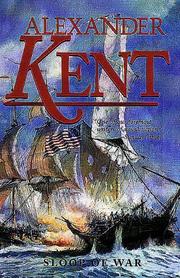
First command — the sloop Sparrow, in the American war, and the direct run-up to To Glory We Steer. Reading it eighth rather than first is the clearest demonstration of what publication order buys you: you already know what this command leads to.
The main line resumes
IntermediateReturn to the sequence Kent was writing in parallel with the prequels, through the middle of the French wars.
▸ Study plan for this stage
Pace: Six to eight weeks for 1,008 pages — Command a King's Ship 320, Passage to Mutiny 368 and Signal–Close Action! 320. Read them in this order; Passage to Mutiny follows Command a King's Ship directly in both possible routes through the saga, so this trio is the same wherever you started. Command a Kin
- The East Indies station and a single-ship cruise far from any fleet, which is the saga at its most self-contained
- The Navy's cruelty toward its own crews as a subject rather than a background condition
- Mutiny as a structural threat that the saga has been circling since the first book's mutinous crew
- The Nile campaign, and Kent's handling of a fleet action whose outcome every reader already knows
- How a long saga varies itself: alternating self-contained cruises with the great set-piece battles
- Bolitho's growing seniority beginning to separate him from the men he commands
- Command a King's Ship stands alone better than anything else here. What has been removed to make that possible?
- How does Passage to Mutiny apportion blame — to individual officers, to the service, or to the conditions?
- Signal–Close Action! dramatises an action whose result is famous. Where does Kent find the suspense?
- Compare the Bolitho of this stage with the man in To Glory We Steer. What has seniority cost him?
- Which of these three would survive being read out of order, and which would not?
- Continue the career sheet and add a column for how many men Bolitho is responsible for in each book. The number climbs steadily and it is the saga's actual arc.
- Read the historical outline of the Nile campaign before Signal–Close Action! rather than after. Kent writes for readers who know the shape, and the novel is better with it.
- In Passage to Mutiny, mark every point where an officer could have acted differently. Then decide whether the book agrees with your marks.
- Use Command a King's Ship as the decision point it is: after finishing it, commit either to the flag-rank books or to stopping. A saga this long needs to be chosen deliberately at least once.
Next up: Bolitho has gone as far as a captain can, which is the promotion the next stage turns into a problem rather than a reward.

The Undine in the East Indies, 1784, and the most self-contained of the middle books — a good one to test whether the saga holds you for another twenty volumes. The record's year is junk metadata; the novel is from 1973.

The Pacific in 1789, written in the shadow of the Bounty and the closest Kent comes to writing about the Navy's own cruelty. It follows Command a King's Ship directly in both orders.
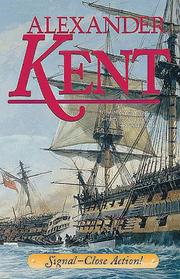
The Nile campaign of 1798, and the fleet novel Kent's readers most often reach for first on a reread. The catalogue displays it with an en dash rather than a hyphen; it is the 1974 novel.
Flag rank, and where the saga goes after
IntermediateFollow Bolitho into command of a squadron and see how the series changes once he is no longer the man on the quarterdeck.
▸ Study plan for this stage
Pace: Two months for 953 pages — A Tradition of Victory 299, Honour this Day 302 and The Only Victor 352, the three shortest novels on the path and the densest in consequence. Read them in order. A Tradition of Victory makes Bolitho a rear-admiral and changes the books permanently: he now sends other men
- Flag rank as a loss: command of a squadron means never being the man on the quarterdeck again
- Sending men to die rather than leading them, made the explicit subject of the late books
- Trafalgar approached from the edge rather than the centre, which is how the saga handles every famous action
- A private life that the earlier novels kept off the page and the flag-rank books cannot
- The changed war after Trafalgar, and what a navy without a fleet enemy does next
- Where the saga goes afterwards — the remaining Bolitho volumes and then the shift to his nephew Adam — and why that is a new sequence
- How to leave a very long series honestly: at a rank change or a war's end, not at an arbitrary volume
- What does A Tradition of Victory take away from the reader as well as from Bolitho?
- Honour this Day is the strongest of the three. What is it doing that the other two are not?
- How does Kent write around Trafalgar rather than through it, and is the choice a limitation or a strength?
- The Only Victor exposes Bolitho's private life. Does the saga's earlier reticence make that land harder or feel out of key?
- Is this a real ending? Say what would be gained and what lost by continuing to the Adam Bolitho books.
- Looking at the completed career sheet, when did Bolitho stop being the man you met in To Glory We Steer?
- Complete the career sheet through The Only Victor and read it start to finish. Every book on this path, its rank, ship and station on one page is the saga's arc, and no single volume shows it.
- Compare a battle scene in The Only Victor with one in Enemy in Sight! and note how much of the action Bolitho now watches rather than fights.
- Write the reading advice you would now give a newcomer — publication order or chronological, and why — in three sentences. That is the deliverable this whole path was built to produce.
- Decide your ending explicitly: stop at The Only Victor with a complete arc, continue through the remaining Bolitho novels, or take up the Adam books. All three are legitimate, and a saga this size is only finishable by a reader who chooses.
Next up: This is the end of the path: Bolitho's career is read from midshipman to flag rank in the order Kent wrote it, and the remaining volumes are a choice rather than an obligation.
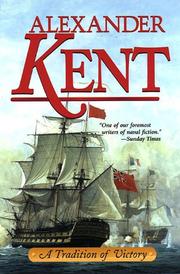
Bolitho as a rear-admiral in 1801, which changes the books permanently: he now sends other men to die rather than leading them himself, and Kent makes that the subject rather than a detail.
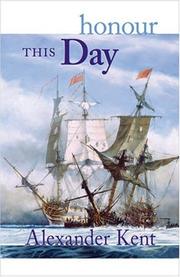
The 1804 run-up to Trafalgar, and the strongest of the flag-rank novels. Read it here to see the mature saga working at full stretch.
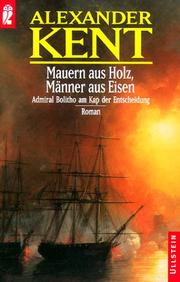
After Trafalgar, 1806, with the Navy's war changed and Bolitho's private life at its most exposed. It closes this path, and it is the point where the remaining volumes — Beyond the Reef through Cross of St George, then the handover of the saga to Bolitho's nephew Adam in Second to None and the four books after it, ending with In the King's Name — become a decision about how far you want to go rather than a question of order.