The Bahai Faith: the best books to read, in order
The Bahai Faith began in 1840s Iran as a messianic Shia movement, was violently suppressed, and became a worldwide religion with several million adherents and no clergy. Reading about it requires attention to who is speaking: the community produces a large devotional and official literature, and there is a smaller body of independent academic scholarship, and the two do not always describe the same history. This path labels every book as one or the other. It opens with academic surveys, then reads the scripture itself, then the community's own authorised histories, and closes with the critical scholarship and the persecution of Bahais in Iran, which is documented by human-rights bodies as well as by the community.
Scholarly orientation
BeginnerGet the history, beliefs, practices and organisation from academic surveys before reading any devotional material — who the Bab and Bahaullah were, what progressive revelation claims, how a religion with no clergy governs itself. The first two books here are by a historian of religion writing academically; the third is an introduction by authors who are themselves Bahais, and is flagged as such.
▸ Study plan for this stage
Pace: Three weeks. Our record for Peter Smith's An introduction to the Baha'i faith carries no page count; it is a Cambridge introduction covering doctrine, history, administration and demography, so budget it as a full survey volume and give it about ten days rather than assuming a length. Read it first:
- The Bab, the Babi movement of 1840s Iran, and its violent suppression
- Bahaullah's claim, his exile through Baghdad, Istanbul and Edirne to Akka, and the succession to Abdul-Baha and then Shoghi Effendi
- Progressive revelation: a single religion disclosed in stages through successive Manifestations
- The unity of religions and the unity of humankind as the tradition's two organising doctrines
- The administrative order — elected assemblies and no clergy — and how a religion without priests governs itself
- The distinction between devotional and academic writing, which this path applies to every book on it
- Global demography and where the community actually is, which the introduction supplies and the devotional literature does not
- What did the Bab claim, and how did that claim change between the earliest writings and the later ones?
- State progressive revelation precisely. What does it assert about earlier religions, and what does it require of them?
- How does the elective administrative order actually work, and what does the absence of clergy change in practice?
- Where do Smith and the Hatcher and Martin account describe the same events differently, and what is the difference in method?
- What does Smith treat as historically uncertain that the insider account treats as settled?
- Build a chronology from Smith's short history running 1844 to the present, marking the Babi period, the exiles, the successions and the twentieth-century expansion. Every later stage assumes it.
- Take three doctrinal claims from Hatcher and Martin and find how Smith describes each. Note where the vocabulary itself differs.
- List the names you will need — Bab, Bahaullah, Abdul-Baha, Shoghi Effendi, Universal House of Justice, Nabil — with one line each. The scripture stage assumes all of them.
- Write a paragraph on what it means to read a religion's own literature as evidence about the community rather than as description of events.
Next up: With the history and the institutions mapped from outside, the next stage is the scripture the whole tradition interprets.

The standard academic introduction, by the leading non-devotional scholar of the tradition, covering doctrine, history, administration and demography. Start here; it is the one book on this path that assumes nothing and takes no side.

Smith's narrative history of the movement from the Babi episode to the twentieth-century expansion, shorter and more chronological than the introduction. Read second, for the sequence of events the doctrinal books assume; the catalogue displays it as A Short History of the Bahai Faith.

Insider literature, and named as such: Hatcher and Martin are Bahais writing a systematic presentation of the faith's teachings and self-understanding. Valuable precisely for that — it shows how the community explains itself — and should be read after Smith rather than instead of him.
The scripture
IntermediateRead Bahaullah and Abdul-Baha directly. These are sacred texts, not descriptions of a religion, and they are the primary sources everything else interprets; the stage is arranged from the shortest and most poetic to the most doctrinal.
▸ Study plan for this stage
Pace: Four weeks. These are sacred texts, not accounts of a religion, and the stage runs from the shortest and most poetic to the most doctrinal. The Hidden Words is 82 pages of aphorisms in Arabic and Persian and is the text a newcomer is usually handed first — read it in a sitting, then reread it slowly
- The Hidden Words as ethical and mystical distillation rather than doctrine
- The station of the Manifestation of God, and what it is claimed to be and not to be
- The argument from prophecy in the Kitab-i-Iqan, and its treatment of symbolic versus literal fulfilment
- The doctrine of the covenant and the authorised chain of interpretation
- Shoghi Effendi's translations as the community's authoritative English, with the stylistic choices that entails
- Abdul-Baha's engagement with Western questions in Some Answered Questions — the tradition explaining itself outward
- The difference between reading scripture for what it says and reading it for what a community does with it
- What kind of argument is the Kitab-i-Iqan making from prophecy, and what does it require a reader to accept before it can persuade?
- How does the concept of the Manifestation relate to prophethood in Islam and to incarnation in Christianity?
- Gleanings is a selection. What kinds of material would a differently motivated selector have included or omitted?
- In Some Answered Questions, how are Christian doctrines handled — refuted, reinterpreted, or absorbed?
- What does the covenant doctrine do institutionally, and how does it relate to the absence of clergy?
- Read The Hidden Words twice, a fortnight apart, and note which passages read differently after the Kitab-i-Iqan.
- Take one prophetic passage the Kitab-i-Iqan interprets and read the original Biblical or Quranic verse first. Then write what the interpretation adds.
- Choose five passages from Gleanings and write, for each, what doctrinal work it does. Then ask why an editor would have chosen it.
- Keep a glossary of terms as they appear in the scripture — Manifestation, covenant, dispensation, station — and compare each with Smith's academic gloss from stage one.
Next up: You have the scripture; the next stage is how the community narrates its own past, which is a different kind of writing again.
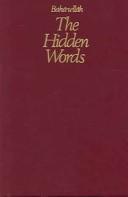
A brief collection of aphorisms in Arabic and Persian, the most widely circulated Bahai text and the usual first thing a newcomer is handed. Read it first because it is short and gives the devotional register everything else is written in.

The standard anthology of Bahaullah's writings, selected and translated by Shoghi Effendi — which means the selection itself is an act of interpretation by the faith's authorised leadership. The most-used single source for Bahai doctrine.
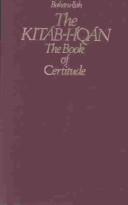
The Book of Certitude, written in Baghdad in 1862 and the principal doctrinal work: an argument from Quranic and Biblical prophecy for progressive revelation and the legitimacy of the Bab. Denser than the previous two and best read after them.

Table talks recorded in Akka, in which Bahaullah's son answers questions on Christian doctrine, the soul, evolution and free will. This is where Bahai teaching is stated most explicitly in response to Western questions, which is why it closes the stage.
The community's own history
IntermediateRead the authorised narrative — the martyrdom-centred chronicle of the Babi movement, the official century-history written by the faith's Guardian, and a popular apologetic work — recognising all three as accounts written from inside the tradition to establish and defend its self-understanding.
▸ Study plan for this stage
Pace: Five weeks for 1,425 pages, all three books written from inside the tradition. The dawn-breakers is 685 pages, Nabil's chronicle of the Babi period translated and edited by Shoghi Effendi, and it is the book people abandon: it is long, the cast of names is enormous, and the narrative style is devoti
- Devotional history: a narrative shaped throughout by the meaning it wants events to carry
- Martyrdom as the organising category of the Babi chronicle
- Shoghi Effendi's dual role as translator, editor and author, which shapes two of the three books here
- The Babi upheavals of 1848 to 1852 as the community narrates them, against the sociological account coming in stage four
- Apologetics as a genre with its own standards, distinct from both history and theology
- The uses of a centenary history: what a community writes when it is establishing its own legitimacy
- How to read a source seriously as evidence about its authors without accepting it as evidence about its events
- How does The dawn-breakers frame the persecutions, and what would a non-devotional history have to establish differently?
- What is God passes by doing that a scholarly history is not? Identify the moves, not just the tone.
- Thief in the night argues from prophecy to a general Christian readership. What does the argument assume about its reader?
- Where does Smith's account from stage one contradict the community's narrative, and where does it merely differ in emphasis?
- What is gained by reading all three of these after the academic surveys rather than before?
- Pick one episode covered in both The dawn-breakers and Smith's short history, and set the two accounts side by side line by line. This single exercise is the point of the stage.
- In God passes by, mark every point where an outcome is described as providential. Then write the same passage as a neutral chronicler would.
- Read one chapter of Thief in the night and write out its argument as premises and conclusion. Then note which premises a non-Christian reader would not grant.
- Add the events from these three books to your stage-one chronology, in a separate colour. Where the two disagree on a date or a sequence, note it.
Next up: With the community's own narrative in hand, the final stage returns to academic work — which is far more useful now than it would have been earlier.
Nabils chronicle of the Babi period, translated and edited by Shoghi Effendi, and the community's foundational narrative of the Bab and the persecutions. Devotional history: vivid, detailed and shaped throughout by the meaning it wants the events to carry.
The official centenary history by the Guardian of the faith, covering 1844 to 1944. It is scripture-adjacent within the community rather than an independent history, and reading it after Smith makes the difference in method immediately visible.

A widely circulated apologetic work arguing that Christian prophecy of Christs return was fulfilled in the Bab and Bahaullah. Clearly labelled insider material and evangelistic in purpose; read it for what the tradition finds persuasive about itself, not as historical argument.
Critical scholarship and the persecution in Iran
BeginnerReturn to the academic literature with the tradition's own account in hand, and take up the two hardest subjects: the historical origins of the Babi movement reconstructed from sources the community does not privilege, and the systematic persecution of Bahais in Iran since 1979 — denial of higher education, confiscations, and executions documented by outside human-rights bodies.
▸ Study plan for this stage
Pace: Four weeks for 922 pages. The Babi and Baha'i religions is 243 pages, Smith's full scholarly monograph treating the movement as a case in the sociology of religion — how a messianic Shia sect became a universalist world religion — and it is the most demanding reading on the path; it also repays havi
- Sect-to-religion transformation as a sociological problem, and the specific mechanisms Smith identifies
- The Shia messianic background and the categories the Babi movement emerged from and broke with
- Sources the community does not privilege — Iranian state, missionary and orientalist records — and what they add
- The legal position of Bahais in Iran as a recognised versus unrecognised minority, and what follows from it
- Documented post-1979 persecution: executions, property confiscation, and exclusion from universities
- The Baha'i Institute for Higher Education as the community's response to that exclusion
- The difference between a religion's self-understanding and a sociological account of the same history, which the whole path has been building toward
- What mechanisms does Smith identify in the shift from a messianic Shia sect to a universalist world religion?
- Which of the community's own historical claims does the scholarly monograph revise, and on what evidence?
- What is the legal basis for the treatment of Bahais in Iran, and how has it changed since 1979?
- The contributors to The Baha'is of Iran are writing academic history about a living persecution. How do they handle that, and where is the strain visible?
- Having read the whole path, which claims about the tradition's history do you hold with confidence, and which rest on a single kind of source?
- Take the Babi upheavals as narrated in The dawn-breakers and as analysed in The Babi and Baha'i religions, and write a page on what changes when the same events are treated as sociological data.
- Use the encyclopedia to look up ten names you met in the scripture and the chronicle, and note which ones the devotional sources had characterised differently.
- From The Baha'is of Iran, summarise the documented pattern of restrictions since 1979, with the type of source for each.
- Write a 600-word account of the tradition for someone who has read nothing, labelling every claim by the kind of source it rests on. That labelling habit is what this path exists to teach.
Next up: This is the end of the path: you can now read anything written about this religion and place it immediately as scholarship, scripture, official history or apologetics.
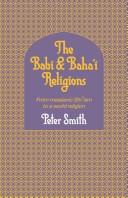
Smiths full scholarly monograph, treating the movement as a case in the sociology of religion: how a messianic Shia sect became a universalist world religion. The most demanding book here and the one that most repays having read The Dawn-Breakers first.
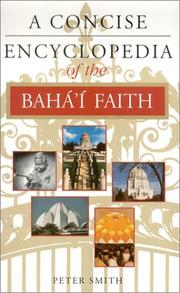
A reference work rather than a reading book: entries on persons, texts, institutions and terms, useful for the many unfamiliar names in the scripture and the histories. Keep it beside you through this stage.

An academic collection of socio-historical studies on the Iranian Bahai community and its persecution from the nineteenth century to the present. The right final book: it returns the religion to the country it came from and to the situation its adherents there still face.