The Baby-Sitters Club Reading Order: Where to Start
The Baby-Sitters Club ran to well over two hundred books across the main series, the Little Sister spin-off, the Super Specials and the Mysteries, and nobody reads it end to end. What actually matters is the first stretch, because it is the only part where the club is being assembled and the narrators are being introduced one at a time — after roughly book twenty the series settles into a rotation and volumes become genuinely interchangeable. Read the first four in order, take a representative run through the teens, then dip. This path also handles the thing that trips up anyone building a list today: several of the early books now exist in two forms, the 1986 novel and Raina Telgemeier's graphic-novel adaptation, and the adaptations are a different object with a different reading age. They are given their own stage here rather than mixed into the numbering.
The first four, in order
BeginnerMeet the four founding members in the order the series introduces them, which is the only stretch where reading order genuinely matters
▸ Study plan for this stage
Pace: One to two weeks for all four — 633 pages total, and they are 150-page books with generous type: Kristy's Great Idea at 153, Claudia and the Phantom Phone Calls at 153, Mary Anne Saves the Day at 167, Dawn and the Impossible Three at 160. A confident reader finishes one in an evening; a younger one
- The series ran to well over two hundred volumes across the main line, the Little Sister spin-off, the Super Specials and the Mysteries. Nobody reads it end to end, and the first stretch is the only part that has to be read in sequence.
- Kristy's Great Idea is the one obligatory book: the club is invented, the four founders are recruited, and the operating rules — the meeting times, the phone in Claudia's room, the notebook — are set up. Everything afterwards assumes that meeting happened.
- The rotating narrator is the format's real invention, and book two is where it is demonstrated. Handing the voice to Claudia so early tells the reader the series belongs to four girls rather than to Kristy.
- Each founder is built around one clear situation: Kristy's remarrying mother and new stepfamily, Claudia's art and the gifted older sister she is measured against, Mary Anne's over-protective widowed father, Dawn's parents' divorce and her move across the country.
- Mary Anne Saves the Day is the strongest of the four because it breaks the premise — the club fractures, the four stop speaking, and the shyest narrator has to operate alone.
- Dawn's arrival in book five is the last structural change in this stretch. She shifts the club from four to five and gives Mary Anne a second friendship, which the following books use constantly.
- After book five the series becomes additive rather than sequential. That is the honest reason this stage stops where it does.
- What problem does Kristy actually solve in book one, and why does the club need four members rather than one sitter?
- How does the voice change when Claudia takes over the narration? Name two things she notices that Kristy would not.
- What breaks the club in Mary Anne Saves the Day, and what does Mary Anne do that none of the others could?
- What does Dawn's arrival change about the balance between the original four?
- Which of the four founders' home situations is doing the most work in these books, and how can you tell?
- Keep a note of the club's rules as they are established in book one — meeting days, times, the notebook, the treasurer — and check in each later book which one is being bent. The plots almost always turn on a rule.
- After each of the four, write one sentence in the narrator's voice about the same event: the meeting on Monday. Four sentences side by side make the rotating-narrator technique visible in a way reading it does not.
- Mark where the books tell you something about a narrator's family versus where they show it. Martin front-loads the telling in the first chapter of each and it is a useful thing to notice.
- Read the first chapter of book two and the first chapter of book four back to back. Each re-introduces the club from scratch for a new reader, which is the design decision that makes the later series skippable in any order.
Next up: With the club assembled and the format established, the next stage shows what a settled volume actually looks like once the sequence stops mattering.

Book one, and the only obligatory one: Kristy invents the club, the four founders are recruited, and the rotating-narrator format is established. Everything after assumes this meeting happened.
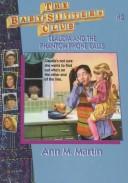
Book two, and the first handover of the narration — Claudia's voice, her art, her difficult relationship with a gifted older sister. Read it second because the switch is the point: it teaches you that the series belongs to four girls, not one.
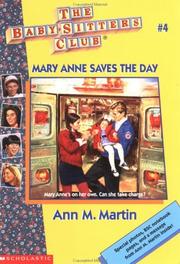
Book four, and the best of the early run: the club fractures, the four stop speaking, and the shyest member has to function alone. Note that book three, The Truth About Stacey, is only available to us as the graphic-novel adaptation, so it appears in a later stage rather than here.
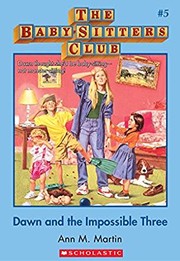
Book five, and the arrival of the fifth member — a Californian transplant who changes the club's balance and gives Mary Anne a second friendship. This is the last book that is structurally necessary; from here the series is additive rather than sequential.
The series finding its rhythm
BeginnerRead a representative stretch of the settled series and see what a typical volume actually does
▸ Study plan for this stage
Pace: About a week for 440 pages across three books — Kristy's Big Day at 153, The Ghost at Dawn's House at 148, Logan Likes Mary Anne! at 139. These read faster than the first four because you already know the cast and the opening chapter of each is a recap you can skim. Order matters much less here; rea
- Kristy's Big Day is the first true set piece — fourteen children minded across a wedding weekend — and the point where the babysitting stops being the frame around the plot and becomes the plot.
- The Ghost at Dawn's House is the template for the light-mystery volumes, which eventually spun off into an entire parallel series. Nothing about the club changes to accommodate it, which is the demonstration.
- Logan Likes Mary Anne! introduces the first romance and, with it, the associate member — a device that let the series add characters indefinitely without expanding the club itself.
- Every settled volume runs the same structure: a sitting job creates a problem, the problem doubles a problem in the narrator's own life, and both resolve together. Once you can see it, you can read any volume in the series.
- The opening chapter of each book re-introduces all seven members. It is repetitive read in sequence and it is exactly what makes the series work as a library shelf you can pull from at random.
- The formula's range is the thing to notice here — a comic logistics story, a spooky story and a romance, with no change to the cast or the rules.
- In Kristy's Big Day, what makes fourteen children funnier to read about than one? What does the number let Martin do?
- How does the ghost story resolve, and what does the resolution tell you about how far this series will go?
- What does an associate member let the series do that a full member would not?
- Take any one of these three and identify the sitting problem and the narrator's own problem. How does Martin make them rhyme?
- Having read three settled volumes, could you now pick up book forty and follow it? What would you be missing?
- Read the first chapter of all three and mark what is identical. The repeated block is the series' distribution mechanism, and seeing it laid out explains why the books could be read in any order.
- Diagram one volume: sitting job, narrator's problem, the point where they connect, the resolution. Then check the diagram against the other two.
- Pick the volume you liked least and say specifically what the formula failed to carry. This is the most useful exercise on the path for deciding how much further to read.
- Count how many of the children being minded you can name afterwards. Martin builds a permanent secondary cast of charges, and they are half of why the settled series is re-readable.
Next up: The settled volumes leave the club unchanged by design, which is what makes the next three — the only ones with permanent consequences — worth singling out.
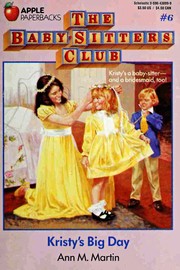
Book six, and the first genuine set piece — fourteen children minded across a wedding weekend. A good demonstration of the formula working at full stretch, and the point at which the babysitting itself becomes the entertainment rather than the frame.
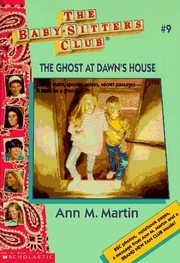
Book nine, and the template for the light-mystery volumes that later spun off into their own series. Placed here because it shows the range the format could absorb without changing anything about the club.
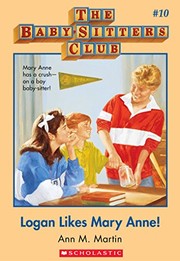
Book ten, and the first romance plot, which introduces the associate-member device the series used from then on. Read it after book nine — it is the book where the club stops being a closed circle.
Departures and arrivals
BeginnerRead the three books that change the membership, which are the only later volumes with real consequences
▸ Study plan for this stage
Pace: About a week for 424 pages — Good-bye Stacey, Good-bye at 142, Hello, Mallory at 137, Jessi's Secret Language at 145. Read these three in order and close together, because they are one movement: a founding member leaves and the club rebuilds around the gap. They read at the same pace as the rest of
- Good-bye Stacey, Good-bye is the first time the series allows something to be permanent. Stacey moves back to New York and stays there, which the formula had until then avoided.
- That permanence is why these three are worth reading when books six to twelve are optional. They change the club's membership rather than exercising it.
- Hello, Mallory follows directly on and recruits the first junior member. It is written for a reader who has just felt the loss, which is why reading it immediately afterwards matters.
- Junior members are a structural fix: two younger sitters who can only take daytime jobs, which lets the club grow without diluting the original four's screen time.
- Jessi's Secret Language has the club's other junior member learn American Sign Language to sit for a deaf child, and it treats the language as something to be learned properly rather than as a plot token.
- It is widely held to be the best single volume in the series, and it is the clearest case for the format: an ordinary sitting job used to take a reader somewhere genuinely new.
- Jessi is also the series' first Black narrator, and her book deals directly with how her family is received in Stoneybrook.
- How does the series handle Stacey's departure differently from the way it handles the temporary problems in the settled volumes?
- What does Mallory's recruitment restore, and what does it deliberately not restore?
- Why do junior members exist? What limitation does the series invent for them, and what does that limitation solve?
- In Jessi's Secret Language, what does Jessi actually have to do, and how does Martin make the learning part of the story rather than a summary?
- What does the strongest volume in the series have that a typical volume does not?
- Read the last chapter of Good-bye Stacey, Good-bye and the first chapter of Hello, Mallory back to back. The handover is the most deliberate piece of construction in the series.
- Learn the manual alphabet alongside Jessi's Secret Language. It takes an afternoon, it is exactly what the book is about, and it turns a reading experience into a skill.
- List what each of the seven members contributes to a job by this point in the series. The club has become a small organisation with real division of labour, and the list makes that visible.
- Compare how Jessi's first-person chapter introduces her family with how Claudia's did in book two. Both are doing the same job and the differences are instructive.
Next up: Those are the last volumes with consequences; the remaining question is what the adaptations and the spin-off actually are, since one of them holds a book the main sequence is missing.

Book thirteen, and the first time the series lets something be permanent: Stacey moves back to New York. Read it before the two that follow, because they are the club rebuilding around the hole it leaves.
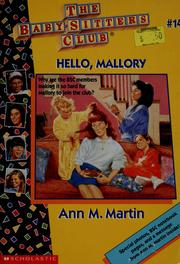
Book fourteen, and the recruitment of the first junior member. It follows directly from Stacey's departure and is best read immediately after it.

Book sixteen, in which the club's other junior member learns American Sign Language to sit for a deaf child. Widely held to be the strongest single volume in the series and the one that most justifies the format; read it last of these three.
The graphic novels and the spin-offs
BeginnerUnderstand how the comics adaptations map onto the original numbering, and where the spin-off series sit
▸ Study plan for this stage
Pace: Two or three sittings, not a week — and the page counts are misleading in a way worth stating plainly. The two Telgemeier adaptations, The Truth About Stacey at 144 pages and Claudia and Mean Janine at 176, are comics: 320 pages of panel art that most readers finish in an hour apiece, not an evening
- The Truth About Stacey is book three of the original numbering, and the edition available to us is Raina Telgemeier's graphic-novel adaptation rather than Ann M. Martin's 1986 novel. Same story, same place in the sequence, a different object to hold.
- It introduces Stacey's diabetes and her parents' search for a cure — the material the rest of the series treats as already known, which is why reading it at some point closes a real gap.
- Claudia and Mean Janine adapts book seven, on Claudia's grandmother's stroke and her rivalry with her sister, and is the most emotionally serious of the early run. It is credited to Telgemeier with Martin.
- A graphic adaptation is not a shorter version of the novel. It cuts interior narration almost entirely and replaces it with faces, which changes what the story is good at — Claudia's silences carry far more here than they do on the page.
- The reading age is lower than the prose novels, which matters if you are handing these to someone who asked for the books rather than the comics. Check which one they mean before ordering.
- Karen's Witch is the first Baby-Sitters Little Sister book, following Kristy's six-year-old stepsister, in shorter chapters and much larger type. It is a parallel line, not a continuation — nothing in it is required for the main series.
- The spin-offs are the answer to a specific question: what to give a reader who is two or three years too young for Stoneybrook proper.
- What does The Truth About Stacey establish that the later books assume you already know?
- Where does the graphic adaptation carry something in a picture that the prose novels would have had to state? Find one panel and describe what it replaces.
- Claudia and Mean Janine deals with a stroke and its consequences. How does the comic format handle that compared with how the settled volumes handle a problem?
- Who is Karen's Witch for, and what has been changed — chapter length, vocabulary, plot scale — to fit that reader?
- If someone asks for the Baby-Sitters Club books, which of these three are you actually giving them?
- Time yourself on one of the Telgemeier volumes and then on one of the prose novels. The comparison is the most concrete way to understand why they are in a separate stage.
- Take one page of a Telgemeier adaptation and write out what the equivalent paragraph of prose would have to say. Most of it turns out to be facial expression.
- Read the first chapter of Karen's Witch and the first chapter of Kristy's Great Idea, and list the differences in sentence length and chapter length. It is a clear illustration of how the same author pitches to two different ages.
- Before buying, check whether the edition you are ordering is the 1986 novel or the adaptation. The titles and the numbering are identical and the two are routinely confused.
Next up: Having seen the series at its most commercial, the last book on the path is what Martin writes when nothing is a formula.
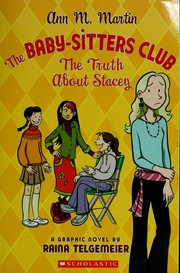
Book three of the original series, and the volume that introduces Stacey's diabetes and her parents' search for a cure. The edition that comes up for it is Raina Telgemeier's graphic-novel adaptation rather than the 1986 novel — same story, same numbering, a different book to hold, and a younger reading age.
![Claudia and Mean Janine [graphic novel adaptation]](https://covers.openlibrary.org/b/id/8476349-M.jpg)
Book seven, on Claudia's grandmother's stroke and her rivalry with her sister — the most emotionally serious of the early run. Again the available edition is the graphic-novel adaptation, credited to Telgemeier with Martin, which is worth knowing before you order it for a reader who wants prose.
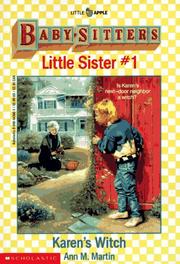
The first Baby-Sitters Little Sister book, following Kristy's six-year-old stepsister, and the answer to what to hand a reader who is two or three years too young for the main series. A parallel line rather than a continuation — nothing in it is required.
Ann M. Martin after the club
IntermediateRead the later novel that shows what Martin does outside a series format
▸ Study plan for this stage
Pace: One week for 195 pages. A Corner of the Universe is a short novel but it is not a fast one — it is quieter and considerably sadder than anything in the series, and it wants 30 to 40 pages a sitting rather than a single evening. Read it last, after the series, because its effect depends on knowing ho
- A Corner of the Universe is a Newbery Honor novel set in the summer of 1960, in which a twelve-year-old meets the uncle her family has kept in an institution and never mentioned.
- Martin has said the book draws on her own family, and the specificity shows — this is observation rather than construction, and it is the clearest evidence that the series' insight was never the formula's doing.
- The structural difference is total: one narrator, one summer, no recap chapter, no reset at the end. Nothing here is designed to let a reader start at book forty.
- It also does what the series will not — it allows an outcome that cannot be repaired, which is precisely the thing the Baby-Sitters Club format is built to avoid.
- The 1960 setting is doing real work: institutionalisation, and the family shame around it, is treated as a fact of that decade rather than as a villain's decision.
- Read against Jessi's Secret Language, the two books show the same interest — a child paying close attention to someone the adults have decided is difficult — with and without a series to protect the ending.
- What does Hattie learn about her family, and what does she learn about herself in the process?
- How does this book handle an unfixable outcome, and what would the Baby-Sitters Club format have had to do instead?
- What does the 1960 setting make possible that a contemporary setting would not?
- Where can you see the same author as the series — in the dialogue, the observation of children, the pacing?
- Does reading this change your view of the series? What does it suggest the formula was costing her?
- Read the last chapter of Jessi's Secret Language and the last chapter of A Corner of the Universe on the same day. The contrast in what each ending permits is the sharpest thing on this path.
- Mark every place the novel declines to explain an adult's behaviour. Martin trusts the reader far more here than the series does, and the difference is measurable page by page.
- Write one paragraph on what a Baby-Sitters Club volume about Adam would have looked like. The exercise makes the constraints of a series format concrete.
- Note the length: 195 pages against the series' 140 to 170. It is barely longer and it is a completely different reading experience, which is a useful corrective to judging books by size.
Next up: That closes the path — the series read where it matters, the adaptations placed correctly, and the writer seen without the format.
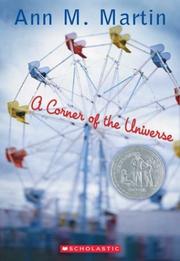
A Newbery Honor novel about a twelve-year-old meeting the uncle her family has kept in an institution, set in the summer of 1960 and drawn from Martin's own family. Read it last: it is the book that shows the observation underneath the series was never the formula's doing.