Sober curious: rethink your drinking
This curriculum moves from personal awakening to scientific understanding to practical mastery, giving the reader both the emotional vocabulary and the evidence-based tools to genuinely examine and reshape their relationship with alcohol. Each stage builds on the last: first you feel seen and motivated, then you understand the "why" behind drinking's grip, and finally you develop a sustainable, self-directed practice for the long term.
Awakening: Stories That Open the Door
BeginnerRecognize and name your own relationship with alcohol through the lived experiences of others, and understand what 'sober curiosity' actually means as a concept and lifestyle choice.
▸ Study plan for this stage
Pace: 10–12 weeks total, reading roughly 20–25 pages per day. Spend ~3–4 weeks on "This Naked Mind" (Annie Grace's denser, research-heavy prose rewards slower reading), ~3 weeks on "Sober Curious" (conversational and reflective — ideal for journaling alongside), and ~3–4 weeks on "The Unexpected Joy of Be
- Sober curiosity as a spectrum — Ruby Warrington's core argument that questioning your drinking does not require hitting 'rock bottom' or identifying as an alcoholic; curiosity itself is enough of a reason to explore sobriety
- The unconscious mind and alcohol — Annie Grace's central thesis in 'This Naked Mind' that our desire to drink is largely conditioned by advertising, culture, and repeated messaging rather than genuine free choice or physical need
- The 'alcohol illusion' — Grace's concept that alcohol does not actually deliver the relaxation, confidence, or pleasure we believe it does; it merely relieves the anxiety it created in the first place
- Social and cultural conditioning — how all three authors show that drinking norms are socially constructed, and how recognizing this conditioning is the first step toward autonomy
- The identity shift — Catherine Gray's lived account of how sobriety reshapes self-image, relationships, and daily rituals, demonstrating that a new identity is built gradually through small, concrete changes
- The neurological and physical timeline of change — Gray's accessible breakdown (backed by science chapters) of what happens to the brain and body in the first days, weeks, and months without alcohol
- Mindful drinking vs. abstinence — Warrington's nuanced framing that sober curiosity is not a binary; it includes taking breaks, moderating intentionally, or going fully alcohol-free, all driven by self-awareness rather than rules
- Naming your own relationship with alcohol — the shared invitation across all three books to observe your drinking patterns without shame or judgment, using other people's stories as a mirror
- After reading 'This Naked Mind,' can you explain in your own words why Annie Grace argues that willpower alone is an ineffective strategy for changing your drinking — and what she proposes instead?
- How does Ruby Warrington in 'Sober Curious' define sober curiosity, and why does she deliberately avoid the language of addiction or alcoholism when addressing her audience?
- What specific beliefs or 'illusions' about alcohol did you personally hold before this stage, and which of Grace's or Warrington's arguments most directly challenged them?
- Catherine Gray describes distinct emotional and physical phases in her first year sober — what were the key turning points she identifies, and how did her relationship with her own identity evolve across them?
- All three authors address the social fear of not drinking (parties, peer pressure, professional settings). What strategies or reframes do they collectively offer, and which feels most applicable to your own life?
- Having read all three books, how would you now describe your own relationship with alcohol — and has the label or language you would use to describe it shifted at all?
- Baseline drinking audit (before starting 'This Naked Mind'): For one week, log every drink — time, place, who you were with, and the emotion or craving that preceded it. Do not try to change anything yet; pure observation only. Return to this log after finishing all three books to see what you notice differently.
- The 'illusion inventory' (during 'This Naked Mind'): Make a two-column list of every belief you hold about what alcohol gives you (e.g., 'it helps me relax,' 'it makes me funnier'). In the second column, write Grace's counter-argument for each. Identify which beliefs feel most resistant to challenge — those are your richest areas for reflection.
- Sober curiosity conversation (during 'Sober Curious'): Using Warrington's framing, have one honest conversation with a trusted friend or journal entry where you articulate your relationship with alcohol without using the words 'alcoholic,' 'problem,' or 'addict.' Notice how the language you choose changes the feeling of the conversation.
- 30-day mindful drinking experiment (can begin anytime during the stage): Inspired by Warrington's concept of the 'sober curious experiment,' choose one of three tracks — alcohol-free for 30 days, alcohol-free on weekdays only, or 'pause before every drink' for 30 days. Journal three times per week on what you observe about cravings, moods, sleep, and social dynamics.
- Timeline of self (after finishing 'The Unexpected Joy of Being Sober'): Draw a personal timeline of your relationship with alcohol — key memories, turning points, and feelings associated with drinking across your life. Alongside it, sketch a 'future timeline' imagining what the next 12 months might look like with more intentionality around alcohol. Gray's own narrative arc is your model.
- Concept synthesis letter: After completing all three books, write a one-to-two page letter to a hypothetical friend who is 'sober curious but skeptical.' Draw on specific arguments from Grace, Warrington, and Gray to explain what sober curiosity is, why it's worth exploring, and what they might realistically expect. This forces active integration of all three authors' voices.
Next up: By the end of this stage the reader has moved from passive cultural acceptance of alcohol to active, curious self-examination — establishing the personal awareness and vocabulary needed to engage with more structured frameworks, scientific research, and practical habit-change strategies in the next stage.
The perfect entry point: Grace uses a gentle, non-judgmental, curiosity-driven approach to help readers examine unconscious beliefs about alcohol without labeling or shame. It introduces the core idea that drinking is largely conditioned — not a character flaw.

Warrington coins and defines the 'sober curious' movement itself, making this essential reading right after Grace. It broadens the conversation beyond addiction into everyday drinking culture and asks whether alcohol is truly serving you.

Gray's candid, witty memoir grounds the abstract ideas of the first two books in a real human story, building emotional momentum and showing what life on the other side can actually look and feel like.
The Science: What Alcohol Actually Does
IntermediateUnderstand the neuroscience, psychology, and biology behind alcohol's effects on the brain and body, so that your choices are informed by evidence rather than myth or marketing.
▸ Study plan for this stage
Pace: 10–12 weeks total, roughly 20–25 pages/day. Suggested split: Weeks 1–4 for "Alcohol Explained" (~30 min/day, read slowly and re-read the physiological chapters); Weeks 5–7 for "Why We Sleep" (focus on alcohol-related chapters plus sleep architecture sections, ~25 pages/day); Weeks 8–12 for "In the R
- The glutamine rebound effect (Porter): how alcohol suppresses glutamine, which then overproduces during withdrawal, causing anxiety, poor sleep, and cravings — the core engine of the alcohol trap
- Cumulative tiredness and the 'top-up' illusion (Porter): why each drink relieves the discomfort created by the previous one, making alcohol feel like a solution rather than the problem
- Alcohol as a GABA-A agonist and its cascade of neurochemical effects: dopamine flooding, serotonin disruption, and the progressive blunting of the brain's reward baseline
- Sleep architecture destruction (Walker): how alcohol suppresses REM sleep, blocks memory consolidation, and fragments sleep cycles — debunking the 'nightcap' myth with hard neuroscience
- The HPA axis and stress-response hijacking (Walker & Maté): alcohol's interaction with cortisol and the body's stress system, and why stressed individuals are neurobiologically more vulnerable
- Adverse Childhood Experiences (ACEs) and the neurobiology of addiction (Maté): how early trauma rewires dopamine and opioid systems, making addiction a response to pain rather than a moral failing
- The difference between physical dependence, psychological habituation, and addiction as a spectrum (Maté): moving beyond binary 'alcoholic vs. normal drinker' thinking
- Neuroplasticity and recovery: the brain's capacity to rewire reward circuits, restore REM sleep, and recalibrate stress responses when alcohol is reduced or removed
- After reading Porter, can you explain in plain language exactly why you feel anxious the morning after drinking — tracing the mechanism from the first drink through glutamine rebound?
- What specific stages of sleep does Walker show are suppressed by alcohol, and what are the documented cognitive and emotional consequences of losing that sleep over weeks or months?
- How does Maté reframe the question 'Why are some people addicted?' and what does his ACE research suggest about the social and biological roots of compulsive drinking?
- Porter argues that alcohol is 'self-perpetuating' — what is the biochemical loop he describes, and how does understanding it change the way you interpret a craving?
- Walker presents data on alcohol and memory consolidation — what does the evidence say about drinking and learning retention, and how might this affect your professional or personal life?
- Drawing on all three books, how would you explain to a friend why 'just having a couple of drinks to relax' may not be as benign as it feels in the moment?
- Glutamine rebound log (during 'Alcohol Explained'): For two weeks, rate your anxiety, sleep quality, and energy each morning on a 1–10 scale alongside any drinking the night before. Map the data against Porter's glutamine rebound timeline and look for the pattern he describes.
- Sleep experiment (during 'Why We Sleep'): Choose two consecutive weekends — one with your normal drinking pattern and one alcohol-free. Use a sleep-tracking app or a simple journal to record sleep duration, dream recall, and morning mood. Compare the results against Walker's REM-suppression findings.
- The 'craving anatomy' journal (ongoing): Each time you notice a desire to drink, pause and write three sentences: (1) what physical sensation you feel, (2) what emotion or situation preceded it, and (3) which book's framework best explains it (Porter's rebound, Walker's fatigue, or Maté's emotional pain). Review after 30 days.
- Myth-busting fact sheet: After finishing all three books, write a one-page document debunking five common alcohol myths you personally believed before this stage (e.g., 'it helps me sleep,' 'I drink because I enjoy it,' 'I could stop anytime'). Use direct evidence from the texts.
- ACE reflection exercise (during 'In the Realm of Hungry Ghosts'): Privately and at your own pace, work through the ACE questionnaire Maté references. Write a non-judgmental paragraph about how your own history might interact with your relationship to alcohol — not to diagnose, but to build compassionate self-awareness.
- Teach-back session: Explain the core mechanism from each book (Porter's glutamine loop, Walker's REM suppression, Maté's trauma-dopamine link) out loud to a friend, partner, or voice recorder in under five minutes each. Gaps in your explanation reveal gaps in your understanding — revisit those sections.
Next up: Having built a rigorous, evidence-based understanding of what alcohol actually does inside the brain and body, the reader is now ready to move from the 'why it happens' to the 'how to change it' — exploring mindful drinking frameworks, identity-level habit change, and practical strategies for recalibrating their relationship with alcohol.
Porter provides the clearest layperson-friendly explanation of alcohol's physiological and psychological mechanisms — tolerance, withdrawal, anxiety, sleep disruption — giving readers the scientific vocabulary needed for everything that follows.
Sleep is one of alcohol's most significant and least-discussed casualties. Walker's landmark book on sleep science makes the cost of drinking viscerally concrete and provides powerful, evidence-based motivation to drink less.

Maté's compassionate, neuroscience-rich exploration of addiction and trauma deepens understanding of why people drink compulsively, moving the reader from self-blame toward self-understanding — a crucial shift before tackling behavior change.
Practical Tools: Drinking Less or Not at All
IntermediateAcquire concrete, research-backed strategies and frameworks for changing drinking behavior — whether the goal is moderation, extended breaks, or full sobriety — and build a personalized, sustainable plan.
▸ Study plan for this stage
Pace: 2–3 weeks, ~20–25 pages/day (the book is ~280 pages); read in longer sittings of 45–60 minutes when possible, since Carr's method is designed to work as a continuous, cumulative argument — avoid skipping ahead or reading out of order
- The 'Easyway' reframe: alcohol provides no genuine pleasure or benefit — only the illusion of relief from the discomfort it itself creates (the 'Little Monster' / 'Big Monster' model)
- The trap mechanism: alcohol creates a cycle of mild withdrawal that drinkers misinterpret as stress relief, relaxation, or enjoyment, keeping them locked in dependency
- Dismantling brainwashing: society, advertising, and personal history layer false beliefs about alcohol onto the drinker; identifying and systematically deconstructing each belief is the core method
- Willpower is not the answer: Carr argues that relying on willpower frames sobriety as deprivation and sacrifice, which guarantees misery and relapse — the goal is to want to stop, not to force yourself to stop
- The 'non-drinker' identity shift: the method aims to move the reader from 'I am giving something up' to 'I am gaining freedom' — a complete cognitive reframe of what not drinking means
- Alcohol as a drug, not a lifestyle choice: treating alcohol with the same clinical lens as nicotine or other addictive substances removes its cultural mystique and weakens its psychological hold
- The final drink ritual: Carr prescribes a deliberate, conscious 'last drink' taken with full awareness of the trap — not as a reward but as a closing ceremony that seals the decision
- Sustainability through mindset, not rules: because the change is cognitive rather than behavioral, no tracking systems, substitutes, or avoidance rituals are needed — freedom comes from changed perception, not changed habits
- In your own words, explain the 'Little Monster / Big Monster' cycle. How does mild physical withdrawal produce a psychological craving that feels like a need for pleasure or stress relief?
- Carr explicitly rejects willpower-based approaches. What is his argument against them, and do you find it convincing? Where might it fall short for some drinkers?
- List at least five 'brainwashing' beliefs about alcohol that Carr identifies. For each one, write the counter-argument he provides and evaluate whether it shifted your own thinking.
- What is the role of the 'final drink' in Carr's method? Why does he insist on framing it as a ceremony rather than simply stopping mid-bottle?
- How does Carr define the difference between a 'drinker' identity and a 'non-drinker' identity? What practical difference does this distinction make in social situations or moments of craving?
- After finishing the book, can you articulate one area where Carr's method feels complete and one area where you feel you need additional tools or support?
- Belief audit before reading: Before starting the book, write down every reason you currently believe you drink or would miss alcohol (e.g., 'it helps me relax,' 'it makes socializing easier'). Revisit this list after finishing and annotate each belief with Carr's counter-argument and your own honest assessment.
- The 'trap diary': As you read, keep a running log of every moment in the book where Carr names a specific trap or illusion. By the end, you should have 10–15 entries. For each, note whether you personally recognized that trap in your own relationship with alcohol.
- Reframe writing exercise: Choose three upcoming social situations where you would normally drink. Write two versions of how you imagine each scenario: one from the 'deprived drinker' mindset and one from the 'free non-drinker' mindset. Notice which version feels more honest or appealing.
- The final drink ceremony (if applicable): If you choose to follow Carr's method fully, plan and conduct the final drink ritual exactly as he prescribes — consciously, deliberately, and with a written statement of what you are choosing and why. Journal the experience immediately afterward.
- Counter-argument stress test: Share Carr's core thesis ('alcohol gives no real benefit') with a trusted friend or write a devil's advocate rebuttal yourself. Then write a response defending Carr's position. This surfaces any beliefs that weren't fully resolved by the reading.
- Personal sustainability assessment: After finishing the book, write a one-page 'freedom statement' — not a list of rules or restrictions, but a positive articulation of what your life looks like and feels like without alcohol as a crutch. Date it and return to it in 30 days to see how it holds up.
Next up: Carr's method delivers a powerful cognitive foundation — the 'why' of wanting to stop — but readers who want to deepen their mindful relationship with drinking (rather than pursue full sobriety) or who need behavioral scaffolding, community support, and neuroscience-backed tools will be well-primed to engage with more nuanced frameworks in the next stage.
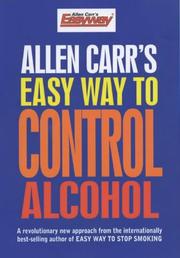
Carr's method dismantles the psychological 'illusion' of alcohol's benefits through repetition and reframing, making it a powerful practical complement to the science already absorbed. Best read after the science stage so the reader can evaluate his claims critically.
The Deeper Life: Identity, Culture & Long-Term Flourishing
ExpertExamine the broader cultural forces that normalize drinking, integrate a new relationship with alcohol into a full and meaningful life, and develop the philosophical and psychological resilience to sustain it.
▸ Study plan for this stage
Pace: 4–5 weeks, ~25–30 pages/day; allow extra time for journaling after chapters on identity and cultural critique, as reflection is core to the book's method
- The patriarchal and capitalist systems that specifically market alcohol to women as a coping tool, stress reliever, and badge of empowerment — and how to see through that conditioning
- The 'holistic sobriety' framework: Whitaker's argument that quitting alcohol is not enough on its own; healing requires addressing nutrition, sleep, trauma, spirituality, and emotional regulation simultaneously
- Shame as a structural weapon: how the wellness and recovery industries have historically used shame and moral failure narratives to keep people — especially women — cycling through relapse rather than achieving genuine healing
- Identity reconstruction: the process of dismantling the 'drinker' self-concept and consciously building a new identity that is not defined by absence but by presence, values, and authentic desire
- The insufficiency of willpower-only models: Whitaker's critique of AA's one-size-fits-all approach and her case for personalized, self-directed recovery that honors individual neurobiology and lived experience
- Emotional sobriety vs. physical sobriety: the distinction between simply not drinking and developing the emotional tools — boundaries, self-compassion, nervous system regulation — that make long-term flourishing possible
- Cultural deprogramming: learning to read media, social rituals, and peer pressure as alcohol-normalization mechanisms, and developing a critical lens that protects long-term resolve
- Spirituality without dogma: Whitaker's invitation to develop a personal sense of meaning, purpose, and connection that replaces the false transcendence alcohol promises
- How does Whitaker argue that mainstream culture — advertising, feminism branding, social media — specifically targets women to normalize and even celebrate heavy drinking, and what evidence does she draw on?
- What are the core pillars of Whitaker's holistic sobriety model, and why does she insist that physical abstinence alone is an incomplete solution?
- How does Whitaker critique the traditional 12-step model, and what alternative frameworks or tools does she propose in its place?
- In what ways does shame function as a barrier to recovery according to Whitaker, and what practices does she recommend for replacing shame with self-compassion?
- How does Whitaker describe the process of identity change — what must be 'unlearned,' and what must be actively constructed to sustain a sober life?
- What role does Whitaker assign to spirituality, community, and meaning-making in long-term flourishing, and how does she suggest readers develop these without prescribed religious frameworks?
- Cultural audit: For one full week, log every alcohol reference you encounter — ads, TV shows, social media posts, conversations, restaurant menus. Annotate each entry with the emotional hook being used (stress relief, reward, belonging, femininity). Reflect in writing on which hooks have had the most power over you personally.
- Identity letter: Write a 1–2 page letter from your future self — someone 2 years into a mindful, alcohol-free or alcohol-intentional life — back to your present self. Describe who you have become, what you value, and what you no longer need. Use Whitaker's identity-reconstruction framework as a scaffold.
- Holistic sobriety self-assessment: Using the pillars Whitaker outlines (nutrition, sleep, movement, emotional regulation, spirituality, community, trauma), rate your current level of support in each area on a 1–10 scale. Identify the two lowest-scoring areas and draft a specific, small action plan for each.
- Shame-to-curiosity reframe journal: Recall 2–3 past moments when you drank more than you intended or felt out of control. Rewrite each memory replacing the shame narrative with a curious, compassionate one — asking 'what need was I trying to meet?' rather than 'what is wrong with me?'
- Deprogramming dialogue: Choose one social ritual in your life where alcohol is central (a weekly happy hour, a family dinner tradition, a celebratory norm). Write out the unspoken 'rules' of that ritual, then draft a personal script for how you would navigate it on your own terms — including what you would say, drink, and feel.
- Meaning inventory: Make a list of 10 experiences, relationships, or pursuits that produce genuine aliveness, connection, or transcendence for you — with no alcohol involved. Rank them by how consistently you currently access them. Commit to scheduling the top three into your calendar in the next 30 days.
Next up: Whitaker's work equips the reader with a critical cultural lens and a holistic personal framework, laying the philosophical and psychological groundwork needed to engage with any future exploration of community, advocacy, or deeper somatic and spiritual practices in a sustained sober life.

Whitaker delivers a sharp cultural critique of how the alcohol industry specifically targets women and how wellness culture intersects with sobriety — essential for understanding the systemic forces that make drinking feel inevitable.
Discussion
Keep reading
Paths that share books, cover the same subject, or open a related topic.