Skincare that works: the science of healthy skin
This curriculum moves from consumer-friendly skincare literacy to dermatology-level science, ensuring the learner builds a solid biological and chemical foundation before tackling clinical evidence and advanced formulation. Each stage reuses and deepens vocabulary from the last, so no step feels like a leap into the unknown.
Skincare Literacy: Cutting Through the Noise
BeginnerUnderstand how the skin works as an organ, learn to read ingredient labels critically, and separate evidence-based claims from marketing hype.
▸ Study plan for this stage
Pace: 3–4 weeks, ~20–25 pages/day (skinCARE by Caroline Hirons is approx. 320 pages); read in the morning or evening when you can take notes without rushing
- Skin anatomy basics: the epidermis, dermis, and skin barrier function as explained by Hirons — understanding the skin as a living organ, not just a surface
- Skin types vs. skin conditions: Hirons' foundational distinction between what you're born with (type) and what you're dealing with right now (condition), and why confusing the two leads to poor product choices
- The role of the acid mantle and lipid barrier in maintaining hydration and protecting against environmental aggressors
- How to read an ingredient list (INCI names): understanding descending order by concentration, identifying key actives vs. fillers, and spotting common irritants or allergens
- Evidence-based actives vs. marketing language: Hirons' framework for evaluating claims — what ingredients have peer-reviewed support (e.g., retinoids, SPF, niacinamide, AHAs/BHAs) vs. buzzword-driven hype
- The basic skincare routine structure: cleanse, treat, moisturise, protect — and why the order and layering of products matters
- SPF as a non-negotiable: understanding UVA/UVB protection, PA ratings, and why Hirons treats sun protection as the single most evidence-backed anti-ageing step
- How lifestyle factors (diet, sleep, stress, hormones) interact with skin health, as contextualised throughout skinCARE
- According to Hirons, what is the difference between a skin type and a skin condition, and why does this distinction change how you build a routine?
- How does the skin barrier work, and what common product or lifestyle habits does Hirons identify as damaging to it?
- When you look at an ingredient list, what does the position of an ingredient tell you, and how would you identify whether a 'hero' ingredient is present in a meaningful concentration?
- What criteria does Hirons use to separate genuinely effective ingredients from marketing hype — and can you name at least three actives she considers evidence-backed and explain what each does?
- Why does Hirons argue that SPF is the most important skincare product, and what should you look for on a sunscreen label to ensure broad-spectrum protection?
- How should a basic evidence-based routine be structured according to skinCARE, and what is the rationale for the order in which products are applied?
- Skin audit: Before reading, photograph your skin in natural light and write a one-page description of it. After finishing skinCARE, revisit your notes and re-classify your skin using Hirons' type-vs-condition framework — note what changed in your understanding.
- Ingredient label dissection: Pick 3–5 products currently in your bathroom. Look up each ingredient list on the INCI Decoder website (or similar), identify the top 5 ingredients by concentration, flag any known actives, and note any potential irritants Hirons warns about.
- Marketing claim audit: Find 5 skincare advertisements or product pages online. For each claim made (e.g., 'boosts collagen,' 'repairs DNA'), write one sentence evaluating whether Hirons would consider it evidence-based or hype, and why.
- Build your own routine on paper: Using only the framework from skinCARE (cleanse → treat → moisturise → protect), draft a morning and evening routine suited to your actual skin type and current conditions. Annotate each step with the ingredient or product category Hirons recommends and the reason.
- SPF label literacy: Compare the labels of three different sunscreens (drugstore, premium, mineral vs. chemical). Use Hirons' guidance to evaluate each for UVA/UVB coverage, formulation type, and suitability for your skin type. Write a short verdict on each.
- Reading journal: At the end of each reading session, write 2–3 bullet points — one thing that surprised you, one myth you held that Hirons debunked, and one actionable change you want to make to your routine.
Next up: Completing this stage gives you a reliable filter for evaluating any skincare information you encounter — the next stage can build on this critical foundation by going deeper into the biochemistry of specific actives (such as retinoids, vitamin C, and exfoliating acids), where understanding ingredient labels and evidence-based thinking will be essential prerequisites.

A practical, no-nonsense reference organized by skin type and concern; builds consumer vocabulary (actives, occlusives, humectants) and teaches how to construct a real routine.
Foundations: Skin Biology and the Science of Ingredients
BeginnerUnderstand the structure of the skin at a cellular level, how key ingredient classes (retinoids, acids, antioxidants, SPF) actually work, and why formulation matters.
▸ Study plan for this stage
Pace: 6–8 weeks total. Week 1–4: "The Beauty of Dirty Skin" by Whitney Bowe (~20–25 pages/day, including time to re-read the gut-skin axis chapters). Week 5–8: "Skin Rules" by Debra Jaliman (~15–20 pages/day, pausing after each "rule" chapter to take notes on the specific ingredient or habit discussed).
- The skin microbiome and how disrupting it (over-cleansing, harsh actives) triggers inflammation — the central thesis of Bowe's 'Dirty Skin' framework
- The gut-skin axis: how diet, stress, and the gut microbiome communicate with skin cells to drive or suppress conditions like acne, eczema, and premature aging
- The three-layer skin architecture (epidermis, dermis, hypodermis) and the specific cell types (keratinocytes, fibroblasts, melanocytes) that ingredients must reach to be effective
- The skin barrier: the role of ceramides, fatty acids, and cholesterol in the lipid matrix, and what 'barrier disruption' actually means at a cellular level
- Retinoids: how retinoic acid binds nuclear receptors to upregulate collagen synthesis and accelerate cell turnover, and why Jaliman's rules around introduction and frequency matter
- Chemical exfoliants (AHAs/BHAs): mechanism of action (loosening corneocyte bonds vs. oil-soluble penetration), appropriate pH ranges, and the difference between glycolic, lactic, and salicylic acid
- Antioxidants (especially Vitamin C/L-ascorbic acid): how they neutralize free radicals, why formulation stability is critical, and how to layer them correctly per Jaliman's protocols
- SPF science: UVA vs. UVB damage at the DNA/collagen level, the difference between chemical and physical filters, and why Jaliman treats daily SPF as non-negotiable
- After reading Bowe, can you explain in plain language what the gut-skin axis is and give two concrete dietary or lifestyle changes she recommends to support it?
- What does Whitney Bowe mean by 'the beauty of dirty skin,' and how does her argument challenge the conventional 'squeaky-clean' skincare paradigm?
- Using the skin biology covered in both books, why does a retinoid cause initial purging and peeling, and what does Jaliman recommend to minimize this during the introduction phase?
- Jaliman outlines specific rules for layering actives. Based on those rules, how would you correctly sequence a Vitamin C serum, a BHA exfoliant, a moisturizer, and SPF in a morning routine — and why does that order matter chemically?
- Both authors discuss inflammation as a root cause of skin aging and disease. How do Bowe's microbiome-focused explanation and Jaliman's ingredient-focused rules complement each other on this point?
- What is the difference between UVA and UVB radiation in terms of the specific skin damage each causes, and why does Jaliman argue that broad-spectrum SPF 30+ must be worn even indoors or on cloudy days?
- Microbiome audit: For one full week while reading Bowe, log every product you apply to your face, noting whether it contains sulfates, alcohol, or fragrance. Cross-reference with Bowe's list of microbiome-disrupting ingredients and identify what to swap or eliminate.
- Ingredient label dissection: Pick 5 products currently in your routine. For each, locate the active ingredients on the INCI list and, using Jaliman's ingredient explanations, write one sentence describing the mechanism of action of the key active in each product.
- Skin barrier sketch: Draw a simple cross-section of the three skin layers from memory, labeling the key cell types and the lipid matrix components Bowe discusses. Use this as a self-quiz tool — redraw it at the start of each new reading week without looking at your notes.
- Routine redesign exercise: After finishing 'Skin Rules,' draft a complete AM and PM routine on paper, citing a specific Jaliman 'rule' number or principle that justifies every product and its placement in the sequence.
- SPF stress-test: Research the SPF products you currently own (or three drugstore options) and classify each filter as chemical or physical, UVA-covering or broad-spectrum, using the science Jaliman provides. Write a one-paragraph verdict on which you would choose and why.
- Reflection journal: After each book, write a one-page 'myth I held before vs. what the science actually says' entry. Aim for at least three myth-busting moments per book (e.g., 'more cleansing = cleaner skin' vs. Bowe's microbiome argument).
Next up: Mastering the cellular mechanics of skin and the 'why' behind foundational ingredient classes in this stage equips the reader to move confidently into more advanced formulation science and condition-specific protocols — understanding not just what ingredients do, but how concentration, vehicle, and skin-condition context determine whether they succeed or fail.

Introduces the gut-skin axis and the microbiome — a biological framework that explains inflammation, acne, and aging in a way that pure ingredient-focused books miss.

A board-certified dermatologist's concise breakdown of evidence-based rules for daily care, reinforcing the biology from Bowe with actionable, science-backed protocols.
Going Deeper: Sun, Aging, and Acne — The Evidence
IntermediateDevelop a rigorous, research-grounded understanding of photoaging and UV damage, the biology of acne, and the mechanisms behind anti-aging ingredients like retinoids and peptides.
▸ Study plan for this stage
Pace: 8–10 weeks total: Weeks 1–4 cover "The Skin Type Solution" (~25–30 pages/day, focusing on skin-type chapters tied to UV sensitivity, acne-prone, and aging concerns); Weeks 5–10 cover "Cosmetic Dermatology" (~20–25 pages/day, reading ingredient and condition chapters with note-taking on mechanisms an
- Baumann Skin Type Indicator (BSTI): the four axes (Oily/Dry, Sensitive/Resistant, Pigmented/Non-Pigmented, Wrinkled/Tight) and how they interact to define personalized skincare needs
- Photoaging vs. intrinsic aging: UV-induced collagen degradation via matrix metalloproteinases (MMPs), reactive oxygen species (ROS), and cumulative DNA damage (cyclobutane pyrimidine dimers) as detailed in Cosmetic Dermatology
- UVA vs. UVB damage profiles: UVA's role in deep dermal aging and pigmentation vs. UVB's role in sunburn and direct DNA mutation; SPF vs. PA/PPD rating systems
- Acne pathogenesis: the four pillars — sebaceous hyperactivity, follicular hyperkeratinization, Cutibacterium acnes colonization, and inflammatory cascade — as mapped across both Baumann texts
- Retinoid mechanisms: retinol-to-retinoic-acid conversion, RAR/RXR nuclear receptor binding, upregulation of procollagen synthesis, and downregulation of MMPs covered in Cosmetic Dermatology
- Peptide science: signal peptides (e.g., Matrixyl/palmitoyl pentapeptide), carrier peptides, and neurotransmitter-inhibiting peptides — their proposed mechanisms and the strength of clinical evidence as evaluated in Cosmetic Dermatology
- Antioxidant defense: Vitamin C (L-ascorbic acid) stability, pH requirements, and synergy with Vitamin E and ferulic acid in neutralizing UV-induced ROS
- Evidence hierarchy in cosmetic dermatology: how to read ingredient claims critically — distinguishing in-vitro, ex-vivo, and randomized controlled trial (RCT) evidence as modeled by Baumann's approach in Cosmetic Dermatology
- According to Baumann's BSTI framework in 'The Skin Type Solution,' how does an oily, acne-prone skin type differ in its UV and anti-aging product needs from a dry, wrinkle-prone type — and why would the same retinoid formulation be appropriate for one but potentially harmful for the other?
- Using the mechanisms described in 'Cosmetic Dermatology,' explain the step-by-step process by which chronic UVA exposure leads to visible wrinkle formation, naming the specific enzymes and molecular intermediates involved.
- What are the four pathophysiological pillars of acne as outlined across both Baumann books, and which topical ingredient classes target each pillar?
- How do retinoids differ from peptides in their mechanism of action for anti-aging, and what does 'Cosmetic Dermatology' indicate about the relative strength of clinical evidence for each?
- Why does L-ascorbic acid require a specific pH range to remain stable and effective, and how does formulation science (as discussed in 'Cosmetic Dermatology') address this challenge?
- How does Baumann's evidence-based framework in 'Cosmetic Dermatology' help a reader distinguish a well-supported ingredient claim from a marketing-driven one? Provide two ingredient examples from the book to illustrate.
- Skin-Type Audit: Using the BSTI questionnaire from 'The Skin Type Solution,' formally type your own skin across all four axes. Then audit your current routine and flag every product that is mismatched to your type, citing the relevant chapter's reasoning.
- Photoaging Diagram: After reading the UV damage chapters in 'Cosmetic Dermatology,' draw a flowchart from UV photon → ROS generation → MMP activation → collagen/elastin degradation → visible wrinkle. Annotate each step with the ingredient class that can interrupt it (e.g., antioxidants, sunscreen, retinoids).
- Acne Ingredient Matrix: Create a 4-column table (one column per acne pillar) and populate it with every ingredient mentioned across both books that targets that pillar, along with the level of evidence Baumann assigns to each.
- Retinoid vs. Peptide Evidence Comparison: Write a one-page structured comparison of retinoids and peptides using only evidence cited in 'Cosmetic Dermatology.' Score each on: mechanism clarity, quality of human RCT data, side-effect profile, and formulation stability.
- Sunscreen Label Decode: Collect 3–5 sunscreen labels and, using the UVA/UVB filter information in 'Cosmetic Dermatology,' classify each filter as UVA-dominant, UVB-dominant, or broad-spectrum, and assess whether the formulation matches the SPF and PA claims on the packaging.
- Critical Ingredient Review: Choose one trending anti-aging ingredient NOT covered in depth by Baumann (e.g., bakuchiol or niacinamide) and write a one-page evaluation using the evidence-assessment framework modeled in 'Cosmetic Dermatology,' noting what types of studies would be needed to meet Baumann's standard of rigor.
Next up: Mastering the biological mechanisms and evidence standards in these two Baumann texts equips the reader to critically evaluate advanced formulation science and emerging active ingredients — the natural focus of a subsequent stage on cosmetic chemistry and product development.
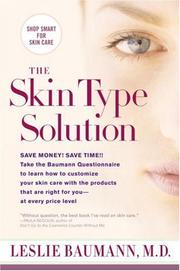
Written by a leading academic dermatologist, this book introduces a systematic, research-based framework for matching ingredients and routines to specific skin types and conditions.
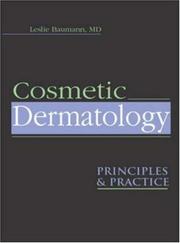
Baumann's clinical textbook — readable by a motivated non-specialist — covers the peer-reviewed evidence for every major cosmetic ingredient class, making it the most rigorous ingredient reference in this curriculum.
Discussion
Keep reading
Paths that share books, cover the same subject, or open a related topic.