Sarah Waters books in order: where to start
Sarah Waters has written six novels and none of them is a sequel, so there is no chronology to obey — but publication order still turns out to be the right order, because her books move steadily forward in time and steadily inward in technique. The path reads the three Victorian novels first, then the three twentieth-century ones, then opens out into the neo-Victorian shelf she came out of and the writers working the same seam now.
The Victorian Trio
BeginnerRead Waters's first three novels in publication order and see how quickly she moves from picaresque comedy to claustrophobic gothic to full-blown plot machine. ORDER CHOSEN: publication order — these are standalones, so nothing forces a sequence, but each book visibly answers the one before it.
▸ Study plan for this stage
Pace: About four weeks at 50 pages an evening. Tipping the Velvet is 480 pages and moves fastest of the three. Affinity is the shortest at 368 pages and the one to take slowest, because it alternates two dated diary strands and skimming loses track of which year you are in. Fingersmith is the longest at 5
- The self-deceiving narrator: in Affinity and Fingersmith the first person is not lying to you, she is wrong about her own situation, and the prose gives you the evidence before she reads it
- Waters's use of the period's own documents — music-hall bills, prison visitors' journals, sensation-novel plots — as structure rather than decoration
- How Tipping the Velvet uses costume and impersonation as the engine of the plot, not as a theme laid over it
- The sensation novel of the 1860s (Collins, Braddon) as the machinery Fingersmith is rebuilding — swapped identities, wrongful confinement, a stolen inheritance
- Class as the thing that actually decides outcomes in all three books, with sexuality secondary to it
- Why the tonal drop from Tipping the Velvet's comedy to Affinity's claustrophobia is deliberate rather than a failure of nerve
- At what point in Affinity did you have the evidence to see what Selina was doing, and what made you discount it?
- Fingersmith retells its first half from the other side. Which scenes change meaning most, and which turn out to have been narrated accurately all along?
- Tipping the Velvet moves Nancy through three distinct households and economies. What does each one cost her, and what does she gain that she keeps?
- All three novels put a woman inside an institution she cannot leave by choice. How do the prison, the asylum and the domestic household differ in how they hold her?
- Waters wrote these three in sequence. What does she stop doing after Tipping the Velvet, and what does she start doing?
- Read the first thirty pages of Affinity twice — once cold, once after finishing — and mark every sentence in Margaret's diary that is true but that you read as meaning something else.
- Keep a two-column date list while reading Affinity: Margaret's entries in one column, Selina's in the other. The gap between the two columns is the plot.
- After Fingersmith, go back to the chapter where the swap is first set up and count how many pages Waters gives you before she needs you to have missed it.
- Write down, before starting Fingersmith, the three things Affinity taught you not to trust in a Waters narrator. Check the list when you finish.
- Compare the music-hall scenes in Tipping the Velvet with the seance scenes in Affinity: both are staged performances with a paying audience. Note what each performer is concealing and from whom.
Next up: Having learned to read Waters's narrators against themselves in a period she reconstructs entirely from research, you are ready for the twentieth-century novels, where the same distrust operates on a world close enough to living memory that the reader brings their own assumptions to it.
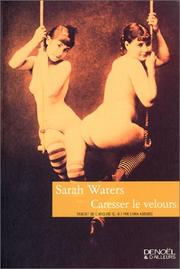
Her debut and the warmest book she has written: a Whitstable oyster girl follows a male-impersonator onto the London music-hall stage. Start here because it is the most purely enjoyable entry point and it establishes the lesbian Victorian London that the next two novels darken.
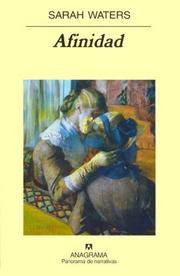
A lady visitor at Millbank prison becomes obsessed with an imprisoned spiritualist medium. Second because it takes the same period and drains all the fun out of it — the tonal swerve is the point, and it teaches you to distrust her narrators before Fingersmith requires you to.
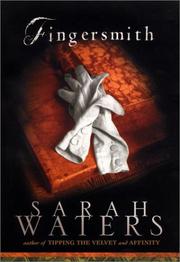
The Dickensian con-artist plot with the twist everyone talks about, and the novel that made her reputation. Third because the trick only lands at full force if you have already learned from Affinity that her first-person narrators are unreliable in ways they do not know about.
Into the Twentieth Century
BeginnerFollow Waters out of the Victorian period into the 1920s, the Blitz and the post-war years, and see her swap intricate plotting for atmosphere, class anxiety and slow dread.
▸ Study plan for this stage
Pace: Five to six weeks for 1,592 pages, and worth going slower than the Victorian trio because none of these three is driven by a twist. Night Watch is 509 pages in three sections that run backwards — 1947, then 1944, then 1941 — so read each section in as few sittings as you can manage, since the payoff
- Reverse chronology in Night Watch: what a structure gains by giving you the consequence first and withholding the cause
- The unreliable narrator relocated to a man, Dr Faraday, and to class resentment rather than desire
- Post-war austerity and the collapse of the gentry as material conditions, not backdrop — rationing, requisitioned houses, servants who will not come back
- The half-novel turn in The Paying Guests, where a domestic love story becomes a crime story and the reader's sympathies are deliberately compromised
- Waters's move from plot mechanism to atmosphere and dread as the primary engine
- The Little Stranger as the one novel of hers with no lesbian protagonist, and what that choice frees her to write about
- How the wartime blackout works in Night Watch as the only condition under which some of these lives are possible
- In Night Watch, name one fact from the 1947 section whose meaning only becomes available in 1941. Would the book work forwards?
- Is there anything supernatural in The Little Stranger? Assemble the case both ways from the text, and say what Faraday's narration does to your ability to decide.
- The Paying Guests spends its first half on a love affair and its second on a legal process. Where exactly does the hinge fall, and what has Waters made you complicit in by then?
- Compare Faraday's class resentment with Margaret's in Affinity. Which of the two does Waters treat more harshly?
- These three books cover 1922, 1941–47 and 1947. What does Waters think happened to women's possibilities across that span?
- Sketch Night Watch's events in forward chronological order on a single sheet, then reread the 1947 section against it and mark which scenes gain and which lose.
- Track every occasion in The Little Stranger where Faraday is alone at Hundreds Hall with no other witness, and see how much of the haunting rests on those moments.
- In The Paying Guests, mark the page where you first noticed you wanted a specific outcome from the investigation, and write down what Waters had done to put you there.
- Take one paragraph of description from Fingersmith and one from The Little Stranger and compare sentence length and clause structure — the change in her prose across the two halves of her career is measurable this way.
Next up: With all six of her novels read, the next stage steps back to the neo-Victorian tradition she was writing into, so you can see which of her moves were hers and which she inherited.

Wartime and post-war London, told in three sections that run backwards — 1947, then 1944, then 1941 — so causes arrive after their effects. Read it first of the modern books because the reverse structure is the clearest statement of what she is now interested in. Our catalogue record displays it as Night Watch, without the article.
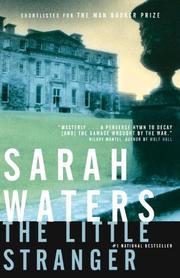
A crumbling Warwickshire house, a declining gentry family and a doctor narrator who may be the most unreliable in her whole body of work. Here because it applies the Affinity lesson to a 1947 setting, and because it is the only novel of hers with no lesbian protagonist — a deliberate move worth noticing.
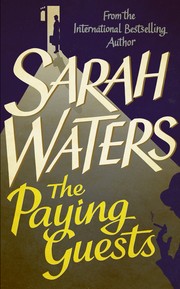
1922 Camberwell: a genteel widow takes in lodgers, and the novel turns from love story into crime story roughly halfway through. Last because it is her longest and slowest, and it rewards a reader who already trusts her to be going somewhere.
The Neo-Victorian Shelf She Came Out Of
IntermediateUnderstand the tradition Waters was writing into — the twentieth-century novel that reconstructs the nineteenth from the outside, with modern knowledge the Victorians did not have about themselves.
▸ Study plan for this stage
Pace: The heaviest stage on the path at 2,090 pages, and the one to budget two to three months for. The French Lieutenant's Woman is the shortest at 445 pages and should be read first and unhurried, because its narrator keeps interrupting and the interruptions are the argument. Then the two long ones: The
- Neo-Victorian fiction as a genre with two strategies: ironic distance that keeps the modern narrator visible (Fowles) and total immersion that hides them (Palliser, Faber)
- The multiple-ending device in The French Lieutenant's Woman and what it claims about the novelist's authority over character
- The inheritance plot as the Victorian novel's central machine, reconstructed at full length in The Quincunx
- What modern fiction can say about Victorian bodies, money and sex that Victorian fiction could not, and the risk of using that licence as a cheap advantage
- Research as visible surface: how each of these three authors signals the depth of their period knowledge to the reader
- The direct line from The Quincunx's con-artist machinery to Fingersmith
- Fowles interrupts his own novel to discuss it. Does that make the Victorian world more or less convincing, and would Waters's novels survive the same treatment?
- The Quincunx is 800 pages of pastiche. What does that length buy that a shorter homage could not, and where does it stop paying?
- Which elements of Fingersmith's plot can you trace directly to The Quincunx, and what does Waters do with them that Palliser does not?
- The Crimson Petal and the White gives you Sugar's interiority in full. Compare it with Nancy's in Tipping the Velvet — what does each author think a Victorian working woman's inner life sounded like?
- All three of these were written by men about Victorian women. Read alongside Waters, what difference does that make to what the books are interested in?
- Read both of Fowles's endings and then write one paragraph arguing that only one of them is the real ending; notice what you had to ignore.
- Pick a single scene of confinement or deception in The Quincunx and set it beside its counterpart in Fingersmith; list what Waters compressed.
- Take the opening page of The Crimson Petal and the White, where the narrator addresses you directly, and compare it with Fowles's narratorial intrusions — same device, opposite effect.
- Keep a running list of period details in Faber that you could not have learned from a Victorian novel itself, and ask of each one how the author knows it.
Next up: Having placed Waters inside the tradition she inherited, the last stage moves sideways to the writers working the same material now, so you have somewhere to go when her six novels are finished.
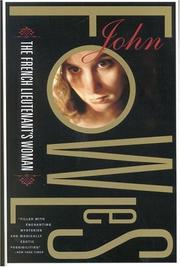
The book that invented the form: a Victorian romance narrated by a twentieth-century voice that keeps stepping outside the frame. First here because everything after it is arguing with it.
A vast, deliberately archaic pastiche of a Dickens inheritance plot, published in 1989. Read after Fowles as the opposite strategy — total immersion rather than ironic distance — and note how much of its machinery Fingersmith reuses.
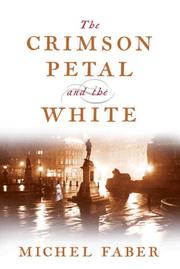
An 1870s London prostitute's ascent, with the sexual and bodily detail Victorian fiction could not print. The closest sibling to Waters's early novels, and the best test of whether you want more of this or want out.
Contemporaries Working the Same Seam
IntermediateFind the next writers to read once Waters's six novels are done, chosen for the same combination of historical research, queer or female interiority, and plot that actually moves.
▸ Study plan for this stage
Pace: About five weeks for 1,184 pages, the lightest stage on the path — none of the three runs past 416 pages, and all three are plot-forward. Read Slammerkin (406 pages) first and slowest: it is built out of a real court case and its ending is fixed by the record, so the reading experience is watching a
- Historical fiction built from a documented court case (Slammerkin) versus fiction built from a period's texture alone
- Voice as the primary pleasure: Bessy's narration in The Observations does the work that plot does in the other two
- The servant's-eye view of a household, and how it differs from Waters's version in Affinity and The Little Stranger
- Pre-Raphaelite London in The Doll Factory as a setting where art-making and possession are the same impulse
- Refusing to sentimentalise poverty: what Donoghue does with material that invites pity and how she withholds it
- How to tell, from these three, which direction of Waters's work you actually want more of
- Slammerkin's ending is a matter of record. Does knowing that change how the book reads, and how does Donoghue use the inevitability?
- Bessy's voice in The Observations is the reason to read it. Where does the voice do something the plot could not have done?
- Which of these three is closest to Waters, and on which axis — research, queer interiority, or plot?
- The Doll Factory and Fingersmith both end in captivity. Compare what each novel thinks captivity is for, structurally.
- After four stages, what specifically do you now want from a historical novel that you did not want at the start?
- Read the first ten pages of The Observations aloud; the voice is built for the ear and the reason it works is audible rather than visible on the page.
- Set Mary Saunders's route through service, the street and the household in Slammerkin beside Nancy's three households in Tipping the Velvet, and mark where the two novels diverge on what a woman can choose.
- Write a one-paragraph case for which of these three authors to read next in full, citing a specific passage rather than a general impression.
- List the neo-Victorian devices from stage three that appear in The Doll Factory, and note which have become genre furniture.
Next up: This is the end of the path: six Waters novels, the tradition behind them, and three living writers to follow — from here the sensible next move is to pick one of those three and read them in full rather than adding another survey.
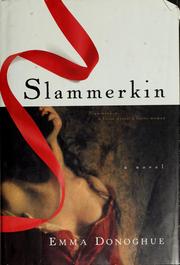
An eighteenth-century servant girl's story built out of a real court case. Donoghue is the closest match to Waters on research and on refusing to sentimentalise poverty.

An 1863 Scottish house, an Irish maid narrator with an unmistakable voice, and a mistress who is writing about her. The narrative voice is the reason to read it — it is doing what Tipping the Velvet does with comic energy.

Pre-Raphaelite London, obsession and captivity, published 2019. The most recent of the three and the most plot-driven, so it makes a good last stop before you go looking on your own.