Ruby on Rails: books to build web apps fast
This curriculum takes a complete beginner from zero Ruby knowledge all the way to deploying polished, tested, full-stack Rails applications. Each stage builds directly on the last: you first learn the Ruby language itself, then the Rails framework core, then professional-grade testing and database mastery, and finally real-world deployment and application design patterns.
Ruby Foundations
BeginnerUnderstand Ruby syntax, object-oriented programming, blocks, iterators, and idiomatic Ruby style — the essential vocabulary before touching Rails.
▸ Study plan for this stage
Pace: 8–10 weeks, ~40–50 pages/day. Start with "Learn to Program" (weeks 1–3, ~200 pages), then move to "The Well-Grounded Rubyist" (weeks 4–10, ~400–450 pages). Allocate 2–3 days per major concept for practice and review.
- Ruby syntax fundamentals: variables, data types (strings, numbers, arrays, hashes), operators, and control flow (if/else, loops)
- Methods: defining, calling, parameters, return values, and default arguments
- Object-oriented programming: classes, instance variables, inheritance, and method visibility (public, private, protected)
- Blocks, procs, and lambdas: understanding closures and passing code as arguments
- Iterators and enumerable methods: map, select, each, and functional programming patterns
- String and array manipulation: built-in methods and idiomatic Ruby approaches
- Exception handling: begin/rescue/ensure and raising custom errors
- Idiomatic Ruby style: naming conventions, duck typing, and writing readable, maintainable code
- What is the difference between a block, a proc, and a lambda in Ruby, and when would you use each?
- How do classes, inheritance, and instance variables work together in Ruby's object model?
- Explain what duck typing is and why it matters in Ruby development.
- How do iterator methods like map, select, and each work, and what do they return?
- What are the differences between public, private, and protected methods, and why would you use each?
- How does exception handling work in Ruby, and what is the purpose of begin/rescue/ensure blocks?
- Complete all programming exercises in "Learn to Program" chapters 1–12, building small programs that use variables, loops, and methods.
- Write a simple class hierarchy (e.g., Animal → Dog, Cat) with instance variables, methods, and inheritance; instantiate objects and call methods on them.
- Refactor a procedural script into object-oriented code using classes and methods.
- Write a program that uses blocks and iterators: read a file or array, use map/select/each to transform data, and output results.
- Create a custom exception class and write code that raises and rescues it in different scenarios.
- Build a small command-line application (e.g., a to-do list or number guessing game) that combines classes, methods, iterators, and user input.
Next up: Mastering Ruby's syntax, OOP model, and functional programming patterns equips you with the language fundamentals needed to understand Rails' conventions, metaprogramming, and how Rails leverages Ruby's flexibility to build web applications efficiently.
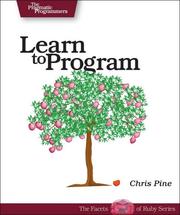
A gentle, friendly introduction to programming using Ruby. Perfect for absolute beginners — it builds logical thinking and basic Ruby syntax before any framework complexity.
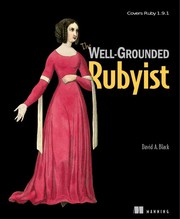
The most thorough beginner-to-intermediate Ruby book available. Covers objects, modules, blocks, and the Ruby object model in depth — knowledge Rails relies on heavily.
Rails Core — MVC & ActiveRecord
BeginnerBuild and understand real Rails applications using MVC architecture, routing, ActiveRecord, forms, and the asset pipeline.
▸ Study plan for this stage
Pace: 8–10 weeks, ~40–50 pages/day (mix of reading and hands-on coding)
- MVC architecture and how Models, Views, and Controllers interact in Rails
- Rails routing: RESTful conventions, route definitions, and URL generation
- ActiveRecord fundamentals: migrations, associations, validations, and querying
- Form handling: form helpers, strong parameters, and error handling
- The asset pipeline: CSS/JavaScript organization, preprocessing, and bundling
- Rails conventions over configuration philosophy and how it accelerates development
- Database design and relationships (has_many, belongs_to, has_many :through)
- Scaffolding and generators as productivity tools for rapid application development
- How does the MVC pattern separate concerns in a Rails application, and where does each layer live?
- What is RESTful routing, and how do Rails conventions make it automatic?
- How do ActiveRecord associations work, and what are the differences between has_many, belongs_to, and has_many :through?
- What is the purpose of migrations, and how do you create and modify database schemas with them?
- How do Rails form helpers prevent security vulnerabilities, and what role do strong parameters play?
- What is the asset pipeline, and how does it manage CSS and JavaScript in production?
- How do validations work in ActiveRecord, and where should validation logic live?
- What is the difference between a scaffold and a resource, and when should you use each?
- Build a complete blog application (posts and comments) following the MVC pattern from 'Agile Web Development with Rails 7' chapters 1–6, implementing models, controllers, and views
- Create a many-to-many association (e.g., students and courses) using has_many :through and verify it works in the Rails console
- Write custom validations for a User model (email format, password strength) and test them with unit tests
- Build a form with nested attributes (e.g., creating a post with multiple tags in one form) using form helpers and strong parameters
- Refactor a controller action to use Rails conventions (RESTful routes) and verify all 7 CRUD actions work correctly
- Create a multi-step form (wizard) that spans multiple controller actions, persisting data across requests
- Set up and configure the asset pipeline for a new Rails app; add custom CSS and JavaScript, then verify it works in production mode
- Follow the 'Ruby on Rails Tutorial' sample application (chapters 1–8) end-to-end, building a Twitter-like app with users, microposts, and relationships
Next up: This stage establishes the foundational architecture and patterns of Rails applications, preparing you to advance into more sophisticated topics like authentication, authorization, testing, and API development in the next stage.
The canonical Rails starter book. Walks you through building a complete e-commerce app from scratch, introducing every core Rails concept in a practical, project-driven way.

Builds a full Twitter-like application end-to-end, reinforcing MVC, authentication, and RESTful design. Reading this after Agile Web Development solidifies and deepens every concept introduced there.
Testing & Quality
IntermediateWrite professional-grade tests with RSpec and Capybara, understand TDD/BDD workflows, and build confidence that your Rails apps are correct and maintainable.
▸ Study plan for this stage
Pace: 4–5 weeks, ~25–30 pages/day, with 2–3 dedicated practice days per week
- RSpec fundamentals: describe blocks, context blocks, and example groups for organizing test suites
- Expectation syntax and matchers: using expect() and should syntax, built-in matchers, and custom matchers
- BDD workflow: writing failing specs first, then implementing code to satisfy them
- Test doubles: mocks, stubs, and spies to isolate units and control external dependencies
- Rails-specific testing: model specs, controller specs, and integration testing with Capybara
- Shared examples and helper methods: DRY testing patterns to reduce duplication
- Test organization and best practices: naming conventions, setup/teardown, and maintaining readable test suites
- How do describe and context blocks differ, and when should you use each to organize your test suite?
- What is the difference between a stub and a mock, and why would you use one over the other in a test?
- How does the BDD workflow (red-green-refactor) differ from traditional test-after development, and what are its benefits?
- What are the key differences between model specs, controller specs, and integration tests, and what should each test?
- How do you write a custom matcher in RSpec, and when is it worth creating one instead of using built-in matchers?
- What is a shared example, and how can it help you keep your test suite DRY?
- Set up a new Rails project and write RSpec specs for a simple model (e.g., User) using describe/context blocks and multiple matchers before implementing the model logic
- Write a controller spec that uses stubs and mocks to isolate the controller from the model layer, then verify the controller calls the expected methods
- Implement a custom RSpec matcher for domain-specific validation (e.g., a matcher that checks if an email is valid) and use it in multiple specs
- Refactor an existing test suite by extracting shared examples for repeated test patterns across multiple spec files
- Write an integration test using Capybara that exercises a full user workflow (e.g., sign up, log in, create a resource) without mocking the underlying models
- Practice the red-green-refactor cycle: write a failing spec for a new feature, implement the minimal code to pass it, then refactor for clarity and maintainability
Next up: Mastering RSpec and BDD practices establishes the foundation for advanced testing strategies—such as performance testing, continuous integration, and test-driven architecture—that ensure Rails applications scale reliably in production.
Goes deeper into RSpec and Cucumber, explaining the BDD philosophy and advanced matcher/mock patterns that make test suites expressive and robust.
ActiveRecord & Database Mastery
IntermediateMaster ActiveRecord associations, queries, migrations, and performance optimization so your data layer is efficient and well-designed.

The definitive Rails reference. After building apps, this book fills in every gap — covering ActiveRecord in exhaustive detail, along with advanced routing, ActionController, and API design.

Written by a Rails core team member, this book reveals how Rails works internally through hands-on extension projects — essential for understanding the framework deeply rather than just using it.
Real-World Design & Deployment
ExpertArchitect maintainable large-scale Rails applications using proven design patterns, and confidently deploy and operate them in production.
▸ Study plan for this stage
Pace: 8–10 weeks, ~25–30 pages/day, with 2–3 days per week dedicated to hands-on exercises and deployment practice
- Sustainable architecture: organizing code into logical layers (models, services, presenters) to reduce cognitive load and enable long-term maintainability
- Design patterns for Rails: service objects, presenters, and query objects to keep controllers and models lean and testable
- Dependency injection and testing strategies: writing decoupled, unit-testable code without relying on Rails magic
- Database design and migrations: managing schema evolution safely in production environments
- Containerization with Docker: building reproducible development and production environments using Docker and Docker Compose
- Multi-stage Docker builds and image optimization: creating lean production images and managing development vs. production configurations
- Container orchestration basics: understanding how containerized Rails apps run in production (networking, volumes, environment variables)
- Deployment workflows: moving from local development through staging to production using containers
- How do service objects, presenters, and query objects reduce complexity in Rails applications, and when should you use each?
- What are the key principles of sustainable Rails architecture, and how do they differ from a typical Rails application?
- How do you structure a Dockerfile and Docker Compose setup to support both development and production Rails environments?
- What is dependency injection, and why is it essential for writing testable Rails code without tight coupling to the framework?
- How do you manage database migrations and schema changes safely when deploying containerized Rails applications?
- What are the trade-offs between multi-stage Docker builds and image size, and how do you optimize for production?
- Refactor an existing Rails controller and model pair by extracting business logic into a service object; write unit tests for the service without loading Rails
- Build a presenter class for a complex view, moving view logic out of the template and model; test the presenter in isolation
- Create a query object to encapsulate a complex ActiveRecord scope; compare readability and testability before and after
- Write a Dockerfile for a Rails application with separate development and production stages; use Docker Compose to run the app locally with a database and Redis
- Set up a multi-stage Docker build that compiles assets and installs gems in a builder stage, then copies only necessary artifacts into a lean production image
- Deploy a containerized Rails app to a staging environment (local Kubernetes, Docker Swarm, or a cloud provider); practice rolling updates and rollbacks
Next up: This stage equips you with the architectural patterns and deployment infrastructure needed to build and operate Rails applications at scale; the next stage will deepen your expertise in monitoring, scaling, and optimizing production systems under real-world load.

Addresses the hard long-term problems: keeping a Rails codebase clean, avoiding fat models, and making architectural decisions that scale over years of development.

Teaches containerizing and deploying Rails apps with Docker and Docker Compose — the modern, practical path to production deployment that every Rails developer needs to know.
Discussion
Keep reading
Paths that share books, cover the same subject, or open a related topic.