Best Books on Rowing and the Erg, in Order
This curriculum moves from the universal basics of rowing technique and indoor training, through structured erg programming and on-water skill-building, and finally into the rich literary and historical tradition of the sport. Each stage builds the vocabulary, physical intuition, and cultural context needed to fully appreciate the next, so a complete beginner will arrive at the advanced narratives with both technical fluency and a deep love of the sport.
Foundations: The Stroke & the Erg
BeginnerUnderstand the fundamental biomechanics of the rowing stroke, learn safe and efficient erg technique, and get comfortable with basic training concepts before ever touching water.
▸ Study plan for this stage
Pace: 2–3 weeks, ~20–25 pages/day, with 2–3 dedicated erg practice sessions per week
- The six phases of the rowing stroke (catch, drive, finish, recovery) and their biomechanical purpose
- How power is generated through leg drive, trunk rotation, and arm extension in sequence
- The concept of leverage, timing, and synchronization in crew rowing
- Erg ergonomics: seat position, footplate angle, handle height, and their effect on force application
- The difference between power output and efficiency; why smooth strokes beat jerky ones
- How to read and interpret erg performance metrics (split time, power curve, stroke rate)
- Common technical errors and how to correct them before they become ingrained habits
- What are the four main phases of the rowing stroke, and what is the primary biomechanical goal of each?
- How does the sequence of leg drive, trunk, and arms contribute to efficient power generation?
- What are the key ergonomic adjustments on an erg, and how does each one affect your stroke mechanics?
- Why is a smooth, controlled stroke more efficient than a powerful but jerky one?
- What does the power curve on an erg display, and what does it tell you about your stroke technique?
- What are three common technical faults in the rowing stroke, and how would you correct them?
- Perform 5–10 minutes of on-erg drills focusing on each phase separately: legs-only, trunk-only, and arms-only rows; then combine in sequence
- Record yourself on the erg (video or phone) and compare your stroke to the biomechanical descriptions in Nolte; identify one technical flaw and practice correcting it over 3–4 sessions
- Complete a 2,000 m erg test at a steady, sustainable pace and analyze your split times and power curve; repeat weekly and track improvements
- Do a 10-minute steady-state row at a low stroke rate (16–18 spm) focusing on complete leg drive and full trunk rotation; feel the difference in power and smoothness
- Create a one-page diagram or notes page mapping the stroke phases to muscle groups and leverage points; use this as a reference during erg sessions
- Perform 3–5 sets of 500 m intervals on the erg at a moderate intensity, focusing on maintaining consistent technique under fatigue
Next up: Mastering the biomechanics of the stroke and erg technique on land provides the technical foundation and body awareness needed to safely transition to water, where you'll apply these principles in a shell while managing balance, timing with crew, and the unique demands of moving a boat.

The single most comprehensive technical manual on rowing, edited by a world-class coach. Start here to build a rigorous vocabulary of the stroke, body mechanics, and training principles that every later book assumes you know.
On the Water: Skill, Coaching & Racing
IntermediateTransfer erg fitness and technical knowledge onto the water, understand boat-feel, balance, and bladework, and learn how coaches and athletes think about racing strategy.
▸ Study plan for this stage
Pace: 4–5 weeks, ~40–50 pages/day (approximately 350 pages total; allows time for reflection and note-taking on coaching philosophy and race strategy)
- Translating erg fitness into on-water performance: how raw power must be adapted to boat dynamics, timing, and crew synchronization
- Boat-feel and balance: understanding how weight distribution, blade work, and individual rower adjustments affect boat run and stability
- The coach's mental model: how elite coaches diagnose problems, communicate feedback, and make strategic decisions during training and racing
- Racing strategy and crew psychology: how athletes think about pacing, competition, mental toughness, and the collective mindset required for high-stakes racing
- Technical refinement through competition: how racing exposes technical weaknesses and drives iterative improvement in bladework and synchronization
- The relationship between individual ambition and crew cohesion: balancing personal goals with the demands of collective performance
- How does Halberstam illustrate the difference between erg power and effective on-water rowing? What adjustments must rowers make?
- What does 'boat-feel' mean, and how do the coaches and athletes in the book develop and communicate about it?
- How do the coaches in the book diagnose technical problems and communicate corrections to their crews? What is their coaching philosophy?
- What racing strategies and mental approaches do the elite rowers in the book employ, and how do they prepare psychologically for high-stakes competition?
- How does Halberstam portray the tension between individual ambition and crew unity? What does this reveal about team dynamics in rowing?
- What role does competition play in technical development? How do races serve as learning opportunities for the athletes and coaches?
- Read and annotate key passages where Halberstam describes coaching feedback or technical corrections; extract the specific language coaches use to diagnose and fix problems.
- Create a 'coaching philosophy' document for one of the coaches featured in the book, summarizing their approach to training, communication, and strategy.
- Watch video footage of the actual 1985 U.S. National Rowing Team (the subject of the book) and compare Halberstam's descriptions of boat-feel and technique to what you observe on video.
- Conduct a mock race debrief: choose a key race from the book and write a post-race analysis as if you were the coach, identifying what went well, what didn't, and what adjustments you'd make for the next competition.
- Interview a local rowing coach or experienced rower about how they think about boat-feel, balance, and the translation from erg fitness to on-water performance; compare their answers to Halberstam's narrative.
- Create a timeline of the book's competitive season, marking key races and technical breakthroughs; annotate how each race or training block influenced the team's strategy and mindset.
Next up: This stage grounds you in the lived experience of elite rowers and coaches translating fitness into performance and thinking strategically about racing, preparing you to learn advanced technical systems, biomechanics, and the science behind the intuitions Halberstam captures.

Halberstam's immersive account of four scullers competing for a spot on the 1984 U.S. Olympic team is packed with on-water detail and coaching insight, making it both a gripping read and a masterclass in how elite rowers train and race.
Classic Rowing Narratives
ExpertExperience rowing as history, culture, and human drama — understanding the sport's deeper meaning through its greatest stories and the athletes who defined it.
▸ Study plan for this stage
Pace: 8–10 weeks, ~40–50 pages/day, with 2–3 days per week for reflection and exercises
- Rowing as a vehicle for social mobility and personal transformation, exemplified by the Depression-era crew in *The Boys in the Boat*
- The role of coaching philosophy and leadership in shaping both individual athletes and team culture, as explored through Topolski's perspective in *True Blue*
- The psychological and emotional dimensions of elite rowing—fear, resilience, focus, and the mind-body connection detailed in *Mind Over Water*
- Rowing's cultural significance as a mirror of class, nationality, and institutional identity across different eras and contexts
- The narrative power of individual stories within collective achievement—how personal struggles and triumphs define a team's legacy
- The technical and strategic evolution of rowing, from the 1930s to modern competitive rowing, and how training philosophy has transformed
- Rowing as a metaphor for life: discipline, perseverance, and the pursuit of excellence under pressure
- How does *The Boys in the Boat* use the 1936 Olympic crew's journey to illustrate the intersection of personal hardship, social class, and national identity?
- What are the key differences in coaching philosophy and team dynamics between Topolski's account in *True Blue* and the leadership shown in *The Boys in the Boat*?
- According to *Mind Over Water*, what are the primary mental and psychological challenges elite rowers face, and how do they overcome them?
- How do these three books collectively portray rowing as both a sport and a cultural phenomenon that transcends athletic competition?
- What role does institutional loyalty and tradition play in shaping rowing culture, as evidenced across all three narratives?
- How do the personal narratives in these books illustrate the concept of 'flow' or peak performance in rowing?
- Character mapping: Create detailed profiles of 3–4 key athletes from *The Boys in the Boat* (e.g., Joe Rantz, Don Hume) and track how their personal challenges shaped their rowing performance and team dynamics
- Comparative coaching analysis: Read the sections on coaching in *True Blue* and *The Boys in the Boat*, then write a 2–3 page essay contrasting Topolski's approach with Al Ulbrickson's leadership style
- Psychological journal: As you read *Mind Over Water*, keep a reflective journal identifying the mental techniques Lambert describes and note which ones resonate with your own experience of challenge or performance
- Timeline construction: Create a visual timeline spanning 1930s–1980s showing how rowing training methods, team selection, and competitive strategy evolved across the three books
- Narrative analysis: Select one pivotal moment from each book (e.g., the Olympic final in *The Boys in the Boat*, a critical race in *True Blue*, a mental breakthrough in *Mind Over Water*) and analyze how each author uses narrative technique to convey the emotional stakes
- Institutional deep dive: Research the history of either the University of Washington or Cambridge/Oxford rowing programs and connect what you learn to the cultural contexts depicted in these books
Next up: This stage establishes rowing as a rich narrative and cultural tradition, preparing you to move into the next stage—whether that focuses on technical rowing instruction, contemporary competitive rowing, or the science and physiology behind elite performance—with a deep appreciation for the human stories and historical context that give the sport its meaning.

The defining modern rowing narrative — the story of the 1936 U.S. Olympic eight. Read after building technical knowledge so you can fully appreciate the descriptions of the stroke, the boat-feel, and the coaching that Brown renders so vividly.
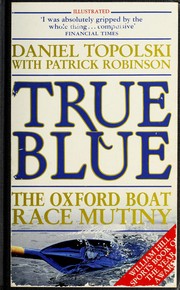
The inside account of the 1987 Oxford–Cambridge Boat Race mutiny, told by Oxford's legendary coach. A gripping story of team dynamics, loyalty, and the brutal demands of elite sweep rowing.
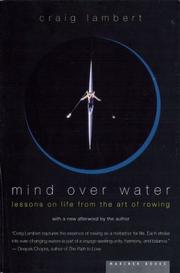
A Harvard-trained rower and journalist uses a season on the Charles River to meditate on the philosophy, Zen, and pure sensation of rowing — the perfect capstone that rewards every technical and narrative lesson learned along the way.
Discussion
Keep reading
Paths that share books, cover the same subject, or open a related topic.