Robert Silverberg books in order: where to start
Robert Silverberg has published several hundred books, most of them not worth your time, and the reason he matters sits almost entirely in a seven-year stretch from 1967 to 1976 when he decided to write serious literary science fiction and did. This path front-loads that period rather than starting at the beginning of a career that began in pulp magazines. Later stages cover the earlier idea-driven novels, the Majipoor fantasies he came back with after retiring in disgust, and the late elegiac work.
Start here: the New Wave peak
IntermediateRead the three novels that justify the whole career, and understand what Silverberg was doing that the field was not.
▸ Study plan for this stage
Pace: Three short novels, 667 pages in total — Dying Inside 256, The Book of Skulls 222, Downward to the Earth 189 — and the fastest stage on the path. A fortnight of ordinary evenings covers it. Read them in the order given rather than by length: Dying Inside first because it is the strongest and least g
- Telepathy used as a metaphor for a failing career rather than as a plot device, which is what makes Dying Inside unlike its genre neighbours
- Rotating first-person narration in The Book of Skulls, and how four unreliable voices verify and contradict one another
- Downward to the Earth built on the frame of Heart of Darkness, with colonial guilt as its actual subject
- The New Wave project in one sentence: science-fictional premises given the interiority of literary fiction
- Silverberg's characteristic middle-aged failure narrator, established here and recurring for the rest of the career
- Why 222 and 189 pages are enough — the compression is deliberate, not commercial
- What is Dying Inside actually about, if the telepathy is granted and set aside?
- In The Book of Skulls, which of the four narrators do you trust least, and what in the text produces that?
- How closely does Downward to the Earth track Heart of Darkness, and where does it deliberately break the parallel?
- What can these three do that the science fiction of the previous generation could not?
- Which is the better novel, Dying Inside or The Book of Skulls, and on what criterion?
- Mark every passage in Dying Inside where the narrator's account of an event is contradicted by what he reports others thinking. The gap is the novel.
- In The Book of Skulls, chart which of the four narrators tells you each plot fact first; the sequencing is the formal control the path claims for it.
- Read the final twenty pages of Downward to the Earth against the end of Heart of Darkness and describe the substitution Silverberg makes.
- After all three, write down what you expect the rest of the career to look like. Stage three is where that expectation gets tested.
Next up: You have the three peaks, so the rest of the great decade reads as variations on a method you can already recognise.
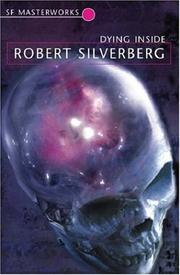
The place to start and the best book he wrote: a telepath in New York losing his gift, told as a novel of middle-aged failure. Barely science fiction in temperament and completely so in premise.

Four students drive to Arizona chasing immortality, narrated in rotating first person. The most formally controlled thing Silverberg attempted and the one most likely to convince a literary reader.
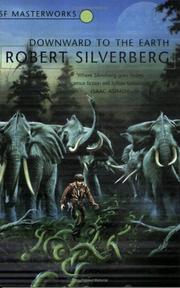
Colonialism, guilt and transcendence on an alien world, structured on Heart of Darkness. Read third: it is the most conventionally science-fictional of the three and reframes the other two.
The rest of the great decade
IntermediateFill in the other major novels of the 1967-1976 run, where Silverberg wrote a book of consequence roughly every nine months.
▸ Study plan for this stage
Pace: Four novels, 829 pages in total, none longer than 222 — Thorns 222, Tower of Glass 206, A Time Of Changes 214, The world inside 187. That is a month at one a week and the most concentrated reading on the path: four complete novels for less than the length of a single modern doorstop. Read Thorns fir
- Thorns as the hinge: pulp structure carrying non-pulp intent, visible in the same 222 pages
- Tower of Glass as the period's plainest statement — manufactured labour, invented religion, one man's monument
- A Time Of Changes as a single-idea novel executed to exactly the length the idea supports, and the discipline that takes
- The world inside as linked stories rather than a continuous novel, and what the form lets Silverberg avoid
- The recurring subject underneath all four: people constructed by systems they did not choose and cannot see out of
- A working rate of roughly a novel of consequence per year, and what that does to consistency
- What in Thorns is still pulp machinery, and what is doing something the machinery cannot?
- Is the android religion in Tower of Glass satire, tragedy, or straight extrapolation? Argue from the ending.
- Does A Time Of Changes have anything to say once its central taboo is understood, or is understanding it the whole book?
- Why is The world inside told as linked stories rather than as a single narrative?
- Which of these four could stand beside Dying Inside, and which are clearly a tier below?
- Take the opening chapter of Thorns and the opening chapter of Dying Inside and list what changed in the prose between them.
- In A Time Of Changes, note every construction the narrator uses to avoid the forbidden pronoun and how the awkwardness is deployed.
- Map the vertical geography of The world inside floor by floor as the stories move through it, then ask what the map argues.
- Rank all seven books read so far and write one sentence for each placement; you will revise this after the Majipoor stage.
Next up: With the peak decade complete, the earlier idea novels show what the same writer was doing before the prose caught up with the ambitions.
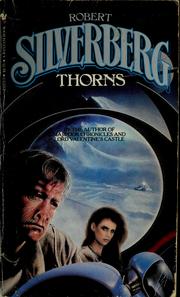
The novel where the shift begins — a study in engineered suffering, still pulp in shape but no longer pulp in intent.

Androids, religion and a billionaire's tower. Silverberg's most direct book about labour and belief, and the plainest statement of the period's themes.
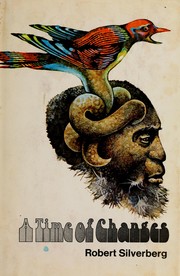
His Nebula winner: a culture where the first person singular is obscene. A one-idea novel executed exactly as far as the idea goes.

Thousand-storey vertical cities and enforced sexual availability, told as linked stories. The most 1971 book on this path and still genuinely unsettling.
The idea novels, earlier and stranger
IntermediateGo back to the mid-1960s books, which are shorter, cruder and full of premises the later work refines.
▸ Study plan for this stage
Pace: 681 pages across three — Hawksbill Station 185, Up the Line 256, The Stochastic Man 240 — and a fortnight at a relaxed pace. These are shorter and cruder than the previous stage and should be read faster; the interest is in the premises, not the sentences. Hawksbill Station at 185 pages is the clean
- The idea-first mode: a premise stated cleanly and worked out, with characterisation kept minimal
- Hawksbill Station's exile-in-deep-time premise as a political allegory that never insists on itself
- Comedy as a mode Silverberg attempts rarely and controls unevenly
- Determinism and foreknowledge in The Stochastic Man, and the difference between a novel about exhaustion and an exhausted novel
- What is gained by reading these after the major work rather than before
- What makes Hawksbill Station work at 185 pages that a longer version would have lost?
- Where does Up the Line's comedy stop functioning, and is that failure or design?
- How does The Stochastic Man handle the paradox that its narrator can see what is coming?
- Which of these three premises would you most like to see rewritten by the author of Dying Inside?
- Do these books read as apprentice work, or as a different mode practised alongside the major novels?
- Write the one-sentence premise of each of the three, then note how many pages each takes to deliver it. The ratio is the argument of this stage.
- Compare the closing pages of Up the Line with its opening tone and describe where the book turns.
- Read The Stochastic Man immediately after The world inside — both near-future New York, 187 pages against 240 — and note what has gone out of the writing.
- Decide, in writing, whether you would keep any of these three on a five-book Silverberg shelf.
Next up: Knowing what the career had run down to makes the comeback legible as a deliberate change of writer, not a continuation.
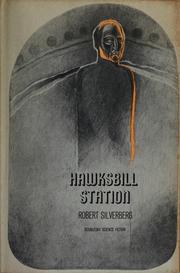
Political prisoners exiled to the Cambrian era. A clean, hard idea and a good demonstration of Silverberg before the prose caught up with him.

Time-travel tour guides and a paradox comedy that gets progressively less funny. Uneven and worth reading for the ending.
Prediction, politics and determinism in a near-future New York. The last novel before he quit, and audibly exhausted — which is part of its interest.
Majipoor: the comeback
IntermediateRead the sequence Silverberg returned with after retiring, which is a completely different mode: enormous, generous planetary fantasy.
▸ Study plan for this stage
Pace: A change of scale as well as mode: Lord Valentine's Castle is 466 pages and Majipoor Chronicles 317 — 783 for the two — which makes Lord Valentine's Castle more than twice the length of anything in the previous stage. Our record for Valentine Pontifex is a German-language edition and carries no page
- A deliberate rejection of the earlier mode — generosity, length and comfort chosen against compression and bleakness
- Majipoor as a planet built for scale, with distance itself as the plot of the first book
- Majipoor Chronicles as linked stories doing world-building the novels cannot pause for
- Amnesia and restored identity as the trilogy's engine, and how that differs from the interiority of the peak novels
- The commercial fantasy market of the period as a real force on what a science fiction writer could sell
- Reading a career backwards and forwards at once: the same author, an incompatible set of intentions
- What does Lord Valentine's Castle refuse to do that every book in the first three stages does?
- Is Majipoor Chronicles better read before or after the novel it supports? Defend your answer.
- How does Valentine Pontifex resolve the trilogy, and does the resolution need 466 pages of journey to earn it?
- Is the Majipoor mode a retreat or a genuinely different ambition?
- Which Silverberg would you recommend to a reader who liked Lord Valentine's Castle, given that almost nothing else here resembles it?
- Draw the route of Lord Valentine's Castle across the planet and mark where the narrative pace slows; the map and the pacing are the same object.
- Pick one story from Majipoor Chronicles and identify what it adds that the trilogy would otherwise have to state outright.
- Read the first ten pages of Lord Valentine's Castle and the first ten of The Book of Skulls consecutively and describe the two readers each is written for.
- Revise the ranking you made in stage two now that the Majipoor books are in it, and note whether you had to change your criterion to fit them in.
Next up: Having seen both modes at full length, the late work is where the ambition of the peak decade returns in short forms.
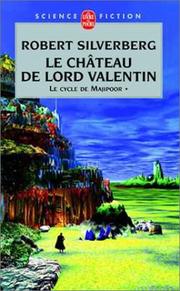
The 1980 comeback and a deliberate rejection of everything above — a picaresque, warm, slow journey across a giant planet. Read it as a different writer, because he meant it as one.
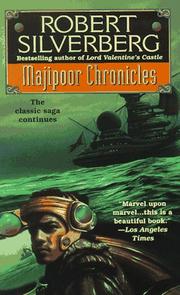
Linked stories from the planet's history, and the best entry point into Majipoor's depth. Our catalogue record co-credits a translator; the work is Silverberg's 1982 collection.

Closes the original Majipoor trilogy. Read after both, because it assumes the whole geography.
Late Silverberg
IntermediateFinish with the elegiac later work, where the ambition of the 1970s returns in shorter forms.
▸ Study plan for this stage
Pace: Two books, 698 pages — Sailing to Byzantium at 300 and Roma Eterna at 398 — and about a month. Both are built from shorter pieces rather than continuous narrative, so they suit interrupted reading in a way nothing else on this path does: Roma Eterna is a sequence of linked stories spread across two
- The late elegiac register: reconstruction, memory and belatedness as explicit subjects rather than implications
- The novella as Silverberg's natural length, argued by how much better the short late work is than the long
- Roma Eterna's counterfactual premise as a frame for a sequence rather than a puzzle to be solved
- Continuity with the peak decade — the same interest in people made by systems, now viewed from the far end
- How a career of several hundred books reduces to a shelf of about a dozen, and what the filtering is based on
- What does Sailing to Byzantium share with Dying Inside, separated by a whole career?
- Does Roma Eterna's alternate history do argumentative work, or is it a setting?
- Why do these late pieces work at 300 and 398 pages when The Stochastic Man at 240 does not?
- Having read fifteen books, what is the through-line in Silverberg — and is there one?
- Which three would you give someone who will read exactly three, and what would you be leaving out?
- Read the title novella of Sailing to Byzantium twice, a week apart, and note what the second reading recovers.
- Chart Roma Eterna's stories on a timeline and mark where the divergence from actual history matters to the plot and where it is decoration.
- Take the ranking you have revised twice and finalise it, then write the two-sentence pitch you would put at the top of it.
- Choose one book from outside this path — Silverberg published hundreds — read its first chapter, and decide whether the filter that excluded it was right.
Next up: This path takes fifteen books out of several hundred; anything further is best chosen by mode — peak-decade compression or Majipoor generosity — rather than by chronology.

The late-career novella, resurrected people in reconstructed cities. The single best piece of short Silverberg and a fair summary of his preoccupations.
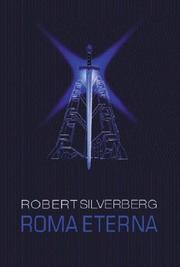
An alternate history in which Rome never fell, told across two thousand years of linked stories. The most ambitious late project and a good last stop.