Elvis Cole books in order: where to start with Robert Crais
Robert Crais began the Elvis Cole novels as bright, wisecracking Los Angeles private-eye books in the Robert B. Parker tradition, then broke his own formula in 1999 and never went back. This path reads them in publication order, because the series has one clean hinge — L.A. Requiem — and its effect only works if you have spent seven books in the earlier voice. The later stages follow the point of view as it shifts onto Joe Pike, and finish with the standalones, which are where Crais writes his tightest plots.
Start here: the early Elvis Cole
BeginnerGet the voice, the office, the Pinocchio clock and the partnership, in the order Crais built them.
▸ Study plan for this stage
Pace: Short, fast books: The Monkey's Raincoat is 245 pages and Stalking the angel 256, so 501 pages for the two we hold lengths for. Our catalogue record for Lullaby Town (Elvis Cole) carries no page count, so treat its length as unrecorded rather than assuming it matches the others. Three books a month
- Cole's wisecracking as a coping mechanism rather than a character tic, established in the debut and dismantled across the run
- The private-eye furniture Crais inherits from the Chandler and Parker line, and what he keeps of it
- Joe Pike introduced as a silent counterweight, given more room with each book
- Los Angeles as a mapped, specific geography rather than a mood
- The one-case-per-book contract that Crais honours here and later breaks
- What does Cole's comedy protect him from in The Monkey's Raincoat, and how early can you see it?
- How does Stalking the angel change the balance between Cole and Pike, and what does Crais gain by keeping Pike nearly silent?
- What does taking Cole out of Los Angeles in Lullaby Town do to a series so rooted in one city?
- Which elements of these three books are genre inheritance, and which are Crais's own?
- On this evidence, what would you predict the series cannot do — and keep the answer for stage three?
- Keep a tally of the jokes in the first fifty pages of The Monkey's Raincoat, then run the same count on the first fifty pages of The Watchman at stage four. The difference is the series in one number.
- Note every fact you learn about Pike's past across these three books. The list should be very short, and that is the point when L.A. requiem opens it up.
- Write down the case Crais makes for Cole's competence versus his luck in Lullaby Town, and check it against Free fall in the next stage.
- Before continuing, record which of the three you would recommend first if publication order did not matter, and why publication order still wins.
Next up: You now have the voice and the partnership in their original form, which is exactly what the mid-period books refine and the hinge novel discards.
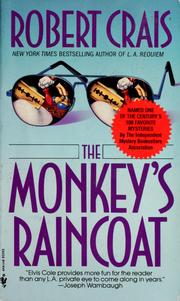
The 1987 debut and the right place to start. Fast, funny, and the book that establishes Cole's defensive comedy as a coping mechanism rather than a character tic — which is the thing the whole series later dismantles.
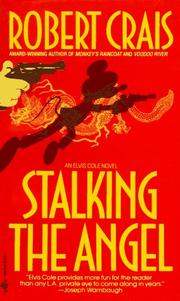
The second book, and the first to test how far the jokes will carry. Joe Pike gets more room, and the pairing starts to look like the point.
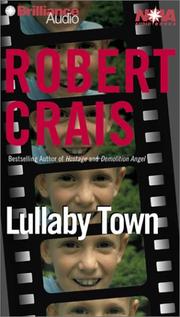
Cole in Connecticut against the mob, and the first genuinely tense Crais plot. Our catalogue record carries the series tag in its title, Lullaby Town (Elvis Cole); it is the 1992 novel.
Hitting stride
BeginnerRead the mid-period books where Crais has full command of the formula, so you can feel exactly what he throws away next.
▸ Study plan for this stage
Pace: 1,006 pages across three: Free fall at 288, Voodoo River at 406 and Indigo Slam at 312. Voodoo River is the outlier — our record is a large-format edition, so it runs a third longer than its neighbours and is the one to give two weeks rather than one. Three a month still works here. Read Indigo Slam
- The police shifting from obstacle to antagonist in Free fall, planting ground the next stage detonates
- Lucy Chenier introduced as the relationship that supplies the emotional stakes for the next decade of novels
- Crais taking Cole out of his own city twice in three books, and what the series proves it can survive
- Comedy and decency forced into the same scene by the children in Indigo Slam
- What a fully working formula looks like, so that stage three registers as a choice rather than a rescue
- How does Free fall change the moral geography of the series, given that Cole works alongside the LAPD?
- What does Lucy Chenier give Crais that the earlier books had no way to reach?
- Why is Indigo Slam usually named the best of the pre-reinvention novels?
- What is the cost of the formula at this point — what can these books not do?
- Which of these three would suffer least from being read out of order, and what does that tell you about how tightly the series is built so far?
- Mark the moment in Free fall where Cole stops joking and note what triggers it; you will want the reference at stage three.
- Track Lucy Chenier's presence in Voodoo River by page count rather than impression — how much of its 406 pages is actually hers?
- In Indigo Slam, list the scenes where the comic voice and the moral seriousness are in the same paragraph. Crais is running out of room and the list shows where.
- Update your Pike-facts list from stage one. If it has barely grown across six novels, that is the setup L.A. requiem is about to exploit.
Next up: Six novels of a formula in full working order is the precondition for the next stage, where Crais throws it away on purpose.

LAPD corruption, and the first book where the police are the antagonist rather than the obstacle. It plants ground that L.A. Requiem will detonate.

Cole in Louisiana, and the book that introduces Lucy Chenier — the relationship that gives the next decade of novels their emotional stakes.

The best of the pre-Requiem books: Cole hired by three abandoned children, which forces the comedy and the decency into the same scene. The last novel in the original mode.
The reinvention
IntermediateRead the hinge of the series and the two books that live in its aftermath.
▸ Study plan for this stage
Pace: 1,083 pages across three, and the density rises with the count: L.A. requiem at 426, The last detective at 302 and The Forgotten Man at 355. Move to two books a month here. L.A. requiem alternates Cole's first-person narration with third-person chapters from Pike's past, so it reads slower than its
- The abandonment of first-person-only narration, and why that single formal change is what readers remember the series for
- Pike's past supplied in third person, converting a device into a character
- Consequence carried across books: The last detective is the direct emotional aftermath of L.A. requiem rather than a fresh case
- The comedy of the early books reframed retrospectively as concealment
- Cole's parentage as the wound the first seven novels were written around
- Why the hinge only works with the earlier books behind it — the same technique on book one would be a gimmick
- What does the third-person Pike material let Crais show that Cole's narration structurally cannot?
- How does L.A. requiem use the police corruption established in Free fall?
- Why does The last detective reach back to Vietnam at this exact point in the series?
- Is The Forgotten Man's paternity plot earned by the earlier books, or imposed on them? Argue from the first six novels.
- What has the series lost in the reinvention, if anything?
- Read the first Pike chapter of L.A. requiem immediately after finishing it, now that you know where it leads, and note what the prose was signalling on the first pass.
- Compare your fifty-page joke count from stage one against the same fifty pages of The last detective.
- Assemble the timeline of Cole's own history that the three books disclose, in chronological rather than publication order, and note how much of it is withheld until after the hinge.
- Write the argument for reading L.A. requiem first as a standalone, then the argument against. Deciding which you believe is the single most useful thing you can do on this path.
Next up: With Pike established as a character rather than a weapon, the series can hand him the point of view outright.

The book the series is remembered for. Crais abandons first-person-only narration, cuts to Pike's past in third person, and turns a genre series into something with real weight. Read the six or seven books above it first, or the shock is just a technique.
Cole's own history in Vietnam surfaces while Lucy's son is taken. The grief-soaked one, and the direct emotional consequence of Requiem.
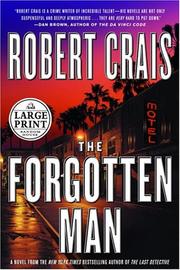
A man dies claiming to be Cole's father. Crais going straight at the wound the earlier comedy was covering.
When Pike takes the wheel
IntermediateFollow the point of view as it moves onto Joe Pike, and see what the series looks like without Cole's narration holding it.
▸ Study plan for this stage
Pace: 958 pages across three, and the most even stage on the path: The Watchman 344, The first rule 308, The sentry 306. They also read faster than the count suggests, because Pike-led prose is stripped down — short sentences, little interiority, almost no comedy. Two a month is comfortable; three is real
- Point of view as the series' real variable — the same world reported by a narrator who does not explain himself
- Sentence-level style change: what Crais's prose does when the joke is unavailable to it
- Pike's mercenary past returning as plot rather than backstory in The first rule
- The thriller shape displacing the detective shape, and what is lost with the investigation
- Cole as a supporting character, and how the reader's loyalty behaves when the narration moves
- What can Crais do with Pike narrating that he cannot do with Cole?
- Does The Watchman work for a reader who has not read L.A. requiem? What exactly would they miss?
- How does The first rule justify its violence, or does it not attempt to?
- Is The sentry's love plot consistent with the Pike of the first ten novels, or a softening?
- After three Pike-led books, which character do you now think the series is actually about?
- Take one page of The Watchman and one page of The Monkey's Raincoat and count sentences and average length. The stylistic distance is measurable, not impressionistic.
- In The first rule, mark each point where Pike makes a decision Cole would have made differently, and say why.
- Rewrite one paragraph of The sentry in Cole's first-person voice and note what the joke does to the scene's weight.
- Close out your Pike-facts list from stage one: it should now be long. Note which entries came from Pike's own chapters and which from Cole's observation.
Next up: Having watched Crais run the same world through two different narrators, the standalones test what survives when neither is available.
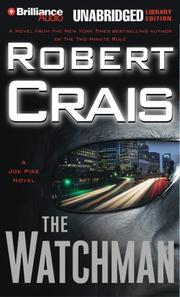
The first Pike-led novel. Almost no jokes, very short sentences, and it works — the strongest argument that Pike was always the more interesting character.
Pike's old mercenary life catches up with him. The most violent book in the series and the one that most resembles a thriller rather than a detective novel.
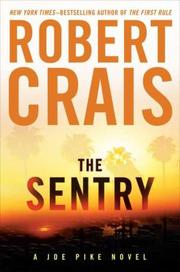
Pike in love, which Crais handles far better than the premise deserves. Completes the run of Pike-centred books before the series alternates freely.
The standalones
IntermediateFinish with the two novels outside the series, where Crais writes without a recurring cast and plots hardest.
▸ Study plan for this stage
Pace: Two novels, 386 and 384 pages, 770 in all — a month at a relaxed pace, or a fortnight if the plotting carries you, which it usually does. Demolition angel follows a bomb-squad investigator and describes device construction and blast injury in technical detail; Hostage is a siege novel that keeps esc
- Plot construction without a recurring cast, and how much of Crais's method was resting on familiarity
- A protagonist whose competence is technical rather than intuitive, in contrast to Cole's
- Escalation as a structural principle in Hostage, where each act raises the stakes rather than tightening the same ones
- What the series voice was contributing, visible now by its absence
- The case Crais's admirers make with Demolition angel when handing him to a sceptic, and whether it holds
- Which of Crais's strengths survive without Cole's narration, and which turn out to have been the narration?
- How does Demolition angel handle exposition of technical material differently from the way the Cole books handle investigation?
- Why does Hostage keep going past its apparent climax, and does the extension earn itself?
- Are these better novels than the series books, or just tighter ones? The distinction is worth defending.
- Having read all fourteen, where would you now tell a new reader to start, and would you still say publication order?
- List the structural moves Demolition angel shares with Indigo Slam. The overlap is where Crais's method actually lives.
- Chart the escalation points in Hostage by page, then check the shape against The first rule at 308 pages. Both are escalation novels built differently.
- Write the one-paragraph pitch you would give someone choosing between the series and the standalones, and be honest about who each is for.
- Go back to the prediction you recorded at stage one about what the series could not do, and mark which parts of it L.A. requiem and The Watchman falsified.
Next up: The path stops after the standalones; the Cole and Pike novels published since continue directly from the pattern established in the Pike-led stage.
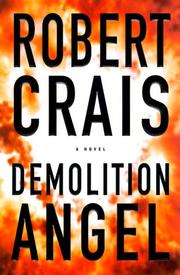
A bomb-squad procedural with a woman lead, and the tightest thing Crais has written. Frequently the book his admirers hand to sceptics.
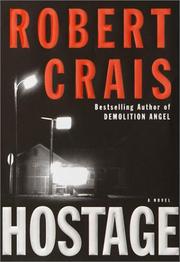
A siege novel that keeps escalating past where you expect it to stop. Read after the series so you can see how much of Crais's method survives without Cole's voice.