Richard Yates in Order: What to Read After Revolutionary Road
Almost everyone arrives at Yates through Revolutionary Road, usually via the film, and then discovers there is no obvious next step, because for most of the 1990s every one of his other books was out of print. They are all back now, and they are not equally good. This path goes from the famous novel to the stories, then to the second masterpiece almost nobody names, then through the autobiographical middle novels in the order that keeps them from blurring together, and ends with the collected stories and a very good biography.
The Obvious Start and the Non-Obvious Second Book
BeginnerRead the novel everyone knows, then the story collection that proves it was not a fluke, and learn the Yates sentence: plain, unshowy, and pitiless about self-deception.
▸ Study plan for this stage
Pace: Four weeks. Revolutionary Road is 337 pages and reads faster than its reputation suggests — two weeks at 25 pages a day. Eleven Kinds of Loneliness is 230 pages in eleven stories; one story a sitting over a fortnight, and do not run three together, because the cumulative effect is the point and it n
- The Yates sentence is plain to the point of being invisible: no metaphor to speak of, ordinary diction, and the whole force carried by exactly which detail is selected. Nothing is being withheld stylistically, which is why the cruelty registers as fact rather than as authorial cruelty.
- Revolutionary Road opens with an amateur theatrical company's production failing in front of its own audience, and that overture states the novel's method: people performing a version of themselves that the room can see through.
- Frank and April Wheeler's plan to move to Paris is a self-image, not a plan, and the book is precise about the difference. Every character has a story about who they really are, and the novel measures the distance between that story and what they do on a Tuesday.
- The one person allowed to name what is wrong has been institutionalised, and the fact that his diagnosis is accurate and unusable is the bleakest joke in the book.
- Yates said his subject was the abortion of hope, and the novel makes that literal in a way readers coming from the film are often unprepared for. The last chapter's final gesture — an elderly man turning down his hearing aid — is the most efficient ending he ever wrote.
- Eleven Kinds of Loneliness proves the range within one subject: a new boy scapegoated in a fourth-grade classroom, a woman looking at her fiancé the night before the wedding, a TB ward, an army barracks, an office, a jazz bar in the south of France.
- The last story in the collection is about a failing writer ghostwriting for a cab driver who wants windows put in his stories, and it is Yates writing about his own craft more directly than he ever did elsewhere. Read it last, as placed.
- What does the opening theatrical failure establish that the following three hundred pages then repeat in other forms?
- Frank Wheeler is not stupid and knows he is performing. Why does the self-awareness not help him?
- The Paris plan collapses for a stated reason and an unstated one. Name both.
- Take three stories from Eleven Kinds of Loneliness. What is the loneliness in each — situational, temperamental, or self-inflicted?
- In the story about the cab driver and the windows, what is Yates saying about what readers want from fiction, and does his own work supply it?
- Both books are set in the same decade and class. What can Yates do in a story that he cannot do in the novel?
- Take any Yates paragraph and count the metaphors. Then do the same with a contemporary of his — the emptiness of the result is the technique.
- Mark every moment in Revolutionary Road where a character narrates their own life to somebody else. Write 200 words on what the narrations have in common.
- For each of the eleven stories, write down the exact sentence at which the reader understands more than the protagonist does. Some stories have no such sentence; note which.
- Reread the final page of Revolutionary Road after finishing the stories and write a paragraph on why the hearing aid is the right last image.
Next up: With the famous novel and the stories behind you, the next book is the one his admirers put above both, and it will not work on a reader still expecting a reprieve.
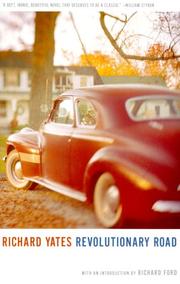
A young Connecticut couple convince themselves they are too good for the life they have chosen. If you have already read it, start at the next book; if not, start here, because every later novel is in conversation with it.

The correct second book, not a novel. Eleven stories about failure at every scale, and the fastest way to see that Yates had one subject rather than one good idea. Read The Best of Everything and A Really Good Jazz Piano first if you want a sample.
The Second Masterpiece
IntermediateRead the book his admirers argue is better than Revolutionary Road, and see him compress a whole life into a novel half the length.
▸ Study plan for this stage
Pace: Four weeks. The Easter Parade is 229 pages covering fifty years, so it moves in jumps and can be read in ten days — but it is the bleakest thing he wrote and there is no reason to hurry it. A Good School is 178 pages and much lighter; a week, deliberately taken as relief afterwards.
- The Easter Parade announces its ending in its first sentence — neither sister will have a happy life — and then spends fifty years showing you how. Removing suspense forces the reader to watch the mechanism instead of the outcome.
- The two sisters are a controlled experiment: one takes the conventional path of marriage and a house, the other takes independence, work and a series of men. Neither route works, which is the argument.
- The mother is the constant, and Yates's portrait of a woman living permanently above her means on a fantasy of gentility is the most sustained version of a figure who appears across the whole body of work.
- The title comes from a single photograph — a couple in a newspaper's Easter parade coverage, looking exactly as a happy marriage should look — set against what the marriage actually is. It is the book's whole method in one image.
- The final scene gives Emily a sentence about being tired of being young that lands as the closest thing to mercy in the novel, and Yates gives it to her only on the last page.
- A Good School is the outlier: a wartime prep school, a boy learning to edit the school paper, teachers with their own small ruined lives, and a tenderness that appears nowhere else in the fiction.
- It is framed by Yates writing in his own voice about his father at the start and the end, which is the most direct autobiographical statement in the novels and a useful marker before the middle books, where the autobiography is disguised.
- Placing it here is a deliberate pacing decision. Read straight from The Easter Parade into the middle novels and the sequence becomes an endurance test that misrepresents him.
- What does the first sentence of The Easter Parade cost the book, and what does it buy?
- The two sisters make opposite choices and end similarly. Is the novel arguing that the choices did not matter, or something more specific?
- What is the mother's fantasy about herself, and where does the novel show the gap between it and her circumstances most sharply?
- In A Good School, what is the frame about the father doing? Try reading the novel without it and say what changes.
- A Good School has warmth. Is that a change in Yates or a change in the material?
- Build a two-column timeline of the sisters' lives with the years down the middle. The novel's jumps are so large that the symmetry only shows on paper.
- Find the Easter parade photograph passage and write 200 words on how the image is used, then find every later reference back to it.
- Write out the last page of The Easter Parade and the last page of Revolutionary Road side by side. One offers something and one does not; describe the difference precisely.
- In A Good School, list the teachers and what each one wants. The adults' plots run underneath the boys' and are easy to read past.
Next up: You now know both what he does at his best and what he sounds like when he relaxes, which is exactly the calibration needed to read five autobiographical novels without them blurring.
Two sisters, fifty years, and one of the most famous opening lines in American fiction telling you exactly how it ends. Third rather than second because it is the bleakest thing he wrote and it lands hardest once the stories have taught you not to expect a reprieve.
A short, unexpectedly gentle novel about a prep school in wartime, and the only book of his with real tenderness in it. Placed here deliberately as relief between The Easter Parade and the harder middle novels.
The Autobiographical Middle
IntermediateWork through the novels that rewrite Yates's own life — the war, the breakdowns, the failed marriages — and learn to tell them apart, which is the real difficulty with reading him deeply.
▸ Study plan for this stage
Pace: Twelve to fourteen weeks for five books, and the sequencing matters more here than anywhere. A Special Providence is 352 pages, Disturbing the Peace 288, Liars in Love 272, Young Hearts Crying 347, Cold Spring Harbor 190. Read them in the order given, take Liars in Love at one story a sitting as a b
- These five rework the same life — a mother who was a failed sculptor living on illusions, an infantry war, drinking, breakdowns, marriages that fail on the same fault line — and the difficulty of reading Yates deeply is that they can run together into one long book. Reading them in a deliberate orde
- A Special Providence alternates a young infantryman in the last winter of the war with his mother's story a decade earlier. Yates considered it a failure, and the interest is in seeing the raw material before he found the angle on it.
- The mother in that novel is the first full treatment of a figure who returns as the mother in The Easter Parade and in the best story in Liars in Love. Tracking that one character across three books is the single most useful thing to do in this stage.
- Disturbing the Peace follows an advertising man through drinking, a psychiatric ward and a Hollywood detour, and it is the closest to undisguised autobiography in the novels. It is also the most uncomfortable, because the protagonist has no compensating charm.
- Liars in Love is the second story collection and the correct interruption: seven stories, mostly Americans failing at home or abroad in the 1950s, looser than the first collection but containing at least two pieces as good as anything he wrote — including a 1930s story about a boy, his mother and a
- Young Hearts Crying takes twenty-five years of a marriage between a would-be poet and a woman with money. It is widely called the weakest of the major novels, and reading it is instructive precisely because the method is visible when the self-knowledge slips — the same architecture with no pressure
- Cold Spring Harbor is the last novel, short, written in poor health, and it stops rather than concludes. That muted ending is the honest place to leave the fiction.
- Across all five, the recurring structural move is the same: a character forms an image of the life they are about to have, and the novel measures the distance travelled from it. What changes book to book is how much sympathy Yates is willing to extend.
- In A Special Providence, what does the alternating structure achieve, and where does it fail? Yates thought it did fail; say why you agree or not.
- Follow the sculptor-mother figure through A Special Providence, The Easter Parade and the 1930s story in Liars in Love. What is constant and what is revised?
- Disturbing the Peace gives its protagonist almost no redeeming qualities. Is that a miscalculation or the point?
- What exactly is thin in Young Hearts Crying? Point at a scene and say what a better version of it would have done.
- Cold Spring Harbor stops rather than ends. Is that a failure of energy or a deliberate refusal?
- Across the five, when does Yates extend sympathy to a character and when does he withhold it? Is there a pattern?
- Keep one sheet with five columns — a character list for each novel — and mark every figure who is recognisably a version of a figure in another book. By the fifth column the recurrences will be obvious.
- Write 300 words on the sculptor-mother across three books, quoting one passage from each.
- After Disturbing the Peace, write 200 words on what a novel gains and loses when its protagonist has no charm.
- Take one scene from Young Hearts Crying and one structurally similar scene from Revolutionary Road and annotate the difference in what each withholds from the reader.
- Rank the five for yourself before reading anything about them, and write one sentence of justification per book. You will test this against the biography.
Next up: Having read the fiction and formed your own ranking, the last stage supplies the uncollected stories and the account of the life that explains both the disappearance and the return.
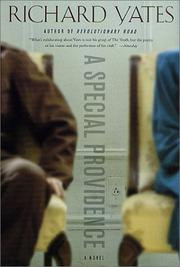
An infantryman in the last winter of the war and the mother who ruined him, in alternating halves. Yates himself thought it a failure; read it here for the raw version of material he handled better later.
An alcoholic advertising man goes into Bellevue and comes out worse. The most uncomfortable book in the sequence because it is the closest to undisguised autobiography.
His second story collection, and a deliberate palate cleanser: seven stories, mostly about Americans failing abroad or at home in the 1950s. Shorter and looser than Eleven Kinds of Loneliness, but a few pieces are among his best.
Twenty-five years of a marriage between a would-be poet and an heiress. Widely called his weakest major novel, and worth reading eighth precisely because it shows how thin the method gets when the self-knowledge slips.
The last novel, short and written in poor health, about a bad marriage on Long Island in the early 1940s. A muted ending rather than a triumphant one, which is the honest note to finish the fiction on.
The Completist Tail
IntermediateGather the stories in one volume and read the biography that explains the twenty-year eclipse and the posthumous revival.
▸ Study plan for this stage
Pace: Eight to ten weeks, most of it the biography. The Collected Stories runs 496 pages but roughly two thirds duplicates what you have read; go straight to the nine uncollected pieces and treat the rest as a shelf copy. A Tragic Honesty is 680 pages and dense; five to six weeks at 25 pages a day.
- The Collected Stories gathers both collections plus nine previously uncollected stories, so its value on this path is the uncollected material and the convenience of having everything in one volume — not a fresh reading experience.
- Read as a single body, the stories show a narrower range than the novels and a higher hit rate. Whether that makes him primarily a story writer is a real question and the collected volume is where to settle it for yourself.
- A Tragic Honesty is the biography that put him back on shelves. It is unsparing about the tuberculosis, the drinking, the psychotic episodes, the poverty and the long stretch of teaching to survive.
- Its most useful function for a reader is the mapping: which episode of the life became which scene in which novel, and how much was altered. That mapping is only interesting after you have read the fiction and formed your own view.
- The eclipse is a publishing story as much as a critical one. For most of the 1990s nearly every Yates title was out of print, and the revival was driven by other writers arguing for him in print before the reprints followed.
- Reading the biography changes the middle novels most. Scenes that read as repetition turn out to be repeated attempts at the same unresolved material, which is a different kind of failure from laziness.
- The honest conclusion the biography supports is that his reputation rests on two novels and the stories, and that the rest is worth reading for what it shows about the two — which is not the same as saying the rest is bad.
- Reading the nine uncollected stories, why do you think they were left out? Is the judgement Yates's or his publisher's, and does it hold?
- Is Yates a novelist who wrote stories or a story writer who wrote novels? Argue it from the collected volume.
- Which novel does the biography change most for you, and in which direction?
- What actually caused the twenty-year eclipse — the books, the market, the man, or the timing? The biography supplies evidence for more than one answer.
- Compare your own ranking of the five middle novels, written before this stage, with Bailey's assessments. Where do you differ and on what grounds?
- Read the nine uncollected stories first and write one sentence on each before reading anything about them.
- While reading the biography, keep a two-column note: life event on the left, the novel or story it turned into on the right. Twenty entries is easy to reach.
- Write 400 words on what the biography adds to Revolutionary Road and what it takes away from it.
- Return to your five-novel ranking, revise it if you want to, and write a paragraph on what changed your mind — the life, or a rereading.
Next up: This is the end of the path: the famous novel, the stories, the second masterpiece, the five books that rework one life, and the biography that explains why they were unavailable for twenty years.

Both collections plus nine uncollected stories in one book. It duplicates most of your stage-one and stage-three reading, so buy it only if you want the uncollected pieces and a permanent shelf copy.
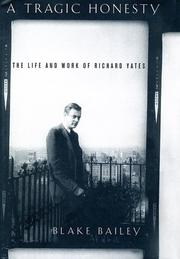
The biography, and the reason Yates came back into print. It is unsparing about the drinking, the tuberculosis and the poverty, and it maps which novel took which piece of his life, so read it after the fiction rather than before.