Richard Matheson books in order: where to start
More people have seen a Richard Matheson story than have read one, and the films are consistently unfaithful to what makes the books work: I Am Legend has been filmed three times and none of the versions keeps its ending. This path starts with the two novels that reshaped horror and science fiction in the 1950s, moves to the haunted-house and afterlife books, then spends real time on the short stories — which is where Matheson actually lives — before finishing with the suspense novels and the two books nobody expects him to have written.
Start here: the two that changed the genre
BeginnerRead the pair of 1950s novels that took horror out of the gothic castle and put it in a suburb.
▸ Study plan for this stage
Pace: The lightest stage on the path and the one to read first without exception: 463 pages for both — I am Legend 192, The Shrinking Man 271. A week, comfortably. I am Legend is under 200 pages and can be read in two sittings, which is part of why it works: the compression is the technique. Read it befor
- Horror relocated from the gothic castle to a suburb, with an ordinary house as the site of siege
- A supernatural premise given a rigorous scientific explanation, and what the rigour does to the fear
- The last-man premise inverted — the ending that every adaptation declines to film, and the reason it matters
- Scale as an existential problem in The Shrinking Man, where the horror is a change in proportion rather than a monster
- Masculinity treated as the actual subject of both books, one by isolation and one by diminishment
- Compression: 192 pages doing what later writers would take 600 to attempt
- What does the ending of I am Legend claim, and why would a film adaptation resist it?
- How does the pseudo-scientific explanation change the experience of the vampires compared with a supernatural one?
- In The Shrinking Man, at what point does the physical predicament become a psychological one?
- What do both novels do with domestic space that gothic horror could not?
- Which is the better novel, and is the more influential one also the better one?
- Read I am Legend in as few sittings as possible, then write down the ending in one sentence before looking at any adaptation.
- Track the shrinking man's scale against the household objects he faces and note where Matheson changes the rules of the danger.
- List every explanation I am Legend offers for the plague and mark which are confirmed and which are the narrator's guesswork.
- Write a paragraph on what these two 1950s novels assume about a husband and a house, using only what the texts show.
Next up: With the two foundational novels read, the supernatural books show Matheson applying the same literalism to hauntings and the afterlife.
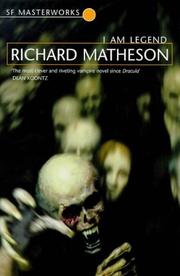
The single most influential horror novel of the twentieth century — it invented the modern zombie apocalypse by way of vampires, and its ending is the thing every film adaptation refuses to keep. Under 200 pages; start here.
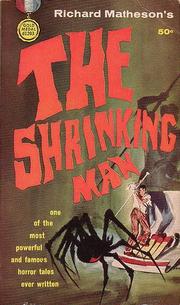
A man shrinking a seventh of an inch a day, told as an existential crisis about masculinity and scale. Published in some editions as The Incredible Shrinking Man after the film; the 1956 novel is the one to read.
The haunted house and the afterlife
BeginnerRead the three novels where Matheson takes a supernatural premise absolutely straight and pushes it further than his imitators would.
▸ Study plan for this stage
Pace: 834 pages across three — Hell House 268, Bid Time Return 278, What Dreams May Come 288 — near-identical lengths and about a month at one a week. Read Hell House first; it is the strongest and the most extreme. State plainly what it contains: sustained psychological cruelty, sexual violence and body
- Hell House as a direct answer to Shirley Jackson's method — escalation where she withholds, and what each strategy costs
- A haunted house given a machine-like causal explanation, continuous with the science-fictional literalism of I am Legend
- Matheson's willingness to write sentiment straight, with no irony to protect it
- The afterlife researched and rendered as a literal geography rather than as metaphor
- An author's own valuation of his work against his readers', and how to argue with it usefully
- Duplicate records and retitled reissues as a practical hazard in a bibliography this heavily adapted
- Where does Hell House escalate past the point Jackson would stop, and does the escalation gain or lose?
- How does the explanation offered at the end of Hell House change the preceding 268 pages?
- Does Bid Time Return earn its sentiment, or does it simply commit to it?
- What is What Dreams May Come arguing, and what would have to be true for the argument to work?
- Why might Matheson have valued What Dreams May Come above the books he is remembered for?
- Read the opening chapter of Hell House against the opening of The Haunting of Hill House if you have it, and describe the two approaches to the same setup in one paragraph each.
- In Bid Time Return, mark the mechanism by which the time travel works and check whether the novel keeps to it.
- List the propositions What Dreams May Come treats as established fact about the afterlife, and note where the novel's research is doing the work of plot.
- Confirm which title your copy of Bid Time Return carries before buying anything else by Matheson; the retitled records catch people out.
Next up: Having read the novels, the collections show where Matheson's reputation actually comes from — about twenty short stories, not the long books.

The benchmark haunted-house novel and a deliberate answer to Shirley Jackson: where she withholds, Matheson escalates relentlessly. Considerably nastier than its reputation.

The time-travel romance, later reissued as Somewhere in Time after the film — two separate records exist for the one novel, so buy only one. Sentimental in a way none of the horror is, and it won the World Fantasy Award.

A researched, oddly literal novel of the afterlife, written after the death of Matheson's mother. He considered it his most important book; readers usually do not, which makes it worth arguing with.
The short stories, where Matheson actually lives
IntermediateRead the collections. Matheson's reputation rests on roughly twenty short stories, and most of the famous films come from them.
▸ Study plan for this stage
Pace: 1,624 pages across three volumes — Duel 400, Nightmare at 20,000 Feet 325, Collected Stories 899 — but this is short fiction and reads in fragments; a story or two an evening covers it in six to eight weeks. The Collected Stories at 899 pages is the longest book on this path by a wide margin and is
- Explanation withheld as the core method — Duel gives the reader a truck, a car and nothing else
- The ordinary object turned hostile, which is the single trick most of the famous adaptations are built on
- Short fiction as the natural length for a premise that cannot survive being explained
- Matheson's story notes as a working writer's account of where ideas come from, unusual in being unromantic about it
- Overlap between the three collections, and the buying decision that follows
- Roughly twenty stories carrying a reputation, and what that says about the novels
- Why does Duel refuse to explain the driver, and what would an explanation have cost?
- Which stories rely on a single reversal, and which sustain themselves without one?
- What do Matheson's own notes reveal about how much of the effect was planned?
- How many of the stories you already knew from film or television, and were the adaptations faithful?
- Does the short fiction support the claim that this is where Matheson's reputation properly rests?
- Read Duel, then note every piece of information a lesser writer would have supplied about the truck driver.
- Pick three stories and write the one-sentence premise of each; then check how many pages each needed.
- Compare the tables of contents of the three volumes and mark the overlap before buying more than one.
- Read a Matheson note alongside its story and record one thing it told you that the story alone did not.
Next up: The stories establish the method at its purest, which makes the unsupernatural suspense novels legible as the same writer working without a premise.
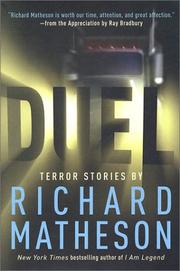
The collection headed by the story Spielberg filmed as his first feature. A truck, a car, no explanation — Matheson's method in its purest form.
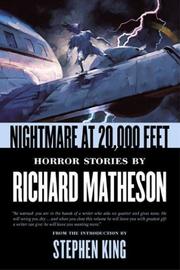
The best single-volume selection, including the Twilight Zone story of the title, Prey and Born of Man and Woman. If you read only one Matheson book after I Am Legend, read this.

The complete short fiction in one volume, with Matheson's own notes on each story. Long, and the notes are the reason to own it.
The suspense novels
IntermediateRead the crime and suspense books, which have no supernatural element at all and are much better than their pulp packaging suggests.
▸ Study plan for this stage
Pace: This is the stage where our catalogue is thinnest on lengths: A stir of echoes is 223 pages, and no page count is recorded for either Someone Is Bleeding or Ride the Nightmare, so treat those two as unrecorded rather than assuming a length. Both are paperback-original crime novels and are short by a
- The same method with the supernatural element reduced to a single suggestion — the difference between hinting and asserting
- Hypnosis as a plausible mechanism, which keeps A stir of echoes ambiguous where Hell House commits
- Paperback-original crime as a market with its own conventions, and Matheson working inside them
- Prose quality present from the first novel, before any of the famous premises
- Domestic invasion as the recurring situation across the whole bibliography, supernatural or not
- What does A stir of echoes leave unexplained, and how does that compare with the explanations in Hell House?
- How much of Someone Is Bleeding is genre convention and how much is Matheson? Point to a passage of each.
- What makes Ride the Nightmare effective at its length, and what does it not attempt?
- Is the suspense work better than its packaging suggests, or does the reputation gap have a reason?
- Across supernatural and non-supernatural books alike, what is Matheson's recurring situation?
- In A stir of echoes, list every event that has a mundane explanation available and mark whether the novel supplies it.
- Write down the structure of Ride the Nightmare as beats, then compare it with Duel — the same shape at two lengths.
- Note where Someone Is Bleeding's conventions date it and where the prose does not; the two are separable.
- Pick the single most frightening scene you have read on this path so far and work out whether anything supernatural actually happens in it.
Next up: With the crime novels read, the last two books remove genre entirely and test whether the label was ever accurate.

A man hypnotised at a party starts receiving impressions he cannot switch off. The most restrained thing Matheson wrote and arguably the most frightening.

His 1953 first novel, straight noir, published as a paperback original. Read for the shock of how good the prose already was.

A tight home-invasion thriller from 1959 that Hitchcock adapted for television. Short, mean and completely unsupernatural.
The Matheson nobody expects
IntermediateFinish with the two novels that show how wrong the horror-writer label is.
▸ Study plan for this stage
Pace: 561 pages across two — The beardless warriors 337 and Journal of the gun years 224 — and about three weeks. Read The beardless warriors first: it is a realist novel about teenage infantry in the European theatre, drawn from Matheson's own service, and it is the best-written book on this path with no
- A genre writer's realist novel drawn from lived experience, and what changes when nothing is invented
- Combat at 337 pages written without either heroism or protest as the organising attitude
- The unreliable journal in Journal of the gun years, and the same withholding technique from the short fiction applied to a Western
- Legend-making as a subject, which connects the Western to the adaptations problem this path opened with
- Category as a commercial fact rather than a description of a writer, demonstrated across thirteen books
- What does The beardless warriors do differently from a war novel written by someone who was not there?
- How does the journal form let Journal of the gun years undercut its narrator?
- What technique carries over from the short stories into the Western, and where can you see it?
- Having read all thirteen, is Matheson a horror writer? What would you call him instead?
- Which book on this path is most unlike the reputation, and which most confirms it?
- Read the first chapter of The beardless warriors and the first chapter of I am Legend consecutively and list what the two have in common at sentence level.
- Mark every point in Journal of the gun years where the narrator's account and the evidence he records diverge.
- Write the two-sentence description of Matheson you would give someone who only knows the films.
- Choose the three books from this path you would keep, and say which of Matheson's five modes you are discarding.
Next up: This path covers thirteen books; anything further means the later novels and the film and television scripts, which are a different body of work with different problems.
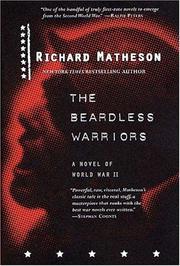
A realist novel about teenage infantry in Germany in 1944, drawn from Matheson's own service. No genre elements whatsoever, and the best-written book on this path.

A Western, told as the journal of a gunfighter dismantling his own legend. It won a Spur Award, which surprises everyone who only knows the horror.