Pregnancy to first birthday, evidence-based
This four-stage curriculum takes a beginner from the basics of pregnancy all the way through evidence-based parenting in the first year. Each stage builds on the last: you first establish a solid factual foundation, then interrogate the data behind common decisions, then go deeper into birth and the newborn period, and finally zoom out to the science of early child development — so every book you read makes the next one richer and more meaningful.
Foundations
BeginnerBuild a reliable, week-by-week factual map of pregnancy, fetal development, and what to expect at birth — the shared vocabulary every later book assumes.
▸ Study plan for this stage
Pace: 8–10 weeks total. Week 1–5: Mayo Clinic Guide to a Healthy Pregnancy (~25–30 pages/day, reading the month-by-month chapters alongside the symptom/nutrition reference sections). Weeks 6–10: What to Expect When You're Expecting (~20–25 pages/day, reading each monthly chapter in parallel with the Mayo
- Trimester structure and the key developmental milestones within each (organogenesis in T1, viability threshold ~22–24 weeks in T2, lung maturation and positioning in T3) — as mapped week-by-week in the Mayo Clinic Guide
- Fetal development benchmarks: how the Mayo Clinic Guide tracks size, organ formation, and sensory development from fertilization through 40 weeks
- Prenatal care cadence: the schedule of OB/midwife visits, routine lab work, and screening tests (first-trimester combined screening, anatomy scan at ~20 weeks, glucose challenge test, Group B Strep) explained in both books
- Common pregnancy symptoms by trimester — nausea, fatigue, round-ligament pain, Braxton Hicks — and the evidence-based coping strategies both books provide
- Nutrition and weight gain guidelines: the Mayo Clinic Guide's specific nutrient targets (folate, iron, calcium, DHA) and What to Expect's practical 'Best-Odds Diet' framework for translating those targets into daily food choices
- Red-flag warning signs that require immediate medical attention (heavy bleeding, severe abdominal pain, signs of preeclampsia, decreased fetal movement) as emphasized in both books
- The stages of labor and birth: early, active, and transition phases of Stage 1; pushing and delivery in Stage 2; placental delivery in Stage 3 — and the immediate newborn assessments (Apgar score) covered in the Mayo Clinic Guide
- Postpartum basics introduced at the end of both books: physical recovery, emotional changes (baby blues vs. postpartum depression), and newborn feeding fundamentals
- Without looking at either book, can you sketch a fetal development timeline — listing at least one major milestone per month from conception through birth — as described in the Mayo Clinic Guide?
- What prenatal screening tests does the Mayo Clinic Guide recommend in each trimester, and what conditions is each test designed to detect?
- How does What to Expect's 'Best-Odds Diet' translate the Mayo Clinic Guide's nutrient recommendations into practical daily eating? Give at least three specific examples.
- What are the warning signs both books flag as requiring an immediate call to a provider, and why is each one potentially serious?
- Walk through the three stages of labor as described in the Mayo Clinic Guide: what is happening physiologically in each stage, and roughly how long does each typically last?
- How do both books distinguish normal postpartum 'baby blues' from postpartum depression, and what first steps do they recommend for each?
- Build a 'Fetal Development Timeline' poster or digital doc: for each of the 40 weeks, record the size comparison, key organ/system milestone, and one maternal symptom from the Mayo Clinic Guide. Pin it somewhere visible for the rest of the curriculum.
- Create a 'Prenatal Appointment Tracker' template (visit number, gestational week, tests ordered, questions to ask) based on the visit schedule outlined in the Mayo Clinic Guide — then fill in the test rationale column using What to Expect's explanations of each screening.
- Run a 'Symptom → Strategy' mapping exercise: list every symptom mentioned in What to Expect's monthly chapters, then find the corresponding evidence-based remedy or when-to-call guidance in the Mayo Clinic Guide. Note any contradictions or gaps between the two books.
- Design a sample 3-day meal plan that meets the Mayo Clinic Guide's nutrient targets using only the food categories and serving suggestions from What to Expect's Best-Odds Diet chapter. Calculate whether folate, iron, and calcium targets are plausibly met.
- Write a one-page 'Birth Plan Vocabulary Sheet' defining every medical term that appears in the Mayo Clinic Guide's labor and delivery chapters (e.g., effacement, dilation, epidural, episiotomy, Apgar). Use What to Expect's explanations to add plain-language definitions alongside each term.
- After finishing both books, write a 500-word 'Stage Summary' in your own words covering: how pregnancy is divided, how the baby grows, how care is structured, and what birth involves — with zero jargon that you cannot personally define. This becomes your reference document for all later stages.
Next up: Completing these two books gives you the factual skeleton — the timeline, terminology, and medical framework — that more specialized or experience-focused books in later stages will assume you already possess, allowing you to engage critically rather than just absorb.
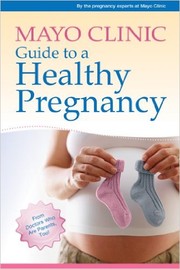
The single most authoritative, jargon-light reference for first-time parents; establishes the medical baseline — trimesters, prenatal visits, warning signs — that all later reading builds on.
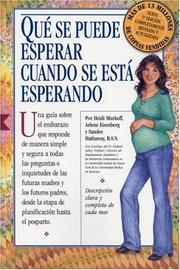
The most widely-read pregnancy guide in the world; its month-by-month structure and Q&A format fills in the everyday practical and emotional questions the Mayo guide leaves out.
Evidence Over Anxiety
BeginnerLearn to read the actual research behind the decisions that dominate pregnancy — food, testing, birth plans, epidurals — so you can weigh trade-offs rather than just follow rules.
▸ Study plan for this stage
Pace: 8–10 weeks total: Weeks 1–5 for "Expecting Better" (~25–30 pages/day, 5 days/week), Weeks 6–10 for "Cribsheet" (~25–30 pages/day, 5 days/week). Reserve one day per week for reflection, note-taking, and exercises. Both books are conversational and data-rich, so a slower pace allows time to look up ci
- Baseline risk vs. relative risk: understanding how Oster reframes scary-sounding statistics (e.g., a 2× risk increase means little if the baseline is tiny) — central to both books
- The difference between correlation and causation in observational pregnancy studies, and why so many 'rules' are based on weak evidence
- Expected-value thinking: weighing the probability and magnitude of benefits and harms to make a personal decision rather than defaulting to blanket prohibitions
- How to read a study's methodology — sample size, confounders, self-reporting bias — as modeled throughout 'Expecting Better' on topics like alcohol, deli meats, and caffeine
- The role of personal values and preferences in evidence-based decisions: Oster's framework is not 'ignore your doctor' but 'bring data to the conversation'
- First-year parenting decisions through the same evidence lens in 'Cribsheet': sleep training, breastfeeding duration, screen time, and daycare — each treated as a trade-off with real data, not moral absolutes
- How to identify when expert consensus IS strong (e.g., folic acid, avoiding smoking) versus when guidelines are precautionary and the evidence is thin
- Communicating data-informed preferences to healthcare providers: framing questions, asking for numbers, and advocating without conflict
- After reading 'Expecting Better,' can you explain why Oster concludes that an occasional drink in the second or third trimester carries a different evidence profile than drinking in the first trimester — and what data she uses to reach that conclusion?
- What is the difference between a relative risk and an absolute risk, and can you give one concrete example from either book where conflating the two would lead to unnecessary fear?
- How does Oster evaluate the evidence on epidurals in 'Expecting Better,' and what trade-offs does she identify that standard birth-plan advice often glosses over?
- In 'Cribsheet,' what does the research actually show about the cognitive and emotional benefits of extended breastfeeding once socioeconomic confounders are controlled for — and how does that change the framing of the 'breast is best' message?
- Using the decision-making framework modeled across both books, how would you approach a new pregnancy or parenting claim you read online? Walk through the steps.
- What distinguishes a topic where Oster says 'the evidence is clear, follow the guideline' from one where she says 'the evidence is weak, here is how to decide for yourself' — and can you name two examples of each from the books?
- 'Stat translation' drill: Pick any three rules from a mainstream pregnancy website (e.g., BabyCenter). For each, find the relative risk statistic cited and convert it to an absolute risk using a realistic baseline. Compare your gut reaction before and after the conversion — write a short paragraph on how the framing changed your perception.
- Study quality audit: Choose one topic Oster covers in 'Expecting Better' (e.g., deli meats, caffeine, or prenatal testing). Find the original study or studies she references, read the abstract, and note: sample size, study type (RCT vs. observational), and any confounders the authors acknowledge. Write two sentences on whether you'd weight this evidence heavily or lightly.
- Personal decision matrix: Using the expected-value framework from 'Expecting Better,' create a simple two-column table (Benefits / Harms) for one real decision you face or have faced — a prenatal test, a birth preference, or a first-year choice covered in 'Cribsheet.' Assign rough probabilities and write a one-paragraph conclusion.
- Doctor conversation roleplay: Draft three questions you would bring to a prenatal or pediatric appointment that ask for numbers rather than rules (e.g., 'What is the absolute risk reduction of this screening test for someone my age?'). Practice saying them aloud and anticipate how you'd follow up if the answer is 'just trust the guideline.'
- Cribsheet comparison chart: For three first-year decisions covered in 'Cribsheet' (e.g., sleep training method, breastfeeding duration, pacifier use), build a side-by-side chart showing: what the popular advice says, what the data Oster cites actually shows, and what factors would tip a personal decision one way or the other.
- Evidence journal: Keep a running log throughout both books. Each time Oster says the evidence is strong, mark it green; each time she says it is weak or mixed, mark it yellow. By the end of 'Cribsheet,' tally your greens and yellows — reflect in writing on whether the ratio surprises you and what that means for how you'll consume parenting advice going forward.
Next up: By finishing both Oster books, the reader has a repeatable framework for interrogating evidence and quantifying trade-offs — skills that make the more clinical and physiological material in subsequent stages (fetal development, labor mechanics, postpartum health) far easier to engage with critically rather than passively absorb.
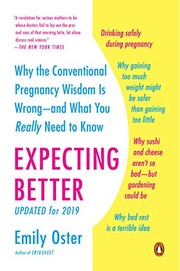
An economist's rigorous, myth-busting review of the pregnancy data (alcohol, caffeine, prenatal tests, induction); teaches you how to evaluate evidence, which is the core skill for everything that follows.

Oster applies the same data-first lens to the first two years — breastfeeding, sleep training, childcare — making it the natural sequel and bridging pregnancy to the newborn stage.
Birth & the Newborn
IntermediateUnderstand the physiology and psychology of labor and delivery, and gain a practical, evidence-grounded toolkit for the chaotic first weeks with a newborn.
▸ Study plan for this stage
Pace: 8–10 weeks total, reading ~20–25 pages/day. Week 1–3: Ina May's Guide to Childbirth (~300 pp) — read Part 1 (birth stories) at a relaxed pace, then Part 2 (physiology & midwifery wisdom) more analytically. Week 4–5: The Happiest Baby on the Block (~250 pp) — read quickly but pause to practice each "
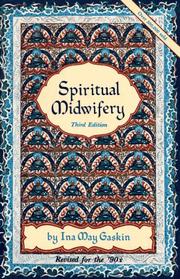
- The mind-body connection in labor: how fear, tension, and pain form a cycle (Gaskin's 'sphincter law' and the Fear-Tension-Pain triad) and how environment, support, and mindset can interrupt it.
- Physiological vs. managed labor: understanding the hormonal cascade of oxytocin, endorphins, and adrenaline, and how interventions (epidurals, Pitocin, continuous fetal monitoring) alter that cascade — per Gaskin's evidence-based critique.
- The role of the birth team: how a doula, midwife, or informed partner actively shapes labor outcomes, drawn from Gaskin's Farm Midwifery Center data and birth narratives.
- The 'fourth trimester' framework: Karp's argument that human newborns are born neurologically early and spend the first ~3 months completing gestation outside the womb, which explains their need for womb-like sensory input.
- The 5 S's system (Swaddle, Side/Stomach position, Shush, Swing, Suck): Karp's evidence-informed, sequential calming protocol for soothing a crying newborn and extending sleep.
- Newborn biological norms vs. parental alarm triggers: Jana's systematic coverage of what is genuinely normal (jaundice timelines, weight loss, stool color progression, umbilical cord care, sleep patterns) versus what warrants a call to the pediatrician.
- Feeding fundamentals: breastfeeding latch mechanics, supply-and-demand physiology, formula preparation safety, and hunger/satiety cues — as laid out practically in Jana's chapters.
- Safe sleep environment and SIDS risk reduction: the AAP guidelines as presented by Jana, and how to reconcile them with Karp's swaddling and shushing recommendations.
- According to Gaskin, what is the 'sphincter law' and how does it explain why a laboring person's progress can stall or reverse when they feel observed, frightened, or cold — and what practical steps can a birth team take in response?
- Walk through the hormonal sequence of unmedicated labor from Gaskin's physiological framework: what does each hormone (oxytocin, beta-endorphin, adrenaline) do, when does it peak, and how does an epidural or synthetic Pitocin alter that sequence?
- Explain Karp's 'fourth trimester' concept: why does he argue that human infants are born 'too early,' and how does this neurological premise justify the 5 S's as a calming strategy rather than a 'spoiling' one?
- Describe the correct sequence and technique for each of Karp's 5 S's, including why order matters and what 'vigorous' means in the context of the Swing and Shush steps.
- Using Jana's guidance, what are the key warning signs in a newborn's first two weeks that should prompt an immediate call to the pediatrician, and which common parental concerns (e.g., hiccups, crossed eyes, soft-spot pulsing) are actually normal?
- How do Gaskin's advocacy for physiological birth and Jana's evidence-based newborn norms together support a philosophy of 'informed confidence' — trusting biological processes while knowing exactly when to seek medical help?
- Birth-story annotation (Gaskin, Part 1): Read at least 5 birth narratives and for each one write 2–3 sentences identifying which physiological or psychological principle from Part 2 the story illustrates (e.g., a stalled labor that resumed after the room was cleared = sphincter law in action).
- Birth-plan draft: Using Gaskin's framework for informed consent and intervention trade-offs, write a one-page birth preferences document that addresses environment, support roles, pain-management options, and at least three 'if X then Y' contingency statements.
- 5 S's practice session: Borrow or use a weighted baby doll (or a willing friend's infant with supervision) and run through all 5 S's in sequence, timing yourself until you can execute the full protocol smoothly in under 90 seconds. Film yourself to review swaddle tightness and swing vigor.
- Newborn 'normal vs. not' flashcard deck: From Jana's book, create 20 flashcards — one side describes a symptom or behavior, the other side gives Jana's verdict (normal / monitor / call doctor) plus the reasoning. Quiz yourself until you score 18/20 consistently.
- First-week simulation log: For one week, keep a mock newborn log (or a real one if you have a baby) tracking feeds, wet/dirty diapers, sleep windows, and one 'concern of the day.' At the end of each day, look up Jana's guidance on each concern and note whether your instinct matched her evidence-based answer.
- Integrated Q&A session: After finishing all three books, host a 30-minute conversation with your partner, doula, or a friend where they play 'worried new parent' and ask random questions drawn from all three books. Answer without looking anything up, then debrief together on gaps.
Next up: By internalizing the physiology of birth (Gaskin), the neurological needs of the newborn (Karp), and the practical health baselines of the first weeks (Jana), the reader has established a confident, evidence-grounded foundation that makes the next stage — focused on infant development, feeding decisions, and emerging parent identity across the first year — feel like a natural, curiosity-driven con

The canonical text on the physiology and psychology of labor; reading it after Oster means you can appreciate its insights on natural birth while critically evaluating its claims.
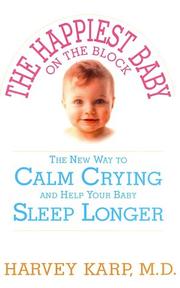
Karp's '5 S's' framework for soothing newborns is one of the most evidence-cited practical tools for new parents; best read just before the baby arrives so it is immediately actionable.

A pediatrician's clear, research-backed guide to the first weeks at home — feeding, sleep, health — that bridges the birth books to the broader first-year science ahead.
The Science of the First Year
ExpertUnderstand the neuroscience and developmental psychology behind infant learning, attachment, and brain growth — giving you a deep 'why' beneath every parenting decision.
▸ Study plan for this stage
Pace: 5–6 weeks total: Weeks 1–3 cover "Brain Rules for Baby" (~25–30 pages/day, including pause days for reflection); Weeks 4–6 cover "The Whole-Brain Child" (~20–25 pages/day, slower pace to absorb the 12 strategies deeply). Reserve one day per week as a no-reading integration day to journal and practic
- Medina's core brain rules for babies: the outsized role of safety, love, and a low-stress environment on early neural wiring (Brain Rules for Baby)
- How chronic stress — especially marital conflict — physically reshapes the developing infant brain, impairing future emotional regulation (Brain Rules for Baby)
- The science of 'serve and return' interactions: how contingent, responsive caregiving drives synapse formation and IQ development (Brain Rules for Baby)
- Empathy as a teachable, brain-based skill: Medina's research-backed steps for raising emotionally intelligent children from birth (Brain Rules for Baby)
- Siegel's 'Integrate to Regulate' principle: the left brain (logic/language) and right brain (emotion/imagery) must be connected, not just calmed, for healthy development (The Whole-Brain Child)
- Vertical integration — linking the upstairs brain (prefrontal cortex: reasoning, empathy) with the downstairs brain (amygdala/brainstem: survival instincts) — and why tantrums are a neurological event, not a behavioral choice (The Whole-Brain Child)
- Siegel's 'Connect then Redirect' and 'Name it to Tame it' strategies as practical applications of affective neuroscience (The Whole-Brain Child)
- Memory and narrative: how helping infants and toddlers build coherent autobiographical stories (explicit vs. implicit memory) literally integrates the brain and builds resilience (The Whole-Brain Child)
- According to Medina, what are the three most damaging environmental stressors to an infant's developing brain, and what is the neurological mechanism by which parental conflict causes harm even in very young babies?
- What does the research cited in Brain Rules for Baby reveal about the relationship between a parent's emotional intelligence and a child's cognitive outcomes — and what specific parenting behaviors does Medina say matter most in year one?
- In The Whole-Brain Child, Siegel distinguishes between 'horizontal' (left–right) and 'vertical' (upstairs–downstairs) brain integration. What does each axis mean neurologically, and what does a failure of each look like in an infant or toddler's behavior?
- How do Medina's 'serve and return' interactions and Siegel's 'Connect then Redirect' strategy align with each other scientifically? Where, if anywhere, do their recommendations diverge?
- Siegel argues that implicit memory formed in the first year of life shapes behavior and emotion long before a child can consciously recall events. What are the parenting implications of this, and how does it reframe how you respond to an infant who 'won't remember this anyway'?
- Synthesizing both books: what would a single, science-grounded 'ideal response' to a 10-month-old's distress look like, step by step, and which specific brain structures and developmental principles does each step address?
- **Stress Audit (Brain Rules for Baby, Week 1):** List every recurring source of household stress (conflict, financial worry, sleep deprivation). For each, write one concrete, time-bound action to reduce it — then treat this as a brain-health intervention, not just a lifestyle preference.
- **Serve-and-Return Log (Brain Rules for Baby, Week 2):** For three consecutive days, tally every 'serve' your baby initiates (a look, sound, or gesture) and whether you returned it contingently. Aim to identify your personal patterns — when do you miss serves, and why?
- **Emotion Coaching Practice (Brain Rules for Baby, Week 3):** Using Medina's five steps of emotion coaching, script out loud how you would narrate and validate three common infant emotional moments (hunger frustration, separation anxiety, overstimulation). Record yourself and listen back for tone and language.
- **Brain-State Mapping (The Whole-Brain Child, Week 4):** Draw a simple diagram of the 'upstairs/downstairs' brain. Over one week, note each time your infant seems 'flooded' (downstairs dominant). Write which Siegel strategy you used or could have used, and what the outcome was.
- **'Name It to Tame It' Narration (The Whole-Brain Child, Week 5):** Choose five emotionally charged moments from the week and practice narrating them back to your baby in simple language ('You felt scared when the dog barked — that was a big feeling'). Journal how this shifts your own nervous system response as the caregiver.
- **Synthesis Essay (End of Stage, Week 6):** Write a 1–2 page personal 'brain-based parenting philosophy' that draws explicitly from both Medina and Siegel. It should answer: What is my baby's brain doing right now? What does it need most from me? How will I protect and enrich it daily?
Next up: By internalizing the neuroscience and developmental psychology of the first year, you now have the 'why' behind infant behavior — making the next stage's focus on practical caregiving strategies, sleep, feeding, and milestone navigation feel grounded in biology rather than guesswork or opinion.

A molecular biologist translates peer-reviewed neuroscience into what actually shapes a baby's brain from conception through age five; rewards the evidence-literacy built in earlier stages.

Siegel's integration of attachment theory and neuroscience explains the emotional and relational architecture forming in year one, providing the deepest conceptual capstone to the entire curriculum.
Discussion
Keep reading
Paths that share books, cover the same subject, or open a related topic.