Pool and Spa Maintenance: The Best Books to Read, in Order
Almost everything that goes wrong with a swimming pool is a water chemistry problem wearing a costume: cloudy water, green water, irritated eyes, corroded fittings and a pump that will not prime all trace back to a handful of numbers you can test for in five minutes. This path starts with the one book most pool owners should own, adds a second and third opinion on the same weekly routine, then covers spas, hot tubs and equipment, then the commercial operator literature that explains circulation and filtration in far more depth than any homeowner guide, and finishes with chemical-free alternatives and design. A note on the catalogue: this is a small publishing niche, several standard titles do not resolve to a record here, and some of what does resolve is decades old — pumps and sanitiser products have moved on even where the chemistry has not.
The Weekly Routine and the Chemistry Behind It
BeginnerLearn to test and balance pool water — free and combined chlorine, pH, total alkalinity, calcium hardness, cyanuric acid — and to run a maintenance schedule you can actually keep to.
▸ Study plan for this stage
Pace: Two to three weeks, but treat this stage as reference reading rather than a read-through. Tamminen (580 pages) is the book you will keep: read the chemistry and circulation chapters properly in the first week, then use the troubleshooting and repair sections as they come up. Hardy (288 pages) takes
- The five numbers that govern everything: free chlorine, combined chlorine, pH, total alkalinity and calcium hardness, plus cyanuric acid where a stabiliser is used. Almost every visible pool problem is one of these out of range, and Tamminen organises his troubleshooting around exactly that.
- Free versus combined chlorine is the distinction most owners never learn. Combined chlorine is chloramine — chlorine that has already reacted with contaminants — and it is what produces the smell people mistakenly read as too much chlorine. The correct response is usually more chlorine, not less.
- Total alkalinity buffers pH. Chasing pH without first setting alkalinity is the commonest failure mode in home pool care and the reason a pool can be dosed weekly and still swing.
- Cyanuric acid protects chlorine from ultraviolet degradation and, above a certain concentration, suppresses its effectiveness. Because it is not consumed, it accumulates, and the only real remedy is dilution — which is why stabilised chlorine products create a slow problem the label does not mention
- Circulation and filtration do the work that chemistry gets credit for. Turnover, skimming, brushing and backwashing determine how much sanitiser demand exists in the first place, and Tamminen is explicit that a chemistry problem is often a hydraulics problem.
- Algae is a symptom with a sequence: sanitiser residual fails, phosphate and nitrate load rises, circulation is poor in a corner. Treating the bloom without correcting the cause guarantees a repeat.
- Hardy's most useful contribution is the question the manuals dodge — which jobs are worth doing yourself and which are worth a service call. He writes for both audiences, so parts of his book assume tools a homeowner will not own.
- Tamminen's earlier Ultimate Pool Maintenance Manual is the same work under its former title and also appears in this catalogue. Buy the later edition; you do not need both.
- Given a cloudy pool with a normal free chlorine reading, what are the three most likely causes and what would you test or inspect to tell them apart?
- Why does a strong chlorine smell usually indicate too little effective sanitiser rather than too much, and what does the combined chlorine reading tell you that the free chlorine reading does not?
- Explain in order why total alkalinity should be corrected before pH, and what happens if you reverse the sequence.
- How does cyanuric acid accumulate over a season, at what point does it become the problem rather than the solution, and what is the only reliable way to reduce it?
- Which maintenance tasks does Hardy argue are not worth doing yourself, and what is his reasoning — cost, tools, risk or liability?
- Name every component in a domestic filtration loop from skimmer to return, and say what a failure at each point would look like in the water.
- Keep a water log for a full month: date, free and combined chlorine, pH, total alkalinity, calcium hardness, cyanuric acid, water temperature, bather load, weather and what you dosed. This single habit turns the rest of the path from theory into diagnosis.
- Calculate your pool's volume, then work out the actual dose needed to raise free chlorine by one part per million with whatever product you use. Do the arithmetic once by hand so you stop dosing by eyeball.
- Walk the circulation loop with Rist's illustrations in hand and name every part out loud. Photograph your equipment pad and label the photo.
- Deliberately let alkalinity drift low and watch what pH does over a week before correcting it. This is the fastest way to internalise buffering, and it is reversible.
- Using Tamminen's troubleshooting chapters, write your own one-page decision tree for green water, cloudy water and eye irritation, then tape it inside the equipment cupboard.
Next up: The same chemistry applies to a spa, but at a tenth of the volume and twice the temperature, which changes the numbers enough that a pool owner who assumes the routine transfers will get it wrong.
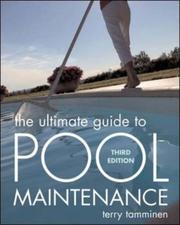
The standard owner's manual and the only genuinely essential book here: chemistry, circulation, filtration, troubleshooting and repair, written by a former pool service operator. Tamminen's earlier The Ultimate Pool Maintenance Manual is the same work under its previous title and also resolves in this catalogue — buy the later edition, not both.

Read second as a shorter, blunter second opinion on the same weekly tasks, with more attention to the question the guides usually dodge: which jobs are worth calling a service company for. Written for both audiences, so some of it assumes tools you will not own.

A Sunset home-reference title covering planning, construction, equipment and upkeep with heavy illustration. Useful here as the visual companion to Tamminen's text — it is the fastest way to learn what the parts of your filtration system are called. Catalogued under its author Curtis Rist.
Spas, Hot Tubs and Equipment
BeginnerExtend the same chemistry to the much smaller, much hotter water volume of a spa, where sanitiser demand and bather load behave very differently, and get comfortable with pumps, heaters and filters.
▸ Study plan for this stage
Pace: One to two weeks. Warton and Spring's Spas, Hot Tubs and Home Saunas is short (80 pages) and is an evening's read. The Creative Homeowner volume covers overlapping ground and is worth reading only if siting and installation are still unclear after the first — treat it as optional rather than sequent
- Volume is the variable that changes everything. A spa holds a small fraction of a pool's water with a comparable or higher bather load, so contaminant concentration rises far faster and sanitiser is consumed far faster.
- High temperature accelerates chlorine loss and shifts the practical choice toward bromine, which is more stable hot and behaves differently in its combined form — bromamines remain active sanitisers, unlike chloramines.
- Biofilm in the plumbing is a spa-specific problem that pool books do not cover: the jetted pipework is warm, wet and dark, and a spa that reads correctly at the surface can be seeding contamination from inside the lines. Purge products and periodic line cleaning exist for this reason.
- Drain-and-refill intervals are a real maintenance parameter, not a nicety. Total dissolved solids accumulate in a small volume until the water can no longer be corrected chemically, and the standard rules of thumb tie the interval to volume and bather load.
- Cover and shell care is most of a spa's non-chemical maintenance. A waterlogged cover is both a heat loss and a mechanical hazard, and shell materials have specific cleaning restrictions.
- Pumps, heaters and filters are the components that actually fail, and the equipment chapters here are your vocabulary for describing a fault to a service technician accurately enough to avoid a diagnostic visit.
- White's photographic survey belongs in a maintenance stage for a reason the marketing never states: decking, coping, screening and planting decide how much debris reaches the water, and therefore how much of your season is spent skimming. Maintenance load is designed in before it is managed.
- Why does a spa need a different sanitiser regime from a pool, and what specifically does temperature do to chlorine that makes bromine attractive?
- How do bromamines differ from chloramines in behaviour, and what does that difference mean for how you read a combined-sanitiser result in a spa?
- What is biofilm, why is spa plumbing an ideal site for it, and what would make you suspect it when your surface readings look fine?
- How would you decide when to drain and refill a particular spa, and which measurements inform that decision?
- Looking at White's photographs, identify three design or planting decisions that would increase debris load and three that would reduce it.
- Work out your spa's volume, then calculate how much a single two-person soak changes the sanitiser demand relative to the same soak in your pool. The ratio is the lesson.
- Inspect and document your own equipment pad: pump, heater, filter, controller. Note the model of each and where its manual is. Do this before you need it.
- Draw the water path through a spa from suction to jet, marking every place biofilm could establish and every place a filter can be serviced.
- Walk the perimeter of the pool or spa and list every source of debris — overhanging trees, prevailing wind, the route people take when they get out. Score each for how much work it creates per week.
Next up: Homeowner books tell you what to do; the commercial operator literature explains why, in terms of turnover and filter sizing that let you diagnose a stubborn pool rather than keep dosing at it.

Covers the spa-specific problems a pool book skips: the effect of high temperature on chlorine and bromine, biofilm in the plumbing, drain-and-refill intervals, and cover and shell care. An older title, so treat its equipment recommendations as historical. Catalogued under its authors Susan Warton and Paul Spring.

A second illustrated treatment of the same ground, filed here under the fuller published title that also takes in saunas and home gyms. Read it only if the Sunset book leaves you unsure about installation and siting; the maintenance advice largely overlaps.

Photographs rather than instruction, and placed here deliberately: decking, coping, screening and planting decisions all determine how much debris lands in your water and therefore how much maintenance you sign up for.
How Professionals Run Water
IntermediateUnderstand turnover rate, filter sizing, saturation index and disinfection by-products at the level a commercial operator is trained to, so you can diagnose a stubborn pool rather than dosing at it.
▸ Study plan for this stage
Pace: Two to three weeks, and read selectively. Williams's Aquatic Facility Operator Manual is a certification training text — work through the circulation, filtration and disinfection sections properly and treat the facility-management chapters as background unless you run a public pool. Perkins's Swimmi
- Turnover rate is the professional's central number: how long the filtration system takes to process a volume equal to the whole pool. Commercial standards specify it, and most domestic pools run well below what a public facility would be permitted.
- Filter sizing and flow rate are coupled. A filter passed too much water filters badly and a pump oversized for the plumbing cavitates or wastes energy; the operator literature treats the pump, pipe, filter and pool as one hydraulic system rather than four purchases.
- The saturation index relates pH, temperature, calcium hardness and alkalinity to whether water will scale or corrode. It is the concept that explains why chemically balanced water can still eat a heater or cloud a surface, and it is the clearest single gain from reading at this level.
- Disinfection by-products, chloramines chiefly among them, form from the reaction of sanitiser with organic load rather than from excess sanitiser. Operator training treats air quality and breakpoint chlorination as a routine part of running water, which homeowner books barely mention.
- A pool that reads correctly can still be unsafe. Williams's material makes the point directly: correct residuals with poor circulation leave dead zones, and correct chemistry with inadequate turnover leaves pathogens in contact time they should not have.
- Perkins gives the structural and materials side — tank construction, hydraulics, plant rooms — which is what a designer and builder worry about and what determines the maintenance burden the owner inherits.
- This is the stage where the path stops being about products and starts being about systems, and it is the reason the earlier troubleshooting advice works.
- Define turnover rate and calculate it for your own pool. How does it compare with the standard a commercial facility would have to meet, and what would you change to improve it?
- How can water be chemically in balance and still be corroding a heat exchanger? Answer using the saturation index rather than a single reading.
- What is breakpoint chlorination, when does an operator use it, and why is it counterintuitive to a reader who thinks of chlorine as something to minimise?
- Where in a typical domestic pool would you expect poor circulation, and how would you detect a dead zone without instrumentation?
- Which of Perkins's engineering concerns actually affect a homeowner's maintenance load, and which are purely a designer's problem?
- Measure or estimate your system's flow rate, then compute turnover and compare it against the commercial guidance in Williams. Write down what a compliant configuration would require.
- Calculate the saturation index for your water at its current readings and again at summer peak temperature. Note which single adjustment moves it most.
- Map every place your return jets aim and predict where circulation is weakest, then test the prediction with a dye or a handful of surface debris.
- Take one troubleshooting recipe from Tamminen and re-derive it from the operator manual's principles. If you can explain why the recipe works, you have got what this stage is for.
Next up: Everything so far assumes a chlorinated system; the last stage asks whether you want one at all, and what the alternative actually costs in labour rather than in chemicals.
The training manual behind a commercial operator certification, and the step up in rigour from every homeowner book above: circulation calculations, chloramine formation, and why a pool that reads correctly can still be unsafe. Catalogued under its author Kent G. Williams.

The engineering side — structure, hydraulics, water treatment plant and materials, written for designers and builders rather than owners. Read last in this stage and read it selectively; it is a 1980s British technical work and the most demanding book on the path.
Chemical-Free Alternatives and Design
IntermediateEvaluate natural and planted pools as a genuine alternative to a chlorinated system, and understand the maintenance trade you are making rather than the one the marketing describes.
▸ Study plan for this stage
Pace: One to two weeks. Littlewood's Natural Swimming Pools is a short introduction and can be read in a sitting. Kircher, Thon and Kingsbury's How to Build a Natural Swimming Pool (328 pages) is the substantial one — a week, with the planting and nutrient chapters read slowly. Klein's Pools (208 pages) i
- A natural swimming pool substitutes a planted regeneration zone for chemical sanitisation: water circulates through gravel and root systems where plants and microorganisms consume the nutrients that would otherwise feed algae. It is a biological filter, not an absence of filtration.
- The regeneration zone is a large fraction of the total surface area — commonly of the same order as the swimming zone itself — which is the constraint most people discover too late. You are trading chemical dosing for land.
- Nutrient management replaces sanitiser management. Phosphate is the limiting variable: leaf litter, run-off, swimmer load and fertiliser from surrounding planting all feed the system you are trying to keep lean.
- The maintenance trade is real but different rather than absent. There is no weekly dosing, and there is seasonal planting work, sediment removal, and a system that takes time to establish and can be destabilised faster than it recovers.
- Kircher, Thon and Kingsbury write from German practice, where these pools are most established, and give construction detail, planting schedules and nutrient targets that the introductory book states only as principles.
- Water clarity and water safety are different claims. A natural pool can be clear and biologically active at once, and the standards applied to public natural bathing waters are not the same standards as for chlorinated pools — worth knowing before making comparisons.
- Klein's book has no maintenance content at all, and that is the point of placing it last: design decisions determine everything the earlier stages then have to manage, and it is a reminder of what the testing and dosing are in service of.
- Honest scope note for this whole path: the specialist water-chemistry literature is largely absent from this catalogue, so the path is deliberately widened into spas, professional operation, natural pools and design. It will make you a competent, diagnostic owner. It is not a substitute for an opera
- How does a regeneration zone actually remove the nutrients that would otherwise cause algae, and what determines how large it has to be?
- Compare a season of labour on a chlorinated pool with a season on a natural pool. Where does the work go, and which one is more forgiving of neglect?
- Why is phosphate the limiting nutrient in practice, and what are the main routes by which it enters a natural pool?
- What can destabilise an established natural pool, and how long does recovery take relative to the failure?
- Looking at Klein's photographs with the maintenance knowledge from the first three stages, pick two designs you would not want to own and say precisely why.
- Sketch a natural pool for your own site to scale, including the regeneration zone at a realistic proportion. The drawing usually settles the question faster than the reading does.
- Write a one-page honest comparison of chlorinated and natural systems for your specific site, covering capital cost, land, seasonal labour, water use and what happens if you go away for a month.
- List every nutrient input to your existing pool or proposed site — trees, lawn fertiliser, run-off, bather load — and rank them. Then say which are designable away and which are not.
- Go back through the whole path and write a single-page maintenance calendar for your own water: weekly, monthly, seasonal opening and closing. Note beside each task which book you would consult if it went wrong.
Next up: That closes the path: the weekly chemistry, the spa's different arithmetic, the professional's systems view, and the alternative that trades dosing for planting — and the recurring finding that most water problems are designed and plumbed in long before they are dosed.

The introduction to pools filtered by a planted regeneration zone instead of chemicals: how the biology works, how big the plant zone has to be, and what a season of upkeep really looks like.

The more technical follow-up, from German practitioners in the country where these pools are most established — construction detail, planting schedules and nutrient management. Read after Littlewood, which supplies the concepts it assumes.

A photographic survey of pools as architecture, with no maintenance content at all. Included as the closing book because it is the clearest reminder of what all the testing and dosing is in service of.