Xanth books in order: where to start with Piers Anthony
Anthony has published well over a hundred books and the honest reading order is short. Xanth begins strongly and declines steeply — the puns take over, the plots stop mattering, and the recurring interest in very young female characters reads far worse now than it did in 1977. This path gives you the stretch of Xanth worth reading, tells you where to stop, then moves to Incarnations of Immortality, which is the better series, and ends with the early science fiction, which was written by what is effectively a different and more ambitious writer.
Start here: the first three Xanth
BeginnerRead the original trilogy, which is the only part of Xanth with real narrative stakes, and see the magic system before the jokes swallow it.
▸ Study plan for this stage
Pace: Three to four weeks for 999 pages across three short novels — A Spell for Chameleon at 344, The Source of Magic at 326 and Castle Roogna at 329. These are fast, light books and read in a few evenings each. Read them in order. One thing to know before starting: A Spell for Chameleon's treatment of it
- The premise: Xanth is a land where every person has exactly one magic talent, and the protagonist of book one appears to have none. That single constraint generates most of the series' better plotting.
- The magic system is rule-bound rather than atmospheric. One talent per person, talents do not repeat, and the strongest talents make their holders Magicians. The rules matter in the first three books and stop mattering later, which is itself a useful thing to watch for.
- Xanth's geography and its relationship with Mundania — the ordinary world outside — is the frame for most quest plots and for most of the jokes.
- A Spell for Chameleon won the British Fantasy Award and is the place to start. The premise about its female lead is a genuine plot mechanism, and the honest way to read it is to see how much of the book depends on it rather than to look past it.
- The Source of Magic is a proper quest novel asking a structural question about the setting — where does Xanth's magic come from — and it is the last book in the series where a question of that kind is asked seriously.
- Castle Roogna is widely held to be the best Xanth novel: Dor travels eight hundred years into Xanth's past, which lets Anthony build actual history into the setting rather than only jokes. If you read one book of this series, read this one.
- The puns are present from the beginning but subordinate. In these three volumes wordplay decorates a plot; the reason to read the first three and not the first thirty is that the relationship later inverts.
- This is comfort reading with real craft underneath. Saying both halves of that plainly is more useful than either dismissing the series or overselling it.
- How does the one-talent-per-person rule constrain the plot of A Spell for Chameleon? Name two events that depend on it.
- The premise about Chameleon is central rather than incidental. Trace how the plot would have to change if it were removed.
- What structural question does The Source of Magic ask about the setting, and does the answer hold up?
- Why is Castle Roogna generally rated the best of the series? Give reasons about construction rather than about enjoyment.
- In these three books, are the puns serving the plot or the reverse? Point to a passage that settles it.
- Keep a talents ledger — character, talent, and how it is used to solve a problem. When the ledger stops recording problem-solving and starts recording jokes, you have found the point this path is about.
- Map Xanth as you read: regions, the Gap, the relationship to Mundania. The later books assume it.
- After A Spell for Chameleon, write a paragraph on what the novel is doing with its central premise. Whether you continue is a fair decision to make on that basis.
- Note the ratio of plot to wordplay in one chapter of each of the three books. Keeping that measurement is how you will recognise stage three when you get there.
Next up: You have the setting, the rules and the series at its most disciplined; the next stage is the mid-period, where the books still work as novels while the jokes start taking over.
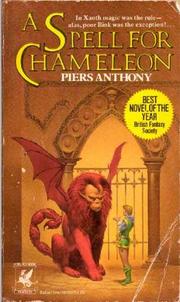
The first Xanth book and the place to start; it won the British Fantasy Award. A young man with no discoverable magic talent in a land where everyone has one. Be warned that the treatment of its female lead is built on a premise about intelligence and beauty that has aged extremely badly, and that this is not incidental to the plot.

The direct sequel, and a proper quest novel — where does Xanth's magic come from. The last book in the series where that kind of structural question is asked seriously.
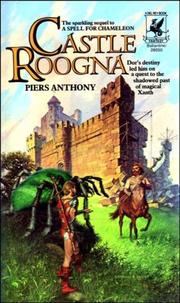
Widely held to be the best Xanth novel. Dor travels eight hundred years into Xanth's past, which lets Anthony build actual history into the setting. If you read only one book of this series, read this one.
The rest of the good stretch
BeginnerRead the mid-period Xanth books that still work as novels, and notice the puns beginning to take over the plotting.
▸ Study plan for this stage
Pace: Two to three weeks for 918 pages — Centaur Aisle at 304, Ogre, Ogre at 307 and Night Mare at 307. Three short, quick books, read in order. This stage is where the series settles into its formula, and reading them close together makes the formula visible in a way that spacing them out would not.
- Centaur Aisle puts Dor in as regent and leaves Xanth for Mundania for the first time, which is lighter than Castle Roogna and is the point at which the series settles into a repeatable shape: a quest, a companion group, obstacles solved by talents and puns.
- The formula itself, stated plainly: a protagonist with an underestimated talent, a journey, a set of comic obstacles, a romance, and a resolution that restores the setting unchanged. Once you can state it, you can see it running for another forty volumes.
- Ogre, Ogre is the funniest of the middle books and is also where the puns stop being decoration and start being the engine. Watching that inversion happen in real time is the reason this book is on the list.
- Reader-submitted puns become an increasing component of the series, and their effect on the plotting is cumulative rather than sudden. Ogre, Ogre is early in that process.
- Night Mare gives the viewpoint to a night mare rather than a human and carries a genuine invasion plot with consequences that persist into later books. It is the last Xanth novel with real weight behind it.
- An invasion plot with lasting consequences is unusual for this series precisely because the formula normally restores the setting. Noticing why Night Mare feels different is the analytical work of this stage.
- The uneven quality is not a matter of taste. These three are worse constructed than the first three and better constructed than what follows, and the decline is measurable in how much of each book is plot.
- State the Xanth formula in one sentence. Now check it against all three books in this stage — where does each depart from it?
- In Ogre, Ogre, find the point at which a pun drives a plot event rather than decorating one. What does that change about how the book has to be constructed?
- Why does Night Mare feel different from the other two? Answer in terms of consequences rather than of viewpoint.
- What does leaving Xanth for Mundania in Centaur Aisle allow Anthony to do, and what does it cost?
- Is the drop in quality from Castle Roogna to Centaur Aisle real or is it familiarity? Argue it with evidence.
- Continue the ratio measurement from stage one on a chapter of each book. Three data points from stage one and three from stage two make the trend visible rather than asserted.
- Write the Xanth formula out as a template with blanks, then fill it in for each of the three books. The ones that resist the template are the better books.
- Track the consequences of Night Mare's invasion plot forward. If they persist, note where; if they are quietly dropped, that is the more interesting finding.
- Decide at the end of this stage whether you want to see the decline for yourself or take the path's word for it. Both are legitimate and the next stage exists for the first.
Next up: The formula is established and the puns have taken over the engine; the next stage is a short, deliberate look at what happens when there is nothing left underneath them.
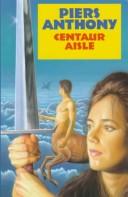
Dor as regent, and the first book to leave Xanth for Mundania. Lighter than Castle Roogna and the point at which the series settles into its formula.
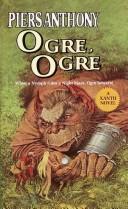
Smash the ogre, and the funniest of the middle books. It is also where the puns stop being decoration and start being the engine, which is worth seeing happen.

Mare Imbrium as protagonist, and a genuine invasion plot with consequences that carry into later books. The last Xanth novel with real weight behind it.
Where the series stops being worth it
BeginnerSee the decline for yourself and know why this path stops here rather than continuing through forty more volumes.
▸ Study plan for this stage
Pace: Two weeks for 636 pages — Crewel Lye at 309 and Golem in the Gears at 327. This is the shortest stage on the path and it has a specific job: to let you see the decline rather than take it on trust. If you are already convinced, you can skip it without losing anything, which is an unusual thing to be
- Crewel Lye tells Jordan the barbarian's story in flashback and is about as good as post-Night Mare Xanth gets. Reading it is the fair test: if the pattern is still holding for you here, the series will keep giving you what you want for a long time.
- The flashback structure is the last real structural experiment in the series, and it works reasonably well, which is why this is the right book for the test rather than a weaker one.
- Golem in the Gears is the point most long-time readers name as the beginning of the end. Grundy the golem's book, with the plots now functioning as scaffolding for wordplay rather than the reverse.
- Reader-submitted puns dominate from around this point, and the structural consequence is that plot events increasingly exist to set up jokes rather than jokes arising from events. This is a difference in kind, not degree.
- Nothing after Vale of the Vole and Heaven Cent adds anything a new reader needs, and there are roughly forty more volumes. Stating the number plainly is the most useful thing this stage does.
- Stopping a long series deliberately is a skill. A series that continues indefinitely does not owe you a conclusion, and choosing a stopping point on quality grounds is a better outcome than drifting away at volume nineteen.
- The counter-case is real and worth stating: readers who want exactly what Xanth provides — light, comic, undemanding, endlessly available — are not wrong, and the decline this stage documents is a decline in ambition rather than in the delivery of what the later books promise.
- Does Crewel Lye's flashback structure work? Compare it with the historical material in Castle Roogna, which does something similar.
- In Golem in the Gears, find a plot event that exists only to enable a joke. How many can you find in one chapter?
- State the difference between a pun decorating a plot and a pun driving one, using an example from each of stages one and three.
- Make the case for continuing past this point as strongly as you can. What does a reader get from volume twenty that they do not get from volume five?
- Where would you personally stop, and on what evidence? This is the question the stage exists to let you answer.
- Take the ratio measurement one last time on a chapter of each. You now have data from three stages and can state the trend as a fact rather than an impression.
- Read one chapter of Golem in the Gears and one of Castle Roogna back to back. The comparison takes an hour and settles the question more efficiently than any argument.
- Write your stopping decision and the reason for it. Then write the recommendation you would give someone else, which need not be the same.
- Look up how many Xanth novels exist now and sit with the number. It is a genuine part of understanding what this series is.
Next up: Xanth is closed on a considered judgement rather than a drift; the next stage is the sequence where the same writer's high-concept instinct is attached to material that can support it.
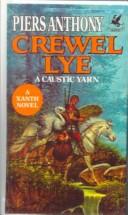
Jordan the barbarian's story, told in flashback, and about as good as post-Night Mare Xanth gets. Read it and judge whether the pattern is still holding for you.
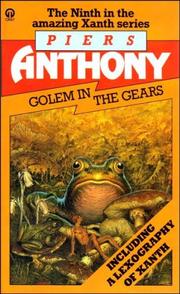
Grundy the golem's book, and the point most long-time readers name as the beginning of the end — the plots are now scaffolding for wordplay and the reader-submitted puns start dominating. Nothing after Vale of the Vole and Heaven Cent adds anything a new reader needs, and there are roughly forty more of them.
The better series: Incarnations of Immortality
IntermediateRead the sequence where Anthony's high-concept instinct is attached to real subject matter, and see what he could do when he was not being funny.
▸ Study plan for this stage
Pace: Four to five weeks for 1,128 pages — On a Pale Horse at 336, With a Tangled Skein at 409 and For Love of Evil at 383. Read On a Pale Horse first and For Love of Evil last; the middle book can be taken in either position. Bearing an Hourglass comes between the first two chronologically if you want th
- The conceit: the abstractions — Death, Time, Fate, War, Nature, Evil, Good — are offices held by ordinary people who can be replaced. It is a genuinely good high-concept premise and the series takes it seriously.
- On a Pale Horse is the best single novel Anthony wrote: a man accidentally kills Death and has to take the office. A concrete bureaucratic afterlife, a suicide as the opening scene, and a moral system that is actually worked out rather than gestured at.
- The bureaucratic treatment of the supernatural is the specific achievement. Death has a caseload, procedures and a balance-of-good-and-evil calculation for each soul, and the machinery is coherent enough to generate real dilemmas.
- Read this even if Xanth did not land. The two series share a writer and almost nothing else, and a reader who bounced off the fantasy has no reason to skip this one.
- With a Tangled Skein gives the office of Fate to three women in one body — Clotho, Lachesis, Atropos — which is the best formal use the series makes of its own premise, and it is the strongest of the sequels.
- For Love of Evil narrates Satan's origin and retroactively reorganises the whole series, which is why it has to come late. It depends on your already knowing the other Incarnations as they appeared from outside.
- The series' recurring weaknesses persist here: the handling of women and of sexuality is uneven throughout, and Anthony's habit of digressing into personal preoccupations is present. The premise is strong enough to carry it, which is not true of the later Xanth books.
- Each volume takes one office and retells overlapping events from that officeholder's position, so the series accumulates a single story from several angles. That is a more ambitious structure than anything in Xanth.
- How does the bureaucratic treatment of Death generate dilemmas that a mythological treatment could not?
- What is the moral system in On a Pale Horse, and is it consistent? Find a case the system handles badly.
- Why does the three-in-one treatment of Fate work formally? What does it let With a Tangled Skein do that a single narrator could not?
- For Love of Evil reorganises the series retroactively. What specifically does it change about how you read the earlier books?
- Compare the ambition of this series with Xanth's. Where does Anthony's instinct for high concept show up in both, and why does it produce better books here?
- Which of Anthony's recurring weaknesses is most visible in this sequence, and does the premise carry it?
- List the offices and, as you read, note the rules governing each — how it is assumed, what its powers and limits are. The series' pleasure is in the rules and tracking them is the way to get it.
- Chart the overlapping events across the three books, marking which office is central in each account. The structure is the same one Anthony never attempted in Xanth.
- Write a paragraph on the moral calculation at the centre of On a Pale Horse and whether the novel applies it consistently.
- Decide whether to read Bearing an Hourglass and And Eternity, and give a reason based on what the three books here delivered.
- Compare one chapter of On a Pale Horse with one of A Spell for Chameleon on prose, pacing and seriousness of intent. This comparison is the argument of the whole stage.
Next up: Having seen what Anthony could do with a serious premise, the last stage goes back to the beginning of the career, where the ambition was higher still.
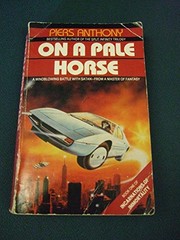
A man accidentally kills Death and has to take the office. The best single novel Anthony wrote: a concrete bureaucratic afterlife, a suicide as the opening scene, and a genuinely worked-out moral system. Start the series here and read it even if Xanth did not land.

The Incarnation of Fate, told as three women in one office. The strongest of the sequels and the one that best justifies the series' conceit. Bearing an Hourglass comes between these two chronologically if you want them all.

Satan's origin, and the book that retroactively reorganises the whole series. Read it late — it depends on you already knowing the other Incarnations. And Eternity closes the sequence.
The early science fiction
IntermediateMeet the ambitious 1960s writer who preceded the fantasy franchises, and understand how the career changed.
▸ Study plan for this stage
Pace: Two to three weeks for 531 pages — Chthon at 234 and Bio of an Ogre at 297. Chthon is short and genuinely difficult, with a fractured non-linear structure that repays slow reading; do not read it at Xanth pace. Bio of an Ogre is the autobiography and should be read last, as the frame for everything
- Chthon is the debut: a prison planet, a fractured non-linear structure, and Hugo and Nebula nominations. Almost nothing about it suggests the author of Xanth, which is the entire point of reading it.
- The non-linear construction is the technical interest. Multiple interleaved timelines with no signposting, requiring the reader to assemble the chronology — a demand Anthony never made of a reader again.
- Reading the debut last, after nine lighter novels, makes the trajectory legible. The question the whole path builds to is what happened between this book and Ogre, Ogre.
- Bio of an Ogre is the autobiography and the most efficient answer to that question. Anthony is candid about the money, the grudges, the publishers and the reasons he wrote what he wrote.
- The commercial argument matters. A writer who found a reliable market and stayed in it is a common and unromantic story, and Anthony tells it without much self-flattery, which makes the book more useful than most author memoirs.
- Anthony's disputes with publishers and editors are a recurring subject and are told entirely from his side. Read the memoir as testimony about his own career rather than as a settled account of the industry.
- Macroscope is the other early novel worth seeking out for readers who want more of this Anthony rather than the later one.
- The honest summary the path arrives at: a genuinely ambitious early writer, one strong high-concept series, one comic fantasy franchise that starts well and runs for decades past its material, and a body of work with recurring content that has aged badly and should be named rather than skirted.
- How is Chthon constructed, and what does the reader have to do that a conventional novel would do for them?
- What in Chthon is recognisably the same writer as the Xanth books, and what is not?
- According to Bio of an Ogre, why did the career go the way it did? How much of the explanation is commercial?
- The memoir is told entirely from Anthony's side. Which of its claims would you want to check, and why those?
- Having read across the whole career, write a one-paragraph assessment of Piers Anthony that is neither dismissive nor promotional.
- What is your final recommendation to a new reader — which books, in what order, and what to warn them about?
- Read Chthon slowly and reconstruct its chronology on paper as you go. Doing that reconstruction is what the novel is for.
- Compare the first page of Chthon with the first page of Ogre, Ogre. Write a paragraph on how the same writer produced both.
- Read Bio of an Ogre with a note of every reason Anthony gives for a career decision, and mark each as commercial, personal or artistic. The proportions are the finding.
- Write the final artefact of the path: a reading guide to Piers Anthony that names the three Xanth books worth reading, the stopping point and why, the better series, the debut, and the content that a reader should know about in advance.
- Revisit the ratio measurements from stages one to three and set them beside Chthon. That is the whole career on one page.
Next up: This is the end of the path: the readable stretch of Xanth with an honest stopping point, the stronger series that followed it, the ambitious debut that preceded everything, and the memoir that explains the distance between them.
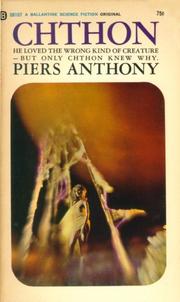
His 1967 debut: a prison planet, a fractured non-linear structure, and Hugo and Nebula nominations. Almost nothing about it suggests the author of Xanth, which is the point of reading it.

The autobiography, and the most efficient way to understand why a writer with Chthon behind him spent four decades on pun-driven fantasy. Anthony is candid about the money, the grudges and the publishers; read it last, as the frame for everything else here. Macroscope is the other early novel worth seeking out.