Learn piano as an adult
This four-stage curriculum takes a complete adult beginner from first contact with the keyboard all the way to playing satisfying, real repertoire with musical understanding. Each stage builds directly on the last: you learn the language of the instrument, then develop technique and reading, then deepen musicianship, and finally tackle real classical and popular pieces with confidence.
First Contact — Getting Your Bearings
BeginnerUnderstand the keyboard layout, basic notation, hand position, and simple rhythms well enough to play short, satisfying pieces from day one.
▸ Study plan for this stage
Pace: 4–5 weeks, ~20–25 pages/day, 5 days/week — work through Piano for Dummies (Blake Neely) from cover through the first satisfying "complete piece" chapters; revisit any notation or rhythm chapter before moving on
- Keyboard geography: the repeating pattern of white and black keys, octave groupings, and how to find any note instantly using the 2- and 3-black-key landmarks
- Grand staff basics: treble and bass clefs, the lines and spaces of each staff, ledger lines, and Middle C as the anchor connecting both hands
- Note values and basic rhythm: whole, half, quarter, and eighth notes and their equivalent rests; how a time signature (4/4, 3/4) organizes beats into measures
- Proper bench position, hand shape, and finger numbering (1–5 on each hand) as taught by Neely — relaxed wrist, curved fingers, flat fingertips on keys
- Dynamics and articulation fundamentals: piano (p) vs. forte (f), legato (smooth) vs. staccato (detached), and how Neely introduces them in early pieces
- Reading hands separately before combining: Neely's method of isolating the right-hand melody and left-hand accompaniment before putting them together
- Simple chord and interval recognition: recognizing 2nds, 3rds, and the basic C, G, and F major chords that appear in the book's beginner pieces
- Practice strategies from Neely: slow-tempo drilling, hands-separate practice, and short focused sessions over long unfocused ones
- Without looking at the keyboard, can you name the white key immediately to the left of any group of two black keys? How does this landmark help you find C, D, and E quickly?
- What does the time signature 3/4 tell you about how many beats are in a measure and which note gets one beat — and how does this differ from 4/4?
- Describe the correct hand position Neely recommends: where should your wrist sit relative to the keys, and why does he caution against flat or collapsed fingers?
- How does Neely suggest you approach a new piece — hands together from bar one, or another method? What is the reasoning behind his recommended sequence?
- Where is Middle C on the grand staff, and on the physical keyboard? Why is it the reference point that links the treble and bass clef?
- In one of the short pieces from the book, identify one dynamic marking and one articulation marking. How would you change your touch to honor each one?
- Keyboard mapping drill: close your eyes, place your hand randomly on the keys, open your eyes, and name every white key your fingers are resting on using the black-key landmark method Neely teaches — repeat for 5 minutes daily until automatic
- Staff flashcards: write each line and space note of the treble and bass clef on index cards; quiz yourself daily, aiming for under 2 seconds per card by the end of week 2
- Rhythm clapping: before playing any new piece from Piano for Dummies, clap and count the rhythm of the right-hand part out loud (e.g., '1-2-3-4') — then do the same for the left hand
- Hands-separate slow practice: take any two-page piece from the book's beginner section, play the right hand alone at half the indicated tempo until clean, then the left hand alone, before attempting hands together
- Finger independence warm-up: using the C major five-finger position Neely introduces, play each finger (1–2–3–4–5 and back) slowly and evenly, listening for equal volume and tone on every note — 3 minutes per hand per session
- Performance log: after completing each piece in the book, record a short voice memo or video of yourself playing it. Review it to self-assess one thing Neely's text says you should be doing (e.g., curved fingers, steady tempo) and note one concrete improvement for next time
Next up: Mastering the keyboard layout, grand staff reading, and basic hand position in Piano for Dummies gives you the stable physical and notational foundation needed to tackle longer pieces, more complex rhythms, and expanded chord vocabulary in the next stage of the curriculum.
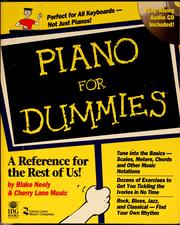
A friendly, jargon-free companion that explains the 'why' behind what the method book teaches — how music is structured, what the pedals do, how to practice efficiently — giving adult learners the conceptual map they crave.
Building the Engine — Technique & Sight-Reading
BeginnerDevelop reliable finger independence, basic scales and chords in both hands, and the ability to sight-read simple pieces at a steady tempo.
▸ Study plan for this stage
Pace: 8–10 weeks total. "Dozen a Day" by Edna Mae Burnam: 6–7 weeks — work through the Preparatory Book and Book 1 at a pace of 2–3 exercises ("dozen") per day, repeating each set until all exercises feel clean before moving on. "How to Read Music" by Roger Evans: run concurrently from Week 2 onward, read
- Finger independence and equality — Burnam's daily gymnastic exercises isolate each finger so no single finger dominates or collapses under pressure
- Hand position and posture — curved fingers, relaxed wrist, and proper bench height as established in the Preparatory Book of Dozen a Day
- Basic scales in both hands — learning the physical pattern (fingering, thumb-under technique) through Burnam's progressive scale exercises
- Simple chord shapes (triads) — forming and releasing major and minor triads cleanly in both hands as introduced in Dozen a Day Book 1
- Note reading on the grand staff — Evans explains treble and bass clef, note names, ledger lines, and staff positions so you can decode any simple score
- Rhythm and time values — Evans covers whole, half, quarter, and eighth notes plus their rests, giving you the rhythmic vocabulary to maintain a steady tempo
- Dynamics and articulation markings — Evans introduces p, f, slurs, and staccato so you can interpret what is written, not just play the right pitches
- Sight-reading at a steady tempo — combining Evans's note/rhythm literacy with Burnam's trained fingers to play unfamiliar short pieces without stopping
- After completing the Dozen a Day Preparatory Book, can you perform all exercises with each finger striking evenly and without tension in the wrist?
- Using the note-naming system explained by Roger Evans, can you identify any note on both the treble and bass clef staves, including one ledger line above and below each staff?
- Can you explain, in your own words, how Evans distinguishes between note duration values (whole through eighth notes) and calculate how many beats each receives in 4/4 time?
- Can you play a one-octave C major scale hands separately and then hands together, using the correct thumb-under fingering as drilled in Dozen a Day?
- When you encounter a dynamic marking (p or f) or an articulation mark (slur or staccato dot) in a piece, can you describe what Evans says it means and demonstrate it at the keyboard?
- Can you sit down with a short, unfamiliar piece at the level of Dozen a Day Book 1 and read through it at a slow but uninterrupted tempo, self-correcting note names with Evans's grand-staff map?
- Daily Dozen warm-up ritual: Every practice session begins with that day's Burnam page. Set a metronome to a tempo where every finger stroke is controlled, then increase by 2 BPM only when three consecutive clean repetitions are achieved.
- Finger-isolation drill: Choose one Burnam exercise and play it hands separately with eyes closed, focusing entirely on the sensation of each finger lifting and dropping independently — this ingrains proprioception rather than visual reliance.
- Grand-staff flashcard sprint (Evans-based): Write each note from Evans's grand-staff diagrams on an index card (note name on one side, staff position on the other). Drill 10 cards before every piano session until identification is under 2 seconds per card.
- Rhythm clapping from Evans: Before playing any new Burnam exercise, read its rhythm aloud ("quarter, quarter, half…") and clap it with a metronome. Only sit at the keys after the rhythm is solid in your hands and voice.
- Hands-together scale challenge: Once a C major scale is clean hands separately (Burnam), add a second hand. Practice in 'shadow mode' — one hand plays while the other silently mirrors the fingering on the fallboard — before combining at the keys.
- Sight-reading log: Once per week, pick a short piece (hymn, folk song, or a skipped Burnam exercise) you have never seen. Using Evans's note-reading checklist (clef → key → time → scan for patterns), play it once through without stopping. Log the date, piece, and one thing to improve — track progress over the 8–10 weeks.
Next up: Mastering finger independence through Burnam and internalizing the grand staff through Evans creates the physical and cognitive foundation needed to tackle longer, more harmonically varied repertoire — the natural next step where both hands must cooperate across fuller textures and more complex rhythms.

A beloved short daily technical warm-up book. Its twelve exercises per session build finger strength and evenness without being overwhelming, and adults can slot them in before any practice session.

A concise, standalone guide to music notation that reinforces and deepens what the method books introduce, ensuring the adult learner can decode any printed score independently.
Making Music — Theory, Ear & Expression
IntermediateUnderstand harmony, chord progressions, and basic music theory well enough to learn pieces faster, play by ear, and bring genuine expression to the music.
▸ Study plan for this stage
Pace: 10–12 weeks total. Book 1 — "Music Theory for Dummies" (Pilhofer): Weeks 1–6, roughly 20–25 pages/day, 5 days/week. Book 2 — "The Complete Idiot's Guide to Music Theory" (Miller): Weeks 7–12, roughly 20–25 pages/day, 5 days/week. Reserve one day per week for review, ear-training drills, and keyboard
- Notation fundamentals — staff, clefs, note values, time signatures, and key signatures as presented in Music Theory for Dummies, which grounds everything else in the stage
- Scales and modes — major, natural/harmonic/melodic minor, and the seven modes; understanding how scale choice colors the mood of a piece
- Intervals — identifying and hearing the distance between two pitches (unison through octave), including quality (major, minor, perfect, augmented, diminished)
- Chord construction — building triads and seventh chords from intervals and scale degrees, covered in depth in both Pilhofer and Miller from complementary angles
- Chord progressions and functional harmony — the roles of tonic, subdominant, and dominant chords (I, IV, V, ii, vi) and how tension and resolution drive music forward
- The Circle of Fifths — using it as a navigation tool to understand key relationships, modulation, and why certain chords appear together, a centerpiece of both books
- Rhythm and meter — simple vs. compound meter, syncopation, and how rhythmic feel underpins expression at the piano
- Basic ear training — recognizing intervals, chord qualities (major vs. minor vs. diminished), and simple progressions by sound, tying the written theory to what you hear and play
- After reading Music Theory for Dummies, can you explain what a key signature tells you and how it relates to the major scale built on that tonic?
- Can you construct a major triad, a minor triad, and a diminished triad from any given root note, explaining which intervals define each quality?
- What is the function of the V7 chord, and why does it create a strong pull back to the I chord? Can you find this resolution in a piece you are currently learning?
- How does the Circle of Fifths (as explained in both Pilhofer and Miller) help you predict which chords will sound natural together in a given key?
- What is the difference between simple and compound meter, and how does that difference change the way you count and feel a piece at the piano?
- After completing The Complete Idiot's Guide to Music Theory, can you listen to a short chord progression and identify whether it is major or minor, and name the likely chords by ear?
- Circle of Fifths drill at the keyboard: each practice session, pick one key from the Circle (as introduced in both books) and play its major scale, its I–IV–V–I progression, and its relative minor scale — rotate through all 12 keys over six weeks
- Interval ear-training: use a keyboard or free app (e.g., musictheory.net) to play two notes and sing/name the interval before checking; start with perfect intervals and work outward to tritones, mirroring the interval chapters in Music Theory for Dummies
- Chord-spelling flashcards: write a root note on one side and a chord quality (major, minor, diminished, dominant 7th) on the other; build and play every chord on the piano, cross-referencing the chord-construction chapters in both Pilhofer and Miller
- Progression mapping: take three pieces you are currently learning and write out the Roman-numeral chord analysis for at least one section of each, using the functional harmony framework from The Complete Idiot's Guide to Music Theory
- Rhythm dictation: listen to 60-second clips of music in different meters (3/4, 4/4, 6/8) and tap or notate the rhythm, then check against the score — reinforces the meter and rhythm chapters from Music Theory for Dummies
- Play-by-ear challenge: at the end of Week 12, choose a simple melody you know well (a folk song, hymn, or pop hook) and find it on the piano by ear, then harmonize it with at least I, IV, and V chords — a direct application of everything covered in both books
Next up: Mastering harmony, ear training, and expressive theory in this stage gives you the analytical vocabulary and listening sensitivity to tackle more advanced repertoire, stylistic interpretation, and technique-focused study in the next stage with genuine musical understanding rather than mere note-reading.

Translates music theory into plain language for self-taught adults. Reading this alongside piano practice connects what your fingers do to what your ears hear and your mind understands.

A complementary theory text that goes slightly deeper into intervals, modes, and chord construction — reinforcing Pilhofer's foundations with different explanations and exercises.
Real Repertoire — Playing Actual Music
IntermediateApply everything learned to perform recognizable, rewarding pieces from classical and popular traditions, and develop a personal practice routine that sustains long-term progress.
▸ Study plan for this stage
Pace: 10–12 weeks total. Weeks 1–7: work through the RCM Celebration Series Repertoire Level 3 book, learning 2–3 pieces per week (~20–30 min of focused reading/score study daily, plus 45–60 min of hands-on practice). Weeks 8–12: read and apply The Perfect Wrong Note (~15–20 pages/day, 3–4 days/week) whil
- Score literacy at the intermediate level: reading and interpreting dynamics, articulation, phrasing, and tempo markings as printed in the RCM Celebration Series Level 3 repertoire
- Stylistic awareness across traditions: recognizing and honoring the characteristic idioms of Baroque, Classical, Romantic, and contemporary pieces as represented in the RCM anthology
- Hands-separate and hands-together practice strategies: building each RCM piece in layers before integrating both hands at performance tempo
- Musical phrasing and shaping: understanding how a melody breathes, where tension builds and releases, and how to project a musical line across a full piece
- The 'perfect wrong note' philosophy (Westney): embracing mistakes as information rather than failures, and using them as diagnostic tools to deepen understanding
- Authentic self-listening (Westney): developing the habit of hearing yourself as an outside listener would — critically, honestly, and without self-judgment — to accelerate improvement
- Deliberate, curiosity-driven practice (Westney): replacing mindless repetition with focused, experimental problem-solving at the piano
- Building a sustainable personal practice routine: structuring daily sessions with warm-up, repertoire work, sight-reading, and reflective review drawn from both books
- From the RCM Celebration Series Level 3 book, choose one piece from each style period represented — what specific markings (tempo, dynamic, articulation) does each score use, and how do those markings differ across the periods?
- After working through several RCM pieces, can you identify the moment in each where the musical tension peaks, and explain how you shaped your playing to reflect that arc?
- According to Westney in The Perfect Wrong Note, why is a 'wrong note' potentially more valuable than a correct one, and how should a pianist respond to mistakes during practice?
- How does Westney define 'authentic practice,' and what specific habits does he argue most adult learners need to unlearn?
- Select one RCM Level 3 piece you found most challenging — describe the exact practice strategy you used (drawn from either book) to move it from stumbling to performance-ready.
- What does a well-structured personal practice session look like for you now, and how have the principles from both books shaped it?
- Score study before playing: for each new RCM Level 3 piece, spend 10 minutes reading the score away from the piano — clap rhythms, sing the melody, mark phrase arcs and dynamic peaks with a pencil — before touching the keys
- Mistake journaling: after every practice session, write down 2–3 specific errors that recurred, then design a micro-drill (slow, isolated, varied rhythm) targeting each one, applying Westney's principle that mistakes are diagnostic data
- Record-and-listen sessions: once per week, record yourself playing a complete RCM piece without stopping, then listen back as Westney's 'outside listener' — note one thing that surprised you positively and one that needs attention
- Style-contrast performance: prepare one Baroque/Classical piece and one contemporary/popular piece from the RCM anthology, then perform both back-to-back for a friend, family member, or teacher, articulating aloud what stylistic choices you made differently for each
- Curiosity practice drill (Westney): take the hardest four-bar passage in any RCM piece and deliberately experiment — play it at three different tempos, with two different articulations, and once with eyes closed — then decide which version feels most musical and why
- Design your personal practice template: using insights from both books, write out a repeatable 45-minute practice session structure (warm-up, technique, repertoire focus, sight-reading, reflection) and test it for two consecutive weeks, adjusting as needed
Next up: By performing polished, stylistically informed pieces from the RCM Level 3 anthology and internalizing Westney's mindset of curious, self-aware practice, the reader has built both a repertoire foundation and a sustainable learning philosophy — the twin pillars needed to tackle more technically and musically demanding material at the next level.

A curated anthology of short classical pieces at the right difficulty level, giving the adult learner a structured repertoire list with proven pedagogical sequencing.
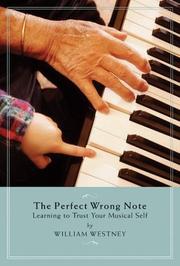
A transformative book on how adults actually learn and practice music — addressing performance anxiety, efficient repetition, and musical intuition. Best read once real pieces are in hand, so every insight lands immediately.
Discussion
Keep reading
Paths that share books, cover the same subject, or open a related topic.