Pentecostalism: the best books to read, in order
Pentecostalism went from a handful of people in a Los Angeles mission in 1906 to something like half a billion adherents, which makes it the fastest-growing religious movement of the twentieth century and one of the least understood. This path is built on scholarly history and social science rather than devotional writing, and it says which is which: three books of orientation, then the American origins, then the global movement where most Pentecostals now live, then the prosperity gospel and the newer network churches — with one insider testimony at the end so you have heard the movement in its own voice.
Orientation
BeginnerBe able to define Pentecostal, charismatic and neo-charismatic, place the movement's origins, and name what actually distinguishes it theologically.
▸ Study plan for this stage
Pace: Three to four weeks for around 900 pages, though Kay's Pentecostalism is short enough to finish in two or three sittings. Take Kay first for the vocabulary, then Anderson's An Introduction to Pentecostalism at 316 pages as the standard university textbook, then Synan's The Holiness-Pentecostal Tradi
- The three-part vocabulary that every later book assumes: classical Pentecostal denominations, the charismatic renewal inside existing Catholic and mainline Protestant churches, and the neo-charismatic or independent churches — often described as three waves, though the metaphor tidies a messier real
- Baptism in the Holy Spirit as a distinct experience subsequent to conversion, which is the doctrinal core, and the doctrine of initial evidence — the claim that speaking in tongues is the sign of that baptism — which is what most sharply separated Pentecostals from other evangelicals.
- Glossolalia itself: what practitioners understand it to be, the distinction between tongues as a private prayer language and as a public gift requiring interpretation, and the fact that scholarly and confessional descriptions of the same practice differ in what they take it to establish.
- Divine healing and its centrality. Healing is not a peripheral enthusiasm in this movement; it is a core expectation, and its prominence explains much of the movement's growth in places with weak medical provision.
- Anderson's insistence, stated from his first chapter, that Pentecostalism is a global rather than an American story. He works on African and Asian Pentecostalism, and reading him before the American stage stops you mistaking the origins for the whole.
- Synan's correction to the popular account: the movement's roots run back into nineteenth-century Wesleyan holiness teaching about a second work of grace, so Azusa Street is a crystallisation rather than a beginning.
- Scale. Something in the order of half a billion adherents makes this the fastest-growing religious movement of the twentieth century, and the size of the claim is what justifies the volume of scholarship in the later stages.
- The difference between a scholarly and a confessional account of the same events, and the habit of asking of every book on this path which it is. The path is deliberately built almost entirely of the first kind.
- Define Pentecostal, charismatic and neo-charismatic so that the distinctions actually do work. Where do the categories blur, and does that matter for the argument?
- What is the doctrine of initial evidence, and why was it the most divisive claim in early Pentecostalism rather than tongues as such?
- Summarise Synan's account of the Wesleyan holiness background. What does it change about the standard Azusa Street origin story?
- Why does Anderson insist on a global framing, and what would you get wrong if you read only the American material?
- How do these three authors each signal their own relationship to the movement, and where does that show in what they emphasise?
- Build a glossary of twenty terms from Kay and Anderson — baptism in the Spirit, initial evidence, glossolalia, xenolalia, sanctification, oneness, three waves — and keep it beside you for the rest of the path.
- Draw a family tree of the movement from Synan: Wesleyan holiness, the Keswick strand, the early Pentecostal bodies, the later charismatic and independent branches. Update it as later stages add names.
- Take one doctrinal claim and write two descriptions of it: one as a historian describes a belief, one as an adherent states it. Keep both; the last book on this path is written entirely in the second register.
- Estimate, from Anderson, the rough regional distribution of Pentecostals worldwide, then compare it with where the books on this path were written. Note the mismatch — it is a real feature of the scholarship.
Next up: With the vocabulary fixed and the holiness pre-history in place, the American origins stage becomes what it should be — one important episode within a larger movement rather than the whole story.

Catalogued under the bare title 'Pentecostalism'. Around 150 pages, written by a scholar of the movement, and the fastest way to get the vocabulary — baptism in the Spirit, glossolalia, the three waves — before anything longer.
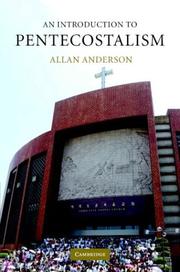
The standard university textbook, and the one that insists from the first chapter that Pentecostalism is a global rather than an American story. Anderson works from Cambridge and specialises in African and Asian Pentecostalism; read him second and the American stage will not feel like the whole subject.
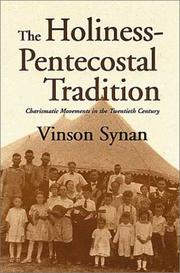
Synan traces the movement back into nineteenth-century Wesleyan holiness rather than starting at Azusa Street, which is the single most important correction to the popular account. Synan wrote as a historian from within the tradition, and states so.
American origins
BeginnerKnow what happened at Azusa Street and in the two decades after, and be able to explain the movement's early interracialism and its subsequent segregation.
▸ Study plan for this stage
Pace: Six to eight weeks for around 1,490 pages of academic history. Robeck's The Azusa Street Mission and Revival is 352 pages of archival work, Wacker's Heaven Below 384, Robert Mapes Anderson's Vision of the Disinherited 334 and Sutton's biography of Aimee Semple McPherson 416. Read in the order given,
- What the sources actually show about the 1906 Azusa Street revival, as against the legend — the mission's premises, its duration, William Seymour's role and leadership, and the composition of the congregations. Robeck's contribution is that he worked the documents.
- Seymour as a figure: an African American holiness preacher who received the doctrine from Charles Parham under segregated conditions and then led the mission where the movement's public phase began. The relationship between the two men is central to the racial story.
- Early interracialism and its collapse. The mission's mixed worship was genuinely remarkable in its context, and within roughly two decades the American movement had organised itself along the same racial lines as the rest of the country. Both facts have to be held together.
- Wacker's thesis in Heaven Below, which organises the whole stage: early Pentecostals combined ecstatic primitivism — the conviction of direct, unmediated divine action — with hard-headed pragmatism about organisation, money, publishing and buildings, and the combination is why the movement survived
- The social-deprivation interpretation in Vision of the Disinherited: that early Pentecostalism is best explained by the marginal social position of its adherents, and religious enthusiasm as compensation for material powerlessness.
- How Wacker refutes it, and how much of Anderson stands anyway. The deprivation reading is not simply wrong; the question is whether it explains the movement's persistence and organisational competence, and that is what you should be assessing.
- Sutton's McPherson: the movement's first mass-media figure, using radio, staged services and celebrity, entering public life and politics well before the standard account has evangelicals doing so.
- The methodological point running through the stage: an interpretation can be defeated on the evidence and still have identified something real. Learning to say which parts of Anderson survive Wacker is more valuable than choosing a side.
- What does Robeck establish about Azusa Street that the popular account gets wrong, and what evidence does he use?
- Describe the relationship between Parham and Seymour and its consequences for the movement's racial history.
- State Wacker's primitivism-and-pragmatism thesis precisely, and give two specific pieces of evidence he offers for the pragmatic half.
- What is the social-deprivation argument, and which of its claims does Wacker's evidence actually defeat? Which does it leave standing?
- How does Sutton's McPherson complicate the standard chronology of evangelical engagement with politics and media?
- The early movement was interracial and then was not. What explanations do these authors offer, and which do you find best supported?
- Build a timeline from the holiness background through Azusa Street to the formation of the major early denominations, marking each racial division as it occurs.
- Write Wacker's argument and Anderson's as two numbered chains from premise to conclusion, then mark the exact step where they diverge.
- Take one Azusa Street claim you had absorbed before reading Robeck and check it against what he documents. Write down what changed.
- Compare how Wacker and Sutton each handle the question of Pentecostal engagement with modern institutions. Do they agree about what that engagement means?
- Write a page assessing which parts of the deprivation thesis you think survive, citing specific evidence rather than the general shape of the argument.
Next up: You have the American origins as documented rather than as remembered — which is exactly the ground you need before the next stage explains why most Pentecostals have never lived anywhere near it.
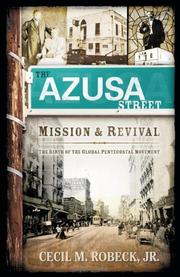
The archival history of the 1906 revival itself, by a scholar who spent decades on the sources. It replaces a great deal of legend with documents, including on the mission's racial composition and William Seymour's role.
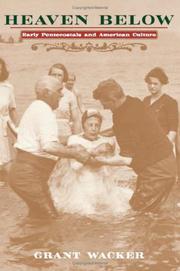
Subtitled 'Early Pentecostals and American Culture', and the best book on the list. Wacker's argument — that the movement combined ecstatic primitivism with hard-headed pragmatism, and that this is why it survived — organises everything after it.
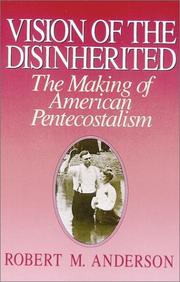
The older social-deprivation reading of early Pentecostalism, and the interpretation Wacker was arguing against. Read it after Wacker so you can see what he is refuting and judge how much of Anderson survives.
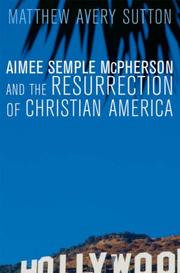
A scholarly biography of the movement's first mass-media figure. It shows Pentecostalism entering public life, politics and radio decades before the usual story says evangelicals did.
The global movement
IntermediateExplain why the majority of Pentecostals are in Latin America, Africa and Asia, and what the movement does socially where it grows fastest.
▸ Study plan for this stage
Pace: Two to three months for around 1,240 pages, and the stage where the subject changes shape. Cox's Fire from Heaven is 357 pages of theological reportage, David Martin's Tongues of Fire 352 pages of sociology, Brusco's The Reformation of Machismo a compact 203 pages of ethnography, and Allan Anderson'
- The demographic fact that drives the stage: the great majority of Pentecostals live in Latin America, Africa and Asia, so a movement described only through its American history is being described through a minority of its adherents.
- Cox's significance is disciplinary rather than empirical. A Harvard theologian who had earlier argued for secularisation turned to Pentecostalism as evidence that the argument had been wrong, and Fire from Heaven is the point at which mainstream religious studies began taking the movement seriously.
- Reading Cox as a turning point rather than as current fieldwork. His enthusiasm dates the book in places, and the later ethnographic literature is more careful; his value now is what he changed in the field, not what he reports.
- Martin's thesis on Latin America: Pentecostalism as a Protestant explosion in Catholic societies, offering a portable, lay-led, voluntary religion that fits urbanisation and migration in ways an inherited parish structure does not.
- What it displaced, and what it competed with — Catholic base communities, folk Catholicism, and secular political organisation. Martin's account of why Pentecostalism rather than one of these is the analytically interesting part.
- Brusco's answer to the puzzle of women's participation: Pentecostal conversion redirects male income and behaviour toward the household, curbing drinking, spending and absence, so a formally patriarchal church can materially improve women's position. It is an argument about domestic economy, not abo
- Why Brusco complicates Martin usefully. Her evidence is ethnographic and local where his is comparative and structural, and the two produce genuinely different pictures of the same conversion.
- Anderson's synthesis in To the Ends of the Earth: mission, indigenous initiative and the repeated finding that expansion happened through local agents rather than being exported from the United States. That claim is the intended conclusion of the stage.
- The problem of a scholarship written largely from outside the regions it describes, which is worth carrying forward into the final stage rather than resolving here.
- Why do most Pentecostals live outside the United States, and what does the standard American-origins narrative get wrong as a result?
- What did Cox's book change in the academic study of religion, and which of his specific claims would you now qualify?
- State Martin's explanation for Pentecostal growth in Latin America. What is the alternative explanation, and what evidence would separate them?
- Summarise Brusco's argument about why women join. How does it explain participation without appealing to belief?
- What is Anderson's evidence that expansion was indigenous rather than exported, and how does that bear on calling the movement American?
- Take one country covered in this stage and describe what Pentecostalism does there socially, using the evidence rather than a general claim about the movement.
- Build a regional table — Latin America, sub-Saharan Africa, East and Southeast Asia — recording for each the approximate scale, dominant church type, and the explanation the books offer for growth.
- Set Martin's structural explanation and Brusco's ethnographic one side by side on the same page. Where they conflict, decide what evidence would settle it.
- Take one chapter of Cox and rewrite its central claim at the confidence level the later scholarship supports. This is the most useful thing to do with a landmark book that has dated.
- Trace one indigenous Pentecostal movement through Anderson from origin to present, noting at each point whether the initiative was local or external.
- List the languages and regions represented among the authors on this stage and note who is absent. Carry that observation into the last stage.
Next up: Having seen where the movement actually lives, the last stage takes up the teaching that has travelled with it furthest — and then, finally, lets the movement speak in its own voice.
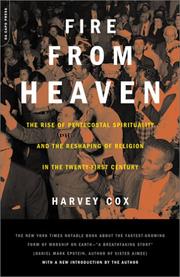
The book that made mainstream religious studies take Pentecostalism seriously, written by a Harvard theologian who had earlier predicted secularisation. Its enthusiasm dates it in places; read it as the turning point in the scholarship rather than as current fieldwork.
Martin is a sociologist of religion, and this is the standard account of the Protestant explosion in Latin America — why Pentecostalism took hold in Catholic countries and what it displaced. He also wrote a later global volume, catalogued ambiguously, so this is the one to read.
Ethnography in Colombia, and the most specific answer anyone has given to why Pentecostal churches attract women in societies where the churches themselves are patriarchal. Short, empirical, and it complicates Martin usefully.
Anderson's history of Pentecostal missions and indigenous expansion worldwide, and the synthesis this stage builds toward. Read it last here; it assumes both the American origins and the regional studies.
Prosperity, networks, and a voice from inside
IntermediateAssess the prosperity gospel and the newer apostolic networks on the evidence, and know how the movement describes itself when it is not being studied.
▸ Study plan for this stage
Pace: Four to six weeks for around 690 pages of very different kinds. Bowler's Blessed is 345 pages of academic history, Christerson and Flory's Rise of Network Christianity a compact 200 pages of sociology, and Sherrill's They Speak with Other Tongues 146 pages read in an evening. Read them in that order
- The prosperity gospel as Bowler defines it, with its four themes of faith, wealth, health and victory, and its intellectual sources in New Thought and in Pentecostal healing teaching rather than in classical Pentecostal doctrine alone.
- Bowler's method, which is why the book is definitive: she treats the movement neither as fraud nor as faith, describing what adherents believe and do without adjudicating whether it works. That stance is rarer than it sounds and worth studying as method.
- The internal critics. Prosperity teaching is contested within Pentecostalism itself, often sharply, and treating it as the movement's default position is a common outsider error.
- The independent charismatic networks in Christerson and Flory: governance by apostolic authority and personal relationship rather than by denominational structure, funded through conferences, media and direct giving, and organisationally lighter than a denomination.
- Why that structure grows quickly and is hard to study — no membership rolls, no central body, and leaders whose authority is personal — which makes claims about the size of these networks softer than they look.
- The political consequences of network Christianity, which is where the current scholarly attention sits: the New Apostolic Reformation and its relatives are the part of the movement now most visible in public life.
- What Sherrill's book is: a journalist set out to investigate glossolalia and became a participant, and the resulting account is confessional testimony rather than scholarship. It states its own conversion as its conclusion, and it should be read as making a claim about the author's experience rather
- Why it is nonetheless on the list. It was enormously influential in carrying the charismatic renewal into mainline Protestant churches, which makes it both a primary source for that spread and an artefact of it — historically important precisely because it is not detached.
- The reading skill this stage is for: identifying the genre of a religious book before assessing it. Bowler describes belief, Christerson and Flory measure organisation, Sherrill professes. Each is doing something legitimate and only one of them is offering evidence in the sense the earlier stages ha
- Define the prosperity gospel using Bowler's own framework. Where does it depart from classical Pentecostal teaching, and where is it continuous with it?
- How does Bowler avoid both debunking and endorsement, and what does she gain by it? Is anything lost?
- What distinguishes an apostolic network from a denomination organisationally, and why does that difference make the networks hard to count?
- What political consequences do Christerson and Flory identify, and how strong is the evidence linking network structure to those outcomes?
- Identify three specific features of Sherrill's book that mark it as testimony rather than scholarship. What claims does it make that no scholarly book on this path makes?
- Sherrill's book was influential in spreading the charismatic renewal into mainline churches. What kind of historical evidence is it for that spread, and what is it not evidence for?
- Looking back across the whole path, which single book most changed your understanding of the movement, and what did it change?
- Trace the prosperity gospel's genealogy from Bowler as a diagram, marking which strands come from New Thought and which from Pentecostal healing teaching.
- Find a statement of prosperity teaching in its own words and a Pentecostal critique of it, and set them side by side. The internal argument is more informative than any outside summary.
- Map one apostolic network from Christerson and Flory: who leads it, how authority flows, how it is funded, and how you would estimate its size given the absence of membership records.
- Read Sherrill and annotate in the margin every place where he moves from reporting to professing. Then write a paragraph on what a historian could legitimately cite the book for.
- Write a final page classifying all fourteen books on this path by genre — archival history, sociology, ethnography, theological reportage, biography, testimony — and say which questions each genre can and cannot answer.
Next up: This is the end of the path: you have the vocabulary, the documented American origins, the global movement where most Pentecostals actually live, the prosperity and network developments, and one confessional voice at the close — clearly labelled as testimony, and read as such.
Subtitled 'A History of the American Prosperity Gospel'. Bowler is a historian at Duke Divinity School and treats the movement neither as fraud nor as faith, which is rarer than it sounds. The definitive scholarly account of health-and-wealth teaching.

Catalogued as 'Rise of Network Christianity', with Richard Flory. Sociology of the independent charismatic networks — the New Apostolic Reformation and its relatives — which is where the growth now is and where the political consequences are showing up.
A confessional book, not a scholarly one, and included deliberately as such: Sherrill was a journalist who set out to investigate glossolalia and ended up a participant. It was enormously influential in spreading the charismatic renewal into mainline churches, so it is both a primary source and an artefact. Read it as testimony, and read it last.