Oscar Wilde: What to Read First, and in What Order
Most readers meet exactly one Wilde — usually a school text of The Importance of Being Earnest or The Picture of Dorian Gray — and stop, which leaves out the fairy tales, the criticism, the socialist essay and the prison letter. The order here starts with the two famous works because they really are the best doors, then widens through the tales and the society comedies, moves to the criticism where Wilde argues for the position the plays dramatise, and ends after the trials with De Profundis and The Ballad of Reading Gaol.
Start Here: The Play and the Novel
BeginnerRead the two works Wilde is famous for, in the order that makes the second one land harder, and learn to hear the epigram as an argument rather than a decoration.
▸ Study plan for this stage
Pace: 2 weeks — Earnest in two or three sittings, then Dorian Gray at ~30 pages/day
- The epigram as argument, not ornament: an inverted commonplace that makes a claim while sounding like a joke
- Bunburying — the invented invalid friend, the double name, the second life — as plot machinery and as autobiography
- Earnest's plot resolving on a handbag and a christening: farce so tightly built that its silliness is a formal achievement
- Lord Henry Wotton's epigrams sharing the exact shape of Algernon's while doing damage instead of delight
- The portrait as an externalised conscience, and the novel's refusal to let Dorian escape it
- The two versions of Dorian Gray — the shorter magazine text and the expanded book with its preface — and why the preface reads as a pre-emptive defence
- Wit used to make seriousness bearable in the play and to make cruelty plausible in the novel
- Reading Earnest first, what changes about Lord Henry when you recognise his lines as Algernon's technique turned lethal?
- Lady Bracknell delivers the play's harshest social judgements and gets its biggest laughs. How does Wilde make those two things the same act?
- Does The Picture of Dorian Gray endorse Lord Henry's aestheticism, punish it, or leave the question deliberately unresolved?
- The preface to Dorian Gray declares there is no such thing as a moral or immoral book. Does the novel that follows behave as though that is true?
- What is Basil Hallward for, and why does the novel need a third position between Dorian and Lord Henry?
- How much of Earnest's comedy depends on the audience knowing that leading a double life is not, for the author, hypothetical?
- Copy out ten epigrams from Earnest and ten from Dorian Gray, then write a paragraph identifying the shared grammatical structure and what changes when the speaker is Lord Henry.
- Summarise Earnest's plot in 150 words without using the word 'absurd', and note how hard the constraint makes it.
- Read Basil's studio scene in chapter two and Lord Henry's speech about youth, and write 200 words on which of the two men actually creates Dorian.
- Track every appearance of the portrait through the novel and note what has just happened in the plot each time; write two sentences on the pattern.
Next up: Having read the Wilde of pure surface twice over, you are set up to be surprised by the fairy tales, which have no irony in them at all.
Start with the play, not the novel. It is ninety minutes long, almost every line is quotable, and the surface frivolity is doing serious work — the whole plot turns on leading a double life under an assumed name, written by a man doing exactly that.
His only novel, read second because the wit you have just enjoyed in Earnest turns poisonous here. Lord Henry's epigrams are the same shape as Algernon's and they destroy a man. The 1890 magazine version and the expanded 1891 book differ; either works.
The Fairy Tales
BeginnerDiscover the Wilde almost nobody expects — sincere, sentimental and religious — and see the moral seriousness that the comedies keep hidden under the wit.
▸ Study plan for this stage
Pace: 1 week — roughly 140 short pages, one or two tales per sitting
- Sincerity without irony: The Happy Prince, The Nightingale and the Rose and The Selfish Giant are parables of self-sacrifice played entirely straight
- Christian imagery used unembarrassedly by the writer best known for the aesthetic position, and what that tension says about him
- The tales' habit of rewarding sacrifice with destruction, then insisting the sacrifice was still right
- Wilde's prose in a plainer register — short sentences, repetition, fable rhythm — after the epigram-dense pages before
- The Canterville Ghost's transatlantic joke: American practicality refusing to be impressed by English tradition, the same engine that drives parts of Earnest
- Stories written for children that are considerably sadder than the description suggests
- Does The Happy Prince ask you to admire the swallow's sacrifice or to be appalled by it, and does the ending settle the matter?
- The Nightingale and the Rose kills its most self-sacrificing character for nothing. Is the story sentimental, or is it an attack on sentimentality?
- Where in these tales do you hear the epigrammatist, and where has he genuinely stepped out of the way?
- How does The Canterville Ghost's comedy differ from Earnest's, given that both run on the same Anglo-American contrast?
- Can the moral seriousness of these tales be reconciled with the preface to Dorian Gray, or is one of the two positions insincere?
- Rewrite the closing paragraph of The Selfish Giant in the epigrammatic register of Earnest, then write 100 words on what the original gains by refusing that register.
- List every act of self-sacrifice across the collection with its outcome; write a short paragraph on what the pattern implies about Wilde's view of virtue.
- Compare the American Minister's family in The Canterville Ghost with Earnest's treatment of unimpressed practicality, in 150 words.
- Read one tale aloud and mark where the sentence rhythm changes; note what those shifts are doing at the level of feeling.
Next up: With the sincere Wilde in view, the society comedies read as a deliberate balancing act — melodramatic moral plots kept aloft by wit.

Written for his sons, and much sadder than that suggests. The Happy Prince, The Nightingale and the Rose and The Selfish Giant are parables of self-sacrifice with no irony in them at all. Read third: they are the corrective to reading Wilde as pure surface.
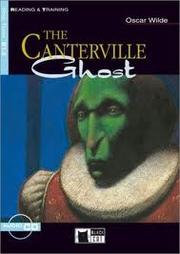
A comic ghost story in which an American family refuses to be frightened, and the ghost gives up. The lightest thing here, and a useful demonstration of how Wilde uses the transatlantic joke that also drives Earnest.
The Society Comedies, in Order
IntermediateRead the three plays that made Wilde the most successful dramatist in London, and watch him rehearse the secret-past plot again and again before perfecting it in Earnest.
▸ Study plan for this stage
Pace: 3 weeks, one play per week across roughly 360 pages
- The house pattern: a hidden past, an incriminating object, a public exposure narrowly avoided, a moral verdict withheld
- Lady Windermere's Fan as the template — the fan itself as the object that carries the plot
- The dandy figure (Lord Darlington, Lord Illingworth, Lord Goring) recurring across all three, gaining moral weight each time
- A Woman of No Importance putting the sexual double standard on stage more openly and letting the melodrama sit closer to the surface
- An Ideal Husband as the most technically accomplished of the three: a political career built on one act of corruption, and a marriage that must absorb the discovery
- Withheld judgement as Wilde's signature move — the audience is invited to condemn and then declined the satisfaction
- An Ideal Husband and Earnest running in London simultaneously when Wilde was arrested, which is the practical peak of the career
- What does Lady Windermere learn, and what does the play deliberately prevent her from learning?
- A Woman of No Importance is the angriest of the three. Does the anger strengthen it as drama or unbalance it?
- Lord Goring is usually called the most attractive character Wilde wrote. What does An Ideal Husband gain by making the dandy the moral centre rather than the cynic?
- Trace the secret-past plot through all three plays and Earnest: what does Earnest do with it that the serious comedies could not?
- Where does each play stop short of the judgement its plot seems to be building toward, and is that evasion or design?
- How do these plays treat forgiveness, and does any of them make it cost anything?
- Chart all three plays on one sheet: the secret, the object, the near-exposure, the resolution. Then add Earnest to the same chart and write 150 words on what the comparison reveals.
- Take Mrs Erlynne's decision in the final act of Lady Windermere's Fan and argue in 200 words for the reading the play refuses to confirm.
- Write out Lord Illingworth's and Lord Goring's best speeches side by side and annotate where the two dandies diverge in moral position.
- Time yourself reading An Ideal Husband's first act aloud, marking every laugh line; write a short note on how the comedy is distributed relative to the plot's stakes.
- Summarise the double standard as A Woman of No Importance states it, in 150 words drawn only from the play's dialogue.
Next up: You have now watched Wilde dramatise an aesthetic position four times; next he argues it directly, at length, and in his own voice.
The first hit, from 1892, and the template: a woman with a hidden past, a fan left in the wrong room, and a moral verdict withheld. Read in stage order to see the technique tighten.

The second, and the most openly angry about the double standard applied to men and women — the melodrama sits closer to the surface here than in the other three.
The best of the three serious comedies and the last before Earnest: a political career built on one act of corruption, and a marriage that has to survive the discovery. Running simultaneously with Earnest when Wilde was arrested.
The Critic and the Provocateur
IntermediateRead Wilde arguing his aesthetic case directly, and see that the paradoxes in the plays are compressed versions of positions he defends at length in prose.
▸ Study plan for this stage
Pace: 3-4 weeks, ~20 pages/day across roughly 390 pages — Intentions rewards a slow pace
- The Decay of Lying's central inversion: life imitates art rather than the reverse, argued rather than merely asserted
- The Critic as Artist claiming criticism as a creative act in its own right, not a service to the work it discusses
- Wilde's use of the dialogue form, which lets him hold a position and its objection simultaneously and makes the criticism far more entertaining than 'essays' suggests
- The Soul of Man Under Socialism arguing for socialism on individualist grounds — that abolishing drudgery is the precondition of becoming oneself
- Salome as the aesthetic position pushed to its limit: humourless, incantatory, built on repetition, and written in French
- The banning of Salome from the English stage, and how censorship shapes which Wilde the English-language reader meets
- Paradox as method: a technique for making an unfamiliar position audible, visible here without the cover of a plot
- Does The Decay of Lying actually establish that life imitates art, or does the dialogue form let Wilde avoid having to?
- The Soul of Man Under Socialism reaches a collectivist conclusion from individualist premises. Which step in that argument is doing the most work?
- How does Salome's repetitive, unfunny style relate to the aesthetic case made in Intentions — illustration, contradiction, or limit case?
- The essays and the plays make the same claims in different forms. Which form is more persuasive, and why?
- If criticism is itself an art, as The Critic as Artist argues, what follows for how you should read this path?
- Does anything here contradict the moral sincerity of the fairy tales, or were those never in tension with it?
- Reduce The Decay of Lying to a numbered five-step argument, then write 150 words on the weakest step.
- Take three epigrams from Earnest and find the passage in Intentions where each is argued out at length; note what the long form adds.
- Summarise The Soul of Man Under Socialism in 200 words without editorial comment, then list the two objections you would most want answered.
- Count the repeated phrases in one scene of Salome and write a paragraph on what the repetition is for, given that Wilde could obviously write differently.
- Write a one-page defence of criticism as a creative act using only positions Wilde establishes in The Critic as Artist.
Next up: Everything to this point was written by a man at the height of his success; the last stage is what the same writer produced from a prison cell.
The critical essays, including The Decay of Lying and The Critic as Artist — several written as dialogues, which is why they are far more entertaining than the word essays suggests. This is where art for art's sake is actually argued rather than merely asserted.
The essay people are always surprised exists: an argument for socialism made on the grounds that it would abolish the drudgery preventing individuals from becoming themselves. Read after Intentions, of which it is the political extension.

Written in French, banned from the English stage, and utterly unlike everything else here — humourless, incantatory, repetitive by design. Placed late because it makes no sense as an introduction and perfect sense as a limit case of the aesthetic position.
After the Trials
BeginnerFinish with the two works written in and after Reading Gaol, and reread the wit of the early stages in the light of what it cost.
▸ Study plan for this stage
Pace: 1-2 weeks — roughly 200 pages, but De Profundis is best taken slowly and in sections
- De Profundis as a letter to one person, never intended as a public essay, and the difference that makes to how it argues
- The letter's shifting registers — self-pity, fury, and sudden clear-sightedness about his own vanity — often within a page
- Wilde reinterpreting his own aesthetic in terms of sorrow and suffering, effectively revising the position he defended in Intentions
- The Ballad of Reading Gaol stripped of ornament: plain diction, hammering ballad metre, a single event held in view
- Publication under the cell number C.3.3. rather than his name, and what anonymity does to the poem's authority
- Reading the early wit backwards through the late work — what the epigrams cost, and whether that changes their value
- The danger of letting biography swallow the writing, and how to keep the works legible as works
- Where in De Profundis is Wilde most convincing about himself, and where is he most clearly still performing?
- The letter revises the aesthetic case of Intentions. Is that a genuine change of position, or the same position restated under new conditions?
- The Ballad abandons ornament entirely. Is the plainness a loss of the earlier gift, or the discovery of a different one?
- How should the trials affect your reading of Earnest — should they at all, given that the play was written before them?
- Does De Profundis ask Lord Alfred Douglas for anything, and does the letter know what it wants?
- Having read the whole sequence, which Wilde do you now take to be the central one?
- Mark every register shift in one twenty-page stretch of De Profundis and label each — accusation, self-accusation, aesthetic argument, appeal — then write 200 words on the pattern.
- Set the preface to Dorian Gray beside the passages in De Profundis on sorrow and art, and write 300 words on how far the later text repudiates the earlier one.
- Scan the opening stanzas of The Ballad of Reading Gaol and write a short note on how the metre controls the pace of the narrative.
- Reread the Bunbury passages in Earnest immediately after De Profundis and write a paragraph on what, if anything, has changed for you as a reader.
- Draft your own recommended reading order for a first-time reader of Wilde and justify each departure from the one you just followed.
Next up: This closes the path: you have met the comic, the sincere, the argumentative and the broken Wilde, and can say which of them the others were concealing.
The long letter to Lord Alfred Douglas written in prison — by turns self-pitying, furious, and startlingly clear-eyed about his own vanity. Devastating only if you have read the comedies first, which is why it belongs here and not earlier.

The last thing he published, written after release and signed only with his cell number, C.3.3. A plain, hammering ballad about a hanging, with none of the ornament of the earlier work — the right final note for this path.