Best Books to Learn Naval Architecture and Ship Design
Naval architecture is the engineering of things that float, and it is unusual among engineering disciplines in that its four core problems — hydrostatics and stability, resistance and propulsion, seakeeping, and structural strength — are genuinely coupled to each other and to a commercial requirement. That is why the field teaches from a small number of comprehensive course texts rather than from separate subject books. This path works through the standard entry text, then the two multi-volume courses, then the specialist literature on each core problem, then design practice, with a final stage for anyone coming to this from sailing rather than from shipping.
The Entry Text
BeginnerUnderstand displacement, buoyancy, trim, initial stability and the vocabulary of ship geometry, and see how a hull is actually put together.
▸ Study plan for this stage
Pace: 10–12 weeks for about 1,110 pages. Work Tupper's Introduction to Naval Architecture (446 pages) as the spine, roughly a chapter a week with the exercises done. Read Gillmer and Johnson's identically-titled Introduction to Naval Architecture (324 pages) alongside rather than after — it is stronger on
- Ship geometry and the vocabulary — lines plan, offsets table, waterlines, buttocks, sections, and the form coefficients derived from them
- Archimedes applied: displacement, buoyancy, the centre of buoyancy and how it moves as the hull heels
- Initial stability: metacentric height, the metacentre's construction, and why GM only describes small angles
- The GZ curve as the actual statement of stability, and the criteria a curve must satisfy
- Trim, longitudinal stability and the effect of adding or moving weight
- Free-surface effect, and why a partly full tank is a stability problem rather than a loading detail
- Hull structure: framing systems, plating, welded construction and classification-society survey
- Why hydrostatics, powering, seakeeping and strength are coupled to one another and to the commercial requirement — the fact that shapes the whole discipline
- From an offsets table, can you compute displacement, LCB, and the block and prismatic coefficients?
- Derive BM = I/V and state exactly which assumptions the derivation makes and where they fail.
- What is the free-surface effect, how is it calculated, and why does subdivision of a tank reduce it?
- Given a GZ curve, what do the range of stability, the maximum righting lever and the area under the curve each tell you?
- How does a longitudinal framing system differ from a transverse one, and for which ship types is each chosen?
- Which of the two books titled Introduction to Naval Architecture is on your desk, and which one do you reach for on a stability question?
- Take a published offsets table and compute the hydrostatic particulars by Simpson's rule by hand — displacement, LCB, LCF, waterplane area, BM. Do it once manually before you ever use software; everything downstream is this calculation repeated.
- Work a full inclining experiment calculation from the data as Gillmer and Johnson present it, and recover the lightship KG. This is the one measurement a real ship's stability book is built on.
- Construct a complete GZ curve for a simple hull at one loading condition and check it against the stability criteria the books quote. Then move a weight and recompute — that comparison is the working naval architect's daily arithmetic.
- Read Eyres's chapter on framing while looking at a midship section drawing, and label every member on the drawing from the text. Do this before the stability chapters rather than after.
- Compare Tupper's and Gillmer's treatments of the same topic — transverse stability is the obvious choice — and note which explains which part better. That comparison is the reason both are on the list.
Next up: With the geometry, the stability arithmetic and the structure in hand, you are ready for the two comprehensive courses that treat the discipline systematically.
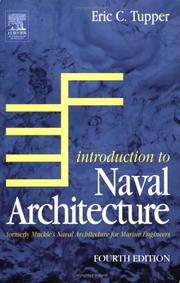
Tupper's book is the standard entry text in the British tradition and the one most first-year courses assign: hull geometry, flotation, stability, resistance and propulsion in a single readable volume. Start here. Note that a different and equally standard book shares this exact title — see the next entry.
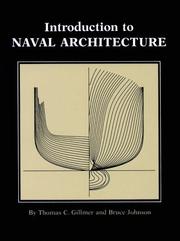
Gillmer and Bruce Johnson's identically-titled American text, used at the US Naval Academy. Worth having beside Tupper rather than instead of it: it is stronger on hydrostatics and stability and weaker on powering, and the two together cover the first year completely.
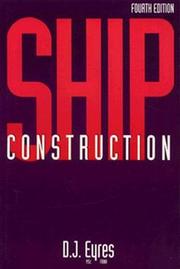
The physical counterpart: framing systems, plating, welding, classification-society survey. Read it alongside Gillmer rather than after — stability arguments are much easier to follow once you can picture the structure they refer to.
The Full Course
IntermediateCover the discipline systematically at the level a practising naval architect is expected to know it.
▸ Study plan for this stage
Pace: 4–5 months, and the two books here are used differently. Rawson and Tupper's Basic Ship Theory (641 pages in the volume listed) is the British course and is worked through — volume one covers geometry, stability and strength, volume two covers resistance, propulsion and seakeeping, so buy both or th
- Longitudinal strength: the still-water bending moment, wave bending moment, and the standard wave assumption used to compute them
- Section modulus and the midship section as a strength calculation rather than a drawing
- Damaged stability and subdivision — added-weight versus lost-buoyancy methods, and the regulatory floor
- Resistance decomposed: frictional, residuary and appendage components, and the Froude hypothesis that permits the split
- Model testing and extrapolation to full scale, including the correlation allowance
- Propeller theory at course level: momentum theory, blade element theory, open-water characteristics, and hull-propeller interaction coefficients
- Seakeeping fundamentals — motions in six degrees of freedom, response amplitude operators, and the wave spectrum
- Vibration and structural response as a design consideration rather than an afterthought
- Compute a still-water bending moment for a given loading and state where the standard wave assumption enters and what it approximates.
- What is the Froude hypothesis, and what error does it introduce in extrapolating model resistance to full scale?
- Define wake fraction, thrust deduction and relative rotative efficiency, and say how each enters the propulsive coefficient.
- How is damaged stability assessed, and what is the difference in practice between the added-weight and lost-buoyancy methods?
- What is a response amplitude operator, and how is it combined with a wave spectrum to predict a motion in a real seaway?
- For a given design question, would you go to Rawson and Tupper or to SNAME? What is each actually good for?
- Work the full longitudinal strength calculation for a worked example in Rawson and Tupper — load curve, shear force, bending moment, section modulus, stress — and check the resulting stress against the classification allowable.
- Take a model resistance test dataset from the book and extrapolate it to full scale yourself using the ITTC procedure. Getting from a towing-tank number to an installed power is the calculation the whole field is organised around.
- Do one damaged stability assessment on a subdivided hull by both the added-weight and the lost-buoyancy method and confirm they agree. Where they disagree you have made an error, and finding it is the exercise.
- Use SNAME as a reference for one specific question raised by Rawson and Tupper and note how differently the two books present the same material. Learning to use the reference is a skill in itself.
- Compute a propulsive coefficient from open-water propeller characteristics and hull interaction factors, then work backwards from a required speed to a required delivered power.
Next up: The course gives you a chapter on each core problem; the next stage takes the hydrodynamic ones to specialist depth.
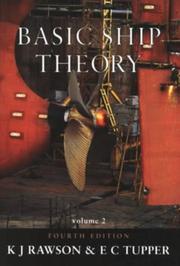
Rawson and Eric Tupper's two-volume work is the British course, and the most complete single treatment of the theory. Volume one covers geometry, stability and strength; volume two covers resistance, propulsion and seakeeping — buy both or the set.
The Society of Naval Architects and Marine Engineers' multi-volume reference and the American counterpart to Rawson and Tupper. Read it as the authority you check rather than a book you work through cover to cover; a revised series has since replaced parts of it.
Resistance, Propulsion and the Sea
BeginnerGo from a course chapter to specialist depth on hydrodynamics, propellers and the loads a hull actually experiences.
▸ Study plan for this stage
Pace: 5–6 months for about 1,820 pages, and this is where the mathematics gets serious. Molland, Turnock and Hudson's Ship Resistance and Propulsion (568 pages) is first and takes about two months — it is the current standard on powering, including the model-testing and extrapolation methods the field run
- Resistance components in detail — form factor approaches, wave-making resistance, roughness and fouling allowances
- Empirical powering methods (Holtrop-Mennen and its relatives) and the range of hull forms they are valid over
- Which CFD results a naval architect should and should not trust, which is Bertram's most useful contribution and unusually honest
- Propeller geometry properly: pitch distribution, skew, rake, blade area ratio, and how each trades against the others
- Cavitation — inception, types, erosion and the cavitation bucket — and the design constraints it imposes
- Propeller-induced vibration and pressure pulses on the hull above the propeller
- Linear wave theory and the strip-theory approach to ship motions
- Wave loads, slamming and green water, and the connection between the ship problem and offshore structures
- Estimate resistance for a given hull using an empirical method, then say what the method assumes and where your hull sits relative to its validation set.
- How does the form factor approach differ from Froude's original split, and what problem was it introduced to fix?
- What determines cavitation inception on a blade section, and how does a designer trade blade area against efficiency to avoid it?
- Which flow features does a RANS solver handle well and which badly, in Bertram's assessment?
- Derive or state a response amplitude operator from strip theory and explain what the theory assumes about the hull.
- How do the wave loads on a ship differ from those on a fixed offshore structure, and why does Faltinsen treat them together?
- Reproduce one of Molland, Turnock and Hudson's worked powering estimates end to end using the book's own numbers, and check every intermediate value against theirs. A powering estimate is a long chain and the only way to trust yours is to have matched a published one.
- Take the same hull and estimate its resistance by two different empirical methods, then compare. The spread between methods is the honest uncertainty of the exercise and no single method will tell you it.
- Work a propeller design point through Carlton — required thrust, chosen diameter and pitch, resulting efficiency, cavitation check — and state which constraint bound the design.
- Follow one of Bertram's CFD examples and write down, for each modelling choice, what physical effect it discards. His book is worth reading precisely for the list of things a computation is not doing.
- Work one strip-theory motion calculation from Faltinsen for a simple hull in regular waves, then combine the resulting RAO with a standard wave spectrum to get a significant motion amplitude.
Next up: You can now analyse a hull that already exists; the next stage is the synthesis problem of producing one from a requirement.

Molland, Stephen Turnock and Dominic Hudson wrote the current standard on powering, including the model-testing and extrapolation methods the whole field runs on. This is the first specialist book to read.
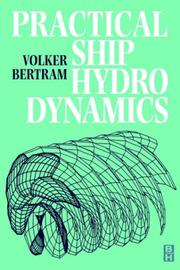
Bertram's book is the bridge to computational methods, and unusually honest about which CFD results a naval architect should and should not trust. Read it after Molland, whose empirical methods it puts in context.

The definitive single-subject monograph — blade geometry, cavitation, vibration, propeller-hull interaction. The right depth once you know why the propeller is the problem it is.

Faltinsen's book is the seakeeping and wave-loads text, and the one that connects the ship problem to offshore engineering. Demanding, and the natural endpoint of this stage.
Design Practice
BeginnerMove from analysis to synthesis — sizing a ship against a requirement and iterating the design spiral.
▸ Study plan for this stage
Pace: 3–4 months. Watson's Practical Ship Design comes first — the classic on the design process itself, written out of a working shipyard career, and the right book before the more academic treatments. Papanikolaou's Ship Design (644 pages) is the modern methodological treatment and takes two months. Sch
- The design spiral: why ship design iterates rather than proceeds, and what closes each loop
- Parametric estimation from a requirement — main dimensions, form coefficients, lightship weight and powering, all before any drawing exists
- The weight and volume balance, and which of the two governs for which ship type
- Freeboard, capacity and regulatory constraints entering the design as hard boundaries rather than as checks at the end
- Optimisation and risk-based design as formal methods, which is what Papanikolaou supplies where Watson relies on experience and rules of thumb
- Design for fuel and operating cost: hull form, propulsion choice, and the economics that decide between them
- Required freight rate and net present value as the actual objective functions a commercial design is optimised against
- The difference between a design that is technically feasible and one that is commercially viable
- Given a cargo capacity and a service speed, produce a first estimate of principal dimensions and displacement, and say which of your assumptions is weakest.
- What closes the design spiral — what condition tells you the iteration has converged?
- For which ship types does volume rather than weight govern the sizing, and what changes in the method when it does?
- How does Papanikolaou formalise a trade-off that Watson handles by judgement? Take one specific example.
- How would you decide between two hull forms on lifetime fuel cost, and what does that calculation need that a resistance estimate does not?
- Do a complete first-pass sizing for a stated requirement following Watson's parametric method, on paper, in a single sitting. The point of the exercise is speed and the acceptance of rough numbers — that is what a first sizing is.
- Take your sizing around the design spiral twice and record what changed on the second loop and why. If nothing changed you did not close the loop properly.
- Apply one of Papanikolaou's optimisation formulations to the same requirement and compare the result with your hand estimate. Where they differ, decide which you believe and write down the reason.
- Use Schneekluth and Bertram to evaluate two propulsion arrangements for your design on lifetime cost rather than on efficiency, and state the fuel-price assumption the answer depends on.
- Write the one-page design justification you would hand an owner, covering the requirement, the main particulars, the powering and the trade-offs accepted. Synthesis is not finished until it can be defended.
Next up: The commercial ship problem is now complete; the final stage applies the same physics to small craft, where the aerodynamic side of the problem dominates.

Watson's book is the classic on the design process itself: parametric estimation, the design spiral, and the trade-offs a first sizing has to make. Read it before the more academic design texts — it comes from a working shipyard career.

The modern methodological treatment, covering optimisation and risk-based design. It supplies the formal framework that Watson handles by experience and rules of thumb.

Schneekluth and Volker Bertram on the specific question of designing for fuel and operating cost, which is now the dominant commercial constraint. Short, and the most directly useful of the three if you only read one.
The Small-Craft Route
IntermediateApply the same physics to yachts and sailing craft, where the aerodynamic side of the problem dominates.
▸ Study plan for this stage
Pace: 4–6 weeks for 341 pages: Larsson, Eliasson and Orych's Principles of Yacht Design. This is the most accessible book in the path if you are coming from sailing rather than from engineering, and it works a complete example yacht from requirement to scantlings — so read it with a calculator rather than
- The sailing yacht as a two-fluid problem: the hull in water and the rig in air, solved simultaneously
- The sail plan as an aerofoil system, and the lift and drag balance that determines pointing ability
- Hydrodynamic side force and the keel's job — the balance of side force and heeling moment that defines a sailing hull
- Righting moment from ballast rather than from form, and how that inverts the stability problem from stage one
- The velocity prediction program as the small-craft equivalent of a powering estimate
- Scantlings and composite construction, which is a different structural world from welded steel
- The complete design example as the book's real content — requirement, lines, appendages, rig, structure, in sequence
- How do side force and heeling moment balance in a sailing yacht, and what does that determine about keel area and ballast?
- What does a velocity prediction program compute, and what inputs does it require?
- How does righting moment from ballast differ, as a design problem, from the form stability of the commercial hulls in stage one?
- What determines a yacht's optimal pointing angle, and which side of the problem — hydrodynamic or aerodynamic — dominates it?
- How are composite scantlings determined, and how does that process differ from classification-society steel rules?
- Work Larsson, Eliasson and Orych's complete example yacht through from requirement to scantlings, doing each calculation rather than reading it. The book is built around this example and skipping it wastes the book.
- Take the hydrostatics method you learned on a commercial hull in stage one and apply it to the yacht's canoe body at several heel angles. The arithmetic is identical and the interpretation is not, which is the most useful thing this stage shows.
- Compute the righting moment curve for the example yacht and compare its shape against a GZ curve for a cargo ship. Two very different answers to the same question.
- Vary one parameter in the example — keel area, ballast ratio, or sail area — and run the consequences through the design as far as the book's method allows, noting everything that had to move with it.
Next up: This closes the path; for the aerodynamics underneath the rig, C. A. Marchaj's Aero-Hydrodynamics of Sailing is the standard follow-on beyond this reading list.
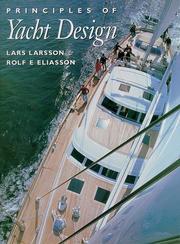
Larsson, Rolf Eliasson and Michal Orych's book is the standard for small-craft design and works a complete example yacht from requirement to scantlings. The most accessible book in this path if you are coming from sailing rather than from engineering, and the natural place to end; for the aerodynamics underneath it, follow with C. A. Marchaj's Aero-Hydrodynamics of Sailing, which remains unmatched on sails as aerofoils.
Discussion
Keep reading
Paths that share books, cover the same subject, or open a related topic.