Make natural soaps & lotions
This curriculum takes a complete beginner from zero knowledge of soap and lotion chemistry all the way to confidently formulating cold-process soaps and simple skincare products at home. Each stage builds on the last — starting with safety and intuition, moving through technique and chemistry, and finishing with advanced formulation and natural cosmetics — so no book assumes knowledge the reader hasn't yet gained.
Foundations: Safety, Vocabulary & First Batches
BeginnerUnderstand lye safety, basic soap chemistry, and successfully complete your first cold-process soap recipes with confidence.
▸ Study plan for this stage
Pace: 6–8 weeks total: Weeks 1–3 cover "The Natural Soap Book" by Susan Miller Cavitch (~20–25 pages/day, reading all chapters on ingredients, lye chemistry, and base recipes); Weeks 4–6 cover "Smart Soapmaking" by Anne L. Watson (~15–20 pages/day, focusing on her streamlined cold-process method and troub
- Lye (sodium hydroxide) safety: proper PPE, safe mixing order (lye into water, never water into lye), ventilation, and first-aid protocols as detailed in Cavitch's safety chapters
- Saponification: the chemical reaction between lye and oils/fats that produces soap and glycerin, explained through Cavitch's foundational chemistry sections
- The role of individual oils and fats: how each contributes hardness, lather, conditioning, or cleansing properties, drawn from Cavitch's ingredient profiles
- Superfat / lye discount: why a small excess of unsaponified oil is left in finished soap for skin feel and safety, as introduced by both Cavitch and Watson
- The cold-process method step-by-step: measuring, melting, mixing lye solution, reaching trace, pouring, and curing — Watson's streamlined approach in Smart Soapmaking is the primary reference here
- Trace: recognizing light, medium, and full trace and understanding why it matters for successful pours, as Watson explains with practical clarity
- Curing: why freshly made soap must rest 4–6 weeks, what is happening chemically during that time, and how to store bars safely
- Reading and using a lye calculator: understanding SAP values and why every recipe must be run through a calculator before any batch is made, reinforced by both authors
- What are the critical safety rules for handling lye, and what should you do if lye solution contacts your skin or eyes — as outlined in The Natural Soap Book?
- In your own words, explain saponification: what goes in, what comes out, and why the ratio of lye to oil must be precise?
- How does each major oil category (hard oils like coconut/palm vs. soft oils like olive/sunflower) affect the final bar's hardness, lather, and skin feel, according to Cavitch's ingredient chapters?
- What is a superfat percentage, why do both Cavitch and Watson recommend it, and how does it affect the lye calculation?
- Describe the cold-process workflow from start to finish using Watson's method in Smart Soapmaking — what does 'trace' look like and how do you know you've reached it?
- Why must cold-process soap cure for several weeks before use, and what physical and chemical changes occur during that period?
- Safety drill before your first batch: assemble all required PPE (goggles, gloves, long sleeves), designate a soap-only workspace, and practice the lye-mixing procedure with plain water only — no oils yet — to build muscle memory for the correct order and ventilation setup.
- Ingredient journal: after reading Cavitch's oil profiles in The Natural Soap Book, create a one-page reference chart listing at least 8 oils with their key properties (hardness contribution, lather quality, conditioning level, approximate SAP value) that you can tape above your workspace.
- Lye calculator practice: before making any physical batch, enter three different hypothetical oil combinations into a free lye calculator (e.g., SoapCalc or Brambleberry's calculator) and verify your numbers match the SAP values Cavitch provides — adjust superfat to 5% as Watson recommends for beginners.
- First batch — Cavitch's simple recipe: make the most basic olive-oil-heavy recipe from The Natural Soap Book, following every safety and process step exactly as written. Log the date, temperatures, time to trace, and any observations in a dedicated soap notebook.
- Second batch — Watson's beginner recipe: make one of the introductory recipes from Smart Soapmaking, this time deliberately comparing Watson's streamlined instructions to Cavitch's more detailed approach. Note any differences in technique or language in your soap notebook.
- Cure tracking log: label both batches with date, recipe name, and expected ready date (4–6 weeks out). Check them weekly, recording any changes in color, texture, or scent, and cross-reference Watson's troubleshooting section if anything unexpected appears.
Next up: Mastering lye safety, saponification fundamentals, and two successful cold-process batches gives you the confident, hazard-aware foundation needed to move into the next stage, where you will expand your formulating skills — exploring a wider palette of oils, natural colorants, botanicals, and eventually lotion-making — without having to revisit basic safety or process questions from scratch.
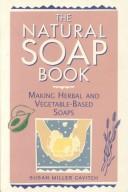
The classic beginner text — introduces lye safety, the saponification process, and simple cold-process recipes in plain language. Reading this first gives you the essential vocabulary and safety mindset everything else builds on.
A concise, myth-busting guide that reinforces safe technique and explains why recipes work, not just how to follow them. Reading it second solidifies your intuition before you start experimenting.
Going Deeper: Oils, Fats & the Science of Lather
BeginnerUnderstand how individual oils and butters affect the finished bar, learn to read and adjust a recipe, and use a lye calculator with confidence.
▸ Study plan for this stage
Pace: 6–8 weeks total: Weeks 1–3 cover "Soap Crafting" (~20–25 pages/day, including re-reading recipe pages and oil charts); Weeks 4–7 cover "Pure Soapmaking" (~15–20 pages/day, pausing frequently to cross-reference the lye calculator and oil property tables); Week 8 is a consolidation week — no new readi
- The fatty-acid profile of an oil or butter (lauric, myristic, oleic, linoleic, ricinoleic, etc.) directly determines the bar's hardness, lather quality, conditioning feel, and shelf stability — as taught through Faiola's oil charts in both books.
- SAP (saponification) values differ for every oil and fat, which is why a lye calculator must be used for every recipe rather than relying on a single fixed lye amount.
- Superfat (lye discount) percentage controls how much free, unsaponified oil remains in the finished bar, balancing skin feel against cleansing power and rancidity risk.
- Hard oils and butters (coconut, palm, lard, cocoa butter, shea butter) provide bar hardness and fluffy lather; soft/liquid oils (olive, sunflower, sweet almond, castor) provide conditioning and skin-loving properties — a concept Faiola illustrates recipe-by-recipe in 'Soap Crafting'.
- Castor oil's unique ricinoleic acid content boosts and stabilizes lather from other oils, and is typically used at 5–10% of a formula.
- Reading and adjusting a recipe means understanding the role of each ingredient as a percentage of total oil weight, not just as a fixed gram amount — the foundation of 'Pure Soapmaking's' formulation approach.
- Trace (emulsification stage) behavior is influenced by oil selection: high-oleic oils slow trace, high-lauric/myristic oils accelerate it, affecting how much time you have to add colorants, fragrance, or swirl designs.
- Water amount and water-to-lye ratio affect unmolding time, final bar hardness, and soda ash formation — both books address this in their troubleshooting and formulation sections.
- Given a list of oils in a recipe (e.g., 40% coconut, 30% olive, 20% lard, 5% shea, 5% castor), what property does each oil contribute, and what would you predict about the finished bar's hardness, lather, and conditioning level?
- Why can you not simply scale a recipe by multiplying all ingredients by the same factor without recalculating lye, and how does a lye calculator solve this problem?
- What happens to a bar's cleansing and conditioning balance if you raise the superfat from 5% to 10%, and in what use-case would each choice be appropriate?
- How does the fatty-acid composition of coconut oil explain why bars made with high coconut-oil percentages can feel stripping, and what adjustment (as shown in 'Pure Soapmaking') corrects this?
- What visual and physical cues at trace tell you that your oil blend is behaving as expected, and which oils in your formula are most responsible for a fast or slow trace?
- How would you use the recipes in 'Soap Crafting' as templates to create a new recipe targeting a hard, long-lasting bar with creamy lather for dry skin — which oils would you increase or decrease, and why?
- Oil property matrix: Create a personal reference table (spreadsheet or notebook) listing every oil and butter featured in both Faiola books. Columns: oil name, key fatty acids, hardness contribution (1–5), lather type (fluffy/creamy/none), conditioning level, recommended usage %, and shelf life. Fill it in as you read each chapter.
- Lye calculator drill: Take three finished recipes directly from 'Soap Crafting' and manually enter them into a free lye calculator (e.g., SoapCalc or Brambleberry's calculator). Verify that the calculator's output matches the book's lye and water amounts. Then change one oil percentage and observe how the lye amount and bar quality numbers shift.
- Superfat experiment: Make the same base recipe from 'Soap Crafting' twice — once at 5% superfat and once at 8% superfat — keeping every other variable identical. After a 4-week cure, compare hardness, lather, and skin feel side by side and write up your observations.
- Recipe remix: Using 'Pure Soapmaking' as your formulation guide, design an original recipe from scratch targeting a specific skin type (e.g., oily, sensitive, or dry). Justify every oil choice in writing by citing the fatty-acid properties you learned, run it through a lye calculator, and then make the batch.
- Trace timing log: During your next two or three batches (using recipes from either book), time how long it takes to reach light, medium, and full trace. Note the oil blend used each time. After three batches, look for a pattern between high-oleic vs. high-lauric formulas and trace speed.
- Troubleshooting journal: After each batch, photograph the finished bars and record any issues (soda ash, rancid spots, soft bars, brittle bars, poor lather). Use the troubleshooting sections in both Faiola books to diagnose the cause, then write one sentence describing the oil or process change you would make next time.
Next up: Mastering how individual oils behave and how to balance a formula with a lye calculator gives you the formulation fluency needed to move confidently into more advanced techniques — such as hot-process soap, liquid soap, and lotion/cream making — where precise oil selection and saponification chemistry become even more critical to final product stability and performance.

Faiola (founder of Brambleberry) explains the role of each oil and fat in depth, with clear charts and a wide range of cold-process projects. This is the ideal bridge between following recipes and understanding formulation.

Picks up where Soap Crafting leaves off, focusing on natural colorants, botanicals, and fragrance — giving you the toolkit to make truly natural, customized bars rather than just replicating someone else's formula.
Chemistry Unlocked: Formulating from Scratch
IntermediateUnderstand the underlying chemistry of saponification and emulsification well enough to design your own soap and lotion recipes from a blank page.
▸ Study plan for this stage
Pace: 10–12 weeks total. Weeks 1–4: Read "The Soapmaker's Companion" at ~25–30 pages/day, pausing after each chapter to take notes on formulation rationale. Weeks 5–10: Read "Scientific Soapmaking" at ~20–25 pages/day — this is denser, chemistry-heavy material; budget extra time for chapters covering fatt
- Saponification chemistry: the triglyceride + lye reaction that produces soap and glycerin, including the role of NaOH (bar soap) vs. KOH (liquid soap) and how water percentage affects the cure
- Saponification values (SAP values): how each oil's unique fatty acid profile determines exactly how much alkali is needed, and how to use SAP values to calculate lye amounts from scratch (core focus of Dunn's 'Scientific Soapmaking')
- Superfat / lye discount: the deliberate excess of unsaponified oils left in finished soap, why it matters for skin feel and longevity, and how to calculate it intentionally rather than by accident
- Fatty acid properties and their effects: how lauric, myristic, palmitic, stearic, oleic, linoleic, and ricinoleic acids each contribute hardness, lather quality, conditioning, or cleansing — as mapped out in Cavitch's oil profiles
- Recipe design from a blank page: using a target fatty acid profile and SAP values (Dunn's method) rather than copying existing recipes, including how to balance cleansing vs. conditioning bars
- Emulsification fundamentals for lotions: the role of emulsifying wax, HLB values, water-in-oil vs. oil-in-water systems, and why phase temperatures and mixing order matter
- Water activity and preservation: how water content in both soap brine and lotion creates microbial risk, and the chemistry behind common preservatives and antioxidants (e.g., ROE, Vitamin E, broad-spectrum preservatives)
- Troubleshooting through chemistry: diagnosing rancidity (DOS), false trace, glycerin rivers, and emulsion separation by tracing them back to their chemical root causes using principles from both books
- Given a blend of three oils with known SAP values and weights, can you calculate the exact grams of NaOH needed — and then adjust for a 5% superfat — without using an online lye calculator?
- Why does a soap high in lauric and myristic acids (e.g., coconut-heavy) cleanse aggressively, and how would you reformulate it using Cavitch's oil property charts to make it gentler while preserving lather?
- Dunn's 'Scientific Soapmaking' treats soap chemistry quantitatively. What is the difference between a soap's 'iodine value' and its 'INS value,' and how do you use each as a formulation target?
- What chemical event causes 'dreaded orange spots' (DOS) in finished soap, and which formulation or process choices — drawn from either book — reduce the risk?
- How does the HLB system guide the selection of emulsifiers for a lotion, and what happens at a molecular level when an emulsion breaks?
- If you wanted to design a shampoo bar from scratch, which fatty acids would you prioritize and why, and how would your lye calculation differ from a standard skin-care bar?
- Manual lye calculation drill (no calculator): Choose 3–5 oils, look up their SAP values in Dunn's appendices, and calculate NaOH and water amounts by hand for a 500 g batch at 0%, 5%, and 8% superfat. Verify with a lye calculator only after completing your own math.
- Fatty acid profile mapping: Using Cavitch's oil property tables, build a spreadsheet that shows the lauric/myristic/palmitic/stearic/oleic/linoleic breakdown for at least 10 common oils. Then design two contrasting recipes — one 'hard & cleansing' and one 'soft & conditioning' — and predict their INS values before making them.
- Side-by-side soap batch experiment: Make two identical-weight batches that differ in only one variable (e.g., 20% coconut vs. 40% coconut). Cure both for 4–6 weeks, then evaluate hardness, lather, and skin feel to confirm Cavitch's and Dunn's predictions about fatty acid behavior.
- Emulsion stability lab: Make three small lotion batches using the same oil phase but different emulsifier percentages (e.g., 3%, 5%, 7% emulsifying wax). Observe stability over 2 weeks and record any separation, connecting results to the HLB and phase-ratio principles covered in the books.
- Troubleshooting journal: Intentionally induce one common defect (e.g., partial gel phase, glycerin rivers by soaping hot) and document what you observe. Write a one-page chemical explanation of why it happened, citing specific passages from Dunn's mechanistic chapters.
- Blank-page formulation challenge: Without referencing any existing recipe, design a complete cold-process soap formula targeting an INS of 160–170, a 5% superfat, and a specific skin-type goal (e.g., oily skin). Document every decision with a chemical rationale, then make the batch and evaluate it against your predictions.
Next up: Mastering saponification math and fatty acid logic here gives the reader the quantitative fluency needed to move into advanced topics — such as specialty additives, natural colorants, and scaling production — where every new ingredient must be evaluated through the same chemical lens established in this stage.
Cavitch's deeper follow-up to her beginner book — covers fatty acid profiles, superfat calculations, and troubleshooting in rigorous detail. This is the reference that turns a hobbyist into a formulator.

The most chemistry-rich book in the canon, written by a chemistry professor. It explains saponification at the molecular level, validates folk wisdom with data, and teaches you to evaluate any recipe scientifically. Read after Cavitch's companion so the math feels grounded.
Expanding into Skincare: Lotions, Balms & Emulsions
IntermediateFormulate safe, stable, naturally preserved lotions, creams, and balms — understanding emulsion chemistry, water activity, and preservation.
▸ Study plan for this stage
Pace: 2–3 weeks; read roughly 20–25 pages per sitting, 4–5 sittings per week — giving extra time to re-read formulation chapters and take notes on each recipe's ingredient rationale before moving on.
- Emulsion chemistry fundamentals: how oil and water phases are combined and stabilized using emulsifying waxes (e.g., BTMS-50, emulsifying wax NF) as covered in Berry's lotion and cream chapters
- The critical role of the water phase in microbial risk — understanding water activity (Aw) and why anhydrous balms (no water) are inherently more shelf-stable than lotions
- Selecting and combining carrier oils, butters, and waxes for desired skin feel, hardness, and therapeutic properties, drawing on Berry's ingredient profiles
- Natural preservation strategies discussed by Berry: broad-spectrum preservatives (e.g., Leucidal, Optiphen Plus), antioxidants (Vitamin E, rosemary extract) and their distinct roles — antioxidants prevent rancidity, preservatives prevent microbial growth
- Heat-and-hold technique: why both oil and water phases must be brought to the same temperature (~160–170 °F) before combining, and how cooling speed affects emulsion texture
- Formulating for stability: the importance of correct emulsifier usage rates, stick/pour temperatures, and how to troubleshoot separation or graininess
- Balm vs. lotion vs. cream distinctions: anhydrous vs. water-in-oil vs. oil-in-water systems, and how each affects product feel, application, and preservation needs
- Safe cosmetic practices: cleanliness, equipment sterilization, patch testing, and basic pH awareness for skin-compatible formulations
- According to Berry's formulation guidance, what is the functional difference between an antioxidant like Vitamin E and a broad-spectrum preservative, and when is each required?
- Why does the presence of water in a lotion or cream make preservation non-negotiable, while a lip balm or body butter made from the same oils does not require a preservative?
- What is the heat-and-hold method described in Simple & Natural Soapmaking, and what problems can arise if the oil and water phases are combined at mismatched temperatures?
- How does the choice of emulsifying wax (type and usage percentage) affect the final texture, stability, and skin feel of a lotion versus a cream?
- Using Berry's carrier oil and butter profiles, how would you adjust a basic lotion formula to make it more suitable for dry/mature skin versus oily/acne-prone skin?
- What steps should be taken — as outlined in Berry's safety and process sections — to sterilize equipment and minimize contamination risk before making a water-containing emulsion?
- **Anhydrous balm first:** Before tackling emulsions, formulate a simple 3–4 ingredient lip or body balm (beeswax or candelilla wax + 2 carrier oils/butters) from Berry's recipes. Record exact weights, observe pour temperature, and note texture at room temperature after 24 hours — this builds baseline skill with no microbial risk.
- **Side-by-side emulsion experiment:** Make the same basic lotion recipe twice — once combining phases at matched temperatures (~165 °F) and once adding the water phase cold to the warm oil phase. Photograph and compare stability, texture, and any separation after 48 hours to viscerally understand the heat-and-hold principle.
- **Ingredient swap journal:** Choose one of Berry's lotion recipes and make three small batches (50–100 g each), substituting one oil or butter in each (e.g., coconut oil → mango butter → hemp seed oil). Record skin feel, absorption rate, and any greasiness — building intuition for oil selection.
- **Preservation audit:** Review every water-containing recipe in Simple & Natural Soapmaking and create a table listing: preservative used, usage rate, and whether an antioxidant is also included. Note any recipes that appear under-preserved and research why Berry may have made that choice.
- **Stability stress test:** Store one batch of a finished lotion in three conditions — room temperature, refrigerator, and a warm spot (~85 °F, e.g., near a window) — and check for separation, color change, or off-smell weekly for 3 weeks. Document results in a formulation notebook.
- **Formulation notebook setup:** Create a dedicated log for every batch made in this stage: date, full INCI ingredient list with weights and percentages, process notes, sensory evaluation (texture, scent, absorption), and any issues. This habit is foundational for all future intermediate-to-advanced formulating.
Next up: Mastering Berry's emulsion and balm fundamentals — especially emulsifier selection, preservation logic, and phase chemistry — gives the reader the practical and conceptual scaffolding needed to tackle more advanced formulation topics such as active ingredients, complex emulsion systems (e.g., cold-process emulsification, gel-cream hybrids), and cosmetic regulatory basics in the next stage.

Bridges soap and skincare by incorporating herbal infusions, botanical extracts, and garden ingredients into both soap and simple lotion recipes — building the natural formulation mindset needed for the final stage.
Mastery: Natural Cosmetic Formulation
ExpertApply professional-level formulation principles to create a full range of safe, stable, naturally inspired skincare products and understand how to evaluate and iterate on your own formulas.
▸ Study plan for this stage
Pace: 3–4 weeks, ~20–25 pages/day; dedicate extra time on weekends to hands-on lab sessions alongside reading
- Professional-grade natural formulation: balancing aesthetics, efficacy, and safety in a finished product
- Ingredient functionality: understanding the role of each botanical, oil, butter, wax, and active in a formula (emollients, humectants, occlusives, actives, preservatives)
- Formulation architecture: how to structure recipes by phase (water phase, oil phase, cool-down phase) and why phase order and temperature matter
- Skin-type targeting: adapting base formulas to address specific concerns (dry, oily, sensitive, mature, acne-prone) by swapping or adjusting key ingredients
- Stability and shelf-life: recognizing signs of oxidation, rancidity, and microbial contamination; selecting and testing natural preservation strategies (antioxidants, broad-spectrum preservatives, pH management)
- Sensory evaluation and iteration: using organoleptic testing (texture, spreadability, scent, absorption) as a systematic tool for formula refinement
- Scaling and batch calculation: converting small test batches to larger production quantities using percentage-based formulation
- Regulatory and safety awareness: labeling conventions, INCI naming, patch-testing protocols, and responsible claims for natural/organic products
- For any recipe in 'Organic Body Care Recipes,' can you identify every ingredient by its functional role (e.g., emollient, humectant, preservative, active) and explain why it was chosen over a common alternative?
- How would you modify a base lotion formula from the book to make it suitable for oily, acne-prone skin versus very dry, mature skin — and which specific ingredients would you swap, add, or reduce?
- What preservation strategy does Tourles rely on most heavily, and what are its limitations? How would you supplement or replace it to extend shelf life in a water-containing product?
- Walk through the step-by-step process — temperatures, mixing order, equipment — for creating a stable oil-in-water emulsion based on the methods described in the book.
- After making a batch, what sensory and physical benchmarks would you use to decide whether the formula is a success or needs iteration, and what specific adjustments would address each failure mode?
- How do you convert a recipe written in volume measurements (cups, tablespoons) to a percentage-based formula, and why is that conversion essential before scaling up production?
- Ingredient audit: Choose five recipes from 'Organic Body Care Recipes' and build a spreadsheet listing every ingredient, its INCI name, its functional category, its approximate usage rate, and one natural substitute — this trains professional-level ingredient literacy.
- Formula deconstruction & rebuild: Select one lotion or cream recipe from the book, rewrite it in weight percentages, then reformulate it twice — once for dry/mature skin and once for oily/combination skin — adjusting oils, butters, and actives accordingly, and make all three versions to compare.
- Stability stress test: Make a small batch of a water-based recipe (lotion, toner, or gel) from the book, then split it into three jars stored at different conditions (refrigerator, room temperature, near a heat source). Evaluate appearance, scent, and texture weekly for four weeks to observe real-world stability differences.
- Sensory scoring sheet: Develop a personal organoleptic evaluation rubric (rating spreadability, absorption speed, skin feel, scent intensity, color) and apply it to every product you make during this stage — practice the habit of systematic, written formula critique.
- Preservation challenge: Take a water-containing recipe from the book that relies solely on antioxidants (e.g., vitamin E, rosemary extract), research a natural broad-spectrum preservative (e.g., Leucidal, Naticide), incorporate it at the recommended usage rate, and document how it changes the formula's pH, texture, and scent.
- Full product line project: Using 'Organic Body Care Recipes' as your formulation reference, design and produce a cohesive three-product mini skincare line (e.g., cleanser, toner, moisturizer) targeting a single skin type — write a one-page 'formulation rationale' for each product explaining every ingredient choice, then conduct a two-week self-use trial with written daily notes.
Next up: Mastering professional formulation principles and systematic iteration in this stage equips the reader with the critical thinking and hands-on confidence needed to move into advanced topics such as cosmetic chemistry, regulatory compliance, and commercial product development.
A comprehensive, well-researched reference covering scrubs, serums, masks, balms, and more — with a strong emphasis on natural ingredients and their skin benefits. Ties together everything learned so far into a complete home apothecary practice.
Discussion
Keep reading
Paths that share books, cover the same subject, or open a related topic.