Natalia Ginzburg Reading Order: Where to Start with Her Essays and Novels
Ginzburg's short books have been reissued in a rush over the last decade and readers pick one almost at random, which is a shame because the essays teach you how to read the fiction. Her manner is flat, plain and apparently artless, and the emotional force is entirely in what she declines to say.
Start here: the essays
BeginnerLearn the voice in the form where it is most exposed.
▸ Study plan for this stage
Pace: One week. Eleven short essays across 110 pages: one or two a sitting, and reread He and I before moving on rather than pushing to the end.
- A flat declarative register that refuses to raise its voice
- Winter in the Abruzzi, and her husband's death in a fascist prison stated rather than dramatised
- He and I as portraiture built entirely out of small preferences
- The title essay's argument about raising children toward the great virtues rather than the little ones
- Understatement as the source of force, not a mannerism
- What she declines to say, and how the omission stays audible
- Where in Winter in the Abruzzi is Leone Ginzburg's death placed, and in how many words?
- How does He and I assemble a marriage out of likes and dislikes?
- What are the little virtues and the great ones, and what is she actually arguing?
- What does this prose gain by refusing emphasis?
- Which essays would you not have guessed were by the same writer as the fiction?
- Read Winter in the Abruzzi aloud and mark the shift in the final paragraph
- Rewrite one paragraph of He and I with adjectives and intensifiers added, then read both and see what breaks
- List every sentence in the collection that states a feeling directly; the list is short enough to keep, and that is the point
Next up: The essays teach you her register in the most exposed possible form, which is exactly what Family Lexicon then sustains for two hundred pages.

Eleven essays, including the one on her husband's death in a fascist prison, written in a register that refuses to raise itself. If you do not like this you will not like the novels.
The family book
BeginnerRead the memoir-novel that is her best-known work.
▸ Study plan for this stage
Pace: 10 days to two weeks at around 25 pages a sitting. There is no plot pulling you forward, so a steady daily pace works far better than long sessions.
- A family reconstructed entirely through the phrases its members repeat
- The narrator's near-absence from her own memoir
- The Turin antifascist circle, including Pavese and the Einaudi world, seen domestically
- Fascism and the war arriving as interruptions to household talk
- The Strega Prize book and her best-known work
- Her insistence that it be read as a novel
- Which phrases recur, and who owns each one?
- Where is Natalia herself in the book, and what does she leave out about her own life?
- How does political history enter the book, and through what kind of sentence?
- Why does she ask that it be read as a novel rather than a memoir?
- How do the famous names function when they appear at the dinner table?
- Keep a running list of the family's repeated phrases and who says them; that list is effectively the book's structure
- Mark every mention of Leone and count them, then compare the total with the space given to her father's complaints
- Read the closing pages against Winter in the Abruzzi: the same events in two registers
Next up: Having heard the family speak for itself, the short novels show the same ear turned on invented people who talk exactly as little.

Her own family, reconstructed entirely through the phrases they repeated. It won the Strega Prize and it is unlike any other memoir — she is barely in it.
The short novels
IntermediateMove to the fiction, which is quieter still.
▸ Study plan for this stage
Pace: About 10 days for all three novellas. Our record pairs The Dry Heart with The Road to the City in one 149-page volume, and Voices in the Evening is another 146; each is an evening's reading.
- The Dry Heart's opening line, and the flat retrospective calm that follows it
- The Road to the City: provincial escape written with no romance attached to it
- Voices in the Evening as a village rendered almost entirely in overheard talk
- Marriage and disappointment as the standing subject
- Narration driven by dialogue with almost no interiority
- Chronology handled by plain statement rather than transition
- How does The Dry Heart make a murder ordinary?
- What does the narrator of The Road to the City want, and what does she actually get?
- How does Voices in the Evening tell you about a whole village without describing it?
- What is common to all three, and what changed between the early forties and 1961?
- Where does the flatness stop being a style and start being a judgement?
- Read the first paragraph of The Dry Heart and its last paragraph together before reading the middle
- Mark every line of reported speech in one chapter of Voices in the Evening and see how little text is left over
- Compare the marriage in The Dry Heart with the marriage in He and I: fiction and essay working the same material
Next up: With the novellas read, the two longer books test whether that method survives being stretched over a war and three hundred pages.

It opens with a woman shooting her husband between the eyes and then explains, calmly, how an ordinary marriage got there. Our record pairs it with The Road to the City.
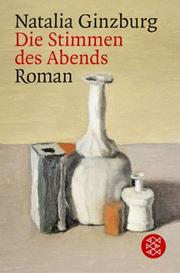
A village and a family after the war, told almost entirely in overheard talk.
The longer work
IntermediateThe two more expansive novels.
▸ Study plan for this stage
Pace: About 3 weeks. All Our Yesterdays is her most conventional novel at 304 pages and takes a fortnight; Happiness, as Such is a short epistolary book of 176 pages, best read in two sittings.
- Two families carried across fascism, the war and the aftermath
- Anna's passivity as a deliberate narrative choice, not a failure of characterisation
- Cenzo Rena as the one figure who acts, and what it costs
- Happiness, as Such told almost entirely in letters
- The absent son as the hole the whole book is arranged around
- 1952 against 1973: what her method does when the scale changes
- How does All Our Yesterdays handle historical events: reported, dramatised, or skipped?
- What does Cenzo Rena do, and how does the novel judge it?
- Who writes the letters in Happiness, as Such, and who never replies?
- Does the plain style hold at three hundred pages, and where does it strain?
- Which of the two feels closer to Family Lexicon, and why?
- Track the war's chronology through All Our Yesterdays and note which events happen entirely offstage
- Read the letters of Happiness, as Such in the order they were written rather than the order they are printed, and see what you lose
- Return to The Little Virtues after finishing both and reread the title essay with the novels behind you
Next up: Having read the essays, the memoir-novel and the fiction at both lengths, her plays and later journalism are the remaining corner of the work.

Italy from the late thirties through the war, across two families. The most conventionally novelistic thing she wrote.
A novel almost entirely in letters, about a son who has gone and the family still writing to him.