Mohsin Hamid in Order: Which of His Five Novels to Read First
Hamid writes short novels in radically different formal experiments — a one-sided monologue, a second-person self-help parody, a fable with doors — so publication order is genuinely arguable and nobody's fifth book resembles their first. This path starts with the most famous and most immediately gripping, then takes the formal experiments in increasing strangeness.
Start here
BeginnerRead the novel that made him internationally known, and the one whose form is easiest to enter.
▸ Study plan for this stage
Pace: Two or three evenings. The Reluctant Fundamentalist is 192 pages of continuous monologue with no chapter rests worth taking, and it works far better read fast, ideally in one or two sittings.
- The dramatic monologue: a silent interlocutor whose reactions you infer from Changez's replies
- The Princeton and Underwood Samson arc as the novel's argument about assimilation
- Withheld information as the engine of suspense rather than plot events
- An ending left deliberately unresolved, with both readings supported
- The Lahore cafe as a real-time frame running alongside the retrospective story
- The double meaning of fundamentalism: market as well as religious
- What do you know about the American, and which sentences gave you each piece of it?
- Where does Changez's story actually turn, and is it the moment he claims it is?
- What is left ambiguous at the end, and why is refusing to settle it the point?
- Which fundamentalism is the title about?
- How does Erica's storyline function in relation to the political one?
- Write down everything you infer about the silent listener, and mark the sentence that gave you each inference
- Read the last three pages twice, once assuming one reading of the ending and once the other
- Read ten pages aloud to feel the address; the direct second person is where the pressure comes from
Next up: Once you have seen a whole novel run on one formal device, the two books built entirely around their own devices are the obvious next move.
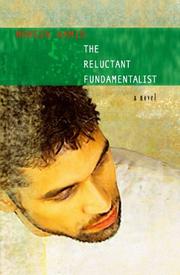
A Pakistani man talks to a silent American across a table in Lahore, and the whole novel is his half of it. The withheld information is the engine. The record lists extra names from an audiobook edition; the book is Hamid's.
The two big formal experiments
BeginnerSee what he does when the form carries the argument.
▸ Study plan for this stage
Pace: About 2 weeks, one short novel a week. Both are under 240 pages and both work better in a few long sittings than in nightly chapters.
- Doors as deliberately undramatic magic in Exit West
- Migration written as aftermath rather than as journey
- Nadia and Saeed's relationship as the novel's actual subject
- The second-person self-help parody carrying a whole life in Filthy Rich
- An unnamed country and unnamed characters as a formal decision
- Hamid's habit of letting form carry the argument instead of dialogue
- Why does Exit West refuse to dramatise the crossing itself?
- What happens to Nadia and Saeed, and what does the novel appear to think about it?
- How does the self-help frame change what a life story is allowed to include?
- What does the second person do in Filthy Rich that a first-person narrator could not?
- Which of the two experiments outlasts its premise better?
- Read the vignettes of strangers in Exit West separately from the main line and ask what each adds
- Take one chapter of Filthy Rich and rewrite its first paragraph in the third person to see exactly what disappears
- Compare the second person of The Reluctant Fundamentalist with the second person of Filthy Rich: the same pronoun doing opposite work
Next up: With the middle of his career read, the debut and the late novel bracket it and show how much of the method was there at the start.
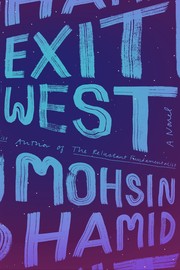
Refugees pass through doors that open onto other countries. The magic is deliberately undramatic, which is the point — it strips migration down to what happens after arrival.
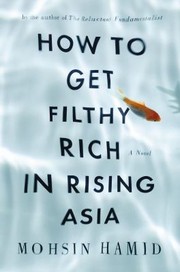
A whole life told in the second person as a parody self-help book. The gimmick could have been unbearable and instead it is unexpectedly moving.
Backwards and forwards
IntermediateThe debut and the late novel, which bracket everything else.
▸ Study plan for this stage
Pace: About 2 weeks. Moth Smoke takes a week at 256 pages; The Last White Man is 160 pages and can be read in an evening or two.
- Moth Smoke's trial structure and the reader placed as juror
- Heroin, envy and Lahore class politics in a rougher prose than the later books
- The Last White Man's premise of skin colour changing overnight
- Fable compression, and why the late novel divided readers
- Twenty-two years between the two, and what stayed constant
- Belonging and its withdrawal as his standing subject
- How does Moth Smoke's framing position you in relation to Daru?
- What is Moth Smoke arguing about class in Lahore?
- What does The Last White Man decline to explain, and does the omission hurt it?
- Which of the two is closer to the Hamid of Exit West?
- What does the debut do that none of the later books attempt?
- Read Moth Smoke's framing chapters together, out of sequence, before reading the rest of the novel
- Note where The Last White Man's sentences lengthen, and set one paragraph against a paragraph of Moth Smoke
- Line all five novels up by page count and by year, and see what that alone tells you about the shape of his career
Next up: With all five novels read, the essays state plainly the arguments you have been reading in disguised form.
His first novel — Lahore, heroin, class and a trial structure. Rougher than the later books and closer to the ground.

People wake up with their skin changed colour. A short fable, and the most divisive thing he has written.
The essays
IntermediateFinish with the non-fiction, which states plainly what the novels dramatise.
▸ Study plan for this stage
Pace: One to two weeks. The pieces are short, so two or three a sitting, stopping each time to place the essay against whichever novel is nearest it in date.
- Journalism as the plain statement of what the novels dramatise
- Lahore, New York and London as the three-way life behind the fiction
- Pakistan after 2001 reported from inside rather than from the wire
- The essayist's voice against the novelist's masks
- The places where his politics are explicit rather than formal
- How a collection of occasional pieces reads as a single argument
- Which essays map directly onto which novels?
- What does he say plainly here that the fiction only implies?
- How does his account of Pakistan differ from the version the novels give?
- Does the confidence of the essayist change how you read the ambiguity of the fiction?
- Where do the essays contradict a novel rather than explain it?
- Pair three essays with the novel each sits closest to and read them back to back
- Put the pieces in the order they were written and read them against his publication list
- Reread the final pages of The Reluctant Fundamentalist after the essays on America
Next up: With the novels and the non-fiction both read, his later essays and journalism can be picked up piecemeal as they appear.

Dispatches from Lahore, New York and London. The record carries an odd year; the collection is from 2014.