Mitch Rapp Reading Order: Where to Start with Vince Flynn
There are two defensible places to start Vince Flynn's Mitch Rapp series, and the choice matters more here than in most thrillers. Flynn began publishing in 1997 with a middle-aged Rapp already operating as a CIA assassin; a decade later he went back and wrote the origin novels, so the books are numbered one way and were written another. This path takes the origin route first because it is the easier on-ramp, then follows publication order through Flynn's own run and into the continuation novels written after his death in 2013.
Start Here: The Origin Novels
BeginnerMeet Rapp as a recruit rather than as an established operator, and understand the loss that put him in the CIA's hands.
▸ Study plan for this stage
Pace: Ten days to two weeks. American Assassin is 435 pages and Kill Shot 385 — both fast thriller reads, five or six days each. Read them in this order and back to back: they were written as a pair and together cover everything the 1997 novels take for granted. Note the ordering oddity you are exploiting
- Rapp's origin as motive rather than mystery: Pan Am 103 is the specific event, and Flynn keeps the motive personal rather than patriotic, which is the series' defining choice about its protagonist.
- The off-the-books premise. Rapp is recruited outside the CIA's formal structure precisely so that his existence can be denied, and every subsequent plot depends on that deniability being fragile.
- Stan Hurley and Irene Kennedy as the two poles of Rapp's formation — the trainer who wants a weapon and the handler who wants an operator with judgement — and the tension between them that runs for the whole series.
- Thomas Stansfield and the institutional layer above Kennedy, which supplies the series' recurring structure: an operation, a political consequence, and a superior deciding whether to protect the operator.
- The training material itself, which is the closest the series comes to procedural detail and which readers of the 1997 books never got.
- Kill Shot's inversion — the first real operation goes wrong and Rapp spends the book hunted by his own side — which establishes the betrayed-from-within pattern that recurs in nearly every later novel.
- Publication order versus internal chronology as a live reading decision. These two were written after the series was established, so they answer questions the earlier books deliberately left open; reading them first is a trade of mystery for context.
- The Flynn thriller formula in its first form: short chapters, multiple viewpoints including the antagonist's, a political layer in Washington running parallel to the operational one, and a resolution that costs Rapp institutionally rather than physically.
- Why is Rapp recruited rather than a serving officer? What does the arrangement give the agency, and what does it cost?
- Hurley and Kennedy want different things from Rapp. State each precisely, and say which one the series ultimately endorses.
- In Kill Shot, who betrays Rapp and why? Trace the institutional motive rather than the personal one.
- American Assassin was written eleventh. What does it explain that the earlier books had left unexplained, and does explaining it help?
- Describe the Flynn formula from these two books in five sentences. You will test it against every later stage.
- Write down the Flynn formula as a numbered structure after finishing Kill Shot — chapter length, viewpoint rotation, the Washington subplot, the shape of the ending. Keep it; you will check it at every stage.
- Build a personnel chart of the agency as these two books present it — Stansfield, Kennedy, Hurley, Rapp and the supporting operators — with each person's position and loyalties. The chart is the series' actual continuity.
- Note every rule the books state about how Rapp's programme operates: authorisation, deniability, contact protocol, what happens if he is caught. Later books break these and you want the originals written down.
- Having read a prequel first, write a paragraph predicting what the 1997 novels will assume you already know. Check it in stage 2.
Next up: You now have the character explained; the next stage goes back to where Flynn actually started and shows what the series looked like when none of that had been written yet.
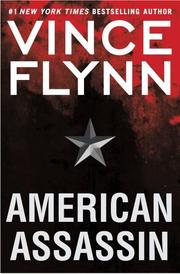
Written eleventh but set first, this is the recruitment and training story: a college athlete whose girlfriend died on Pan Am 103 is turned into an off-the-books killer. Start here if you want the character explained rather than assumed.

Rapp's first real operation goes wrong and he spends the book hunted by his own side. Read it straight after American Assassin — the two were written as a pair and together cover everything the 1997 novels take for granted.
Where the Series Actually Began
BeginnerPick up Flynn's original publication run and see the Rapp the series was built around.
▸ Study plan for this stage
Pace: Four to five weeks. Term Limits is 612 pages, Transfer of Power 395, The Third Option 358 and Separation of Power 436. Read them in this order, with one important caveat about the first. Term Limits is Flynn's self-published debut and a genuine trap for new readers: it is set in the same Washington
- Term Limits as a political thriller without Rapp, and what it reveals about Flynn's actual preoccupations before he had a series character — the argument about Washington is his, and it survives into every later book.
- Transfer of Power's premise as the series' purest expression: a fixed location, a hostage situation, a political layer paralysed by process, and one operator inserted alone.
- The counterterrorism-versus-politics structure, which is Flynn's real engine: the operational problem is usually solvable, and the obstacle is the Washington apparatus.
- The betrayal-from-inside-Langley thread established in The Third Option, which becomes the series' most reliable plot generator and which you have already seen prefigured in Kill Shot.
- Rapp's transition across Separation of Power from field operator toward a position with actual authority, which changes what kinds of story the series can tell afterward.
- The recurring antagonist type: a competent foreign operator paired with a domestic political figure whose motives are careerist rather than ideological. Flynn's villains are more often ambitious than evil.
- Flynn's politics, which are explicit rather than implied. The books argue a position about executive power, intelligence oversight and the constraints on counterterrorism, and reading them as arguments rather than as neutral entertainment is the honest approach.
- The 1997 baseline against the 2010 prequels: read in this order, you can see exactly what Flynn had not yet invented and what he retrofitted a decade later.
- Term Limits has no Rapp. What does it have instead, and what does its existence tell you about what Flynn wanted to write?
- Why does Transfer of Power work as well as it does? Identify the structural choices — location, clock, isolation — that do the work.
- Who betrays Rapp in The Third Option, and how does the motive differ from the betrayal in Kill Shot?
- What changes for Rapp by the end of Separation of Power, and what kinds of plot become impossible afterward?
- Check your stage 1 prediction: what did the 1997 novels assume you knew, and how much of it did the prequels invent rather than reveal?
- State Flynn's political argument as it appears across these three books, as neutrally as you can.
- Update your personnel chart with everyone introduced across these four books, marking who is new and who was retrofitted into the prequels.
- Diagram Transfer of Power's structure hour by hour — the building, the hostages, the political rooms, Rapp's movement — and identify where the tension actually comes from.
- Compare the Rapp of Transfer of Power with the Rapp of Kill Shot and list what is different. Some of the differences are development and some are Flynn not yet having decided; try to separate them.
- Track the internal-politics thread from The Third Option forward, noting each Langley figure who works against Rapp and what they want.
- Check your formula notes from stage 1 against Transfer of Power and mark which elements were already present in 1999.
Next up: Rapp now has authority and a public profile, and the middle run is about what the series does when its protagonist can no longer operate in the dark.
Flynn's self-published debut and a genuine trap for new readers: it is set in the same Washington but Mitch Rapp is not in it. Read it for the world and the politics, or skip it entirely — nothing in the Rapp novels depends on it.

The first true Rapp novel and still the best single argument for the series: terrorists take the White House and Rapp goes in alone. If you only read one Flynn book, this is it.

Rapp is set up and betrayed from inside Langley, which establishes the internal-politics thread that runs through every later book. It reads directly on from Transfer of Power.

Closes the arc the previous two opened and moves Rapp from field operator toward a position with actual authority. Read the three as one continuous unit.
The Middle Run
IntermediateFollow the post-9/11 novels, where the series shifts from lone-operator thrillers to counterterrorism procedure.
▸ Study plan for this stage
Pace: Four weeks. Executive Power is 372 pages, Memorial Day 612 and Consent to Kill 473 — Memorial Day is the longest and needs a full ten days. Read them strictly in order, and in particular do not read Consent to Kill before Memorial Day: its impact depends entirely on the domestic life the earlier boo
- Exposure as a permanent change. Executive Power makes Rapp a known quantity, and every subsequent book has to work around the fact that he can no longer be deniable.
- The shift from operator to figure: Rapp increasingly briefs, decides and delegates, and the series has to find new ways to put him personally at risk.
- Memorial Day's interrogation argument, which is stated in dialogue and demonstrated in plot: Flynn constructs a ticking-bomb scenario in which coercion works and delay is fatal. Whether that scenario is a fair test of the policy question is precisely what critics disputed, and the novel does not ent
- Flynn's ticking-clock construction as a rhetorical device as much as a plot one — the premise is engineered so that the argument's conclusion follows.
- The domestic layer. Across the middle run Rapp acquires a private life, and Flynn builds it deliberately over several books so that Consent to Kill can use it.
- Consent to Kill's contract structure — a foreign party pays for Rapp's death, and the retaliation drives several later books — which converts the series from episodic to serial.
- Escalation of stakes as the middle-run strategy: nuclear devices, direct attacks on the protagonist's family, and threats that cannot be resolved without permanent consequence.
- Formula drift. Compare these three with Transfer of Power and the change is clear: the isolated operation has become a running personal war, and the Washington layer has grown proportionally.
- What does Rapp lose when he becomes publicly known, and what does the series gain from the change?
- Reconstruct Memorial Day's interrogation argument as a syllogism. What does the premise assume, and would the argument survive a different premise?
- Many readers rate Memorial Day the strongest of the middle run. What makes it work as a thriller, independent of its argument?
- Who orders the contract in Consent to Kill, and why? Trace the motive back into the earlier books.
- Why must Consent to Kill be read after Memorial Day? Name the specific dependency.
- Check your formula notes: what has changed between Transfer of Power and Consent to Kill?
- Take Memorial Day's central argument and write out the strongest objection to it that the novel does not raise. Then find the passage where the book forecloses that objection.
- Track Rapp's domestic life across all three books and note in which chapters Flynn is plainly laying groundwork for Consent to Kill.
- Update your personnel chart with the new antagonists and Langley figures, and mark which threads Consent to Kill leaves open.
- Compare a set piece from Transfer of Power with one from Consent to Kill on length, viewpoint count and how much of it is political rather than operational.
- Write a paragraph on how much of the series' politics is stated by characters and how much is built into the plots. The proportion changes across these three books.
Next up: The consequences of Consent to Kill run directly into the last books Flynn wrote, which push the legal jeopardy around Rapp's methods to its limit.

Rapp is exposed publicly and has to work with the constraint of being a known quantity. The change is permanent, so read it before the later books rather than out of sequence.
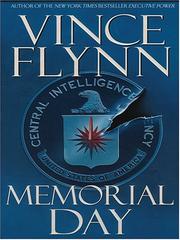
A nuclear device in Washington, and the book where Flynn most directly makes his argument about interrogation. Many readers rate it the strongest of the middle run.

The most personal book in the series, and the one that changes Rapp for good. Do not read it before Memorial Day — its impact depends on the domestic life the earlier books built.
The Flynn Endgame
IntermediateFinish the novels Flynn wrote himself and see where he left the character.
▸ Study plan for this stage
Pace: Three to four weeks. Protect and Defend is 416 pages, Extreme Measures 430 and The Last Man 448 — read in this order, and read Extreme Measures and The Last Man back to back specifically, because the former ends mid-story. Protect and Defend concerns Iran, an Israeli covert operation, and a kidnappi
- Wider geopolitics. Protect and Defend has more moving national actors than any earlier book, and the plotting does correspondingly more work in capitals rather than in corridors.
- The Iranian nuclear programme and Israeli covert action as the series' engagement with an actual policy debate of the period, handled as premise rather than as question.
- Mike Nash as a foil: a younger operator with a family and a conscience, introduced to externalise the costs Rapp himself never articulates.
- Legal jeopardy as the endgame's subject. Extreme Measures pushes the question of whether Rapp's methods can survive congressional and judicial scrutiny further than the series had gone.
- The cliffhanger structure of Extreme Measures, which is unusual for Flynn and is the reason the pairing with The Last Man is mandatory.
- The Last Man as a deliberate correction: Flynn returns to a tighter operational plot after the Nash-centred books, and the difference is instructive about what he thought the series was for.
- Flynn's death in 2013 as a fact about the shape of the series: The Last Man was not written as a conclusion, and where it leaves things is what the continuation had to resolve.
- The full Flynn arc, now visible: a self-published political thriller, an operator series, a personal war, a legal reckoning, and a return to the operational form. Compare the endpoint with Transfer of Power.
- What does the wider geopolitical canvas of Protect and Defend gain, and what does it cost in the tension that made Transfer of Power work?
- What is Mike Nash for, structurally? What can Flynn do with him that he cannot do with Rapp?
- State the legal question Extreme Measures raises. Does the book answer it, or does the plot make the question moot?
- Why must Extreme Measures and The Last Man be read together? What is unresolved at the break?
- The Last Man is called a return to form. What form, specifically, and what had the previous two books been doing instead?
- Compare Rapp at the end of The Last Man with Rapp in American Assassin. Is this the same character developed, or a different one?
- Map the actors in Protect and Defend — American, Iranian, Israeli, Hezbollah — and what each wants. The book is the series' most multi-party plot and the map is the fastest way to hold it.
- Track Nash across both books he features in and write down what each of his scenes is doing for the reader's view of Rapp.
- Read the last chapter of Extreme Measures and the first of The Last Man consecutively and list every carried-over thread.
- Complete your personnel chart through The Last Man and mark every character alive, dead or missing at the end of Flynn's run. This is the state the continuation inherits.
- Write a final version of your formula notes for the Flynn books, then set it beside the first version from stage 1 and describe the drift in one page.
Next up: Flynn's run ends with a plot deliberately left open, and the last stage is what happened when the estate hired someone else to finish it.
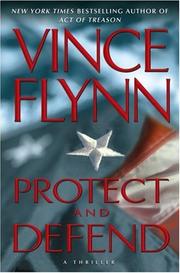
Iran, an Israeli operation and a kidnapping that puts Rapp's boss in the hands of Hezbollah. The plotting is wider than the earlier books and the geopolitics does more work.
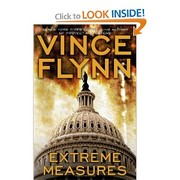
Introduces Mike Nash as a foil and pushes the legal jeopardy around Rapp's methods to its limit. It ends mid-story and is best read back-to-back with the next book.

The last novel Flynn completed before his death in 2013, and a deliberate return to form after the Nash books. A natural stopping point if you want to read only Flynn.
After Flynn
IntermediateDecide whether to continue into the continuation novels, and know what changes when you do.
▸ Study plan for this stage
Pace: Ten days to two weeks. The Survivor is 400 pages and Enemy of the State 400 — a week each. Read them in order. Note what these are: Flynn died in 2013 and the estate hired the thriller novelist Kyle Mills to finish and then continue the series, so these are continuation novels by a different author
- The continuation problem in its purest form: an unfinished plot, an established voice, a living readership, and a new author hired to satisfy all three.
- The Survivor as an act of completion rather than authorship. Mills' first job is to resolve The Last Man's open threads, which constrains almost everything about the book.
- Voice as a technical exercise. Comparing The Survivor's prose with The Last Man's is the clearest available case study in a writer working inside another writer's habits — chapter length, viewpoint rotation and dialogue rhythm are all imitated deliberately.
- The shift in Enemy of the State, where Mills drops the imitation: a different pacing, a leaner cast, and a Rapp cut loose from the agency entirely.
- The no-official-backing premise as Mills' solution to the series' oldest problem — Rapp accumulated too much authority for the field plots to work, and severing him restores the isolation that made Transfer of Power effective.
- Continuity management: what Mills keeps, quietly drops or works around from twenty years of Flynn continuity, and the choices are visible if you have kept the personnel chart.
- The judgement this stage is designed to let you make. Two books is enough to decide whether the continuation is the series you were reading, and the answer is legitimately different for different readers.
- Where the run goes next, if you want it: Mills has continued the series well past these two, and the decision to carry on is best made here rather than after another six books.
- What does The Survivor have to resolve from The Last Man, and how much of the book is spent doing it?
- Where can you hear Mills imitating Flynn in The Survivor? Point to specific habits — chapter breaks, viewpoint changes, dialogue.
- What changes in Enemy of the State? Name three concrete differences from a Flynn novel.
- Cutting Rapp loose from the agency solves a structural problem. What was the problem, and when did it first appear in the series?
- Check your personnel chart: which Flynn characters does Mills keep, and which quietly disappear?
- Having read both: is the continuation the same series? Answer with reasons rather than a preference.
- Take one chapter of The Last Man and one of The Survivor and compare them on sentence length, chapter length, number of viewpoints and proportion of dialogue. Then do the same with a chapter of Enemy of the State.
- List every plot thread The Last Man left open, then mark how The Survivor resolved each — fully, partially, or by ignoring it.
- Finish your personnel chart through Enemy of the State, noting every character retired, killed off or reassigned under Mills.
- Write a one-page assessment of whether to continue the series, citing specific evidence from these two books rather than general impression.
- Set your original formula notes from stage 1 beside Enemy of the State and identify which of Flynn's structural signatures survive under a different author. Those are the series; the rest was the writer.
Next up: The path closes at the handover point: with Flynn's complete run read in a coherent order and two continuation novels to judge by, the decision whether to carry on into Mills' later Rapp books is now an informed one.

The first continuation. Flynn died in 2013 and the estate hired thriller novelist Kyle Mills to finish and then continue the series; this book completes the plot Flynn left open in The Last Man. The byline on most editions carries both names.

The book where Mills stops imitating Flynn and writes his own Rapp — Saudi Arabia, and Rapp operating with no official backing at all. Read it to judge whether the continuation is for you before committing to the rest.