Valdemar books in order: where to start with Mercedes Lackey
Valdemar is more than fifty novels covering roughly a thousand years of internal history, which is why chronological order is a trap for new readers: it starts you in the Mage Wars, three thousand pages before any of it means anything. Publication order is the right answer, and it is also close to the order in which the world was invented. This path runs the original Heralds trilogy, then the Last Herald-Mage, then the Vows and Honor books and the novel that bridges them, then the Mage Winds sequence, and finishes with two books that reach backwards into the deep past — which is where the chronological route wanted you to begin, and which works far better once you already care.
Start here: the Heralds of Valdemar
BeginnerMeet Valdemar through the trilogy that created it — Heralds, Companions, the Collegium and the Monarch's Own — and decide within a hundred pages whether Lackey's register is for you.
▸ Study plan for this stage
Pace: Two to three weeks for the trilogy. Arrows of the Queen is 320 pages, Arrow's Flight 319 and Arrow's Fall 319 — near-identical lengths, all fast reads, and they were conceived as one continuous story split three ways. Read them back to back with no gap; the volumes genuinely do not stand alone. Arro
- The vocabulary the whole shelf runs on and never re-explains: Herald, Companion, Chosen, Whites and Greys, Mindspeech, Gifts, the Death Bell. All of it is defined in Arrows of the Queen and assumed everywhere after.
- Companions as the series' central conceit and its central ambiguity — they Choose, they are not horses, and Lackey withholds what they actually are for a very long time.
- The Heraldic system as a form of government: Heralds are simultaneously judges, envoys, spies and the monarch's conscience, and the books treat this as a functioning constitution rather than as colour.
- Talia's Gift is empathy, which is the pivot of the trilogy: Arrow's Flight is about a Gift going wrong, and the failure mode is specific to what her Gift is.
- Lackey's recurring opening move — a mistreated young person removed to a place that recognises their worth — which is the formula the entire Valdemar shelf runs variations on, and which you should register now so you can watch it change.
- The Collegium as institution: training, Companions' Field, the year on circuit, and the internship structure that gives book two its shape.
- The Arrows books are Lackey's first published novels and read like it — the prose is plainer and the plotting more direct than in the later trilogies. That baseline matters when you reach the 1990s books.
- What is a Companion, on the evidence available by the end of Arrow's Fall as opposed to what characters assume?
- Talia's Gift fails in Arrow's Flight in a specific way. What is the mechanism, and what does the failure tell you about how Gifts work generally?
- What checks exist on a Herald's authority? Name the ones the books state and the ones they only imply.
- The trilogy's opening situation is a mistreated child rescued by recognition. What does Lackey do with that pattern that makes it carry three books rather than one chapter?
- Arrow's Fall changes register sharply. Where exactly does the tone shift, and is it prepared for?
- Keep a running glossary from page one — Herald, Companion, Chosen, Gift types, ranks, place names — and add to it as each term is first used. Every later book assumes you have this and none of them will supply it again.
- Track Talia's Gift across all three books: note each scene where it works, each where it misfires, and what the surrounding circumstances were. The pattern is the trilogy's actual plot.
- Write down Lackey's opening formula in one sentence after finishing Arrows of the Queen. You will test it against Vanyel, Kerowyn, Elspeth and Lavan in every later stage.
- Sketch a map of Valdemar and its neighbours from the descriptions in the text alone, and mark which borders the trilogy actually shows you. Most of the blank space gets filled in stages 3 and 4.
Next up: You now know what a Herald is, which is exactly the knowledge the Last Herald-Mage trilogy assumes while being set centuries before these books.

An abused girl is Chosen by a Companion and taken to be trained as a Herald. Lackey's first published novel and the correct entry to the whole sequence: everything the series means by Herald, Companion, Chosen and Mindspeech is defined here, and later books never re-explain it.

Talia's internship on circuit, and the book where her Gift goes wrong. Read second — the trilogy is one continuous story split three ways and the volumes do not stand alone.
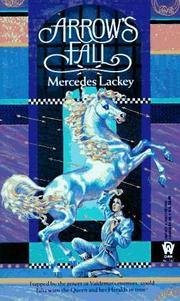
The conclusion, and much darker than the two before it; be aware that it contains an extended torture sequence. Finishing it is the natural decision point for whether to continue into the wider Valdemar shelf.
The Last Herald-Mage
BeginnerRead the trilogy most Lackey readers name as her best, set five centuries before Talia, and see the series take on grief and a gay protagonist in 1989 mass-market fantasy.
▸ Study plan for this stage
Pace: Three weeks. Magic's Pawn is 349 pages, Magic's Promise 320 and Magic's Price 352 — again a single arc in three volumes, and again read without gaps. The ordering decision here is deliberate: this trilogy is set long before the Arrows books, but read it second rather than by internal chronology, bec
- Vanyel Ashkevron as the shelf's central figure — the most famous character in Valdemar and the one the later books' history is measured against.
- Herald-Mages as a distinct and now-vanished class: the Gift of magic alongside the ordinary Gifts, and the historical fact the Arrows books were quietly built on, since Valdemar in Talia's era has none.
- The trilogy as an origin story for an absence. You already know from stage 1 that Valdemar has no mages; this trilogy is the account of how that came to be true.
- Vanyel's sexuality as a central, unambiguous element published in 1989 in mass-market fantasy, and the specific ways the books handle isolation, family rejection and the absence of anyone comparable.
- The cost-of-power theme, which is Lackey's real subject here: Magic's Promise is the quietest volume and does the most work on what the role does to the person holding it.
- Yfandes and the Companion bond taken further than the Arrows books took it — lifebonding, and what the bond can be made to do at the limit.
- Formula variation: the same rescued-outsider opening as Talia's, but with the rescue arriving too late and at a much higher price. Compare the two openings directly.
- The chronology trap worth understanding now: Valdemar's publication order and its internal chronology diverge sharply, and the shelf is designed to be read by the former.
- Why do Herald-Mages exist in Vanyel's time and not in Talia's? Trace the causal chain the trilogy gives.
- Magic's Promise has the least incident of the three. What is it actually doing, and why does the trilogy need it?
- Compare Vanyel's rescue with Talia's. What has Lackey changed in the formula, and what effect does each change produce?
- What does the lifebond between Vanyel and Yfandes allow at the end, and what does it cost? Is the cost stated or implied?
- This trilogy is set centuries earlier but reads as a sequel. What specifically does it assume you learned in stage 1?
- Build a two-column table of Talia's arc and Vanyel's, aligned by story beat — early mistreatment, Choosing, training, first failure, first loss, resolution — and describe what Lackey changed at each row.
- Track every reference in the Arrows trilogy to Valdemar's lack of mages, then reread the end of Magic's Price. Write a paragraph on how much of stage 1 was quietly set up by a trilogy written afterwards.
- Note every scene where Vanyel is the only person of his kind in the room, and classify each by whether the isolation is about magic, about sexuality, or about rank. The overlap is the trilogy's design.
- Read the last twenty pages of Magic's Price and then the first chapter of Arrows of the Queen back to back, and write down what has and has not changed in Valdemar across the intervening centuries.
Next up: Both trilogies so far have stayed inside Valdemar and inside the Heraldic system; the next stage steps outside both, and supplies the novel that ties the whole shelf together.
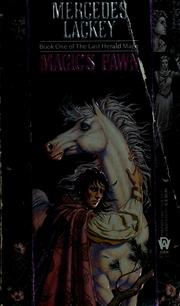
Vanyel Ashkevron, the most famous character in Valdemar, from a childhood of not fitting to the discovery of what he is. Read this trilogy second rather than by internal chronology: it is set long before the Arrows books but it assumes you already understand Heralds, and it is far more affecting when you do.

Vanyel at the height of his powers and thoroughly exhausted by them. The quietest of the three and the one that does the most work on what the role costs.
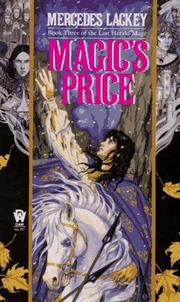
The end of the Last Herald-Mage, and the event the rest of Valdemar's history refers back to. Read directly after Magic's Promise; the trilogy is a single arc and this is where it lands. Content warning applies: the book includes sexual assault.
Vows and Honor, and the bridge novel
BeginnerFollow the mercenary strand of the world — Tarma and Kethry outside Valdemar's borders — and then the long novel that ties their story to the Heralds.
▸ Study plan for this stage
Pace: Three to four weeks. The Oathbound is 304 pages and Oathbreakers 318 — both quick. By the Sword is 650 pages, twice the length of anything read so far, and needs a week and a half on its own. Read in the listed order. Be warned about form rather than content: The Oathbound was fixed up from earlier
- The world outside Valdemar's borders — Rethwellan, the Dhorisha Plains, the mercenary companies — which the Heralds books barely show and which is where roughly half the later series takes place.
- Tarma and Kethry as a partnership rather than a romance: a Shin'a'in swordsworn and a sorceress bound by oath, and the she'enedran bond as Lackey's alternative to both the Companion bond and a love plot.
- Sword-sworn and the Star-Eyed, the Shin'a'in religious and social structure, which becomes load-bearing in the Mage Winds trilogy.
- Magic outside the Heraldic system — Kethry works with a mage-sword and trained in a guild tradition, and seeing non-Valdemaran magic makes clear how idiosyncratic Valdemar's arrangement is.
- The fix-up form of The Oathbound and what it costs: episodic structure, uneven stakes, and characters arriving with backstory the reader has not seen. Oathbreakers is the more novelistic and better book of the pair.
- By the Sword as the shelf's structural keystone. Kerowyn is Kethry's granddaughter, the book connects Vows and Honor to the Heralds books, and it sets up the Mage Winds trilogy — read it before stage 4 or that trilogy loses half its cast.
- The mercenary-company material, which is the most procedurally detailed writing in Lackey's work: contracts, pay, logistics and command as a job rather than as adventure.
- Formula variation again: Kerowyn is not a mistreated child rescued by recognition, she is a competent adult who chooses her own trade — the largest departure from the pattern so far, and the reason By the Sword reads differently from everything before it.
- What is the she'enedran bond, what obligations does it create, and how does it differ from the Companion bond in what it demands?
- The Oathbound is a fix-up. Identify where the seams are, and say what the book gains and loses from the form.
- How does Kethry's magic differ from a Herald-Mage's, institutionally and in practice?
- By the Sword links three separate sequences. Name the specific connections it makes to Vows and Honor, to the Heralds books, and to what comes next.
- Kerowyn's arc breaks Lackey's usual opening formula. What does she have that Talia and Vanyel did not, and what does the book do with that difference?
- Draw the family and oath connections from Tarma and Kethry through to Kerowyn on a single sheet, adding Valdemaran characters where By the Sword connects them. You will need this diagram for stage 4.
- Identify the original short stories inside The Oathbound by looking for the structural breaks, then check your guesses against Oathblood's contents. It is a good lesson in how a fix-up is assembled.
- List every mercenary-company procedure By the Sword describes — contract terms, scouting, pay, discipline — and compare it with how the Heralds books handle Valdemar's military. The difference in specificity is deliberate.
- Add Kerowyn to the two-column formula table you built in stage 2 and note which rows are simply blank for her. Then predict, in writing, what Elspeth's row will look like before you start the Mage Winds.
Next up: By the Sword has introduced half the cast of the Mage Winds and left Valdemar facing a problem — a kingdom with no mages and a war coming — that the next trilogy exists to solve.
A Shin'a'in swordsworn and a sorceress, bound by oath, working as mercenaries in the lands south of Valdemar. Fixed-up from earlier short stories, so it reads more episodically than the trilogies — read it for the world outside Valdemar's borders, which the Heralds books barely show.
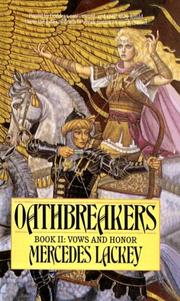
The stronger and more novelistic of the pair, and the one that brings Tarma and Kethry into contact with Valdemar's politics. A third volume, Oathblood, collects short stories and is optional.
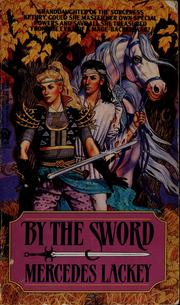
Kerowyn, granddaughter of Kethry, becomes a mercenary captain and then something else entirely. The single most useful book in the series structurally: it connects the Vows and Honor books to the Heralds books and sets up the Mage Winds trilogy, so read it before that. Its catalogue record lists several other authors alongside Lackey, which is a metadata error rather than a shared-world anthology.
The Mage Winds
BeginnerReturn to the present-day Valdemar of the Arrows books and watch magic come back to a kingdom that has forgotten how to use it, in the sequence that follows directly from By the Sword.
▸ Study plan for this stage
Pace: Three to four weeks. Winds of Fate is 460 pages, Winds of Change 462 and Winds of Fury 428 — noticeably longer than the earlier trilogies, and denser with worldbuilding, so budget more time per volume than stages 1 and 2 needed. Continuous story, no gaps. This trilogy depends on two earlier reads: t
- The problem the trilogy is built to solve, set up centuries earlier in stage 2: Valdemar has no mages, and Elspeth leaving the kingdom to find a teacher is the direct consequence of Magic's Price.
- The Tayledras and the Vales — Lackey's most sustained worldbuilding outside Valdemar itself, and the introduction of a magical ecology with rules rather than a magic system with spells.
- Ley-lines, nodes and Heartstones: magic given an infrastructure, which retroactively explains a good deal of what happened in the Last Herald-Mage books.
- The gryphons and the Kaled'a'in inheritance, which arrive here as mysteries and are explained in stage 5. Note what you are told and what you are not.
- Elspeth's arc as a deliberate inversion of Talia's: she starts privileged and unlikeable, and the trilogy is about her earning what Talia was given by being Chosen.
- Scale change. The Mage Winds operates at the level of kingdoms, armies and continental threats, where the Arrows books operated at the level of a Collegium and a Court, and Lackey's prose changes with it.
- Ancient enemies and the deep past pressing on the present — the sense throughout that the current conflict is an aftershock of something much older, which is exactly what stage 5 goes back to look at.
- Where the modern-Valdemar storyline ends. Winds of Fury is a natural resting point; the Mage Storms trilogy — Storm Warning, Storm Rising and Storm Breaking — continues directly from here if you want more.
- Why does Elspeth have to leave Valdemar at all? State the constraint precisely, and trace it back to the specific event in Magic's Price.
- How does Tayledras magic differ from Herald-Mage magic in what it does and what it costs? Use the Vales as your example.
- Elspeth is written to be irritating early on. What is the trilogy doing with that, and does it pay off?
- Which characters arrive in this trilogy without introduction because By the Sword already introduced them? Name at least three.
- The gryphons are unexplained here. What have you actually been told about their origin by the end of Winds of Fury?
- The Mage Winds is much longer per volume than the Arrows books. What is the extra length spent on?
- Write out the rules of the ley-line and node system as the trilogy states them, then reread the climax of Magic's Price and note how much of it those rules retroactively explain.
- Track Elspeth's competence scene by scene across the three volumes, marking where she is wrong and where the narrative agrees she is wrong. The gap between the two is the arc.
- List every unexplained element the trilogy introduces — the gryphons, the Kaled'a'in, the ancient war, the Heartstones — and write a one-line prediction for each. Check them in stage 5.
- Compare the opening chapter of Winds of Fate with the opening chapter of Arrows of the Queen and describe, concretely, what has changed in Lackey's prose and pacing across roughly a decade of writing.
- Add Elspeth's row to your formula table. It should be the most contradictory entry yet — say why.
Next up: The Mage Winds keeps referring to an ancient cataclysm nobody in the present can see clearly; the last stage goes back to it, and then returns to show why chronological order was never the right way in.
Elspeth, the Heir from the Arrows trilogy, leaves Valdemar to find a mage-teacher because the kingdom has none. Read after By the Sword, which introduces half the cast, and after the Arrows trilogy, which is its direct predecessor.
The Tayledras and the Vale, and Lackey's most sustained worldbuilding outside Valdemar itself. Second of three; the trilogy is continuous.
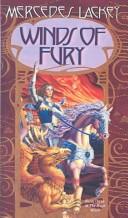
The resolution, and the point where the modern-Valdemar storyline reaches its natural end. A further trilogy, the Mage Storms — Storm Warning, Storm Rising and Storm Breaking — continues directly from here if you want more.
Going backwards: the deep history
BeginnerNow that Valdemar means something, read into its distant past and its foundation, and see why these books are a poor starting point and a good finish.
▸ Study plan for this stage
Pace: Two to three weeks. The Black Gryphon is 330 pages, Brightly Burning 445 — read them in that order. The Black Gryphon, written with Larry Dixon, is set in the Mage Wars thousands of years before everything above, and it is a war novel about characters who exist only in its own trilogy; it lands prop
- The Mage Wars as the origin event: the cataclysm every later book is living in the aftermath of, and the source of the Change-Circles, the gryphons, the Tayledras mission and the Shin'a'in oath.
- Skandranon and Amberdrake, and the fact that this trilogy's protagonists appear nowhere else — the reason it reads as a prequel to a world rather than to a story.
- Where the Kaled'a'in split into Tayledras and Shin'a'in, which is the single most useful piece of retroactive explanation in the whole shelf and which makes stages 3 and 4 read differently.
- The demonstration of why publication order beats chronological order. Read first, The Black Gryphon is an unmoored fantasy war novel; read here, it is the answer to four books' worth of questions.
- Brightly Burning as the standalone model: it needs nothing but a working knowledge of Heralds, which is why it can close a path and also serve as a first Valdemar book for someone who wants one.
- Lavan Firestorm and the Gift as affliction — the darkest treatment on the shelf of the cost-of-power theme that Vanyel's trilogy introduced.
- The formula at its limit. Lavan is the mistreated child rescued by recognition once again, and the book is about what happens when that rescue does not save anyone.
- Where to go next: Take a Thief, Exile's Honor, the Owl trilogy and the Collegium Chronicles all work the same way, and outside Valdemar entirely the Elemental Masters and Five Hundred Kingdoms series are where Lackey readers go.
- What did the Mage Wars actually do to the world? List the specific consequences you can now trace forward into each earlier-read book.
- Where do the Tayledras and the Shin'a'in come from, and what obligation does each inherit? Check your stage 3 and stage 4 reading against the answer.
- The Black Gryphon's cast appears nowhere else. Does that make it a weaker novel or a different kind of one?
- Having read it fifth, state concretely what would have been lost by reading it first.
- Brightly Burning reruns Lackey's standard opening and refuses the standard ending. What is the book arguing by doing that?
- Across all five stages, how has Lackey's treatment of the cost of a Gift changed from Talia to Vanyel to Lavan?
- Build a single chronological timeline of everything you have read — Mage Wars, Vanyel, Tarma and Kethry, Kerowyn, Talia, Elspeth, Lavan — and then write beside it the order you actually read them in. Annotate each mismatch with what the reading order gained.
- Take three unexplained elements you predicted in stage 4 and check each against The Black Gryphon, scoring your predictions.
- Complete the formula table you have been building since stage 1 with Lavan's row, then write a page on how the rescued-outsider pattern changed across roughly fifteen years of Lackey's career.
- Reread the Companions' first appearance in Arrows of the Queen with everything you now know about the Kaled'a'in and the Mage Wars, and write down which sentences read completely differently.
- Decide and justify in writing where you would send a new reader first — Arrows of the Queen, Magic's Pawn or Brightly Burning — and what the cost of each choice is.
Next up: The path closes here, with the deep history in place and the rest of the shelf legible: Take a Thief, Exile's Honor, the Owl trilogy and the Collegium Chronicles read as standalones from this point, and the Elemental Masters and Five Hundred Kingdoms series are Lackey outside Valdemar.
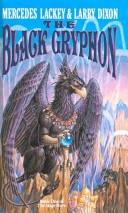
Written with Larry Dixon and set in the Mage Wars, thousands of years before everything above — the cataclysm the whole series is still living in the aftermath of. This is where a strict chronological reading order would start you, and it is the clearest demonstration of why not to: it is a war novel about characters who exist only here, and it lands properly only once the later history is familiar. Two sequels follow, The White Gryphon and The Silver Gryphon.
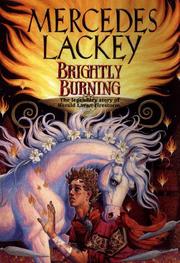
A standalone set in Valdemar's own past, about a Herald whose Gift is uncontrollable firestarting, and one of Lackey's most self-contained and best-liked novels. Closes the path because it needs nothing but a working knowledge of Heralds, and because it points at the rest of the shelf — Take a Thief, Exile's Honor, the Owl trilogy and the Collegium Chronicles all work the same way. Outside Valdemar entirely, the Elemental Masters and Five Hundred Kingdoms series are where Lackey readers go next.