Best Books on Measurement, Units and Metrology, in Order
Every number in science is the end of a long chain of agreements, instruments and arguments, and this path walks that chain backwards. It opens with the great measurement stories — longitude, the metre, the survey of America — then moves to the politics of units and the redefinition of the SI, and closes with time, standards and the formal treatment of uncertainty.
Why measuring is hard
BeginnerSee measurement as a human achievement rather than a given: understand what a standard is, why one was needed, and what it cost to build the first ones.
▸ Study plan for this stage
Pace: About 3 weeks. All three are trade non-fiction with no mathematics. Sobel's Longitude is 192 pages and can be finished in two or three evenings; Vincent's Beyond Measure (424 pages) and Winchester's Exactly are longer but move at 40 pages a day. Read Sobel first for the single case, Vincent second f
- A measurement as a chain of comparisons terminating in a standard, and the standard as a social artefact
- The longitude problem restated as a timekeeping problem, and why that reframing was the breakthrough
- Lunar distances versus the marine chronometer as rival technical solutions with rival constituencies
- The Board of Longitude as an institution with its own incentives, and Harrison's treatment by it
- Accuracy versus precision, and why a clock can be extraordinarily precise and still wrong
- Tolerance and interchangeable parts as the industrial meaning of precision, from Wilkinson's boring machine to Whitworth's gauges
- Vincent's argument that measurement stops being descriptive and becomes a form of authority once it is institutionalised
- Why does knowing the time at a reference meridian give you your longitude, and how much error does one second of clock error produce at the equator?
- What were the Board of Longitude's institutional incentives, and how did they shape its treatment of Harrison?
- What is the difference between accuracy and precision, and which one did H4 actually demonstrate on its trial voyage?
- What did Whitworth's standard gauges make possible that skilled hand-fitting could not?
- Where, in Vincent's account, does quantification cross from measuring the world to governing it?
- Work the longitude arithmetic: given a chronometer reading against local noon, compute longitude, then compute the positional error produced by a three-second-per-day drift accumulated over an eighty-day voyage
- Compare Sobel's and Winchester's accounts of Harrison, and write a page on what the engineering framing adds and what the biographical framing leaves out
- Measure one object in your house three different ways (tape, calliper, folded paper) at least five times each, and record the spread; you now have your own repeatability estimate to reuse in the final stage
- Pick one number you saw in the news this week and try to trace it back to an instrument; write down where the trail goes cold
Next up: You have seen one standard being fought over; the next stage watches two whole systems of units being manufactured, one by revolution and one by survey.

The perfect entry point — one measurement problem, one obsessive clockmaker, and the whole apparatus of prizes, committees and rival methods that surrounds any new standard. Short, and it establishes the shape of every later story in this path.

The best modern survey of measurement as a social force, from Egyptian cubits to the modern obsession with metrics. Read second: it gives you the map of the territory the rest of the path explores in detail.

Published in the United States as The Perfectionists, this is Winchester's history of precision engineering — Wilkinson's cannon boring, Whitworth's gauges, jet engines, GPS. It supplies the industrial half of the story that the scientific histories leave out.
Where the units came from
BeginnerFollow the metre, the American land grid and the metric system from proposal to law, and understand why unit reform is always a political project.
▸ Study plan for this stage
Pace: About 4 weeks. Alder's The Measure of All Things (466 pages), Linklater's Measuring America (324) and Marciano's Whatever Happened to the Metric System (310) are all narrative history for general readers, at 35 to 40 pages a day. Read Alder first, Linklater second as the deliberate contrast, and Mar
- The metre defined as one ten-millionth of the quadrant from pole to equator: a natural standard chosen by political decision
- Delambre and Mechain's triangulation from Dunkirk to Barcelona, and what seven years of fieldwork actually involved
- Mechain's concealed discrepancy, and what an unexplained error means to a surveyor with no theory of error
- The Public Land Survey System, the chain, the township and the section as the American answer
- Path dependence: why a country keeps units that are demonstrably worse
- The US Metric Act of 1866 and the 1975 conversion legislation, and why legal adoption produced no practical change
- Why did the French revolutionaries insist on a standard derived from the Earth rather than from an artefact or a monarch's body?
- What exactly did Mechain conceal, and why does Alder think this episode matters for the history of scientific error?
- How did the rectangular survey shape American land ownership, settlement and politics in ways a metrical land measure would not have?
- The United States adopted the metric system in law twice and never in practice; what does Marciano identify as the actual obstacle?
- What makes a unit stick, given that the technically superior option repeatedly loses?
- Reproduce the geodetic argument: from the arc length and terminal latitudes Delambre and Mechain measured, compute a metre and compare it to the modern definition; the original comes out about 0.2 millimetres short, and you should be able to say why
- Read Mechain's predicament as Alder narrates it, then write down what the error-analysis methods you meet in the final stage would have told him to do instead of concealing it
- Open a US plat map or a BLM survey plat and identify township, range and section, then locate a modern property boundary that still follows those lines
- Take one everyday quantity measured differently on each side of the Atlantic and trace both units back to their origin
Next up: Both those systems fixed units to physical objects or to the Earth; the next stage covers the twentieth-century decision to abandon objects altogether.
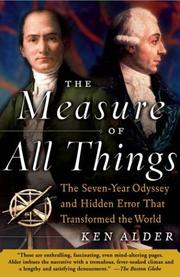
The seven-year survey from Dunkirk to Barcelona that produced the metre, including the error one of the surveyors concealed. The single best case study of how a standard is actually manufactured, and why it belongs first in this stage.
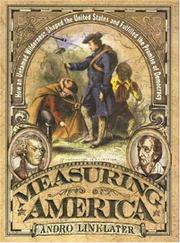
The American counterpart to Alder: how the rectangular survey imposed a measurement grid on a continent, and why the United States kept the chain and the acre. Read it against the metre story to see two different answers to the same problem.

Explains the failure of American metrication as politics rather than stubbornness, closing the loop on the two histories above.
The modern SI and the politics of units
IntermediateUnderstand the 2019 redefinition of the base units in terms of fundamental constants, and why replacing the kilogram artefact mattered.
▸ Study plan for this stage
Pace: About 4 weeks, but the three books are used differently. Crease's World in the Balance (319 pages) and Martin's Seven Measures of the World are trade non-fiction at 40 pages a day. Klein's The Science of Measurement is a 736-page historical reference organised by quantity: consult it unit by unit ra
- Base units versus derived units, and the arbitrariness of where the line is drawn
- Artefact standards versus definitions fixed by constants, and the drift of the international prototype kilogram
- The 2019 redefinition: Planck's constant fixes the kilogram, the elementary charge the ampere, the Boltzmann constant the kelvin, the Avogadro constant the mole
- The Kibble balance and the silicon-sphere Avogadro route as two independent realisations of the same definition
- The distinction between defining a unit and realising it, and the role of the mise en pratique
- The second as the anchor: defined by caesium hyperfine transitions since 1967 and untouched by the 2019 changes
- Crease's argument that a unit system is a political settlement as much as a technical one
- What did it mean for the international prototype kilogram to lose mass, when it was by definition exactly one kilogram?
- How does fixing the numerical value of Planck's constant define a unit of mass? Trace the chain of reasoning.
- What is the difference between the definition of a unit and its realisation, and why does the SI need both?
- Why is the second the unit everything else now leans on, and what would happen to the SI if a better clock transition displaced caesium?
- What, on Crease's account, is a universal system of measures for, beyond commerce and science?
- Work through the Kibble balance equation: set electrical power against mechanical power and show explicitly where Planck's constant enters via the Josephson and quantum Hall effects
- List the seven base units with their current defining constants from Martin, then look each realisation up in the BIPM's free SI Brochure and write down the gap between the definition and what a national laboratory actually does
- Use Klein to trace one unit, the pound or the calorie, from its earliest recorded form to its present legal definition, noting every point at which it was redefined against something else
- Estimate what fractional uncertainty in Planck's constant would have been needed before the redefinition was defensible, and check your estimate against the CODATA values that preceded it
Next up: The second turned out to be both the easiest unit to realise and the hardest quantity to think about, which is why it gets a stage to itself.

A historian and philosopher of science on the long campaign for a universal measurement system and the drive to define units by constants rather than objects. The clearest account of what the SI redefinition was for.

One short chapter per SI base unit, written after the 2019 redefinition, so it describes the system as it now stands rather than as it stood. Read it as the up-to-date companion to Crease.
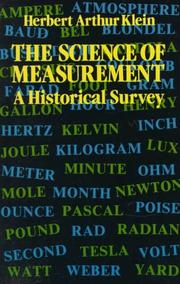
The historical reference volume — exhaustive on the origins of length, mass, time, temperature and electrical units, and useful to consult rather than read straight through. Placed here because it rewards a reader who already knows the outline.
Time, the hardest quantity
IntermediateSee why time is the most precisely measured quantity we have, how clock networks reshaped the world, and how time standards became entangled with physics itself.
▸ Study plan for this stage
Pace: About 5 weeks. Jones's Splitting the Second (199 pages) and Blaise's Time Lord (256) are short popular books, a week each. Galison's Einstein's Clocks, Poincare's Maps is scholarly history of science: 395 pages, denser argument, closer to 20 pages a day, and its central chapter repays a second readi
- The clock progression: pendulum, quartz, caesium beam, caesium fountain, optical lattice
- The definition of the second as 9,192,631,770 hyperfine transitions of caesium-133
- Fractional frequency stability and the Allan deviation as the correct way to characterise a clock
- International Atomic Time, Coordinated Universal Time and the leap second that reconciles them with the Earth's rotation
- Time zones as an administrative artefact created by railway timetables rather than by astronomy
- Clock synchronisation as a practical engineering problem in the telegraph era, and Galison's claim that this is the soil special relativity grew in
- Relativistic corrections in satellite navigation: gravitational and kinematic terms of opposite sign
- Why is time realised more precisely than any other base unit, and what property of atomic transitions makes that possible?
- What does a fractional uncertainty of one part in ten to the eighteenth mean, expressed as seconds lost over the age of the universe?
- What problem do leap seconds solve, and what is the case for abolishing them?
- Is Galison claiming that the synchronisation problem caused special relativity, or that it provided its context? Which does his evidence support?
- How large is the daily clock offset in a GPS satellite, and how quickly would positions degrade if it were uncorrected?
- Compute the GPS clock corrections yourself: the gravitational term of about plus 45 microseconds a day and the kinematic term of about minus 7, then convert the net into an accumulating position error at the speed of light
- Look up the published fractional uncertainty of NIST-F2 or of a strontium optical lattice clock and convert it into seconds gained or lost per billion years
- Read Poincare's 1898 essay La mesure du temps alongside Galison's chapter on it, and judge for yourself how much of Galison's reading the text will bear
- Take a modern time-transfer protocol (NTP or PTP) and describe its synchronisation procedure in the vocabulary Galison uses for telegraphic time distribution
Next up: You now know how standards are made and realised; the last stage is about how to state a result honestly and what happens when numbers are asked to carry authority they cannot support.

A compact technical history of timekeeping from pendulums to caesium fountains, and the natural bridge from units to the instruments that realize them.
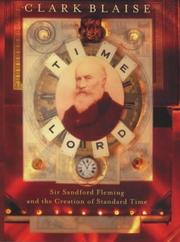
The invention of standard time zones by Sandford Fleming — a reminder that a measurement convention can be imposed on an entire civilization by railway timetables. Read after Jones for the social side of the same subject.
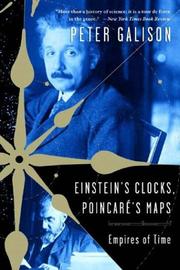
Galison shows relativity emerging from the very practical problem of synchronizing clocks across telegraph networks. The most intellectually demanding book in the stage, and the payoff for reading the two before it.
Uncertainty and the authority of numbers
BeginnerLearn to state a measurement properly, with its uncertainty, and to think critically about what quantification does when it is exported into public life.
▸ Study plan for this stage
Pace: Eight to ten weeks, and these two books must not be read at the same rate. Taylor's An Introduction to Error Analysis is a working undergraduate textbook of 270 pages assuming calculus through partial derivatives, and essentially all its value is in the problems: budget six weeks and do them, chapte
- Random versus systematic error, and why more data helps only with the first
- Standard deviation, standard error of the mean, and the square-root-of-N improvement
- Propagation of uncertainty through a function via partial derivatives, and addition in quadrature for independent errors
- Weighted averages and how to combine measurements of unequal quality
- Least-squares fitting and the chi-squared statistic as a test of the model, not just of the fit
- How to report a result: significant figures, uncertainty, and the difference between Type A and Type B evaluation in the GUM vocabulary
- Porter's thesis that quantification is a technology of distrust, adopted where personal authority is weak
- Mechanical objectivity, and what following the rule costs in judgement
- Given x with uncertainty and y with uncertainty, what is the uncertainty on their quotient, and why do independent errors add in quadrature rather than linearly?
- When can you legitimately reduce your uncertainty by taking more data, and when will more data not help at all?
- How do you decide whether two measurements of the same quantity disagree, and what does chi-squared add to your judgement?
- Why, on Porter's account, did formal cost-benefit analysis take hold in American agencies rather than in French ones?
- What does mechanical objectivity cost the expert who adopts it, and what does it buy the institution that demands it?
- Work the problems in Taylor's chapters on propagation, weighted averages and least squares, including at least one case where a systematic term dominates and averaging cannot rescue you
- Return to the repeated measurement you made in the first stage, compute mean, standard deviation and standard error, and write the result in correct form with its uncertainty and significant figures
- Fit a straight line to a real dataset by hand using the least-squares formulas, then repeat it in software, and compute chi-squared to decide whether the linear model is defensible
- Take one contemporary metric, a university ranking or a national GDP figure, and write 500 words applying Porter's argument: whose distrust was it built to answer, and what judgement did it displace?
- Re-read your notes from the metre chapter and write down what Delambre and Mechain would have reported had they had Taylor's machinery
Next up: This is the end of the path: you can now read a national metrology institute's uncertainty budget line by line and also ask, in Porter's terms, what political work that budget is being asked to do.
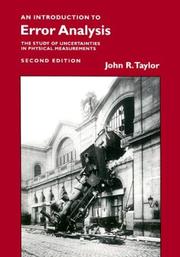
The standard undergraduate text on uncertainty, propagation and least squares, and the one genuinely technical book here. Everything above tells you where standards came from; this tells you how to report a number against one.
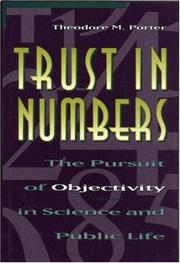
The closing argument: quantification as a strategy for establishing authority where trust is absent. Read last, because it reframes the whole path — precision is not only an epistemic achievement but a political one.