Mary Balogh books in order: where to start with the Bedwyns and Westcotts
Mary Balogh has written well over a hundred Regency romances, and the reason newcomers stall is that there is no single chronology — there are family sagas, each self-contained, plus twenty years of standalones from her earlier traditional-Regency period. This path picks the two novels that open the most doors, then runs the Bedwyn saga in order, then the Westcotts as the modern-era counterpart, and finishes with the darker early standalones that show what Balogh does when she is not writing a family. Every series here can be read on its own; the order below is about where the payoff is largest.
Start here: the two novels that open everything
BeginnerMeet Balogh's characteristic register — quiet, interior, emotionally slow-burning rather than farcical — and pick up the connective tissue that leads into the Bedwyn saga.
▸ Study plan for this stage
Pace: Two to three weeks, about 705 pages. A Summer to Remember is 313 pages and is the standard recommended first Balogh — read it first even though One Night for Love precedes it chronologically. One Night for Love is 392 pages and explains who Lauren is and why she was jilted, which is why it works bet
- Balogh's characteristic register: interior, quiet, and emotionally slow rather than farcical or banter-driven
- The fake courtship in A Summer to Remember as an on-ramp — a complete story that also introduces the social circle the later series inhabits
- Reading order versus chronology, which is the whole practical problem with a hundred-book backlist
- How a Regency romance signals its own subgenre: traditional Regency, Regency historical, and where Balogh sits
- Emotional interiority carried by free indirect style rather than by dialogue
- Why the same author can produce a light novel and a bleak one in the same world
- What is the bargain Kit and Lauren strike, and what does each of them actually want from it?
- How does One Night for Love change your reading of Lauren in A Summer to Remember?
- Where does Balogh put the emotional turn in each book — how many pages in, and what triggers it?
- What is the difference in tone between the two, and is it a difference of subject or of technique?
- Which of the two would you hand a reader who has never read a Regency, and why?
- Read A Summer to Remember first and keep a note of every character introduced who is clearly not needed by this plot; several of them are Bedwyns and Balogh is seeding the saga.
- After One Night for Love, go back to Lauren's first scene in A Summer to Remember and reread it. It is a different scene once you know what happened to her.
- Mark the page in each novel where the couple's relationship changes irreversibly, and compare how much of the book remains after it. Balogh's pacing is unusual and this is where you can see it.
- Write one paragraph describing Balogh's voice using two specific sentences as evidence. You will test it against the Westcotts twenty-five years later.
Next up: You now know the social world and the author's register, which is exactly what the Bedwyn saga assumes without ever restating.
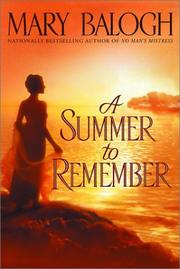
The standard recommended first Balogh and the reason the Bedwyns work: Kit Butler and Lauren Edgeworth's fake courtship introduces the wider social circle the later series inhabits. Read it first — it is a complete novel that happens to function as an on-ramp.

Chronologically precedes A Summer to Remember and explains who Lauren is and why she is jilted, so it is the natural second read rather than the first. A harder, sadder book than its successor, which is a useful early signal of Balogh's range.
The Bedwyn saga, part one
BeginnerBegin the six-book Slightly sequence, following the Bedwyn siblings in publication order, and see how Balogh builds a family across a series without making any single book dependent on the others.
▸ Study plan for this stage
Pace: Three to four weeks, about 1,059 pages: Slightly Married 342, Slightly Wicked 343 and Slightly Scandalous 374. Read them in publication order, which is also the intended order. All three were published within a year of each other and are deliberately consistent in length and shape — this is a series
- Balogh's central move: two people who marry or commit first and fall in love afterwards
- The Bedwyn siblings as a designed set — six characters differentiated before any of them gets a book
- Wulfric, Duke of Bewcastle, as the absent presence looming over all six novels
- Series construction without dependency: each book resolves, the family does not
- Marriage of convenience, mistaken identity and the arranged bargain as three variations on one structure
- Tone modulation across a series — Slightly Wicked as the deliberate light entry
- What obligation drives Aidan's marriage, and at what point does obligation become choice?
- How does Balogh differentiate the six siblings before they have their own books? Name the technique.
- What does Wulfric do in these three books, and how does Balogh keep him interesting while withholding him?
- Which of the three has the most conventional plot, and what does Balogh do with the convention?
- Could any of these three be read alone with no loss? Test it on one.
- Make a Bedwyn family sheet as you read: six siblings, in birth order, with the trait each is introduced by. You will need it for the second half.
- Track Wulfric's appearances across all three books — count his scenes and note what he does in each. The payoff in stage 3 depends on this accumulation.
- Take the marriage-of-convenience structure of Slightly Married and the assumed-identity structure of Slightly Wicked and write down what both are doing to delay the same thing.
- Compare Freyja's dialogue in Slightly Scandalous with her appearances in the previous two books and note whether the voice is consistent.
Next up: The three lighter Bedwyns are done and the family sheet is built, which is what the darker second half and Wulfric's own novel are waiting for.

Aidan Bedwyn's deathbed promise to a dying soldier turns into a marriage of obligation. Book one of six, and the cleanest demonstration of Balogh's central move: two people who marry first and fall in love afterwards.
Rannulf and Judith, an overturned stagecoach and an assumed identity. Read second; it is the lightest of the six and a good breather before the sequence deepens.
Freyja Bedwyn, the sister most readers remember, gets the sharpest banter in the saga. Third in order, and the book where the Bedwyn family voice fully arrives.
The Bedwyn saga, part two
BeginnerFinish the saga through its two darkest entries and its capstone, and understand why Slightly Dangerous is the book Balogh readers argue is her best.
▸ Study plan for this stage
Pace: Three to four weeks, about 1,067 pages: Slightly Tempted 356, Slightly Sinful 342 and Slightly Dangerous 369. Read in order and read Slightly Tempted and Slightly Sinful consecutively — the second's premise depends directly on the first's ending. Slightly Tempted is set in Brussels on the eve of Wat
- Waterloo as the point where the saga's register changes, and how the tonal shift carries into the next book
- Amnesia handled as a real condition with consequences rather than as a plot convenience
- The payoff structure of a six-book family saga: five books of withholding and one of release
- Wulfric's coldness reframed — the same behaviour, given an interior, reading completely differently
- Why Slightly Dangerous only works in position six, and what a reader who started there would lose
- How Balogh ends a series without a wedding-and-epilogue montage
- What does Slightly Tempted do with the battle's aftermath that a lighter series would not?
- How does Slightly Sinful use the amnesia — what does Alleyne not knowing himself let Balogh do?
- What has Wulfric been doing for five books, and how much of it was visible on first reading?
- Is Slightly Dangerous the best of the six? Argue it from the writing, not from the payoff.
- Having read all six, would you now change the order you recommend to a new reader?
- Go back through your Wulfric scene log and reread three of his earliest appearances after finishing Slightly Dangerous. The reread is the argument for reading the saga in order.
- Mark the page in Slightly Tempted where the tone changes and check whether the next book sustains it or retreats.
- Compare how Slightly Married and Slightly Dangerous each handle their first meeting between the couple, and note what fifteen months of writing changed.
- Write 300 words on whether the six books are one novel or six, citing two specific dependencies.
Next up: One complete family saga read in order gives you the standard against which the Westcotts, written twenty-five years later, can actually be measured.
Morgan Bedwyn in Brussels on the eve of Waterloo. Fourth, and the point where the saga stops being comic — the battle aftermath is written seriously and the tone carries into the next book.
Alleyne Bedwyn, presumed dead at Waterloo, wakes with no memory in a brothel. Read fifth, directly after Slightly Tempted, which sets up its premise.
Wulfric, the cold Duke of Bewcastle who has loomed over all five previous books, finally gets his own. The saga's payoff and the reason to have read the others in order — it is frequently named the single best Balogh novel.
The Westcotts: the modern-era series
BeginnerRead the opening of Balogh's later, longer-running family series and see how her handling of scandal, illegitimacy and class hardened over twenty-five years.
▸ Study plan for this stage
Pace: Three to four weeks, about 1,229 pages: Someone to Love 400, Someone to Hold 390 and Someone to Wed 439. These are longer than the Bedwyn books and the series rewards order more than the Bedwyns do — Someone to Hold is a direct consequence of Someone to Love and reads oddly without it. The run conti
- A premise that destroys its characters' social standing in the first chapter and spends a series rebuilding it
- Illegitimacy, inheritance and title as legal machinery rather than as scandal-flavouring
- Series structure with consequence: each Westcott book is caused by the previous one in a way the Bedwyns are not
- How Balogh's handling of class hardened across the twenty-five years between the two sagas — the same author, a sharper edge
- The found-family plot as the Westcotts' distinguishing move
- Length as a signal: the later books are longer because they are carrying more social argument
- What exactly is the legal situation Someone to Love creates, and who loses what?
- How is Someone to Hold caused by Someone to Love, and could it exist without it?
- What does Balogh do with disfigurement in Someone to Wed, and does the novel resolve it honestly?
- Set a page of Someone to Love beside a page of Slightly Married: what has changed across the twenty-five years between them?
- Do the Westcotts reward order more than the Bedwyns? Point to the dependency that proves it.
- Diagram the Westcott family after the revelation in Someone to Love — who is legitimate, who inherits, who is displaced. The next two books assume you have it straight.
- Compare the opening chapters of Slightly Married and Someone to Love and mark the differences in how quickly each establishes its social situation.
- Track how each of the three books handles money — who has it, who lost it, who is marrying for it — and note that the Bedwyns rarely raise the question.
- Decide in writing whether to continue past Someone to Wed, naming the thread that would take you there.
Next up: Two family sagas read in order leaves the standalones, which is where Balogh writes without a series' obligations and goes considerably darker.

A duke dies, his marriage turns out to have been bigamous, and his three legitimate children are unmade in a page. Book one of the Westcotts and the strongest premise Balogh has built a series on; start the modern books here.

Camille Westcott, stripped of her title, teaching in the orphanage her half-sister grew up in. Second, and the direct consequence of book one — the Westcotts reward being read in order more than the Bedwyns do.

A scarred heiress proposes a frank bargain to the new earl. Third, and the point at which the series settles into its rhythm; the run continues well past this book if it holds you.
The darker early Balogh
IntermediateRead the pre-saga standalones that regular readers point to as her most emotionally uncompromising work, and understand why they carry content most Regency romance does not.
▸ Study plan for this stage
Pace: Two to three weeks, about 917 pages, and the shortest stage on the path: The Secret Pearl 408, A Precious Jewel 285 and The Notorious Rake 224. Read them in this order. The Secret Pearl opens with a duke paying a desperate woman for sex on a London street and then finding her employed as his daughte
- The traditional Regency as a distinct format — shorter, less explicit, tighter — and what Balogh could and could not do inside it
- Transactional sex as a premise the novel refuses to launder, and what that costs the romance structure
- Two novels about the same social situation written to opposite emotional effects
- How the early standalones prefigure the sagas: the same interiority, without a family to distribute it across
- Publisher and format as constraints on a romance writer's range
- Why these books are placed last rather than first — they read very differently once you know her instincts
- How does The Secret Pearl handle its opening scene later in the book — is it revisited, reframed or left alone?
- What does A Precious Jewel do differently with a similar premise, and which of the two is more honest about it?
- What can The Notorious Rake do in 224 pages that a 400-page Westcott cannot?
- Which of Balogh's later moves are already present in these three, and which are not?
- Having read all fourteen books, what is the single thing Balogh does that no other Regency writer you have read does?
- Read the opening chapter of The Secret Pearl and then, after finishing the novel, read it again; write down what the ending asks you to do with it.
- Set The Secret Pearl and A Precious Jewel side by side on the same social premise and list every choice that produces the difference in tone.
- Time yourself reading The Notorious Rake and note where Balogh compresses — which of the beats she takes a hundred pages over in the Westcotts happen here in ten.
- Go back to the paragraph you wrote in stage 1 about Balogh's voice and revise it now that you have read her across thirty years.
Next up: That is the working Balogh shelf — two sagas in order, the two on-ramps and the darker early standalones — and enough of a map to choose freely among the ninety books this path does not cover.
A duke buys a night with a desperate woman on a London street, then finds her employed as his daughters' governess. The book Balogh readers name when asked how dark she gets — it opens with a transactional sexual encounter and never softens it. Read it once the saga has taught you her instincts.
A courtesan and the plain, decent man who keeps her. Follows The Secret Pearl in the same loose world and is the more tender of the two; read second for the contrast in how Balogh handles the same social premise.
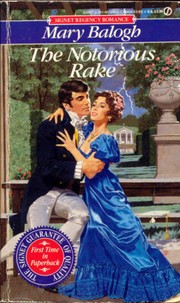
A short traditional Regency from her Signet years, and the best single sample of the format she wrote in before the long sagas. Closes the path by showing the compressed early style the later books grew out of.