Arkady Renko books in order: where to start with Martin Cruz Smith
Martin Cruz Smith wrote one detective across four decades of Russian history, and the Arkady Renko novels are best read in publication order because that order is the history: the Brezhnev stagnation of Gorky Park, the collapse in Red Square, the wreckage of the 1990s, and Putin's Russia after that. This path runs the Renko sequence straight through, then turns to the standalone novels, which are where Smith did his most varied work and where readers who bounce off police procedurals often find their way in.
Start here: Gorky Park
BeginnerMeet Arkady Renko in the novel that defined him, and understand why a 1981 Soviet police procedural still reads as the best entry point rather than a period piece.
▸ Study plan for this stage
Pace: About a week, 393 pages. It is one book and it is the only sensible place to begin, so give it a clear run rather than reading it alongside something else — the first hundred pages are deliberately disorienting and the novel rewards continuity. Gorky Park opens with three mutilated bodies in the sno
- Arkady Renko as a chief investigator whose defining trait is not incorruptibility but an inability to stop asking
- Brezhnev-era Moscow as a working environment — scarcity, privilege, the Party and the KGB as rival jurisdictions
- The jurisdictional conflict between the militia and the KGB, which is the novel's real engine
- Smith's procedural method: forensic detail used to establish that the world is real, not to solve the case
- Renko's marriage and social position as the things the investigation costs him
- How a 1981 novel about the Soviet Union reads now — as period reconstruction, or as reportage that happened to be fiction
- What is Renko's actual position in the hierarchy, and who can overrule him?
- At what point does the investigation stop being about the murders and start being about who is allowed to investigate?
- How does Smith convey Soviet material scarcity without stopping to explain it?
- What does Renko want, stated in his own terms rather than the plot's?
- Does the novel work as a mystery, or is the mystery a delivery mechanism for the setting?
- Mark the first twenty pages for every detail Smith gives about how Moscow physically works — food, transport, apartments, paperwork — and note that almost none of it is explained.
- Track the chain of command: write down every official who tells Renko to stop, and which institution each answers to. The hierarchy is the plot.
- Read the last chapter and then the first, and identify what Renko has actually lost between them.
- Write down one sentence stating the novel's view of the Soviet system. You will test it against the next three books.
Next up: Gorky Park establishes Renko inside a functioning state; the next three books take that state apart while he is still in it.
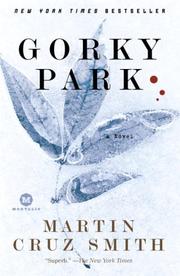
Three faceless bodies in the snow, and a Moscow chief investigator who keeps asking questions after being told to stop. This is the book that made Smith's name and it is the only sensible place to begin: everything Renko becomes over the next forty years is set here, and the novel is self-contained enough that stopping after it is a legitimate choice.
Renko and the Soviet collapse
IntermediateFollow Renko from internal exile through the disintegration of the Soviet state, and see how Smith uses one investigator's career to mark the end of a country.
▸ Study plan for this stage
Pace: Four to five weeks, about 1,245 pages. Polar Star is 386, Red Square 490 and Havana Bay 369. Read them in this order, and note the eight-year gap between the publication of Gorky Park and Polar Star — the gap is the point, and Renko has spent it in internal exile. Red Square is set in Moscow in Augu
- Internal exile as the series' way of showing punishment without a prison — Renko gutting fish on a factory ship
- The shipboard setting of Polar Star as a closed system, which makes it the tightest-constructed book in the series
- August 1991 as a hinge: the state Renko has spent two books resisting stops existing partway through the investigation
- The transition to gangster capitalism as a subject the series enters in real time rather than in retrospect
- Havana Bay as a test of whether Renko works outside Moscow, and what the answer tells you about the character
- Grief as a plot driver — the loss carried out of Red Square is what puts Renko in Cuba
- What has happened to Renko between Gorky Park and Polar Star, and how much does the novel tell you directly?
- How does the confined setting of Polar Star change Smith's method compared with Gorky Park?
- Where in Red Square does the political situation intrude on the case, and where does the case simply carry on regardless?
- What is Cuba standing in for in Havana Bay, and does the parallel hold?
- Is Renko a different character by the end of Havana Bay, or the same character in worse circumstances?
- Read the opening chapter of each of the three books consecutively and note where Smith places Renko physically each time; the series stages his position before it states it.
- In Red Square, mark every reference to the August coup and check how many are Renko noticing versus Smith telling. Smith keeps the history in peripheral vision deliberately.
- Compare the closed community of the Polar Star with the closed community of Havana's expatriate Russians, and write down what Smith needs a closed community for.
- Keep a one-line note per book of what Renko has lost, added to the one from Gorky Park. By book four the list is the character.
Next up: The Soviet state is gone by the end of this stage; the middle sequence is about what replaced it and what that does to a man whose method was built for the old one.

Renko in disgrace, gutting fish on a factory ship in the Bering Sea, until a body comes up in the net. Read second: the eight-year gap between it and Gorky Park is the point, and the shipboard confinement makes it the most tightly constructed book in the series.
Moscow in August 1991, with the coup happening around the investigation. Third in order and the hinge of the whole sequence — the state Renko has spent two books resisting simply stops existing partway through.
Renko out of Russia entirely, in a Cuba abandoned by its Soviet patron and starving for it. Placed fourth because it is where the series tests whether Renko works away from Moscow, and because the grief driving him here follows directly from Red Square.
Renko in Putin's Russia
IntermediateRead the middle sequence, in which the enemy shifts from the Party to oligarchs, contract killers and a state that has learned to be modern about its violence.
▸ Study plan for this stage
Pace: Five weeks, about 1,318 pages: Wolves Eat Dogs 337, Stalin's Ghost 352, Three Stations 317 and Tatiana 312. These four are shorter than the earlier books and read faster. Wolves Eat Dogs takes Renko into the Chernobyl exclusion zone and deals with radiation illness and with the population still livi
- The shift in antagonist from the Party to oligarchs, private security and contract killers
- The exclusion zone as the series' most literal image of what the Soviet Union left behind
- Rehabilitation of the Soviet past as a live political project, which is Stalin's Ghost's subject
- Compression as a deliberate technique in Three Stations — Renko stripped of rank and the book stripped with him
- Fiction built on a real killing: Tatiana as a novel about journalism written while the subject was recent
- How the series' politics changed once the enemy stopped being an ideology and became money
- What is different about the corruption Renko faces in Wolves Eat Dogs compared with Gorky Park?
- What does the Stalin apparition in Stalin's Ghost turn out to be, and what is the novel arguing through it?
- Why is Three Stations so short, and does the compression serve it?
- How does Smith handle writing a character based on a real murdered journalist? What does he change and what does he keep?
- Which of these four is the strongest, and can you argue it on the writing rather than the subject?
- In Wolves Eat Dogs, note every fact Smith gives about the exclusion zone's inhabitants and check afterwards which are documented; the novel is unusually reportorial.
- Write down what the metro apparition in Stalin's Ghost is used for by each faction in the novel; the book is structured as competing uses of the same image.
- Compare a description of Moscow from Gorky Park with one from Three Stations, chosen from a similar setting, and mark what has changed in the city and what in Smith's prose.
- Read Tatiana's opening and the account of the journalist's death, then write a paragraph on what the novel gains and risks by using a real case.
Next up: Four books into the modern sequence, the two late novels close the run as it currently stands and bring the author's own circumstances into the character.
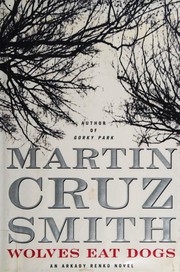
A billionaire's suicide leads Renko into the Chernobyl exclusion zone, where a shadow population still lives. Widely held to be the strongest late Renko and the clearest statement of the new Russia the series has arrived in.
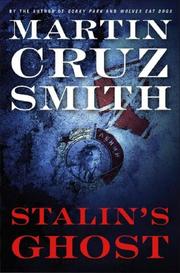
Commuters report seeing Stalin on a metro platform, and the case turns into an argument about what Russia wants to remember. Read after Wolves Eat Dogs; it is the series' most direct engagement with the rehabilitation of the Soviet past.
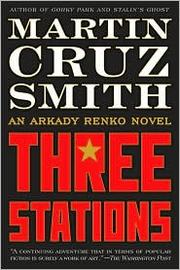
The shortest and bleakest of the run — a dead girl, a stolen baby, and Moscow's rail-station underclass. Here because the compression is deliberate: Renko has been stripped of rank and the book is stripped with him.
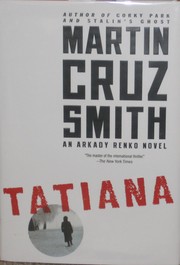
A murdered investigative journalist, transparently modelled on Anna Politkovskaya, and a notebook nobody can read. Read seventh; it is the book where Smith writes most directly about the cost of reporting in modern Russia.
The late Renko novels
IntermediateFinish the sequence as it stands, including the Siberian oil-and-politics novel and the Ukraine book, and understand how the series has aged alongside its detective.
▸ Study plan for this stage
Pace: Two to three weeks. The Siberian Dilemma is 288 pages and reads as a direct continuation of Tatiana rather than a fresh case, so read them close together. Independence Square carries no page count in our catalogue; it is the most recent Renko novel the catalogue holds cleanly, takes Renko to Kyiv af
- Oil money and Siberian politics as the last stage of the series' economic arc
- The jailed dissident as a recurring Russian figure and Smith's late handling of it
- Continuation rather than case-of-the-week: The Siberian Dilemma finishes Tatiana's emotional business
- Ukraine as the setting a series about post-Soviet Russia was always going to reach
- An author writing his own illness into a long-running character, and what that does to the reading
- Reading an unfinished sequence — what you can judge about a series still being written
- In what sense is The Siberian Dilemma a sequel to Tatiana rather than a new book?
- What does the Siberian setting let Smith say about Russian money that Moscow did not?
- How does Independence Square handle Renko's diagnosis — as plot, as metaphor, or as fact?
- Has the detective aged in real time across the series, and does the arithmetic hold?
- Where would you now tell someone the series peaked, and why?
- Read the last chapter of Tatiana and the first of The Siberian Dilemma back to back and mark exactly what the second book assumes.
- Track how Smith writes Renko's physical symptoms in Independence Square — note every scene where the illness affects what he can do, and compare that with how Gorky Park handled physical limitation.
- Update your per-book note of what Renko has lost; the completed list from Gorky Park to Independence Square is the shape of the series.
- Write 300 words on whether the Renko books are a detective series or a history of Russia in disguise, citing three books by name.
Next up: With the detective sequence finished, the standalones show the same author working in four settings he only visited once each.

Renko goes east after Tatiana and finds oligarchs, oil money and a jailed dissident. Read directly after Tatiana, of which it is effectively a continuation rather than a fresh case.

A missing activist takes Renko to Kyiv, and Smith writes Renko's own Parkinson's diagnosis into the character. The most recent entry the catalogue carries cleanly, and a fitting late stopping point; a further Renko novel has since appeared but does not resolve reliably.
The standalones
IntermediateSee the range outside Renko — a Southwestern horror novel, the Manhattan Project, Victorian coal country, Tokyo before Pearl Harbor and wartime Italy — and judge which of Smith's modes you actually want more of.
▸ Study plan for this stage
Pace: Six weeks, about 1,710 pages: Nightwing 255, Stallion Gate 305, Rose 447, December 6 383 and The Girl from Venice 320. Read them in this order, which is roughly chronological by publication and puts the pre-Gorky Park book first. Two catalogue notes for buyers: the Open Library record for Rose lists
- The closed community and the outsider investigator as Smith's structure regardless of genre
- Nightwing as horror written before the thrillers, and the book whose sales paid for Gorky Park
- Stallion Gate as Smith's most ambitious non-series novel — Oppenheimer seen from a Pueblo sergeant assigned to watch him
- Rose as the strongest evidence that Smith is a novelist first: Victorian Wigan, a mining engineer, and a missing woman
- December 6 and the outsider who will not leave, a figure Smith returns to in every setting
- How much of the Renko books is Renko and how much is Smith's method applied to a place
- What structural features do Nightwing, Rose and December 6 share with Gorky Park?
- What does Stallion Gate do with Oppenheimer, and whose novel is it actually?
- Why is Rose so often named as Smith's best book, and do you agree after reading it?
- What is the outsider figure for, in each of these five books?
- Which of Smith's modes do you want more of — the procedural, the historical or the horror? Argue it from the page.
- Read the first chapter of Nightwing and the first chapter of Gorky Park together and list the structural moves that appear in both.
- In Rose, mark the passages of technical mining detail and count them; then do the same for the forensic detail in Gorky Park. The habit is identical and the subject is not.
- Check the edition before buying December 6 — if you already own Tokyo Station you own this book.
- Pick the standalone you rated highest and write 300 words on what it does that the Renko novels cannot.
- Finish by rereading the opening of Gorky Park and deciding whether it still reads as the best entry point after all fifteen books.
Next up: That is Smith's shelf as the catalogue holds it — one detective across four decades of Russian history, plus five novels showing the same method working anywhere.
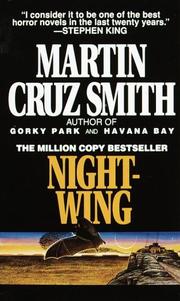
Plague-carrying vampire bats on a Hopi reservation, written before Gorky Park and the book that paid for it. Start the standalones here for the chronology, and because it shows Smith's method — a closed community, an outsider investigator — already fully formed.
Los Alamos and the first atomic test, seen through a Pueblo sergeant assigned to watch Oppenheimer. Read second among the standalones; it is the most ambitious thing Smith wrote outside the series.

A Victorian Wigan coal town, a missing curate's fiancee and a mining engineer sent to find her. Placed here as the strongest argument that Smith is a novelist first and a thriller writer second. The Open Library record carries a translator in the author field alongside Smith; the book is the 1996 novel.
Tokyo on the eve of Pearl Harbor, through an American gambler who will not leave. Note the edition trap: this novel was published in Britain as Tokyo Station, and both titles exist as separate catalogue records — they are one book, so buy only one.

A fisherman in the 1945 Venetian lagoon hides a Jewish girl from the retreating Germans. The lightest book here and a good closing note. Its catalogue record lists the audiobook narrator alongside Smith, which is a metadata quirk rather than a co-author.