The Lunar Chronicles books in order: where to start with Marissa Meyer
Marissa Meyer's main sequence, The Lunar Chronicles, is a set of fairy-tale retellings in a science-fiction setting, and it has the least ambiguous reading order of any popular young-adult series: Cinder, Scarlet, Cress, Winter, in that order, no exceptions. The reason is structural rather than chronological — each book adds a new viewpoint character without dropping the previous ones, so by the fourth the cast from all four is on the page at once, and reading out of order does not confuse you so much as spoil you. The genuine questions are where the companion volumes fit and what to read afterwards, and that is what the later stages of this path answer.
The Lunar Chronicles, in Strict Order
BeginnerRead the four core novels in publication order, which is also the only order they work in.
▸ Study plan for this stage
Pace: Six to eight weeks, about 2,293 pages, and the length is very unevenly distributed: Cinder 416, Scarlet 488, Cress 562, Winter 827. Winter alone is longer than the first two combined and resolves four books' worth of plot, so leave real time for it. One ordering note before you start: Fairest, the p
- The additive cast structure: four books, four new protagonists, none retired — by Winter all four plots share the page
- Each novel's source tale and how far it commits — Cinderella in Cinder, Little Red Riding Hood in Scarlet, Rapunzel in Cress, Snow White in Winter
- Luna and the Earthen Union as a political conflict with a war at the end of it, not a backdrop for romance
- The Lunar glamour: mind control as the series' one magical rule, with defined costs and one defined immunity
- Letumosis as the plot engine of the first two books and the reason Cinder is where she is
- Publication order and internal chronology being identical here, which is why the reading-order question is really a question about the companion volumes
- What are the stated rules and limits of the Lunar gift, and which characters are exceptions?
- How does Meyer introduce each new protagonist without stalling the existing plot? Name the device she uses in Scarlet and again in Cress.
- Which fairy tale does the series follow most closely and which most loosely, and what does the loosest one gain by departing?
- What is actually at stake politically by the end of Cress, stated without reference to any romance?
- Winter is nearly twice the length of Cinder — is that earned, and what specifically fills the extra pages?
- Keep a cast sheet from Cinder onward, adding each new viewpoint character with the book they arrive in and the tale they come from. By Winter there are enough that the sheet is genuinely useful.
- At the end of Cress, stop and read Fairest before opening Winter, then note in the first hundred pages of Winter which scenes land differently because you already understand Levana.
- Chart the chapter distribution in Winter — how many chapters each of the four couples gets — and see whether the balance matches how much plot each carries.
- Take the opening chapter of Cinder and the opening chapter of Winter and compare the prose; the series is often described as roughest at the start, and this is where you can check it.
Next up: The four core novels are done and the epilogue material now has somewhere to attach — which is exactly the constraint governing where the companion volumes belong.
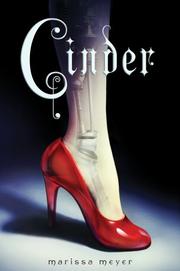
Start here, always. Cinderella as a cyborg mechanic in a plague-stricken New Beijing, and the book that sets up the political conflict with Luna that the whole series turns on. It is also the shortest and the roughest of the four, so if it half-works, keep going.
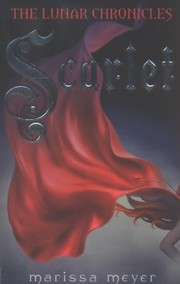
Little Red Riding Hood in rural France, with Cinder's story continuing in alternate chapters. This is where the additive structure becomes obvious: two plots, two casts, one book, and they converge at the end.
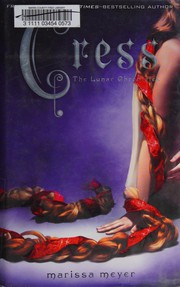
Rapunzel as a hacker in orbit, and the strongest of the four by most readers' reckoning — the plotting is tighter and the ensemble is now large enough to carry set pieces. Do not skip to it; it depends entirely on the previous two.
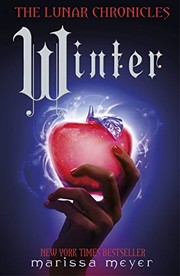
Snow White on Luna, and the finale, at over eight hundred pages. It resolves everything and assumes you remember all of it, which is the argument for reading the four close together rather than over years.
The Companion Volumes
BeginnerPlace the prequel, the novella collection and the graphic-novel sequel correctly, so nothing is spoiled and nothing is read too early.
▸ Study plan for this stage
Pace: Three to four weeks, about 1,152 pages. Fairest is 272 pages and is the Levana prequel — if you followed the note above you have already read it between Cress and Winter, which is where it belongs; read it now only if you did not. Stars Above is 400 pages of nine short stories, mostly backstory for
- Prequel placement as a reading-order problem: Fairest spoils Cinder and Scarlet if read early and loses its effect if read late
- A villain origin that explains without excusing, and how Fairest keeps Levana legible in Winter
- Short-story collections as backfill: which gaps Stars Above closes and which it opens
- Why the epilogue in Stars Above fixes its position absolutely
- Reading a comics continuation after four prose novels — what the form changes about pacing and interiority
- Iko as a character the novels used as relief and the graphic novel promotes to protagonist
- What does Fairest change about your reading of Levana's scenes in Winter, and would it have worked read after?
- Which of the nine stories in Stars Above adds something the novels needed, and which are ornament?
- What does the Stars Above epilogue settle, and does it improve or diminish Winter's ending?
- What does Wires and nerve do with Iko that four prose novels did not?
- If you were telling a friend where these three go, what would you say in one sentence each?
- Rank the nine Stars Above stories by how much they change your understanding of the novels, and note which you would tell a reader to skip.
- Read Fairest's account of one event and then the version of the same event glimpsed in Cinder or Scarlet, and mark exactly what the prequel withheld or reframed.
- Read one action sequence in Wires and nerve and the equivalent in Winter, and write down what the panels do faster than prose and what they lose.
- Check what you are buying before you order Wires and nerve — our record looks like the collected edition covering both parts, so you may be buying one object or two.
Next up: The Lunar Chronicles is finished in every format; the standalones show what Meyer does with a fairy tale when there is no series to protect.

The Levana prequel, published between Cress and Winter. Read it exactly there: earlier and it spoils the reveals in Cinder and Scarlet, later and it loses the effect of walking into Winter already understanding the villain.
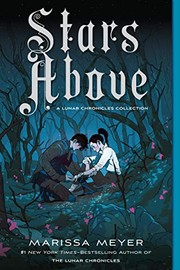
Nine short stories, mostly backstory for characters you already know, plus an epilogue set after the finale. It has to come after Winter because of that epilogue, and it is the natural place to go when you finish and do not want to leave.

A graphic-novel continuation following Iko after the events of Winter — Meyer writing, other artists drawing. Optional, genuinely after the series rather than alongside it, and the only Lunar Chronicles book that is not prose.
The Standalone Fairy Tales
BeginnerRead the retellings that stand outside the Lunar Chronicles entirely, and see what Meyer does with a darker register.
▸ Study plan for this stage
Pace: Four to five weeks, about 1,506 pages. Heartless is 510 pages, a Wonderland prequel about the Queen of Hearts, and it stands entirely alone — read it first here. Gilded is 500 pages and Cursed 496; they are a Rumpelstiltskin duology, Gilded ends on a cliffhanger, and there is no point starting it un
- Writing toward a fixed ending: Heartless is a prequel to a character the reader already knows becomes a tyrant
- Retelling as tonal choice rather than plot choice — the same method as the Lunar Chronicles, aimed at a much darker register
- The Grimm-adjacent setting of Gilded and how much of the folklore is real and how much invented
- Duology structure and the cliffhanger as a commercial and formal decision
- How Meyer's romance plotting changes when the ending is not allowed to be happy
- What is constant across all three: an ordinary competent heroine, a bargain, and a cost paid later
- Does Heartless earn its ending, given that the ending was fixed before the book began?
- How does Meyer make an inevitable outcome suspenseful? Name the technique.
- What is actually taken from the Rumpelstiltskin tale in Gilded, and what is invented around it?
- Where does Cursed pick up, and does the split into two books serve the story or the shelf?
- Which register suits Meyer better — the Lunar Chronicles' or this one — and what evidence are you using?
- Find a translation of the Grimm Rumpelstiltskin, read it in ten minutes, then list every element Gilded keeps, inverts and adds.
- Mark the point in Heartless where you first believed the ending was going to happen, and work out what Meyer had done in the preceding chapter to convince you.
- Read Gilded's last chapter and Cursed's first back to back and judge whether the break falls where a single novel would have had a natural act break.
- Compare the death of a named character in Cursed with the equivalent in Winter and note the difference in how much page time each gets.
Next up: With both fairy-tale projects read, the remaining books are the ones that leave fairy tale behind entirely.

The Queen of Hearts before she was the Queen of Hearts — a Wonderland prequel, standalone, and much sadder than anything in the Lunar Chronicles. The best demonstration that Meyer can write an ending readers do not want.

Rumpelstiltskin, relocated to a genuinely grim German folkloric setting with a body count. First of a duology and it ends on a cliffhanger, so start it only if you intend to read the second.
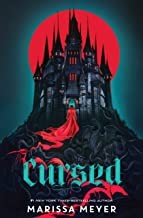
The conclusion of the Gilded duology, and the necessary second half. Read directly after; it picks up where the cliffhanger leaves you.
The Superhero Trilogy and the Contemporary Novels
IntermediateRead the two later projects that move away from fairy tale entirely, and know what kind of book each one is before starting.
▸ Study plan for this stage
Pace: Six to seven weeks, about 2,053 pages. Renegades is 584 pages, Archenemies 512 and Supernova 557 — a single arc of roughly 1,653 pages that should be read in order and reasonably close together, because Archenemies ends mid-motion. Instant Karma is 400 pages, a contemporary romantic comedy with one
- The double-identity plot as the trilogy's engine, and the moment in Archenemies when the deception starts costing rather than protecting
- A superhero story told from both sides simultaneously — the trilogy's premise is a moral argument, not a costume
- Prodigies, the Renegade Council and the setting's rules about who is allowed to use power
- Trilogy architecture: setup, escalation, resolution across three books that Meyer clearly planned as one
- Instant Karma as a deliberate change of register — contemporary, comic, low stakes, one magical rule
- What is recognisably Meyer regardless of genre: dual viewpoint, a bargain, and a slow reveal
- What does Renegades want you to believe about the heroes, and at what point does the trilogy withdraw it?
- What are the stated limits on prodigy powers, and does Supernova respect them?
- Where does the double-identity plot stop being sustainable, and does Meyer resolve it or escape it?
- Is Supernova a satisfying end to a three-book arc? Point to the thread that most needed resolving.
- What survives of Meyer's method in Instant Karma, where there is no myth to retell and almost no magic?
- Keep a two-column sheet through Renegades — what Nova knows and what Adrian knows — and mark each chapter where the gap widens. The trilogy is engineered on that gap.
- List the rules of prodigy powers as Renegades states them, then check every major power use in Supernova against the list.
- After Archenemies, write down your prediction for how the identity plot resolves; check it against Supernova and note what Meyer did instead.
- Read the first chapter of Instant Karma and the first chapter of Cinder and mark the structural moves they share despite having nothing else in common.
Next up: That is Meyer's full published shelf in the order that makes each project land — four interlocking retellings, their companions, two darker standalone fairy tales, a superhero trilogy and one contemporary comedy.
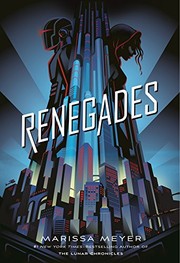
A superhero novel told from both sides — a girl raised by villains infiltrating the hero organisation that destroyed her family. The strongest premise Meyer has had, and a completely different tone from the fairy-tale books.

The middle book, and the one where the double-identity plot pays off. Read in sequence; the trilogy is a single arc and this ends mid-motion.

The conclusion of the Renegades trilogy. Read it last of the three and treat the trilogy as one long book, which is roughly what it is.

A contemporary standalone romantic comedy with one small magical premise, and nothing like the rest of her work. Listed last because it is the least representative and the easiest to enjoy without having read anything else.