Maple Syrup Making: The Best Books to Read, in Order
Making maple syrup is a small number of decisions repeated under time pressure: which trees to tap, when the run starts, how to get sap out of the woods before it spoils, and how to boil forty gallons down to one without scorching it or setting fire to anything. This path starts with the short backyard guides that will get you through a first season with a few buckets and a flat pan, then goes back for the tradition and the underlying chemistry, then opens out to the commercial scale and the kitchen. It is a practical subject and the reading is practical: expect the early books to be thin, cheap and immediately usable, and the later ones to be reference works you keep on a shelf.
Your First Season
BeginnerTap a handful of trees and finish a jar of syrup — identify sugar maples, set spiles, collect and store sap, and boil it down outdoors without ruining it.
▸ Study plan for this stage
Pace: Read this stage in autumn or early winter, weeks before the sap moves — the whole thing is only about 360 pages and can be done in a fortnight, but the practical half of it is locked to a run that lasts a few weeks in late winter and early spring and will not wait for you. Rink Mann's Backyard Sugar
- Identifying sugar maples in winter from bark, branching and buds, having marked them in leaf the previous autumn
- Why the run happens at all: alternating freezing nights and above-freezing days driving pressure changes in the trunk
- Tap placement and depth, tree diameter thresholds, and how many taps a tree can carry
- Sap handling as a food-safety problem — it spoils, and cold storage between collection and boiling is not optional
- The roughly forty-to-one ratio, and what that implies about the volume of water you are evaporating outdoors
- Finishing to density with a hydrometer rather than by eye, and why the last few degrees are where syrup is ruined
- Filtering and canning hot so the finished syrup keeps
- How do you tell a sugar maple from a red or Norway maple in February, with no leaves?
- What weather pattern actually starts and stops the run, and what ends the season for good?
- Where do Mann and Perrin disagree on technique, and which of them is writing for your setup?
- What is the finished density you are aiming for, and how do you know when you have reached it?
- What are the two or three ways a first batch is most commonly ruined, and which one is most likely to be yours?
- In autumn, tag your candidate trees while the leaves are on them and measure each trunk. Mann's diameter guidance tells you how many taps each can carry, and you cannot do this part in February.
- Before the season, set out the equipment Mann lists and check it against Perrin's and Visser's lists; buy only what appears on at least two.
- During the run, keep a sap log: date, overnight low, daytime high, and gallons collected per tap. One season of this is worth more than any chapter on when the run starts.
- Boil one batch through to finish using Visser's hydrometer instructions and record the temperature and reading at which you drew it off, so the next batch is repeatable.
- Filter and can a jar following Visser's procedure and open it three months later to check it kept.
Next up: Having made syrup once by following instructions, the next stage is where you find out why those instructions are what they are.

The classic small-scale guide and the one to buy first: short, unfussy and written for someone with a few trees, a drill and no equipment budget. It covers everything you need for a first season and nothing you do not.
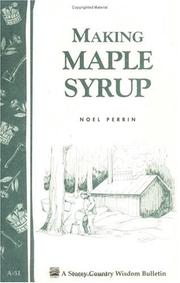
A slim Storey bulletin, cheaper and shorter still than Mann, written by an essayist who ran his own sugarbush in Vermont. Read it alongside Mann rather than instead — the two disagree on small points of technique, which is itself instructive.

The modern hobbyist book, and the most photograph-heavy of the three. Best for the practical questions the older guides skim: tubing versus buckets on a small scale, finishing to density with a hydrometer, and filtering and canning so the syrup keeps.
The Tradition and the Science
BeginnerUnderstand why the sap runs at all, what happens chemically during the boil, and where the practice came from.
▸ Study plan for this stage
Pace: About 608 pages, best read in the off-season — after your first run rather than during it, when there is no boil demanding attention. Helen and Scott Nearing's The maple sugar book is 273 pages from 1950, half practical manual and half argument for a way of living; the technique is dated and the rea
- Stem pressure, the freeze-thaw pump, and why sap flows in a maple and not in most other trees
- Sucrose concentration in sap, its variation between trees and across a season, and what that does to your yield
- The Maillard reaction and caramelisation during the boil, and how they produce colour and flavour as the season progresses
- Why late-season sap makes darker, stronger syrup and why buddiness ends the season
- The Indigenous origins of maple sugaring and the colonial and abolitionist history of maple sugar as an alternative to cane
- How the grading system works and why Quebec dominates the trade
- The Nearings as participants arguing a case about self-sufficiency, not disinterested reporters of technique
- What physically drives sap out of a tapped maple, and why does the run stop when nights stay above freezing?
- Why does syrup made in the last week of the season taste different from the first week's, in chemical terms?
- What does 'buddy' sap mean, how do you recognise it, and what do you do about it?
- What are the current grade names, what do they actually describe, and which grade did you make?
- Which of the Nearings' arguments are about maple and which are about the life they were arguing for?
- Take your sap log from last season and plot yield against the overnight low. Herd's chapters on the freeze-thaw mechanism predict a shape; check whether your trees produced it.
- Refractometer or hydrometer in hand, measure the sugar content of sap from two different trees on the same day. The between-tree variation Herd describes is the single most useful thing to know about your own sugarbush.
- Read the Nearings' equipment chapter beside Visser's and list every piece of their method you would not now use, with the reason.
- Compare the colour and taste of an early-season and a late-season jar from your own run and place each on the grading scale Linton describes.
- Read Hauser's history chapters and write down which practices in your own setup descend directly from Indigenous technique.
Next up: Understanding why the sap runs and what the boil is doing chemically is the prerequisite for deciding whether to scale past a hobby — which is the next stage's question.
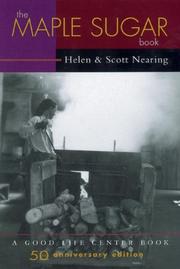
The 1950 homesteading classic, written with Scott Nearing from ten years of running a Vermont sugarbush by hand. Half practical manual, half argument for the life; the technique is dated and the history and the reasoning are not.

The best single book on the how and why — pressure and temperature in the tree, why the freeze-thaw cycle drives the run, what the Maillard reaction is doing during the boil. The bridge between following instructions and understanding them.

A short, well-made book about the sugarbush as a place and a season rather than a process. Read it for the Indigenous and colonial history of maple sugaring, which the how-to books mention and do not develop.
A compact Canadian survey of the whole subject — history, grades, uses — from 1984. Dated on equipment, useful on how the grading system works and why Quebec dominates the trade.
Going Bigger, and Using the Syrup
IntermediateDecide whether to scale past a hobby — tubing, evaporators, reverse osmosis, grading and selling — and learn to cook with what you have made.
▸ Study plan for this stage
Pace: Off-season reading, spread over a month or two, and treat it as two separate jobs. The North American Maple Syrup Producers Manual — by Perkins, Heiligmann, Koelling and van den Berg — is the industry reference produced by extension scientists; our catalogue carries no page count for it, but it is a
- Tubing and vacuum versus buckets: the labour, capital and yield trade-offs, and the tap counts at which each starts to make sense
- Evaporator sizing against tap count, and reverse osmosis as a way of removing water before the fire rather than with it
- Sugarbush management as forestry — thinning, crown release, and the decades-long time horizon that implies
- Food safety, grading and the regulatory requirements that begin the moment you sell rather than give away
- The economics and weather risk of a commercial operation, and the climate-change question running under Whynott's reporting
- Cooking with syrup by grade — which grade suits baking, which suits savoury glazing, and why the darker grades survive heat better
- At what tap count does tubing pay for itself in your terrain, and what does the Manual say the deciding variables are?
- What does reverse osmosis actually remove, and what does it save you in fuel and hours?
- What has to be true before you can legally sell syrup where you live, and what does the Manual say about it?
- What are the real risks Whynott's producers are carrying, and how many of them are weather?
- Which grade did you make, and which of Haedrich's and Webster's recipes is it actually right for?
- Work out the fuel and hours your last season cost per finished pint, then use the Manual's evaporator and tubing sections to price the same yield at three times the taps. The number, not the enthusiasm, is the decision.
- Walk your sugarbush in summer with the Manual's forest-management chapter and mark the trees a thinning would favour.
- Read Whynott and write down the three things that most nearly went wrong in the season he reports, then check whether your setup is exposed to any of them.
- Cook one recipe from Haedrich and one from Webster using your own syrup and note whether the grade you have is doing what the recipe assumes.
- Draft a one-page plan for next season — tap count, collection method, boiling capacity, storage — citing the specific pages that decided each line.
Next up: That closes the path: you have made syrup, you know why it works, and you have priced what scaling would cost — which is enough to decide whether next February is a hobby or a business.

The industry reference, produced by extension scientists and revised repeatedly. Genuinely technical: sugarbush management, tubing layout and vacuum, evaporator design, reverse osmosis, food safety and grading. Overkill for twenty taps, essential past a few hundred.

Narrative reporting rather than instruction — a season inside a large commercial New England operation, with the economics, the weather anxiety and the climate-change question running underneath. The book that tells you what scaling up actually feels like.

The standard collection for cooking with syrup rather than pouring it, from a long-running Storey title. Start here once you have more syrup than you can eat on pancakes.

A modern recipe book that treats maple as a sweetener across savoury and sweet cooking, with more attention to the different grades. The last stop: by this point you know which grade you made and why it tastes the way it does.