Love and Rockets Reading Order: Where to Start With Los Bros Hernandez
Love and Rockets is not one story and the shelf will not tell you that. For forty years Jaime and Gilbert Hernandez have published two entirely separate sagas inside one magazine — Jaime's Locas, about Maggie and Hopey in a Southern California punk scene, and Gilbert's Palomar, about a Central American village — with no shared characters and no shared plot. Reading a collected volume front to back means alternating between them at random, which is why so many people bounce off it. The fix is simple: pick a brother and follow him. This path uses the Fantagraphics Love and Rockets Library edition, the digest-sized paperbacks that separate the two threads and put each in chronological order — the only one of the three competing collection schemes that does that. The older oversized Locas and Palomar hardcovers cover the same early material in one lump, and the original 1980s trades are long out of print; do not mix editions or you will buy the same pages twice.
Start with Jaime: Locas
BeginnerMeet Maggie and Hopey, and see the science-fiction opening give way to the character work the series is actually about
▸ Study plan for this stage
Pace: Three weeks for 288, 294 and 249 pages of comics, in this order and in the Fantagraphics Love and Rockets Library edition — the digest paperbacks that separate the two brothers' threads and put each in chronological order. Do not mix editions with the older oversized Locas hardcovers or the 1980s tr
- That Love and Rockets is two unrelated sagas in one magazine, and that following one brother at a time is the fix
- Jaime's Locas thread: Maggie, Hopey and a Southern California punk scene
- The science-fiction opening — rocket ships, dinosaurs, Maggie as a mechanic — which Jaime quietly abandons
- Reading the genre material as scaffolding rather than as a promise the series breaks
- Jaime's clear-line drawing and how much of the characterisation is carried by faces rather than dialogue
- The tonal turn in Perla la Loca, where the punk comedy becomes adult and sad
- Penny Century as the bridge into the later Locas, with the punk scene gone and time itself becoming the subject
- What is the relationship between Maggie and Hopey, and how does Jaime avoid ever defining it?
- When does the science-fiction framing stop mattering, and does anything of it survive?
- What specifically changes in tone in Perla la Loca, and which story does it?
- How does Jaime draw the passage of time — what changes on the page as the characters age?
- What do you lose by skipping The Girl from H.O.P.P.E.R.S., and does the run still read?
- Pick one page from Maggie the Mechanic and one from Penny Century and compare the drawing of Maggie's face directly; the ageing is the series' most obvious craft achievement and it is invisible until you set two pages side by side.
- Keep a cast list as you go — Jaime introduces people without ceremony and expects you to remember them ten years later.
- Read a Death of Speedy summary or buy the volume before Perla la Loca, and note which references in Perla la Loca you would otherwise have missed.
Next up: The early Locas stories are the famous ones, but critics rate the later work higher, and the next stage is where that case is made.
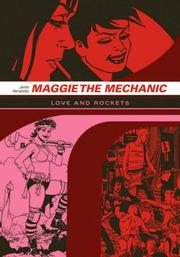
The correct first book for almost everyone. It opens with rocket ships and dinosaurs — Jaime's early sci-fi framing, which he quietly abandons — and settles into Maggie, Hopey and the punk scene that becomes the real subject. Read the genre material as scaffolding and keep going.
A catalogue gap first: the second Library volume, The Girl from H.O.P.P.E.R.S., does not resolve in our book data, so this path jumps to the third. You are skipping the Death of Speedy sequence, widely considered the peak of Jaime's early work — buy it separately. Perla la Loca closes the first movement of Locas and is where the tone turns adult and sad.

The bridge into the later Locas, collecting the work from the second volume of the magazine. Maggie and Hopey are older, the punk scene is gone, and Jaime starts drawing the passage of time as his real subject. Read it after Perla la Loca.
Jaime, later
IntermediateFollow Locas into middle age and see why critics rate the late work above the famous early stories
▸ Study plan for this stage
Pace: Two to three weeks for 272 and 280 pages. Esperanza is catalogued as Esperanza: A Love and Rockets Book and is the volume containing The Love Bunglers, routinely named the best single story either brother has produced; it only works because you have watched Maggie for three books, so read it exactly
- The Love Bunglers as the payoff for cumulative reading rather than a story that stands alone
- Middle age as Jaime's late subject, and why critics rate it above the punk-era work
- How a decades-long serial can make a reveal land by having withheld it for twenty years of publication
- Locas carrying into a new generation of characters in Angels and Magpies
- The difference between a comic that ages its characters and one that resets them
- Choosing a stopping point with one brother in order to start the other from the beginning
- What does The Love Bunglers reveal, and how far back in the series was it planted?
- Would The Love Bunglers work as a first Jaime story, and what exactly would be missing?
- How does Jaime handle the new generation without making the older cast into background?
- What has replaced the punk scene as the social world of these stories?
- Is Angels and Magpies a good stopping point, or does it open more than it closes?
- After The Love Bunglers, go back to the specific earlier stories it depends on and reread them; the story is engineered for that return trip.
- List what has happened to Maggie, Hopey and Ray across all five Jaime volumes as a plain chronology — the emotional effect of the late work comes from that chronology, not from any single scene.
- Write one paragraph on why the late work is better than the early work, or why it is not; you will need a position on this before you can judge Gilbert.
Next up: Gilbert's saga starts from nothing you have read, and the next stage begins it as if it were a different series, because it is.
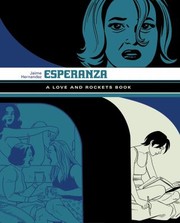
Catalogued as Esperanza: A Love and Rockets Book. This is the volume containing The Love Bunglers, routinely named the best single story either brother has produced. It only works because you have watched Maggie for three books; read it exactly here.

The most recent Library collection of Jaime's work, carrying Locas into a new generation of characters. A reasonable place to stop with Jaime and switch brothers, which is what this path does next.
Now start Gilbert: Palomar
BeginnerBegin the second saga from its own beginning, and read the magical-realist village stories that made Gilbert's reputation
▸ Study plan for this stage
Pace: Three weeks for 296, 250 and 288 pages. Treat Heartbreak Soup as a first page rather than a fourth book — nothing in it connects to Maggie or Hopey. Human Diastrophism contains the title novella about a serial killer in the village. Beyond Palomar collects Poison River and Love and Rockets X: Poison
- Palomar as a Central American village with roughly forty recurring characters introduced without ceremony
- Luba and her hammer as the saga's centre, and Gilbert's very different drawing style from his brother's
- Magical realism used structurally — the impossible stated flatly and never explained
- Human Diastrophism as the Palomar stories at their densest, and the piece most often set against The Love Bunglers
- Poison River's fragmented chronology as a deliberate obstacle, and what it buys
- Love and Rockets X as Gilbert's Los Angeles book and his move away from the village
- Why Beyond Palomar belongs third: it requires trust in the author that the first two volumes earn
- How does Gilbert introduce forty people without a cast page, and what does he rely on you to do?
- What is the village's relationship to the outside world, and how does it change across the three books?
- What does Human Diastrophism do with the killer plot that a crime comic would not?
- Why is Poison River told out of order, and does the difficulty pay off?
- How do Gilbert's and Jaime's drawing styles differ, and what does each style make possible?
- Build a Palomar family tree as you read Heartbreak Soup; Gilbert never provides one and Human Diastrophism assumes it completely.
- After Poison River, write Luba's life in straight chronological order — reconstructing it is the reading experience Gilbert designed.
- Take one page of Gilbert and one of Jaime from the same period and compare panel size, blacks and body drawing; the two threads share a magazine and almost nothing else.
Next up: The village is finished as a setting, and Gilbert's later work follows the same family out of it and into the United States.
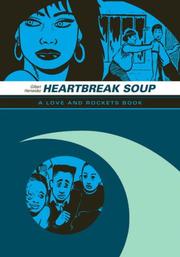
Gilbert's starting point, and effectively a second book one — nothing here connects to Maggie or Hopey. The village of Palomar, Luba and her hammer, and a cast of roughly forty people introduced without ceremony. Treat this as the first page of a different series, because it is.

The Palomar stories at their densest, including the title novella about a serial killer in the village, which is the piece most often set beside Jaime's Love Bunglers. Read it second; it assumes you know the whole cast from Heartbreak Soup.
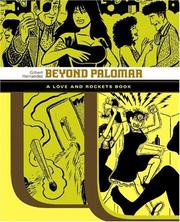
Collects Poison River and Love and Rockets X — Luba's backstory told in a deliberately fragmented, hard-to-follow structure, and Gilbert's Los Angeles book. The most difficult reading in either brother's work; it belongs third, once you trust him.
Gilbert, after the village
IntermediateFollow the Palomar characters out of Palomar and into the American material Gilbert has written since
▸ Study plan for this stage
Pace: Three weeks for 256, 272 and 293 pages, in this order. Sequential reading matters more in Gilbert's late work than in his early work — the sprawling family becomes the structure once the village is gone, and skipping a volume loses relationships the next one assumes. These books carry Gilbert's usua
- The relocation to the United States as a permanent change of setting rather than a trip
- Luba's half-sisters Petra and Fritz as the new centre of gravity
- Family structure replacing geography as the thing that organises the storytelling
- Ofelia's viewpoint and what a cousin's perspective lets Gilbert see that Luba's cannot
- Three Sisters completing the arc from a Central American village to three middle-aged women in California
- How Gilbert handles the loss of a setting that was doing half the work
- What does Gilbert lose when Palomar stops being the setting, and what does he gain?
- How do Petra and Fritz function differently from the Palomar cast?
- Why does sequence matter more here than in Heartbreak Soup?
- What has happened to the magical-realist register once the stories move to California?
- Read whole, does Gilbert's saga hold together as one thing, or as a village book and an American book?
- Extend the family tree you started in the last stage across all three volumes; the late work is unreadable without it and readable with it.
- Mark every explicit reference back to Palomar and note whether the scene works without having read the village books.
- Write two paragraphs comparing Three Sisters with Angels and Magpies — both brothers' most recent Library volumes, both about ageing, and nothing else alike.
Next up: With both sagas read separately and in order, the ongoing magazine that alternates between them becomes readable for the first time.

Luba in the United States with her half-sisters Petra and Fritz, which is where Gilbert's saga relocates permanently. Read it directly after Beyond Palomar, which sets up the relationships this volume depends on.

The continuation, centred on Luba's cousin, and the volume where the sprawling family becomes the structure rather than the village. Sequential reading matters more in Gilbert's late work than in his early work.

The most recent Library volume of Gilbert's main thread, completing the arc from a Central American village to three middle-aged women in California. A natural end point for the Palomar half of this path.
Where the brothers still publish together
IntermediateSee the ongoing magazine and decide whether to follow the series as it comes out
▸ Study plan for this stage
Pace: Open-ended, and read as an ongoing series rather than a finished one. Our catalogue holds Love and Rockets New Stories as a single record with no page count rather than by volume, so treat it as the door into the current run and buy by volume number. This is the annual-format continuation of the mag
- The magazine format as the thing that caused the confusion and the thing the brothers have never abandoned
- Reading alternating threads on purpose, having learned which is which
- Jaime's and Gilbert's late styles diverging further as both age
- The practical edition question: New Stories, the subsequent magazine volumes, and which the Library collects
- What forty years of continuous publication by the same two people makes possible that a finished series cannot
- Now that you can tell the threads apart on sight, what does putting them in one book actually do?
- Where has each brother's work gone since the volumes you read?
- Which thread would you follow if you could only follow one, and has that answer changed since stage one?
- What would you tell someone who picked a New Stories volume off the shelf as their first Love and Rockets?
- Read one New Stories volume and, before checking, mark which pages are Jaime's and which are Gilbert's; getting this right is the practical proof the path worked.
- Write the two-sentence orientation you would hand a new reader — pick a brother, buy the Library edition, start at Maggie the Mechanic or Heartbreak Soup — which is what nobody gave you.
- Decide which brother you are following forward and put the next volume on order; the series is still running and this is the only stage with no endpoint.
Next up: You have both sagas in order, in one edition, and the ongoing magazine untangled — the whole shelf, finally readable.

The annual-format continuation of the magazine, with both brothers still alternating in one book — which is now readable precisely because you have separated the two threads first. Our catalogue holds this as a single record rather than by volume number, so treat it as the door into the ongoing series.