Lisa Kleypas books in order: where to start with the Wallflowers
Start with Secrets of a Summer Night and read the four Wallflowers in order. That is the answer to the question most new Kleypas readers are actually asking, and the reason is specific: the third Wallflower, Devil in Winter, is the book that made her reputation, and it only works because you have spent two novels watching Sebastian, Lord St. Vincent, behave unforgivably. Read it as a standalone and you get a good romance; read it third and you get the redemption arc it was engineered to be. Beyond that, Kleypas's Victorian novels are not one series but several that share a world and hand characters back and forth — the earlier Gamblers books set up the Wallflowers, the Hathaways run alongside them, and the Ravenels pick up the same families a generation later. This path sorts them into the order that makes the connections land.
Start with the Wallflowers
BeginnerRead the four-book series in strict order and understand why the third book is the one everyone recommends
▸ Study plan for this stage
Pace: Four weeks for the quartet — 368 pages for Secrets of a Summer Night, 400 for Devil in Winter and 374 for Scandal in Spring; our catalogue carries no page count for It Happened One Autumn, which runs to a comparable length. Read them in strict order. These are historical romances with explicit sex s
- The wallflower pact as the series' engine: four women agreeing to marry each other off one at a time, in order
- Why the strict order matters — Sebastian, Lord St. Vincent, has to earn your contempt in book two before book three can work on you
- Annabelle's book establishing the social and financial stakes: what a season costs and what an unmarried woman without money faces
- Kleypas's use of trade and new money against the aristocracy, which becomes the spine of the later series
- The friendship group as a structural device that keeps four heroines on the page across four books
- Scandal in Spring's gentler register as a deliberate close, and the Bowman family connection that hands you to the Hathaways
- What does the pact commit the four women to, and where does the series let it fail?
- What exactly does Sebastian do in It Happened One Autumn, and how does Devil in Winter account for it?
- Does Devil in Winter earn the redemption, and which specific scenes do the work?
- How does Kleypas use money and trade to differentiate the four heroes?
- What would a reader who started with Devil in Winter actually miss?
- Read It Happened One Autumn and Devil in Winter back to back and mark every reference in the third book to events in the second; the density of them is the argument for the order.
- Track Evie's speech across Devil in Winter — her stammer is used structurally, not decoratively — and note where it disappears and why.
- Write down the four heroines' financial positions at the start of the series and at the end of Scandal in Spring; the pattern is Kleypas's actual subject.
Next up: The Wallflowers borrow their world from books Kleypas wrote a decade earlier, and the gaming club at the centre of it has its own two novels.
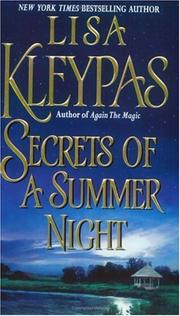
The first Wallflower and the correct entry point to Kleypas generally: four unmarried women at the edge of the ballroom agree to help each other find husbands, one at a time, in order. Annabelle's book establishes the pact, the friendship group and the social stakes that the next three depend on.

Lillian's book, and the one doing the quiet structural work — this is where Sebastian, Lord St. Vincent, commits the act that makes him irredeemable. Do not skip it to get to Devil in Winter faster; skipping it is exactly what removes the point of Devil in Winter.
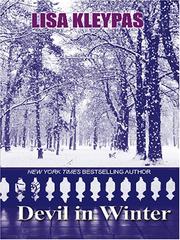
The genre-defining one, and the reason the reading order matters at all: the wallflower everyone underestimated proposes a marriage of convenience to the man who abducted her friend. It regularly tops best-historical-romance lists, and it earns that only in third position.
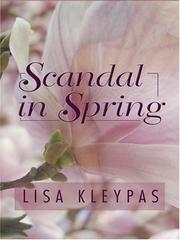
Daisy's book closes the quartet and resolves the friendship group's arc. It is the gentlest of the four, which is the right note to end on, and it hands you directly to the Hathaways through the Bowman family connection.
The earlier books the Wallflowers grew out of
BeginnerRead the two 1990s Gamblers novels that introduce Derek Craven and the world the Wallflowers inherit, and see how much earlier Kleypas built this
▸ Study plan for this stage
Pace: Two and a half to three weeks for 420 and 379 pages, read in this order. These are 1990s novels and the prose, pacing and treatment of consent are noticeably of their period compared with the Wallflowers you have just finished — that difference is why they are placed as backfill rather than as an in
- Craven's gaming club as the recurring setting the Victorian novels keep returning to
- Derek Craven's origin in the rookeries as Kleypas's first full use of a hero from outside the class system
- How much earlier Kleypas built this world, and what the Wallflowers inherited rather than invented
- The shift in Kleypas's craft between the early 1990s books and the mid-2000s quartet
- Why a large part of her readership rates Dreaming of You above Devil in Winter
- Reading an author's early work after her mature work, and what that order lets you see
- What does the gaming club provide structurally that a ballroom cannot?
- How does Craven's class background function in the plot rather than just in his biography?
- Which elements of the Wallflowers world first appear here?
- Where is the writing in these two books visibly earlier than in the quartet?
- On the evidence, is the case for Dreaming of You over Devil in Winter about the hero, the heroine or the structure?
- List everything about Craven's club that reappears in the Wallflowers, and check each against Secrets of a Summer Night.
- Take one romantic set-piece from Dreaming of You and one from Devil in Winter and compare them line by line for how consent and refusal are written.
- Write the case for Dreaming of You as the better book in one paragraph, then the case against; you will need both to place the Ravenels later.
Next up: Both series so far are built on friendship groups and clubs; the Hathaways change the shape entirely by making the unit a family.
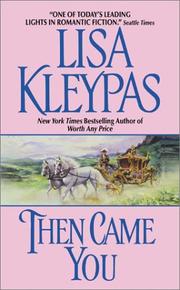
The first Gamblers book, from 1993, and the introduction of the gaming club that recurs throughout the Victorian novels. Read it after the Wallflowers rather than before: it is an earlier, rougher Kleypas, and it lands better as backfill than as a first impression.

The Derek Craven novel, and for a large part of her readership the book they would defend over Devil in Winter. It is the strongest of her early work and the one that explains why the gambling-club setting keeps returning; read it immediately after Then Came You, which sets Craven up.
The Hathaways
IntermediateFollow a single family across a five-book series and see Kleypas handle a Romani hero, a mixed-class household and a slower-burning long arc
▸ Study plan for this stage
Pace: Four to five weeks for 368, 376, 384 and 352 pages, in order. Seduce Me at Sunrise is effectively unreadable out of sequence because its entire tension was set up in the previous book. Note that this path stops after Married by Morning, at four of the five Hathaway novels. Seduce Me at Sunrise invol
- A family series versus a friendship series: siblings recur constantly instead of taking clean turns
- The Romani thread through all five books, carried by Cam Rohan and then by Kev Merripen
- The mixed-class household as Kleypas's structural experiment — gentry by inheritance, not by upbringing
- The Merripen and Win slow burn as the longest-simmering pairing in her work, and how a series sustains one
- Harry Rutledge as the sharpest of her manipulative heroes, and how Tempt Me at Twilight tests him
- Leo and Catherine Marks as the antagonistic pairing seeded from book one, and the payoff for reading in sequence
- What changes about pacing when the recurring cast are siblings rather than friends?
- How does Kleypas handle the Romani material, and where does the writing rely on period romance convention?
- Why is Seduce Me at Sunrise unreadable first, specifically?
- What does Tempt Me at Twilight require of Harry before the book will let him have the marriage?
- Which of the four books would survive as a standalone, and what would it lose?
- Track every appearance of Merripen and Win across Mine Till Midnight before their own book, and count the pages of setup; that number is the argument for the series order.
- Mark the point in Tempt Me at Twilight where Harry's manipulation is exposed and note how many pages Kleypas gives him afterwards to earn the ending.
- List the Hathaway siblings and their situations at the start of book one and at the end of Married by Morning, and identify which threads are still open — that is the fifth book this path does not cover.
Next up: The Ravenels return to these same families twenty years on, and one of them is built directly on the Devil in Winter couple you met in stage one.
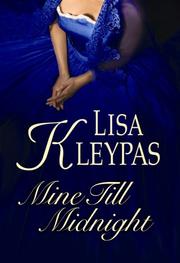
The first Hathaway novel and the start of a family series rather than a friendship series, which changes the shape: the siblings recur constantly instead of taking clean turns. Cam Rohan's book sets up the Romani thread that runs through all five.

Kev Merripen and Win's book, the longest-simmering pairing in Kleypas's work, set up across the previous novel. It is the second Hathaway and effectively unreadable out of order — the entire tension was established in book one.

Harry Rutledge and Poppy, and the sharpest of the Hathaway books: a hero who manipulates his way into the marriage and then has to actually earn it. Read third, where the family dynamic is fully established.

Leo and Catherine Marks, the antagonistic pairing the series has been seeding since book one, and the payoff for reading the Hathaways in sequence rather than picking one. A good stopping point if you only want a taste of this series.
The Ravenels, a generation on
IntermediatePick up the same families twenty years later and see the specific book where the Wallflowers and the Ravenels connect
▸ Study plan for this stage
Pace: Five weeks for 424, 416, 384 and 384 pages, in this order. Devil in Spring is the book the whole path was built to reach and depends entirely on having read Devil in Winter first. Cold-Hearted Rake opens with a death and an entailed estate in near-bankruptcy; Devil's Daughter is a widow's second-cha
- The Ravenels as Kleypas's return to Victorian historical romance after years of contemporaries, and what the gap changed
- The entailed estate and agricultural decline as a plot engine rather than a setting
- Rhys Winterborne and the department store: the series widening past the aristocracy into commercial London
- Devil in Spring as the junction — Gabriel is Sebastian and Evie's son, and both parents are on the page
- The generational bridge completed from the other side in Devil's Daughter, with Phoebe as their daughter
- How an author converts a back catalogue into a single continuous world, and what that asks of the reader
- What has changed in Kleypas's craft between the Hathaways and the Ravenels?
- How does the estate's financial state constrain the plots of the first two Ravenel books?
- What does seeing Sebastian and Evie as parents do to your reading of Devil in Winter?
- Does Devil in Spring work for a reader who has not read Devil in Winter, and what precisely do they lose?
- Taken together, do the Ravenels read as a continuation or as a revisiting?
- Draw the family tree connecting the Wallflowers, the Hathaways and the Ravenels using only what the novels state; the gaps you cannot fill are the books this path leaves out.
- Reread the closing chapter of Devil in Winter immediately before starting Devil in Spring, and mark every line the later book pays off.
- Compare Sebastian's dialogue in Devil in Winter with his dialogue in Devil in Spring and note what Kleypas kept and what she aged.
Next up: You now have the four interlocking series in the order that makes their connections land, and can pick up the remaining Ravenel and Hathaway books without losing the thread.

The Ravenels opener and Kleypas's return to Victorian historical romance after years writing contemporaries. It stands alone if you insist, but the payoff of the series is cumulative and this is where the estate, the family and the tone are set.

Rhys Winterborne, the Welsh department-store owner, is the series' strongest hero and this is the book that widens the world past the aristocracy. Second in order, and the one that establishes the commercial London the later books use.
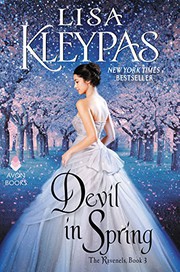
The book this whole path was built to reach: the hero is Gabriel, son of Sebastian and Evie from Devil in Winter, and both parents are on the page. It is the moment the Wallflowers and the Ravenels become one continuous story, and it only pays if you read Devil in Winter first.

Phoebe, Sebastian and Evie's daughter, in a widow's second-chance romance that completes the generational bridge from the other side. Read it after Devil in Spring; together they are the clearest argument for reading Kleypas in order rather than by cover appeal.